← Marketplace Morning Report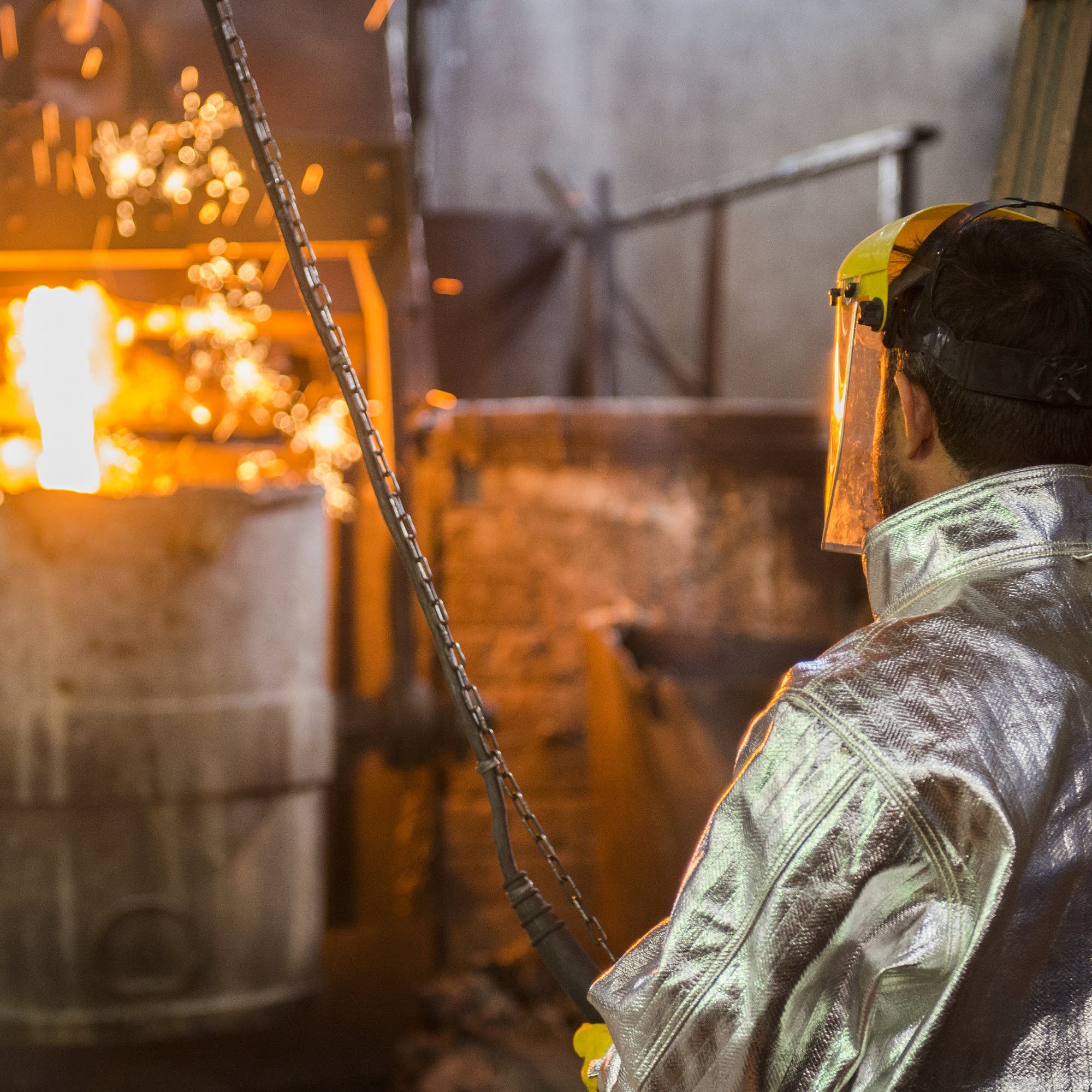
Loading summary
Transcript18 lines
- [00:02]
WhatsApp Representative
On WhatsApp, no one can see or hear your personal messages. Whether it's a voice call message or sending a password to WhatsApp, it's all just this. So whether you're sharing the streaming password in the family chat or trading those late night voice messages that could basically become a podcast, your personal messages stay between you, your friends and your family. No one else, not even us.
- [00:28]
Airwick Advertiser
WhatsApp message privately Airwick Essential Mist Diffuser transforms your space, creating your perfect ambiance with a wide range of inviting fragrances that make your guests go airwick Essential Mist Diffuser's easy to change. Refills allow you to choose your perfect fragrance for any occasion, like lush honeysuckle and raspberry and vibrant island coconut in warm sands. And if guests start shifting from the table to the couches, no worries, it's perfectly portable and cordless. It's airwick Essential Mist Diffuser always inviting.
- [01:04]
Lianna Byrne
On tariffs. The EU is in the firing line, but the UK is spared for now. Good morning, this is the Marketplace Morning Report and we're live from the BBC World Service. I'm Lianna Byrne. So we start with the latest escalation in the global trade dispute. The United States has doubled tariffs on nearly all imported steel and aluminium, jumping from 25% to 50%. The the stakes are high though. Around a quarter of all steel and half of all aluminium used in the US is imported. The BBC's Katie Silver has the details.
- [01:35]
Katie Silver
There has been shock amongst American steel and aluminium importers that is actually going ahead. We've spoken to a number of them, but there are thoughts that the new tariffs could indeed provoke retaliation from some of America's biggest trading partners. Now, the U.S. according to White House estimates, is the biggest importer of steel in the world. That comes after the European Union and it's sourced sources most of the metal from the likes of Canada, Brazil, Mexico and South Korea. Now, it was something this trade deficit was something that President Trump was trying to correct for on his first term in office with tariffs. But the trouble was many nations managed to avoid them by striking bilateral deals. In March. He said that he does not want to see this happen a second time and therefore when he made this announcement last week, he said he wanted to make the tariffs so high at that 50% range that US businesses would have no alternative but to buy from American suppliers. So far it seems the tariffs are reducing imports, according to data, but not yet driving up production. So that's going to be one of the big challenges is how you can make steel affordable when you have U.S. costs and U.S. labor costs and all of those sorts of things.
- [02:39]
Lianna Byrne
That was Katie Silver reporting. But there was a late twist to the story yesterday. The UK will be exempt for now thanks to a bilateral deal signed in May. That deal isn't in force yet, though. So UK steel exporters still still face tariffs in the meantime and they could be hit with a full 50% if the agreement falls through. Rowan Crouser is CEO of Brander, a metal stamping specialist in Birmingham. He says the ongoing uncertainty is having a big impact.
- [03:06]
Rowan Croucher
Essentially our customers, you know, are less confident in forward planning or ordering what they need. Bear in mind that the types of products we make, whether they're from steel, copper or brass or some other metal, there are long lead times to our supply chain to actually procure the material, bring it into our factory, stamp the product, finish the product and then ship it. If there's delays or late placement of orders because they need the products, that's not going away. It does make things a little bit more nightmarish for us to actually plan.
- [03:39]
Lianna Byrne
That was Rowan Croucher, CEO of Brander. Now let's see the numbers. European markets edged higher today with Germany's main index nearing a record high ahead of the country's new tax tax relief package aimed at boosting growth. But traders are remaining cautious because as we mentioned, today is the deadline for countries to respond to those U. S tariff threats. Now let's stick to that story because it is a big week for the EU economy and for its trade relationship with the United States. The European Commission is unveiling its 2026 budget proposal today, setting out things where it wants to spend money on, like climate action, defense and economic growth. But all eyes are also on Washington where the US has set a deadline for for trade partners, including the EU to put forward their best offer to avoid a new wave of tariffs. Marky Booty is former Director General for Economic and Financial affairs at the European Commission. Hello.
- [04:32]
Marco Buti
Hello.
- [04:32]
Interviewer
There is a lot on the line. So do you think the EU is handling these negotiations effectively?
- [04:38]
Marco Buti
I think the EU is negotiating in good faith. So it decided, for instance, after of April, on 14 April, to pose the tariffs that he had announced and actually agreed on 21 billion of US imports. But negotiating good faith with the US government is clearly a risky endeavor. Spelling out clearly what is going to happen should the negotiations fail, I think is a must.
- [05:12]
Interviewer
Now, do you think one of the problems is though, that the US is looking at Europe at the moment and it's seeing a lot of internal challenges. We see Germany's delaying its fiscal plans. France is in political chaos over its budget. With Europe's fiscal unity fraying, is that a bad position to be in when you're negotiating?
- [05:33]
Marco Buti
That is clearly not a comfortable position, obviously. But the eu, I think at the end of the day, especially when existential challenges are hitting us, manages to find unit, sometimes in a quite surprising manner. So President Trump thinks that Europe does not have cards. I think we have a lot of cards to play, but we should be ready to play them all.
- [06:00]
Interviewer
And if this doesn't work out, what exactly are those cards? I know that Europe is trying to boost defence spending urgently, particularly because of the war in Ukraine, and then also trying to strike deals with other partners like the UAE and India. Could that offset anything that they might.
- [06:17]
Marco Buti
Lose from the U.S. as you mentioned, start to strike deals to rebuild multilateralism, bottom up. So now the US Is calling into question, you know, Bretton woods institutions, multilateralism as we know it. We should build free trade areas, investment agreements, and we have started with Mercosur, with India, Switzerland, Mexico, et cetera. After all, the US is a key player. But this 85% of trade in the world is not with the US and the third one, probably the most difficult one, is to rethink Europe's business and security model. It takes time, but we have to start traveling because otherwise the loan, the long run, never comes.
- [07:07]
Interviewer
Okay, Marco Buti, former Director General for Economic and Financial affairs at the European Commission, thank you so much for joining us on Marketplace.
- [07:15]
Marco Buti
Thank you. My pleasure.
- [07:16]
Lianna Byrne
And finally, it's International Cheese Day. And while France is world famous for its fromage, a new survey by Parisian Cheese Academy finds nearly one in ten young French adults don't eat cheese at all. I guess Gen Z just isn't buying. That's it from the Marketplace Morning report from the BBC World Service, I'm Liana Byrne. Thanks for listening.
- [07:44]
Airwick Advertiser
Add a little curiosity into your routine with TED Talks Daily, the podcast that brings you a new TED Talk every weekday. In less than 15 minutes a day, you'll go beyond the headlines and learn about the big ideas shaping your future. Coming up, how AI will change the way we communicate, how to be a better leader and more. Listen to TED Talks Daily wherever you get your podcasts.