← Marketplace Morning Report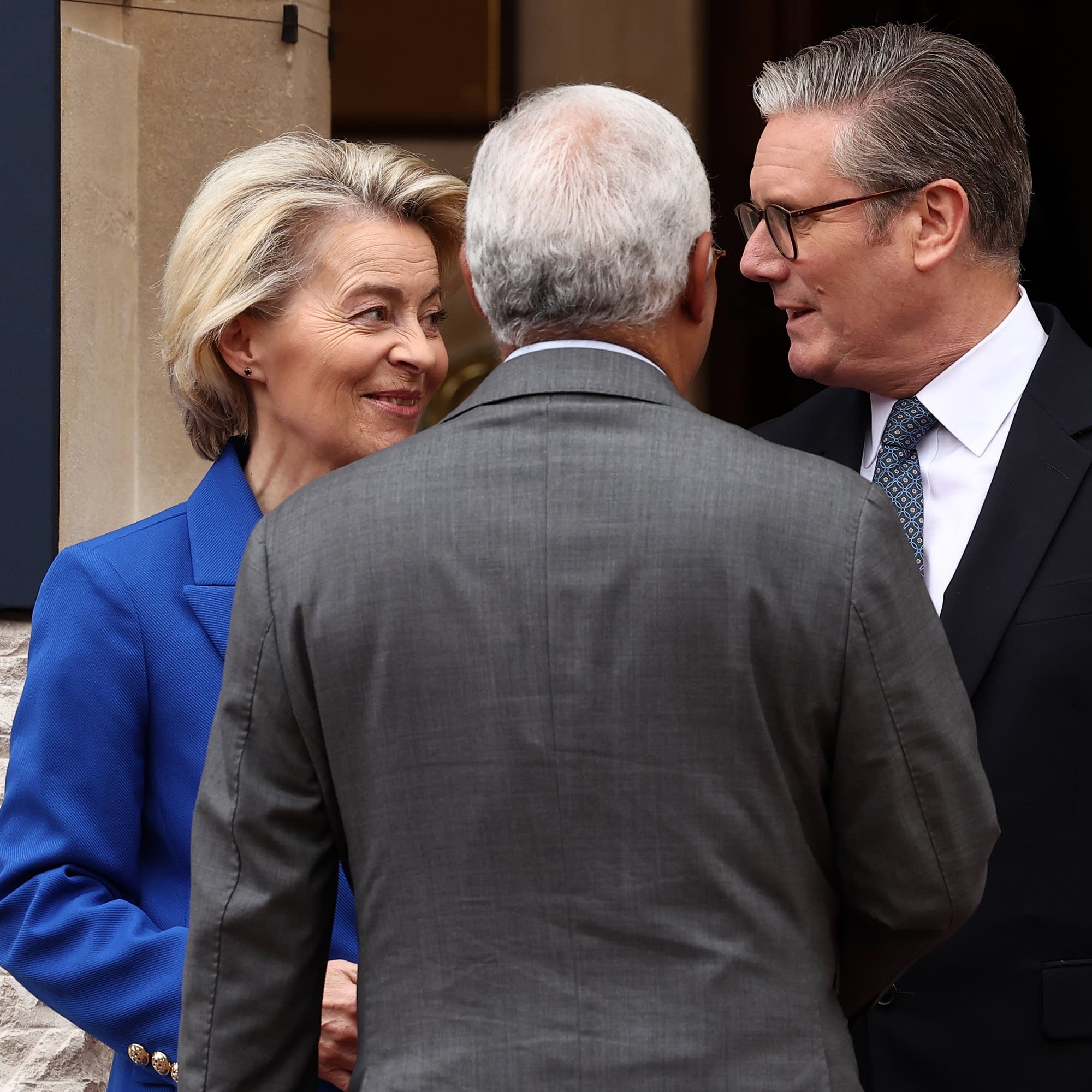
Loading summary
Transcript38 lines
- [00:02]
Lowe's Advertisement
Kick off summer with Memorial Day savings at Lowe's. Right now, get five Scott's Naturescapes, one and a half cubic foot mulch bags for just $10. Plus get up to 40% off select major appliances and save an extra $50 on every $500 you spend on select major appliances. $396 or more. Lowes we help you save. Valid through 528. Mold shopper. Excludes Alaska and Hawaii. Selection varies by location while supplies last. See Lowes.com for more details.
- [00:30]
Straight Talk
Straight Talk here. Federal funding for public media is at risk of being eliminated. That seriously affects our 800 local public radio stations that broadcast Marketplace and that in turn impacts our bottom line. Marketplace needs your help to plan for an uncertain future and to continue bringing you the news, interviews and stories about the economy as it changes. Every donation right now has a profound impact. Please give what you can@marketplace.org donate and and thank you.
- [01:03]
Stephen Ryan
They're talking again. The European Union and the United Kingdom are set to announce deals to ease trade. Live from the BBC World Service, this is the Marketplace Morning Report. I'm Stephen Ryan. It's Mr. Stefano in for Liana Byrne. Hello there. Britain's Prime Minister, Keir Starmer is set to announce a reset in post Brexit relations with the eu. Ursa von der Leyen, president of the European Commission, has just arrived at a London summit after a breakthrough in talks that have been looking at defence, trade and fishing rights. The BBC's Henry Zeffman has the details.
- [01:34]
BBC Correspondent
A new defence and security partnership is expected to be the centrepiece of today's summit. An effort to reduce checks for businesses exporting to the continent will mean alignment with some EU rules and a role for the European Court of Justice. There will be a commitment to pursue a youth mobility scheme, but it's unclear how detailed that will be at this stage. The EU has also sought to extend post Brexit fishing rights for its vessels in UK waters, which was the focus of the final talks.
- [02:00]
Stephen Ryan
So what could it mean for small companies? Simon Sparel is founder of the Cheshire Cheese Company and director at Hartington Creamery in the north of England.
- [02:08]
Simon Sparel
We had to change the way we exported foods and we had to have health checks, which involved a veterinary surgeon checking off every consignment that immediately made us commercially unviable as small businesses. Because we couldn't bury that cost, we couldn't actually absorb that.
- [02:25]
Stephen Ryan
Vicky Price is Chief Economic Adviser at the Centre for Economic and Business Research. Previously she was the Joint Chief of the UK Government Economic Service she told me about the key economic issues behind the talks.
- [02:37]
Vicky Price
Well, the important thing is to get the relationship with the EU working better, because it's clearly not been particularly helpful since Brexit for the UK economy. And if it's growth that this government wants to achieve, then that's one way of doing it.
- [02:49]
Stephen Ryan
And what could free your trade around food and agriculture products, which are one of the big areas mean for British exporters, do you think?
- [02:56]
Vicky Price
Well, it's interesting, of course. An awful lot of what's been going on right now has concentrated on fish, which is rather small. It accounts for only 0.03% of the UK economy, but nevertheless, it seems to be quite an emotional area. But otherwise, I mean, the really important thing on the food side is to get the standards accepted across the UK and the EU region so that we can reduce some of the bureaucracy that exists right now, which has resulted in food exports being either delayed quite significantly and imports at times or in fact just being cut back. So what we're getting basically is the beginning, if you like, of much closer cooperation across the UK and the EU region.
- [03:37]
Stephen Ryan
You talked about people. The EU has suggested a youth mobility scheme for 18 to 30 year olds. What are the economic considerations around something like that?
- [03:45]
Vicky Price
I think from the UK's perspective just now, we have quite a shortage in all sorts of occupations. We've had to import loads of people from other parts of the world to make up for the loss of EU workers. What there is, of course, politically is a concern about what it will do to the numbers if indeed loads of young people want to come in, hence why we're talking about quotas.
- [04:06]
Stephen Ryan
And Vicky, its defence is a major sector in the UK economy. What are they looking at in this deal?
- [04:11]
Vicky Price
We are seeing the need to rearm, if you like, in Europe and not rely so much on the US in the future. The UK wants to participate in the whole procurement process. Strong industries here which can benefit from this but also contribute and participate in the development that will take place in Europe. It's a win win as far as the UK is concern.
- [04:33]
Stephen Ryan
Vicky Price, Chief Economic Advisor at the Centre for Economic and Business Research. Thank you.
- [04:37]
Vicky Price
Thank you.
- [04:38]
Stephen Ryan
Let's do the numbers. Figures from China showed industrial output growth of 6.1% in April, slowing for March. Retail sales growth slowed to 5.1%, missing expectations. And Europe's biggest airline, Ryanair, plans to hike fares. Its annual profits after tax fell 16% to Canada, home to 2 million Indigenous people. But around half, according to a recent survey, say they struggle to Afford basics, including food. The BBC's Megan Lawton has from British Columbia.
- [05:07]
Megan Lawton
On a winding road between snow capped mountains sits Coren, population 1000. But living rurally has its challenges too.
- [05:17]
Rima Grais
I would say honestly, it's about thousand dollars I spend on food a month.
- [05:20]
Megan Lawton
Yeah, that's the equivalent of more than US$700 for single mom Raven. It means she often avoids fresh food.
- [05:28]
Rima Grais
It's pretty pricey. The good healthy food is very, very expensive. You got to be rich to be eating good.
- [05:34]
Megan Lawton
The knock on impact higher levels of chronic health conditions, explains Dr. Hayden King from Indigenous Led Research center, the Yellowhead Institute.
- [05:44]
Dr. Hayden King
Diabetes, obesity, health, disease. I mean these are impacting indigenous people at disproportionate rates compared to non indigenous people. And a lot of that is owed to this dislocation from our food sources and dispossession of the land.
- [05:59]
Megan Lawton
He's talking about the impact of a Canadian federal law introduced in 1876 called the Indian Act. It required Indigenous farmers to obtain permits to sell their produce.
- [06:11]
Dr. Hayden King
The Indian act handicapped their efforts because those indigenous people were producing too much and competing with non indigenous farmers who saw that competition as impacting their own businesses.
- [06:23]
Megan Lawton
The Canadian government has taken steps to address inequalities within the Indian act, most recently in 2023.
- [06:30]
Dr. Hayden King
Indigenous people are still grappling with the legacy of colonization and ongoing colonization, to be frank.
- [06:37]
Megan Lawton
A short drive from Causton, Indigenous farmer Dixon Turbasket is hoping to help food insecurity in his area by launching a community farm and garden.
- [06:47]
Dixon Turbasket
That's the main thing is, but creating food security. Food security means that I'm going to have something to eat, my kids are going to have some, you're going to have some, you're going to have. She's going to have something to eat. That's security here.
- [07:01]
Megan Lawton
He grows everything from apples to corn. But getting funding has been a challenge. As Hannah Field, the farm's food Hub coordinator, explains, the funding pots are getting smaller. In a lot of cases there's more grants coming up, but they're getting more competitive. So that's a huge issue. The Canadian government has said it will work with Indigenous communities to increase food security and support food sovereignty and says it's made funding available for projects in British Columbia.
- [07:33]
Dixon Turbasket
This is our seed crop right here. So we're going to decide how much we're going to plant.
- [07:37]
Megan Lawton
One goal of this farm is to grow the ingredients to make lasting dry goods.
- [07:42]
Dixon Turbasket
So yeah, we, we want to make tacos.
- [07:44]
Megan Lawton
And is there a benefit? I guess in a really rural area like this in making a product like tortillas, which are more likely to keep for longer. Is that a part of.
- [07:52]
Dixon Turbasket
Well, hopefully that that'd be one of the things it stores. We could eat that. There's quite a few meals in there.
- [07:58]
Megan Lawton
Across Canada, Indigenous communities are tackling food insecurity. But food sovereignty, where they have control over what they grow and eat, remains a work in progress. From British Columbia in Canada, I'm the BBC's Megan Lawton for Marketplace.
- [08:14]
Stephen Ryan
Our producer is Craig Henderson. Our editor is Naomi Rainey. I'm Stephen ryan. This is Mr. Stefan Arian. Thanks for listening to the Marketplace morning report from the BBC World Service.
- [08:29]
Rima Grais
Got a toxic boss you don't know how to deal with? Maybe a co worker who sends the most annoying slack messages. Well, we've got a new advice segment to help you out. Oh, girl, you gotta go. I have been coaching women in how to quit for a long time. Often many of us are like ignoring signs that it's time to move on to a new opportunity and then blocking our blessings. I'm Rima Grais and this week, this week on this is Uncomfortable. We find solutions to your work drama. Listen wherever you get your podcasts.