Loading summary
Transcript39 lines
- [00:00]
Dell Advertisement
This Marketplace podcast is supported by Dell Introducing the new Dell AI PC powered by Intel Core Ultra processor. It helps do your busy work for you so you can fast forward through editing images, designing presentations, generating code, debugging code, summarizing meeting notes, finding files, managing your schedule, responding to long emails, leaving all the time in the world for the things you actually want to do. Get a new Dell AI PC starting at $699.99 at Dell.com AI PC how those ahead Stay ahead.
- [00:31]
Palo Alto Networks Advertisement
This Marketplace podcast is supported by Palo Alto Networks. Enterprises are deploying and experimenting with AI apps and agents, often without the right security in place. Leverage the power of a comprehensive AI platform to secure AI at every step from apps, agents, models and data. Deploy AI bravely with Prisma airs more at Palo Alto networks.com.
- [01:00]
David Brancaccio
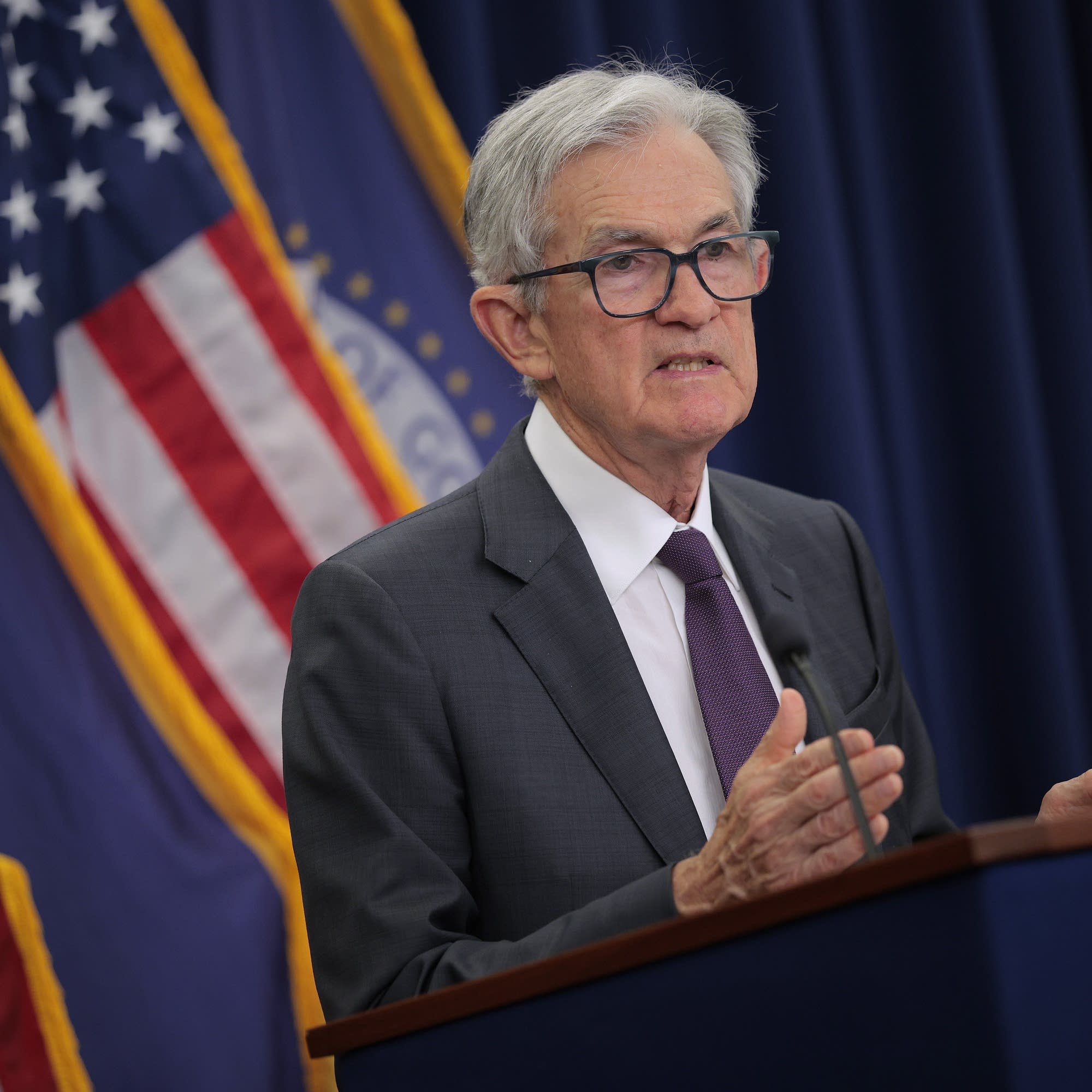
The Federal Reserve Chorus was not singing from the same hymnal. I'm David Brancaccio in Los Angeles. The guardians of interest rates at America's central bank decided now is not the moment to cut interest rates, given the uncertain effects of tariffs and a resilient overall economy. But the committee's decision yesterday was not unanimous. Two people dissented. Our Nancy Marshall Genzer was at the Fed briefing yesterday. Hey Nancy.
- [01:26]
Nancy Marshall Genzer
Hey David. Well, Fed Governors Michele Bowman and Christopher Waller were the dissenters. They wanted a quarter percentage point cut at this meeting. This is very rare. We haven't had this many Fed governors dissenting since 1993, according to account by the St. Louis Fed.
- [01:44]
David Brancaccio
Now, Powell likes to let others on his team speak for themselves and not quote discussions. But what was the dissenting case made for cutting rates now, not waiting as they decided?
- [01:55]
Nancy Marshall Genzer
Well, Powell says the majority view was that inflation is still above the Fed's 2% target and you need to keep interest rates where they are because cutting them prematurely could feed inflation. But Powell told me everyone at the meeting gave their opinion.
- [02:11]
Jerome Powell
I will say what you hope is that people, you know explain their positions very thoughtfully and clearly. And we absolutely had that today all the way around the table. I would call it one of the better meetings I can recall.
- [02:24]
David Brancaccio
Now, Team Fed did not double pinky swear promise to definitely cut rates at the next meeting in September. It's about what the data says happens between now and then.
- [02:35]
Nancy Marshall Genzer
Oh yeah, Chair Powell made that very clear yesterday. He said the Fed does not make interest rate decisions in advance and we'll be getting a fair amount of data over the next few months. Powell pointed out we'll be getting two employment and two inflation reports between now and the September meeting. He's also keeping an eye on tariffs, and he's said they've started to show through on some prices, but their overall effect on inflation remains to be seen.
- [03:01]
David Brancaccio
Nancy, thank you. Tech companies are spending massive amounts developing artificial intelligence, and the quarterly results are starting to show returns for two big players. Microsoft stock up more than 8% in premarket trading now. Meta Facebook is up 12% with its forecast that sales will be higher than expected. It's embracing the word superintelligence for its AI work. Amazon and Apple reveal their spring into summer results after the market market closes today. U.S. officials say a couple more countries have agreed to tariff deals, Thailand and Cambodia. Details are few there, but we do know that South Korea is on board the US putting a 15% import tax on its products. Korea gets the same tariff rate for cars and semiconductors as Japan. Jean Mackenzie reports from Seoul.
- [03:46]
Gene McKenzie
When Japan and the EU secured 15% deals last week, South Korea was suddenly under pressure to achieve the same Seoul sells more to the US than any other country other than China, and far more than it buys in return. So this deal was vitally important. It's being touted as a success here because Seoul didn't have to bend to requests from the US to allow it to sell more rice and beef here. What this deal doesn't cover is the cost of thousands of US Troops stationed in South Korea who help defend it from the North.
- [04:20]
David Brancaccio
Gene McKenzie is with the BBC in Seoul.
- [04:39]
Dell Advertisement
This marketplace podcast is supported by Dell Upgrade your learning experience during Dell Technologies Back to school event with AIPCs like the Dell 14 plus featuring an Intel Core Ultra Processor starting at $749.99. Supercharge your studies with features like real time notes, transcription, AI accelerated hardware to run multiple apps without slowing down, extended battery life, and more. That's the power of new AI PCs with Intel inside. What's more, upgrade your school year setup with limited time deals on select monitors and more. Must have electronics and accessories. Don't wait. Discover a smarter way to learn@dell.com deals that's Dell.com deals.
- [05:28]
Palo Alto Networks Advertisement
This Marketplace podcast is supported by Mercury. Mercury is the FinTech More than 200,000 businesses use to protect their money and power their financial workflows. Learn more@mercury.com There are weather forecasters, right?
- [05:45]
David Brancaccio
And there are professional job forecasters who predict we'll see less hiring when the official July report comes out tomorrow morning. We'll also be tracking people actively looking for work versus those who've stopped looking for now that overall size of what the government defines as the labor force fell sharply in May and June. Warning signs. Trump administration ICE raids are part of that, Marketplace's Mitchell Hartman reports.
- [06:10]
Mitchell Hartman
Here's what the BLS's recent jobs reports have shown, says Sam Kuhn at recruiting firm Appcast.
- [06:16]
Jerome Powell
Over the past two months, the labor force has declined by more than 750,000.
- [06:21]
Mitchell Hartman
And roughly coinciding with that decline of.
- [06:25]
Jerome Powell
382,000 over a three month average in the foreign born labor force.
- [06:30]
Mitchell Hartman
That category includes both documented and undocumented workers. Economist Joe Bruceuelis at consulting firm RSM says Under the Trump administration, border crossings have plummeted, arrests and deportations have risen sharply.
- [06:44]
Palo Alto Networks Advertisement
The crackdown on migrant labor has resulted in a decline in the labor supply.
- [06:51]
Mitchell Hartman
Eventually, fewer people available to hire, combined with a lower unemployment rate could encourage workers to demand higher wages, which Brusuela says would alarm the Fed since it could drive up price inflation. For now, employers tell economist Ray Perryman in Texas that immigrant workers aren't showing up for work and fewer are available to hire. He says the problem's acute in agriculture and the food industry.
- [07:17]
Jerome Powell
The shrimpers on the Gulf coast are also having a difficult time. Texas has had a lot of growth recently, and the construction projects obviously are having a hard time finding enough staff.
- [07:26]
Mitchell Hartman
And in a state like Texas with a large immigrant population, Perryman says the impact of the crackdown will be outsized.
- [07:33]
Jerome Powell
We've really come to rely on the workforce from Mexico to a very large extent. If you look at the undocumented segment of it 35 to 40% of our construction workforce, about 50% of our agricultural workforce and about 30% of our hospitality workforce.
- [07:48]
Mitchell Hartman
And the impact will be different from state to state depending on how much of their labor force is foreign born, says Haley Brown at the center for Economic and Policy Research.
- [07:58]
Kai Ryssdal
For instance, the share of the child care workforce that is foreign born is much, much higher in Alaska than it.
- [08:06]
Mitchell Hartman
Is in North Dakota 40% versus about 10%. Sam Kuhn at APCast says high skilled sectors are especially vulnerable to a decline in legal immigration.
- [08:18]
Jerome Powell
The broad sector professional and business services. Nearly one in four workers are foreign born, right? And that is a sector that's producing chips or they're producing software.
- [08:28]
Mitchell Hartman
He says foreign competitors will be eager to snap up some of those workers. I'm Mitchell Hartman for Marketplace.
- [08:35]
David Brancaccio
Listen to our half hour program with Kai Rysdal. Money, Careers, Innovation. A lot more later today on many public radio stations or streaming from Marketplace Online or a dot org in Los Angeles. I'm David Brancaccio with the MORNING REPORT from apm, American Public Media.
- [08:54]
Kai Ryssdal
Marketplace. Listeners know that voice.
- [08:56]
Palo Alto Networks Advertisement
I'm Kai Rysdal from Marketplace. Let's do the numbers.
- [08:59]
Kai Ryssdal
This August marks 20 years of Kai Ryssdal as a trusted voice in economic news, from interviews with sitting presidents.
- [09:07]
Palo Alto Networks Advertisement
Mr. President, good to talk to you again, sir.
- [09:09]
Jerome Powell
Great to be here.
- [09:10]
Kai Ryssdal
To conversations at local trampoline parks.
- [09:12]
Palo Alto Networks Advertisement
The thing that makes the high concentration of trampoline parks here in Utah County a relevant economic indicator, though it's what it tells you about how demographics affect the economy.
- [09:23]
Kai Ryssdal
Kai is always there to help you make sense of the economy. So to mark this milestone in his career, we're asking listeners to show their appreciation. Tell him how much his reporting means to you by sharing your thoughts in our e card. Visit marketplace.org thankyou by August 1st to share your appreciation.