Loading summary
Transcript24 lines
- [00:00]
Marketplace Host
Marketplace podcasts are supported by Viking, committed to exploring the world in comfort. Journey through the heart of Europe on an elegant Viking longship with thoughtful service, destination focused dining and cultural enrichment on board and onshore. And every Viking voyage is all inclusive with no children and no casinos. Discover more@viking.com this Marketplace podcast is supported by the Freedom From Religion Foundation. America is an aspirational idea, one we're still working to fulfill, shaped by Enlightenment ideals, reason, liberty and freedom of conscience. The belief that power comes from we the people, not a divinely appointed ruler. And while these ideals have not yet been fully perfected, they created something powerful, a framework that has expanded rights and freedoms over time. Now those freedoms and your rights are under attack. We're seeing growing efforts to blur the line between church and state, public funds to promote religion, 10 Commandments in classrooms, and pushing a version of America that leaves out too many people. As our Nation approaches its 250th anniversary, the Freedom the Freedom From Religion foundation is working to protect the Constitution, defend secular government, and ensure that freedom continues to expand for everyone. Because America isn't just where we started, it's what we choose next. Go to FFRF US America or text America to 511-511-America to 511-51-511 text fees may apply.
- [01:26]
Nancy Marshall Genzer
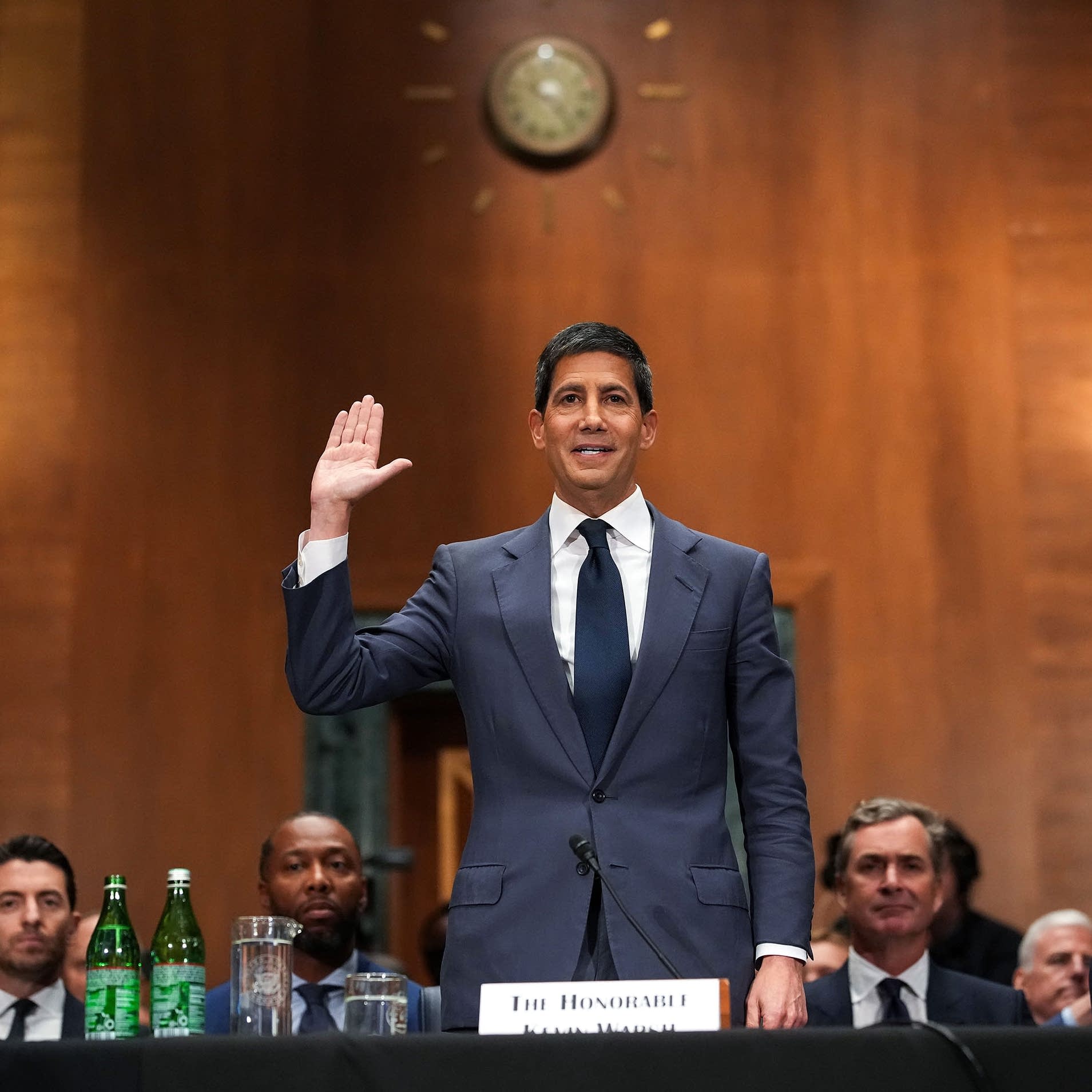
What will a Warsh Fed look Like? From Marketplace, I'm Nancy Marshall Genzer in Washington. Kevin Warsh, next chair of the Federal Reserve The Senate voted 54 to 45 to confirm Warsh to a four year term yesterday. He'll replace Jerome Powell, who has led the central bank for the past eight years. War will face a challenging economic environment as marketplaces, Henry Epp reports.
- [01:53]
Henry Epp
Confirmation coincided with two reports this week showing inflation heating up again. Consumer prices rose 3.8% in April, well above the Fed's target of 2%, and prices paid by wholesalers rose at the fastest pace since 2022. That could mean even higher consumer prices are still on the way. A worsening inflation picture makes it less likely voting members of the Fed will want to lower interest rates. So Warsh could soon have to contend with public pressure from President Trump, who's relentlessly pushed the Fed to lower borrowing costs under Jerome Powell. Trump has attempted to fire Fed governor Lisa Cook, and the Department of Justice began an investigation into Powell's oversight of a building renovation. I'm Henry Epp for Marketplace.
- [02:38]
Nancy Marshall Genzer
Residential rents can differ wildly depending on the market or even the building or neighborhood, but according to the latest report from realtor.com, the median listed rent across 50 of the biggest metro areas fell in April, down 1.7% compared to the same month last year and the 33rd month in a row that rents were lower year over year. Marketplace's Carla Javier explains how that's possible when a lot of other things are getting more expensive.
- [03:07]
Carla Javier
Like with so many things, it all comes down to supply and demand. Joel Berner@realtor.com says, on the supply side of rentals, we had this huge boom
- [03:16]
Guest/Interviewee
of construction from 2021 to about 2024, and that effect is still being felt,
- [03:24]
Carla Javier
especially in the Sunbelt markets.
- [03:26]
Guest/Interviewee
We had lots of movers chasing after a limited number of rental units, and that drove rents way up.
- [03:34]
Carla Javier
That, along with lower interest rates, incentivized construction. But now there's less demand, says Jenny Schutz at Arnold Ventures.
- [03:42]
Marketplace Host
We have a contraction of households overall coming partly from the restrictions on immigration, so fewer people coming to the U.S.
- [03:50]
Carla Javier
she also says fewer young people are getting their own pads, instead opting to stay with parents or roommates. Less demand for more supply means lower rents, at least lower than they had been during that pandemic boom. Susan Wachter at the University of Pennsylvania's Wharton School says today's increased costs won't show up in rents immediately because it takes a while to build new units.
- [04:13]
Nancy Marshall Genzer
Those that are going to come to market years from now will be impacted by today's higher costs, particularly for fuel costs.
- [04:22]
Carla Javier
Though, she adds, renters are still feeling the impact of those higher costs, just not in rents necessarily, but in their utility bills. I'm Carla Javier from Marketplace.
- [04:48]
Podcast Promoter
Dell PCs with Intel inside are built for the moments that matter, for the moment you plan and the ones you don't. Built for the busy days that turn into all night study sessions. The moment you're working from a cafe and realize every outlet's taken. The times you're deep in your flow and the absolute last thing you need is an auto update throwing off your momentum. That's why Dell builds tech that adapts to the way you actually work. Built with long lasting battery so you're not scrambling for the closest outlet and built in intelligence that makes updates around your schedule, not in the middle of it. They don't build tech for tech's sake, they build it for you. Find technology built for the way you work@dell.com DellPCS built for you. Storms, floods and fires are ever more extreme, and yet the Federal Emergency Management Agency is fighting for its life.
- [05:49]
Guest/Interviewee
I've never been a big fan of FEMA.
- [05:51]
Nancy Marshall Genzer
FEMA's a disaster.
- [05:52]
Guest/Interviewee
FEMA's a dirty word. People are waking up in droves to the FEMA camps.
- [05:56]
Podcast Promoter
Can the agency survive the stories that have been told about it? And can we survive without fema? American Emergency the Movement to Kill FEMA is a brand new series from WNYC's on the Media. Listen wherever you get your podcasts.
- [06:11]
Nancy Marshall Genzer
We're continuing to check in with small businesses that are navigating the tariff refund process. The portal to apply for a refund opened a few weeks ago, this after the Supreme Court struck down a large swap swath of President Trump's tariffs. The federal government is on the hook for something like $166 billion in refunds. Today we hear from Gabe Hagan, co founder and CEO of Brick Road Coffee in Tempe, Arizona.
- [06:38]
Guest/Interviewee
The tariffs have been probably the worst thing I could have imagined in 2024 is when my husband and I decided to take my retirement and invest in a second location and bringing in wholesale roasting. So 2024, we do all these projections, we take out these loans so we can expand, do the construction and open the roastery. By the time we're done with construction, it's now June, July 2025. Our first inventory purchase for the roastery was so much higher than we had originally planned because we didn't plan for tariffs. What I didn't know and I didn't realize, like, even though I'm the one that gets the bill from my importer to pay the tariff, they are technically the importer of records. So this has been a whole learning journey, realizing that I can't actually submit to get any of my refunds for my green coffee because it came through technically somebody else. And that's been frustrating because there's nothing that requires them to then pass it back down to me. So I'm still in this gray area of like, will I see any refunds back Tariff refunds aren't going to cover the increased cost of goods. They're not going to cover all of the chaos that was caused within the commodity market. Most of our goods come from distributors who aren't line items. They aren't putting a line item for tariff, they're just raising the prices. So we don't actually see the full impact of what is ERA versus what is being raised because of the war or the blockage of the Strait of Hormuz or whatever it may be at the moment that's causing that. Last year in December, we took a second mortgage on our house, my husband and I, so we could get another round of working capital into the business so there's not many more assets we have. So we're getting close to, like, running out of those, like, in case of emergency, pull lever things. I'm doing my budget month by month at this point because I can't, I can't plan for anything. There's no way of knowing what is going to happen because every time I think they can't do something else that will cause more harm, they do something like stop the flow of the Strait of Hormuz. Like, these are the things where it's just like, I can't wrap my head around how any small business is going to survive.
- [09:17]
Nancy Marshall Genzer
That's Gabe Hagan with Brick Road Coffee. I'm Nancy Marshall Genzer. This is apm, American Public Media.
- [09:25]
Podcast Promoter
There's so much happening in the world, and if you have particularly, shall we say, inquisitive kids, it can be hard to answer their questions. Hi, I'm Ryan.
- [09:35]
Carla Javier
And I'm Bridget. And we host Million Bazillion, a podcast from Marketplace about money for kids and their families. We help your little ones think big about important but tricky topics like taxes, gas prices, and even what a cashless society might be like.
- [09:51]
Podcast Promoter
There's a bunch of new episodes out now, so go listen to Million Bazillion on your favorite podcast app.