Loading summary
Transcript49 lines
- [00:02]
David Brancaccio
On WhatsApp, no one can see or hear your personal messages. Whether it's a voice call message or sending a password to WhatsApp, it's all just this. So whether you're sharing the streaming password in the family chat or trading those late night voice messages that could basically become a podcast, your personal messages stay between you, your friends and your family. No one else, not even us. WhatsApp message privately.
- [00:32]
Joshua McNichols
Here in Seattle, we're.
- [00:33]
David Brancaccio
Building the technologies of the future, from AI to clean energy.
- [00:38]
Joshua McNichols
But we're also dealing with some of today's biggest challenges, like the housing crisis and the skyrocketing cost of living.
- [00:44]
David Brancaccio
We're here to break it all down for you.
- [00:46]
Joshua McNichols
I'm Joshua McNichols. And I'm Monica Nicholsburg. Join us on Booming, a weekly podcast from KUOW about the economic forces shaping our lives here in the Pacific Northwest.
- [00:57]
David Brancaccio
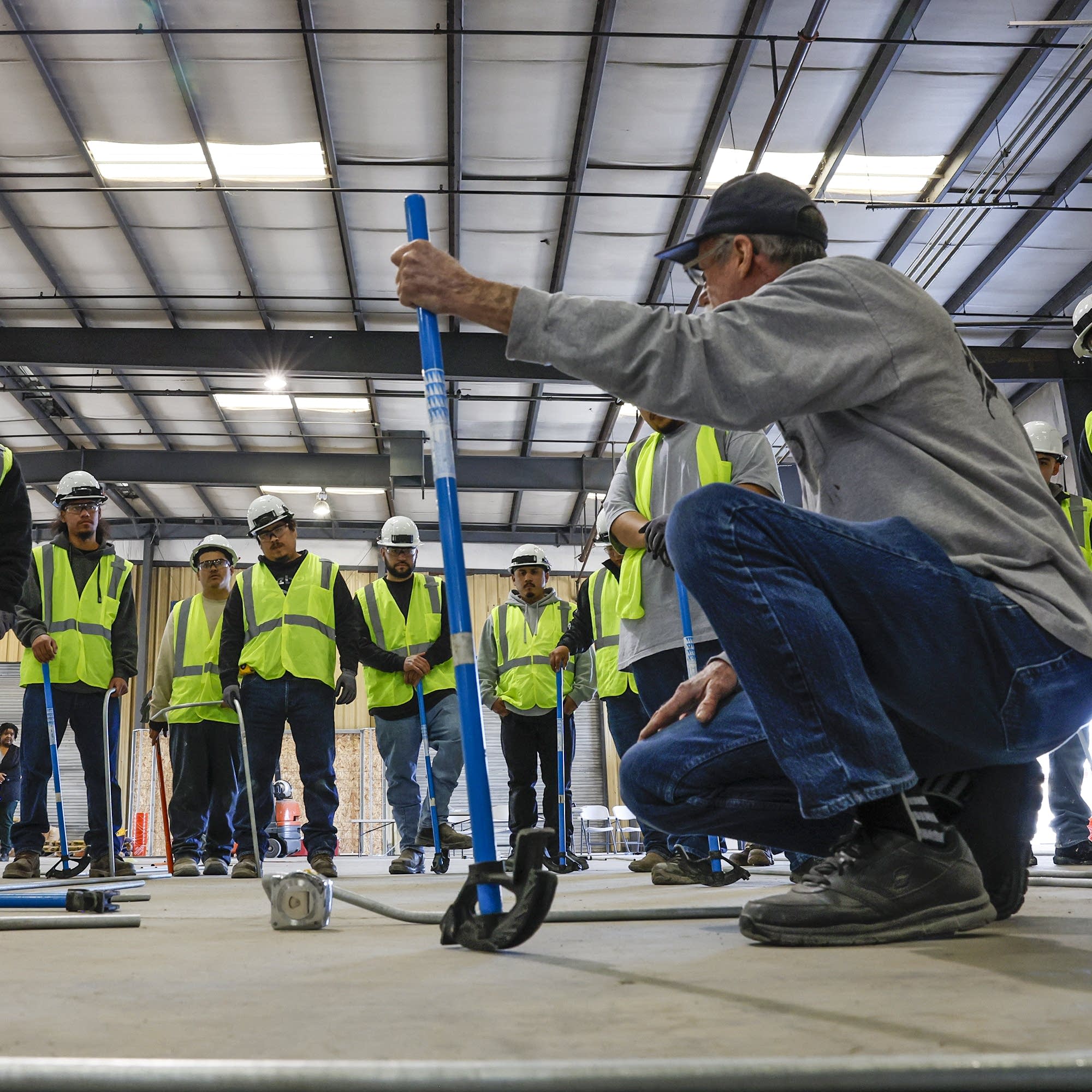
Listen on the KUOW app or wherever you get your podcasts. The Fight over Job Training for Younger People I'm David Brancaccio. In Los Angeles, a federal judge has stopped the Labor Department from halting operations at the federal Job Corps program, something the Trump administration was trying to do. A non profit sued to block the move and now a court has said that while the lawsuit plays out, that program has to stay open for business. Job Corps Tagline Careers Begin Here is a program founded in 1964 by President Johnson to give teenagers and young adults training in trades like construction or car repair marketplaces. Savannah Peters reports.
- [01:39]
Joshua McNichols
24 year old Ezekiel Wilbur of Omaha has had a rugged couple of years. He says a fight with a family member landed him in jail. Once he got out, he struggled to readjust and started using drugs. I was just rotting away in my bed every single day, high out of my mind.
- [01:55]
David Brancaccio
So I signed up to come to Job Corps because I thought of it.
- [01:58]
Joshua McNichols
As a way out. Wilbur has been living at the Pine Ridge Job Corps center in Chadron, Nebraska for six months now. He says he's sober. He's in an apprenticeship program for painting. He's actually calling from a job site. So right now we're working for an elderly woman in town, painting her house for minimum wage and racking up on the job hours he needs to graduate. But this Job Corps center is on the list targeted for closure. It would be devastating. I wouldn't have anywhere to go, wilbur says. He'd probably end up living out of his car in his old neighborhood. The Trump administration says costs for the residential Job Corps program are too high. It spends $80,000 a year on the average trainee because it's so intensive.
- [02:45]
David Brancaccio
It's also very expensive.
- [02:47]
Joshua McNichols
That's economist Bert Barno, who studies workforce training programs at George Washington University. Plus, he says research on the program's outcomes is mixed. Teenagers who go through the program don't seem to do better on the job market than their peers who don't. But the older people who go into.
- [03:06]
David Brancaccio
The job corps, typically 20 to 24, actually do have sustained earnings gains.
- [03:14]
Joshua McNichols
To make sure taxpayers are getting their money's worth, Barno says the Trump administration could narrow the job corps program's focus to those older students rather than scrapping it. Alfonso Flores lagunes with the W.E. upjohn Institute for Employment Research says the federal government doesn't have much else to offer this group. It is a very difficult population to serve, but I think that the worst option is just leaving them behind. If these centers shut their doors, that would also impact the communities that host them, particularly in rural areas. Jody Mitchell is with the Bitterroot Valley Chamber of Commerce in western Montana. The firefighting that they help with is the biggest piece, she says. Students at the nearby Trapper Creek Job Corps center help prevent and suppress wildfires, maintain hiking trails, crucial work that keeps the region's tourism economy afloat. I'm Savannah Peters for marketplace.
- [04:16]
David Brancaccio
The headline figure for economic growth in America has been revised sharply downward. It's for January to March. The winter gross domestic product fell five tenths of a percent. That's more shrinkage than first thought. Let's check in with Diane Swong, chief economist at the audit tax and advisory firm kpmg. Hello, Diane.
- [04:34]
Diane Swonk
Good morning.
- [04:35]
David Brancaccio
Do we have to talk about the third revision to the economic growth figure?
- [04:41]
Diane Swonk
Well, it is an important revision. It's a benchmark revision, and it was larger than many people expected to the downside, and that was mostly because we actually saw consumer spending come in much weaker in the first quarter than initially reported and inflation took higher. So even though we've seen really good inflation inflation numbers since then, that first quarter was a bit of a mess and a muddle. And part of it was much of the front running we saw in imports before tariffs.
- [05:10]
David Brancaccio
So even though this is the winter quarter, there was still planning for the possible tariffs that the incoming president was certainly telegraphing.
- [05:18]
Diane Swonk
Absolutely. And in fact, we saw imports pick up in the wake of the election at the end of 2024 from China in particular, because he had been clear what his stance was on the campaign trail and he wanted to make good on some of promises, which he did on tariffs. And I think that's important because we saw companies hedge against it in the first quarter and then, you know, the minute they got a waiver and a pause, you saw that activity resume. But it actually triggered some things reminiscent of the pandemic. All of a sudden, ships weren't where they were supposed to be and shipping rates in two days in June went up at their fastest two day rate on record because trying to get everything back into the right place again and get these orders that people hope to get before the the pause on tariffs. The most prohibited tariffs with China expired or lapsed in August is underway.
- [06:08]
David Brancaccio
Diane Swonk, chief economist, kpmg. Thank you.
- [06:11]
Diane Swonk
Thank you.
- [06:13]
David Brancaccio
Note that GDP measures money changing hands. Not necessarily. Well being not to be confused.
- [06:34]
Joshua McNichols
Hi, Zoe Saldana.
- [06:35]
David Brancaccio
Welcome to T Mobile.
- [06:36]
Joshua McNichols
Here's your new iPhone 16 Pro on us. Thanks. And here's my old phone to trade in. You don't need a trade in.
- [06:41]
David Brancaccio
When you switch to T Mobile.
- [06:42]
Joshua McNichols
We'll give you a new iPhone 16 Pro Plus.
- [06:45]
David Brancaccio
We'll help you pay off your old Phone up to 800 bucks and you still get to keep it.
- [06:49]
Joshua McNichols
There's always a trade in. Not right now. @ T Mobile. I feel like I have to give you something in return for karma.
- [06:54]
David Brancaccio
That's okay.
- [06:55]
Joshua McNichols
I don't really have much in my purse. Oh, let's see. Hand sanitizer. It's lavender. I'm good.
- [07:00]
David Brancaccio
Seriously.
- [07:01]
Joshua McNichols
Let me check this pocket. Oh, mints.
- [07:04]
David Brancaccio
Really, I'm fine.
- [07:05]
Joshua McNichols
Oh, I have raisins. I'm a mom.
- [07:07]
Diane Swonk
Wait, wait.
- [07:07]
Joshua McNichols
When? Zach, I've got cupcakes in the car.
- [07:09]
David Brancaccio
It's our best iPhone offer ever. Switch to T Mobile. Get a new iPhone 16 Pro with Apple intelligence on us. No trade in needed. We'll even pay off your phone up.
- [07:18]
Joshua McNichols
To 800 bucks with 24 monthly bill credits. New line 100 plus a month on experience beyond Finance Agreement 999.99 and qualifying ported for well qualified. Plus tax and $10 connection charge. Payout via virtual prepaid card. Allow 15 days credits and if you.
- [07:32]
David Brancaccio
Pay off earlier, cancel CT mobile.com cost of owning a home going in the wrong direction. A new report finds home ownership costs are uncomfortably high most places. Here's Marketplace's Mitchell Hartman. The cost of home ownership. That's the monthly mortgage payment. Property tax and insurance should take up no more than 28% of a typical family's income. But in the second quarter, Adam reports it ate up nearly 34%. And the unaffordability gap is getting wider. Since 2020, the cost of purchasing a home has risen 56% while average wages have risen less than half that much. All this, says economist Joe Bruceuelis at consulting firm rsm, unfortunately is impacting the ability of Americans, especially young Americans, to finance the purchase of their first home. As lower and middle income households continue to struggle financially, the rising cost of home ownership raises the risk that more of them will lose their homes, says Bruce Welles.
- [08:34]
Joshua McNichols
Down market, you see elevated interest rates.
- [08:36]
David Brancaccio
To purchase homes and what goes along with that? Higher levels of defaults. Some homeowners, who may be underwater because they bought late in the pandemic, decide to send the keys back to the.
- [08:48]
Joshua McNichols
Financiers and just get on with their lives.
- [08:50]
David Brancaccio
One warning sign, says Bruce Willis. Banks are increasing their loan loss reserves to cover rising mortgage defaults. I'm Mitchell Hartman for Marketplace. And I'm David Brancaccio. This is the Marketplace Morning Report from APM American Public Media.
- [09:06]
Joshua McNichols
This old house has been America's most trusted source for all things DIY and home improvement for decades. And now we're on the radio and on demand.
- [09:16]
David Brancaccio
I think you're breaking into this wall. Regardless. I was hoping you wouldn't say that.
- [09:20]
Diane Swonk
I need to go and get some whiskey.
- [09:22]
Joshua McNichols
I think I would get the whiskey for sure. Subscribe to this Old House Radio hour from LAS Studios. Wherever you get your podcasts.