← Marketplace Morning Report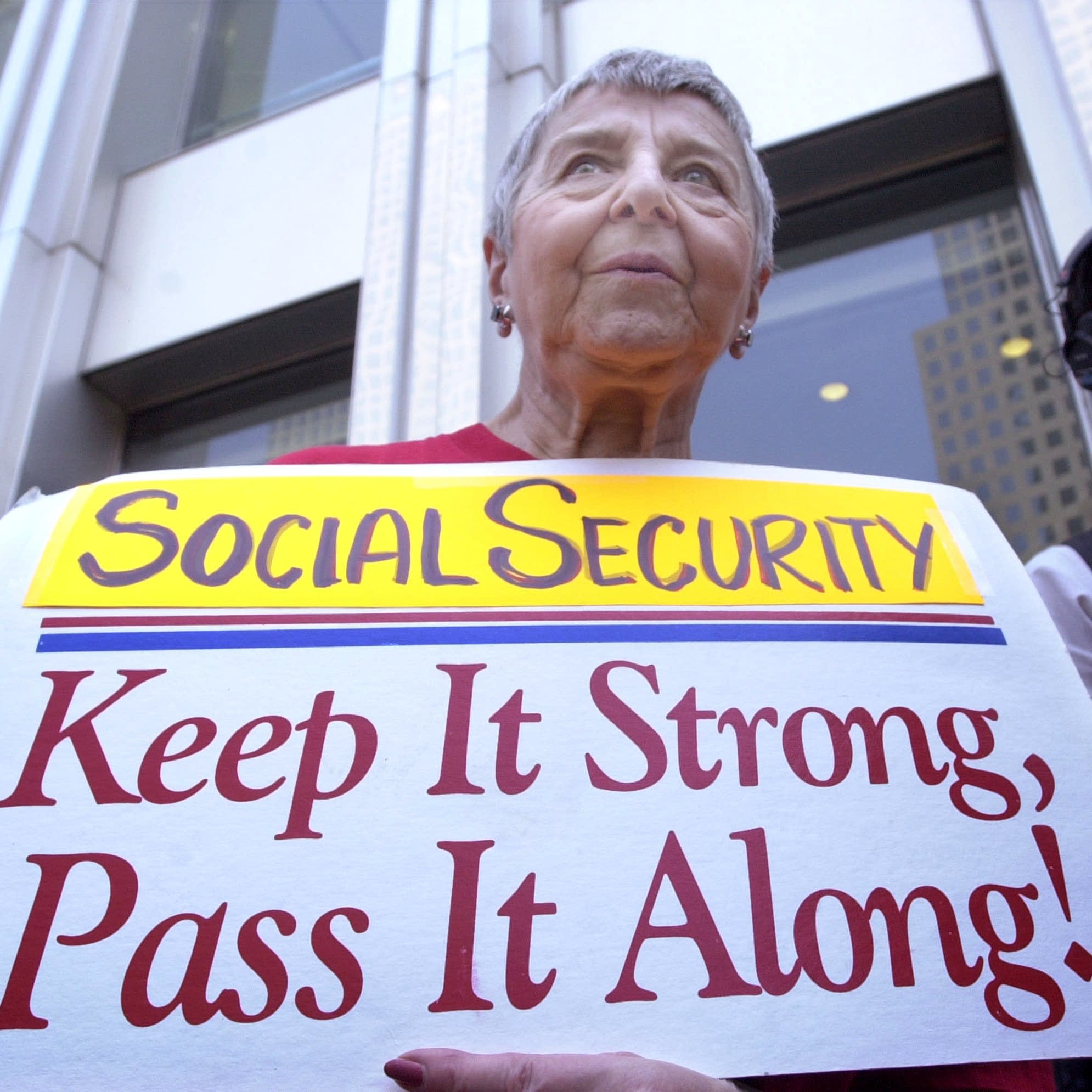
Loading summary
Transcript33 lines
- [00:02]
David Brancaccio
How to use tariffs to help pay for tax cuts and government spending. I'm David Brancaccio in Los Angeles. Gasoline prices are keeping overall inflation steady, we learned yesterday. But setting aside volatile food and fuel, the core rate of inflation went up 3/10 of a percent from June to July, the biggest jump in five months. The higher import taxes. Tariffs supplied by the Trump administration are part of that, economists tell us. At the same time, the tariffs are a moneymaker for the US Government. The nonpartisan committee Committee for a Responsible Federal Budget finds import taxes are bringing in billions of dollars in new revenue every month. Marketplace's Mitchell Hartman reports.
- [00:41]
Mitchell Hartman
President Trump crowed earlier this week that it's so beautiful to see all the new revenue coming in from his tariffs. Mark Goldwine is at the Committee for a Responsible Federal Budget.
- [00:52]
Mark Goldwine
These tariffs are becoming big revenue generators.
- [00:56]
Mitchell Hartman
Before Trump's second term, tariffs brought in about 7 billion a month. That could soon hit 40 to 50 billion over the next 10 years. If tariff rates and revenues hold steady, which is by no means certain, Goldwine predicts federal deficits will be $2.8 trillion lower.
- [01:14]
Mark Goldwine
Not enough to pay for the one big beautiful bill, not enough to move our budget towards balance. But tariffs may start raising more than the corporate income tax.
- [01:23]
Mitchell Hartman
Still, there are a lot of variables at play.
- [01:26]
Mark Goldwine
The revenue effects. They are the least certain aspect of the whole tariff debate.
- [01:32]
Mitchell Hartman
Bill Gale at the Urban Brookings Tax Policy center says tariff collections could decline as the administration negotiates new trade deals and importers shift to lower tariff countries. Also, it's not clear what the administration plans to do with the new money.
- [01:48]
Mark Goldwine
There's discussion that they want to rebate the revenue to individuals. If they rebate it, then it's not cutting the deficit.
- [01:55]
Mitchell Hartman
Most economists predict the tariffs will lead to slower growth and lower incomes for individuals and businesses, cutting into government tax revenues from other sources. I'm Mitchell Hartman for Marketplace.
- [02:08]
David Brancaccio
And even with that tariff revenue up, the federal budget Deficit is up 20% year over year, according to new Treasury Department data. Tomorrow, Social Security becomes a nonagenarian. It's the 90th anniversary of the Social Security act, which ushered in more universal retirement security in America. Without changes, the program will no longer be able to pay full benefits. There's a turning point projected for eight years from now. Marketplaces NovaSafo has more.
- [02:36]
Nova Safo
Before Social Security, America had literal poor houses, places where people who could no longer work could find shelter and food. Then, at the height of the Great Depression in 1935, President Franklin D. Roosevelt signed the Social Security act. Into law.
- [02:53]
David Brancaccio
We can never insure 100% of the population against 100% of the hazards and vicissitudes of life. But we have tried to frame a law which will give some measure of protection.
- [03:06]
Nova Safo
Today, 74 million people are getting Social Security benefits.
- [03:11]
Mark Goldwine
Social Security is incredibly popular.
- [03:13]
Nova Safo
Bill Sweeney of AARP says 96% of Americans approve of the program. In a new survey, AARP found that the number of people who said they significantly rely on Social Security payments went up to 65% compared to 58% a decade ago.
- [03:29]
Mark Goldwine
We have a crisis around saving for retirement. Many people get to retirement age, they just don't have enough money saved. They don't have. A lot of people don't have any money saved.
- [03:39]
Nova Safo
In fact, about 40% of Americans have no retirement savings at all, according to a recent Gallup poll. The problem for them and everyone else is that Social Security is facing the real threat of having to cut benefits.
- [03:52]
Mark Goldwine
Right now, the system is taking in less money in tax revenue each year than it needs to pay full benefits.
- [03:59]
Nova Safo
Andrew Eschtruth is the director of the center for Retirement Research at Boston College. To pay out more than it takes in, Social Security has been dipping into its savings, known as the trust fund.
- [04:09]
Mark Goldwine
That trust fund reserve is expected to be depleted for the retirement part of Social Security in 2033, and when that.
- [04:16]
Nova Safo
Happens, retirees could see their benefits cut by about 20%. This problem has come up before the in the early 1980s, Social Security was just months away from having to cut benefits when President Ronald Reagan signed into law a bunch of reforms.
- [04:32]
David Brancaccio
We're entering an age when average Americans.
- [04:34]
Nova Safo
Will live longer and live more productive lives, and these amendments adjust to that progress.
- [04:40]
Katie Silver
It's not something where you can't imagine a fix.
- [04:43]
Nova Safo
Kathlyn Romig is director of Social Security and disability policy at the center on Budget and Policy Priorities.
- [04:50]
Katie Silver
Because it's just something where people are going to have to do something that maybe they wouldn't prefer to do. So contribute more to the system through their payroll tax contributions or get a benefit cut.
- [05:01]
Nova Safo
Romig says polling consistently shows that people would rather pay more than take cuts. I'm Nova Safo for Marketplace.
- [05:34]
David Brancaccio
On the bet that yesterday's inflation report was tame enough to still allow the Federal Reserve to cut interest rates in September, stock indicators hit new all time highs. The S and p went up 1.1% to a record. Also, it's the highest close for the Nasdaq on a jump of 1.4%. Lower interest rates decrease the cost of borrowing for companies and can boost consumer activity as well as making stocks look more attractive than bonds. This morning, Dow S&P and NASDAQ futures are all up in the two to three tenths of a percent range. The benchmark ten year interest rate is down 4.25% to counteract especially high US tariffs. Brazilians. Brazil's President Luis Inacio Lula da Silva has announced a $5 billion package of help for especially smaller companies there. The BBC's Katie Silver reports now exactly.
- [06:23]
Katie Silver
How they'll fund this is unclear, but they have pledged to match that 50% tariff rate that Washington has put on. So that will generate some revenue. Potentially they might use some of that revenue towards this funding. There has also been a report in recent weeks that the government was thinking about shifting some of the money that is managed State Development bank into supporting local firms that will be hit by the tariffs. There's a big plan that we're expecting to be announced by Brasilia later today.
- [06:52]
David Brancaccio
Katie Silver is with our newsroom partners, the BBC in Los Angeles. I'm David Brancaccio. This is the Marketplace Morning report.
- [07:04]
Mark Goldwine
From.
- [07:05]
David Brancaccio
APM American Public Media.