← Marketplace Morning Report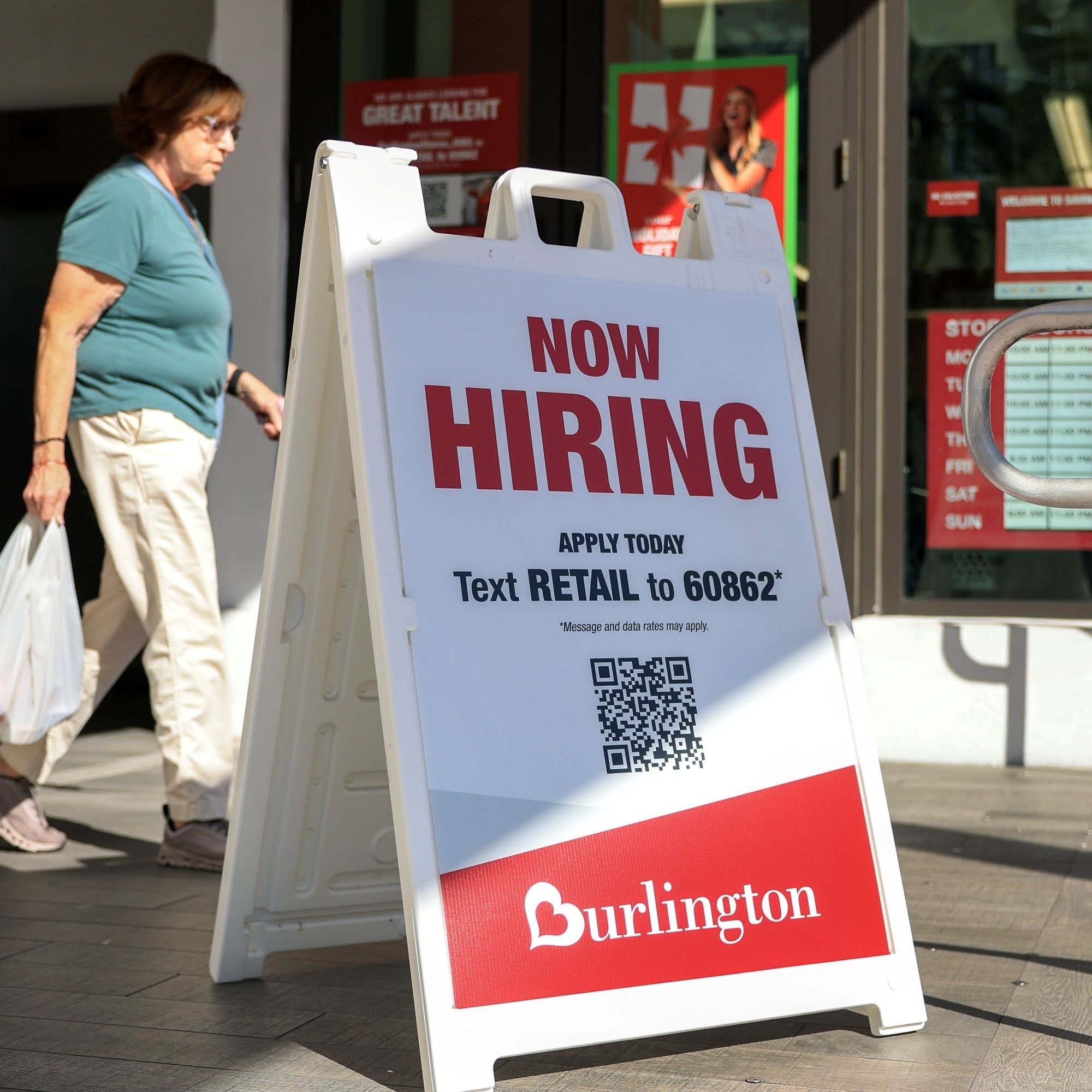
Loading summary
Transcript65 lines
- [00:01]
Sabri Benishore
Lifelock. How can I help?
- [00:02]
Caller/Customer
The IRS said I filed my return, but I haven't.
- [00:05]
LifeLock Announcer
One in four taxpaying Americans has paid the price of identity fraud.
- [00:08]
Caller/Customer
What do I do?
- [00:09]
Eric Gordon
My refund, though.
- [00:10]
Caller/Customer
I'm freaking out.
- [00:11]
Sabri Benishore
Don't worry, I can fix this.
- [00:12]
LifeLock Announcer
LifeLock fixes identity theft, guaranteed, and gets your money back with up to $3 million in coverage.
- [00:18]
Caller/Customer
I'm so relieved. No problem.
- [00:19]
Sabri Benishore
I'll be with you every step of the way.
- [00:21]
LifeLock Announcer
One in four was a fraud. Paying American. Not anymore. Save up to 40% your first year. Visit lifelock.com Specialoffer terms apply.
- [00:30]
Mackenzie
My name is Mackenzie and I started a GoFundMe for the adoptive mother of a non verbal autistic child. The mother had lost her job because she wasn't able to find adequate care for this autistic child. So she really needed some help with living expenses, paying some back bills. So I launched a GoFundMe to help support them during this crisis. And we raised about $10,000 within just a couple of months. I think that the surprising thing was by telling a clear story and just like really being very clear about what we needed, we had some really generous donations from people who were really moved by the situation that this family was struggling with.
- [01:17]
Sabri Benishore
GoFundMe is the world's number one fundraising platform, trusted by over 200 million people. Start your GoFundMe today at gofundme.com that's gofundme.com gofundme.com this podcast is supported by GoFundMe. The unemployment rate fell in March. There is, though, a catch or two from Marketplace. I'm Sabri Ben, ashore in for David Brancaccio. The US economy added 178,000 new jobs in March and the unemployment rate came down to 4.3%. This is pretty positive, but there is more than meets the eye to these numbers. Christopher Lowe is chief economist, FHN Financial in New York. He's here to go through it with us. Hi, Chris.
- [01:59]
Christopher Lowe
Good morning, Sabri.
- [02:01]
Sabri Benishore
So, unemployment rate down, jobs up. Do we feel good about that?
- [02:05]
Christopher Lowe
You know, you have to feel good about it, right? It's the best job growth we've seen in over a year. And the unemployment rate dropping back to about four and a quarter percent, which is also something we haven't seen in months. So, yeah, it's a good, healthy job market.
- [02:27]
Sabri Benishore
4.3% unemployment rate coming down. Is that because the labor market is heating up or more people are getting jobs? What is that about?
- [02:36]
Christopher Lowe
You know, I wish I could say it was There was a lot of weird stuff going on in the quarter. And the biggest thing was that ice storm that locked in the south through the end of January, early February. Because of that, job growth was probably a little overstated in March. The drop in the unemployment rate is primarily because there's fewer people in the labor force either working or looking for jobs. It's a direct reflection of the lack of immigration in the last year or so. Workers are getting harder to find.
- [03:15]
Sabri Benishore
Paychecks are up 3 1/2% year over year. That's faster than inflation. Should we feel good about that?
- [03:23]
Christopher Lowe
Yeah, absolutely. Look, anytime wage growth is outstripping inflation, that's a good thing because it does mean the affordability crisis post pandemic is still receding. But it's also the slowest wage growth in the cycle so far. So this is sort of the flip side of the declining unemployment rate. The declining unemployment rate tells you the job market's getting tighter, but the fact that wage growth is slowing, that tells you that at least for now, you know there is no shortage of labor. Because if there was, then companies would be paying up.
- [04:07]
Sabri Benishore
Christopher Lowe, chief economist at FHN Financial, thank you so much.
- [04:11]
Christopher Lowe
Thank you, Sabri.
- [04:13]
Sabri Benishore
President Trump has signed an executive order threatening new tariffs on imported prescription drugs, possibly as high as 100%. Many companies will be able to avoid the highest tariffs by cooperating on a plan to lower drug prices or by breaking ground on building new production facilities in the US.
- [04:48]
Dell Announcer
Dell PCs with Intel inside are built for the moments that matter. For the moments you plan and the ones you don't. Built for the busy days that turn into all night study sessions. The moment you're working from a cafe and realize every outlet's taken. The times you're deep in your flow and the absolute last thing you need is an auto update throwing off your momentum. That's why Dell builds tech that adapts to the way you actually work. Built with long lasting battery so you're not scrambling for the closest outlet. And built in intelligence that makes updates around your schedule, not in the middle of it. They don't build tech for tech's sake, they build it for you. Find technology built for the way you work@dell.com Dell PCs built for you.
- [05:41]
Sabri Benishore
LifeLock. How can I help?
- [05:43]
Caller/Customer
The IRS said I filed my return, but I haven't.
- [05:45]
LifeLock Announcer
One in four tax paying Americans has paid the price of identity fraud.
- [05:49]
Caller/Customer
What do I do?
- [05:50]
Eric Gordon
My refund though.
- [05:51]
Caller/Customer
I'm freaking out.
- [05:51]
Sabri Benishore
Don't worry, I can fix this.
- [05:53]
LifeLock Announcer
LifeLock fixes identity theft guaranteed and Gets your money back with up to $3 million in coverage.
- [05:58]
Caller/Customer
I'm so relieved. No problem.
- [06:00]
Sabri Benishore
I'll be with you every step of the way.
- [06:02]
LifeLock Announcer
One in four was a fraud. Paying American. Not anymore. Save up to 40% your first year. Visit lifelock.com Special offer terms apply Elon
- [06:12]
Sabri Benishore
Musk's SpaceX has filed the early paperwork for an initial public offering of its stock, likely to be the biggest ever. Bloomberg says the company could be valued at $2 trillion. This is as blockbuster as it gets for IPOs, but this one is a little different for more reasons than that. Eric Gordon joins us to talk about it. He's a professor at the University of Michigan's Ross School of Business. Eric, good morning.
- [06:35]
Eric Gordon
Good morning, Sabri.
- [06:37]
Sabri Benishore
Let's talk about insiders. Not everyone gets to invest in an ipo. Who gets to invest in this one?
- [06:44]
Eric Gordon
It's sort of the privileged few. It's mostly the big institutions, the big professional traders. But then they often set aside a smaller amount for, for individuals, people maybe like you and I, who are lucky enough to get the shares at the insider price and maybe make a lot of money the first day if the stock price pops up.
- [07:09]
Sabri Benishore
How do we do that?
- [07:11]
Eric Gordon
Maybe you were an early investor in the company, maybe you're an employee at the company, maybe you're a supplier to the company, or maybe you're a really important client of, of a stockbroker who wants to keep your business, so they allocate you a few shares.
- [07:29]
Sabri Benishore
Elon Musk says he wants to allow more of these individual investors to invest.
- [07:36]
Eric Gordon
Yeah, Elon says he wants to have a higher percentage of individual shareholders. You know, it's usually 5 or 10%. He's talking in the 30% range. And there's a reason the individual shareholders are like his fans. They support him. They supported his trillion dollar pay package at Tesla. The big institutional professional shareholders don't always vote the way he wants them to. So it's to his advantage to have more individual investors.
- [08:07]
Sabri Benishore
According to Bloomberg, SpaceX is proposing that it be valued at $2 trillion. Its main revenue comes from launching stuff into space and then also its Starlink satellites. That all brings in $20 billion a year. Why would it be worth 2 trillion?
- [08:26]
Eric Gordon
The only way the company is worth $2 trillion is that you're betting on a very different future. You're betting that it's going to be a combination rocket company, AI company, company that has data centers floating in space. You're betting on a future driven by Musk's creativity. Musk's mania and Musk's vision of a future that is very different. Launching rockets once in a while.
- [08:57]
Sabri Benishore
Eric Gordon, professor at the University of Michigan's Ross School of Business, thank you so much.
- [09:02]
Eric Gordon
My pleasure, Sabri.
- [09:03]
Sabri Benishore
This weekend, millions of Americans will tune in for the March Madness Final Four, and many of them are placing bets on which college basketball team will come out on top. And with the rise of prediction markets, you can do that very easily. And not just for sports. Also elections, cultural events, natural disasters. Rima Krais over at Marketplaces podcast this is uncomfortable. Took a look at what happens to our brains and our wallets when you can place a wager on practically anything.
- [09:29]
Caller/Customer
Tim Fong is very busy these days, and he doesn't see things calming down anytime soon. He's a psychiatrist and co director of the UCLA Gambling Studies Program. And lately, more patients are walking into his office with online gambling problems.
- [09:42]
Tim Fong
It's not just one app, it's multiple apps. It's cryptocurrency, it's meme coin, it's stocks, and, of course, sports betting leading the package.
- [09:53]
Caller/Customer
Many of his patients are college students. He says one of them recently drained his entire college savings, a couple hundred thousand dollars.
- [10:00]
Tim Fong
And the fascinating thing about this young man never set foot inside a brick and mortar casino. Everything's on his phone.
- [10:07]
Caller/Customer
Sports betting is now legal in most states, and companies have poured hundreds of millions of dollars into ads, dangling signup bonuses and recruiting celebrities to promote it. And financial planner Hannah Horvath says all of this is happening as more young people are feeling shut out of traditional paths to wealth.
- [10:23]
Hannah Horvath
The kind of quote unquote, American dream is sort of breaking down. Like, how could I possibly buy a home, be able to afford having a family? And then they're also going online and seeing people that are claiming to make all this money doing these alternative, you know, paths to wealth.
- [10:37]
Caller/Customer
Horvath says as gambling becomes more normalized, it changes how often we take risks and even how we experience money.
- [10:44]
Hannah Horvath
If you're sports betting, you're going through up and down a couple hundred dollars that does rewire your relationship to, like, what money means to you. And I there's this perception of, like, okay, Well, I lost $200. I'll just gain it back. And that kind of rewires how you think about, you know, the value of a dollar.
- [11:01]
Caller/Customer
Psychiatrist Tim Fong says the uncertainty baked into gambling is what can make it so addictive when you win. It triggers the same neurochemicals tied to reward and attention.
- [11:10]
Tim Fong
And even for some folks, the near miss. The almost winning is as exciting as neurobiologically rewarding.
- [11:21]
Caller/Customer
And with the rise of prediction markets, platforms where you can wager on everything from elections to military action, Fong says it can change how we relate to one another.
- [11:29]
Tim Fong
It dehumanizes people. It actually makes us feel more like Roman gladiator times, right? You just become desensitized over time, right? You're like, eh, whatever, that's no big deal. But so you lose empathy and compassion.
- [11:43]
Caller/Customer
As I see it, he says, turning every corner of life into an opportunity to gamble might feel exciting, but that's what makes it so dystopian. I'm Maria Grais for Marketplace.
- [11:55]
Sabri Benishore
We are here at Marketplace to help you stay informed about the economy, and you can put that knowledge to the test. Every Friday we publish a news quiz. You can find it at marketplace.org Quiz in New York, I'm Sabri Benishore with the Marketplace Morning Report.
- [12:14]
Caller/Customer
Foreign.
- [12:20]
Sabri Benishore
Public Media
- [12:23]
Caller/Customer
Why do we keep putting off the financial tasks we know we need to do? I'm Maria, and this week on my podcast this Is Uncomfortable, I talk with a behavioral expert about commitment devices, the tricks we can use to force ourselves to follow through. The most extreme form of commitment device is literally saying you're going to fine yourself. Like I'm going to have to give $50 to a politician's campaign who I hate if I haven't done this by next Friday. Listen to this Is Uncomfortable. Wherever you get your podcast.