Loading summary
Transcript34 lines
- [00:01]
Marketplace Host
You can turn to Marketplace to hear from powerful leaders and everyday people about the economy and their role in it. Now we hope we can turn to you. Marketplace is facing real threats and challenges as we plan for the future. As a public media program, donations from you are an important part of our budget. Here's one action you can take right now that will have a long lasting impact. Start a monthly donation to support. Five bucks a month is a great place to start. Head to marketplace.org donate and thank you.
- [00:35]
GoFundMe Advertiser
Imagine if today was the day your idea changed someone's life. Imagine if you could help someone pay for college, help your community build a new playground or help a child make it to that dream competition with GoFundMe. It's all possible. GoFundMe is the world's number one fundraising platform trusted by over 190 million people. And every week ordinary people meet their goals and do extraordinary things. Your ideas matter. GoFundMe isn't just for emergencies. Want to raise money for your kid's soccer team or raise funds for a small business, a creative project or event? GoFundMe helps you turn ideas into reality and help adds up. Fundraisers you start for someone else raise up to five times more. So think right now. Who could use your help? Change rarely comes from waiting. It comes from someone deciding, today I'll start. Don't wait for someone else to bring change today. Start your fundraiser in just minutes@gofundme.com that's gofundme.com to start your fundraiser. Gofundme.com this is a commercial message brought to you by GoFundMe.
- [01:37]
David Brancaccio
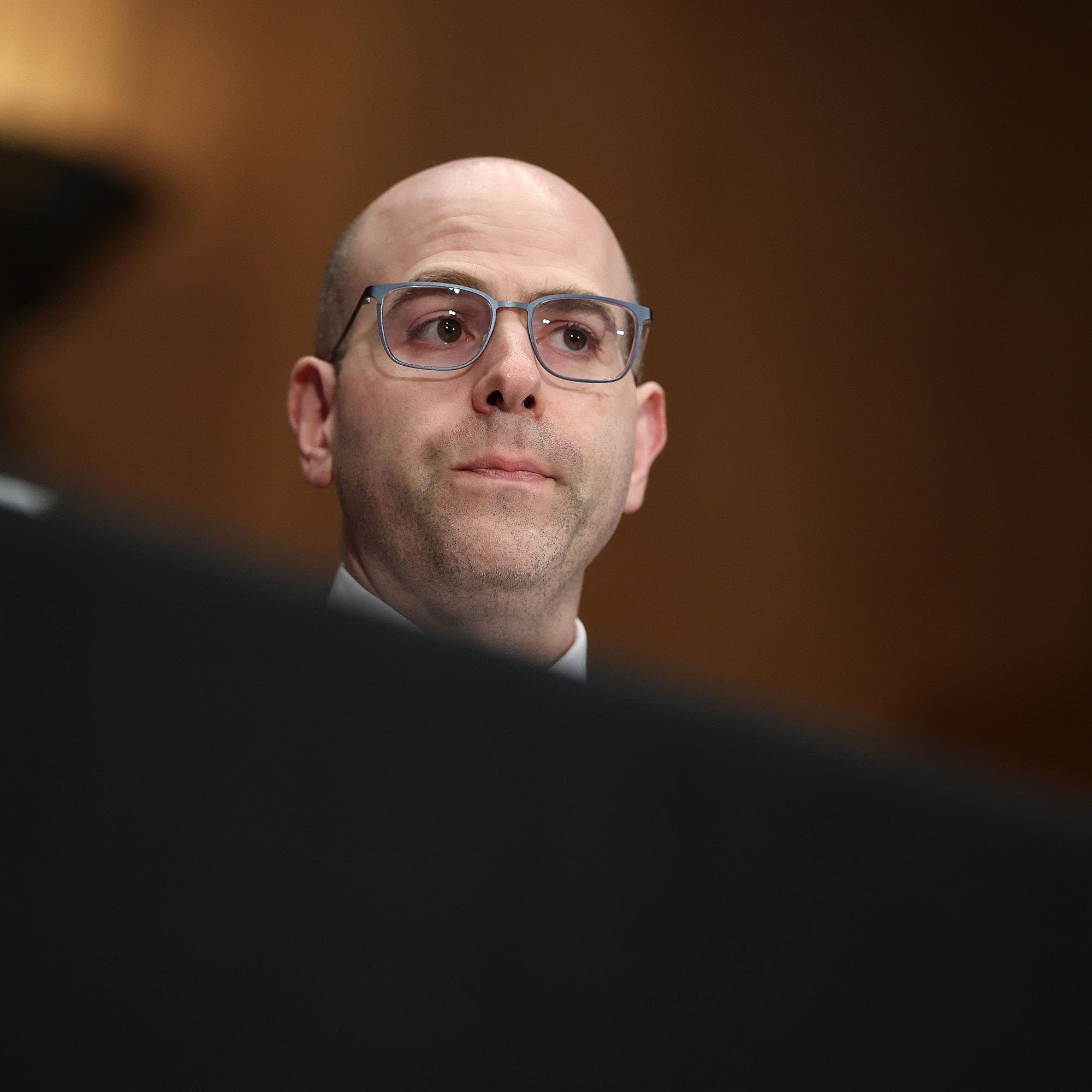
We've now heard from one of the most powerful economic policymakers in the country, the newest member of the Federal Reserve Board of Governors, close ally of President Trump. Stephen Myron made his case for more and larger interest rate cuts in speech yesterday. Last week, the Fed lowered interest rates by a quarter of a percentage point. Myron wanted a bigger half point cut. Marketplace Nancy Marshall Genzer has more on his thinking.
- [02:02]
Nancy Marshall Genzer
Stephen Myron says President Trump's policies are going to push prices down so the Fed doesn't have to worry that lowering interest rates will spark inflation. Speaking at the Economic Club of New York, Myron said, for example, with immigrants leaving the country, there will be more housing available and rents will fall.
- [02:20]
Stephen Myron
I believe forecasters have underappreciated the significant impact of immigration policy on rent inflation.
- [02:26]
Nancy Marshall Genzer
Myron also says deregulation will lower companies costs and there are, quote, unreasonable levels of concern at the Fed about the inflationary effects of President Trump's tariffs.
- [02:37]
Stephen Myron
The upshot is that monetary policy is well into restrictive territory, leaving short term interest rates roughly 2 percentage points too tight, risks unnecessary layoffs and higher unemployment.
- [02:47]
Nancy Marshall Genzer
But Fitch Ratings economist Olu Sinola doesn't buy Myron's arguments. He says there's still a lot of uncertainty around tariffs and the total number of immigrants leaving the country. And Sonola doesn't think Myron will be able to convince other Fed officials to follow his lead.
- [03:03]
Stephen Myron
They have their own staff and their staff, you know, they go out there, they talk to people, they talk to businesses. My sense is that that carries a.
- [03:12]
Nancy Marshall Genzer
Lot more weight, sonola says. It doesn't help that Myron is only supposed to be at the Fed temporarily through January. I'm Nancy Marshall Genser for Marketplace Artificial.
- [03:23]
David Brancaccio
Intelligence hardware maker Nvidia plans to put $100 billion into software maker OpenAI. The boss there, Sam Altman, says the tie up will help build a vast pool of data that would form the basis of the economy of the future. The BBC's Aaron Delmore is in New York.
- [03:40]
Aaron Delmore
It's a blockbuster deal, and it's a credit to the demand for new AI technology like OpenAI's ChatGPT. While OpenAI makes the artificial intelligence chatbot, Nvidia makes the high powered chips that enable its use. Nvidia makes specialized processors or chips that are used for large language models like ChatGPT, and that's what lets the technology process data and execute tasks. So a deal like this brings the two technology giants closer together. Nvidia reportedly is receiving a stake in OpenAI as part of the deal.
- [04:09]
Stephen Myron
Foreign.
- [04:30]
Dell Advertiser
This Marketplace podcast is supported by Dell. Huge savings DELL AI PCs are here and it's a big deal.
- [04:37]
Nancy Marshall Genzer
Why?
- [04:38]
Dell Advertiser
Why? Because Dell AI PCs with Intel Core Ultra processors are newly designed to help you do more faster. It's pretty amazing what they can do in a day's work. They can generate code, edit images, multitask without lag, draft emails, summarize documents, create live translations. They can even extend your battery life so you never have to worry about forgetting your charger. It's like having a personal assistant built right into your PC to cover the menial tasks so so you can focus on what matters. That's the power of Dell AI with Intel inside with deals on Dell AI PCs like the Dell 16 plus starting at 749.99, it's the perfect time to refresh your tech and take back your time. Upgrade your AI PC today by visiting Dell.com deals. That's Dell.com deals.
- [05:33]
David Brancaccio
We continue to follow the Trump administration's abrupt change in skilled visa policy. New H1B visas, often for engineers and people from other specialized fields, now cost $100,000. The White House says it's to push companies to hire Americans first. Note that it's typically companies that'll pay the 100k easier for deep pocketed established firms and harder for smaller startups. Eric Gordon has been thinking about this. He's a professor at the University of Michigan's Ross School of Business. Hey, Eric.
- [06:02]
Eric Gordon
Hello, David.
- [06:03]
David Brancaccio
You've been thinking about how the new rule on the skilled visas percolates into industry. People should understand it's not necessarily an applicant somewhere in the world paying the six figure new fee. It would often be what you think. The companies.
- [06:20]
Eric Gordon
Yeah, the companies put up the money. And big companies that can afford $100,000 a lot more than the smaller companies can afford it will get a new advantage.
- [06:30]
David Brancaccio
So you've been doing the math here in your head. And if you're giant, this extra fee may not be welcome. But you can easily digest it, you.
- [06:41]
Eric Gordon
Can easily pay it. And if you're one of the big tech companies, you have an other out. You probably have offices outside the US where you can hire workers instead of bringing them to the U.S. small companies don't have offices outside the U.S. they don't have offices in India or Canada. They have to import people if they can't find US workers with the right skills.
- [07:05]
David Brancaccio
So I'm hearing from you here a concern that this tilts the playing field in favor of the incumbents. The big getting a new advantage.
- [07:15]
Eric Gordon
I talked to a couple of people at smaller mid sized companies, the kind of companies that are funded by venture capital, and they're very worried. They don't have $100,000 per worker and they don't have an office in Bangalore.
- [07:30]
David Brancaccio
All right, so hire some US based workers with nice shiny engineering degrees to do the work.
- [07:40]
Eric Gordon
That's what you're supposed to do. You're supposed to do that instead of using H1BS. Unless you can't find those workers. And in a lot of engineering and tech fields, you really can't find enough of those workers here.
- [07:53]
David Brancaccio
I mean, I've seen the statistics. I mean, there is a mismatch between the number of people coming out of STEM programs and what US industry needs. For instance, I saw the figures for the microchip industry.
- [08:06]
Eric Gordon
Yeah, it's really tough. We do not have enough homegrown STEM students, especially at the graduate level. And it's something that we've been solving with a bandaid, the H1BS. But maybe we need to rethink a few other things so that we produce.
- [08:21]
David Brancaccio
More folks here we talk about being a country that embraces entrepreneurship. We talk about being a country that wants to look out for smaller businesses. But you see a policy here that seems to be cutting in a different direction.
- [08:38]
Eric Gordon
Every politician during an election year runs around telling audiences that small businesses are the backbone of America and that they support small businesses. Maybe not so much.
- [08:52]
David Brancaccio
Eric Gordon teaches at the University of Michigan's Ross School of Business. He's also an attorney who teaches in the law school. Eric, thank you very much.
- [09:00]
Eric Gordon
My pleasure, David.
- [09:01]
David Brancaccio
Our producers are Tamar Fagan, Ariana Rosas, and Erica Soderstrom. Our senior producer is Alex Schroeder. Our supervising senior producer is Meredith Garrettson. Morby. You're listening to the Marketplace Morning report from APM American Public Media.
- [09:17]
Wix Advertiser
How many times have you wished you could be in two places at once? With wix, you practically can. Wix's website builder is packed with powerful AI tools to make running your business online easier. Build a full site just by talking with AI, get an AI agent to manage your sales and marketing, or work like a 10 person team, even if it's just you. So you don't need superpowers to get everything done. You just need Wix. Try it out for yourself@wix.com.