← Marketplace Morning Report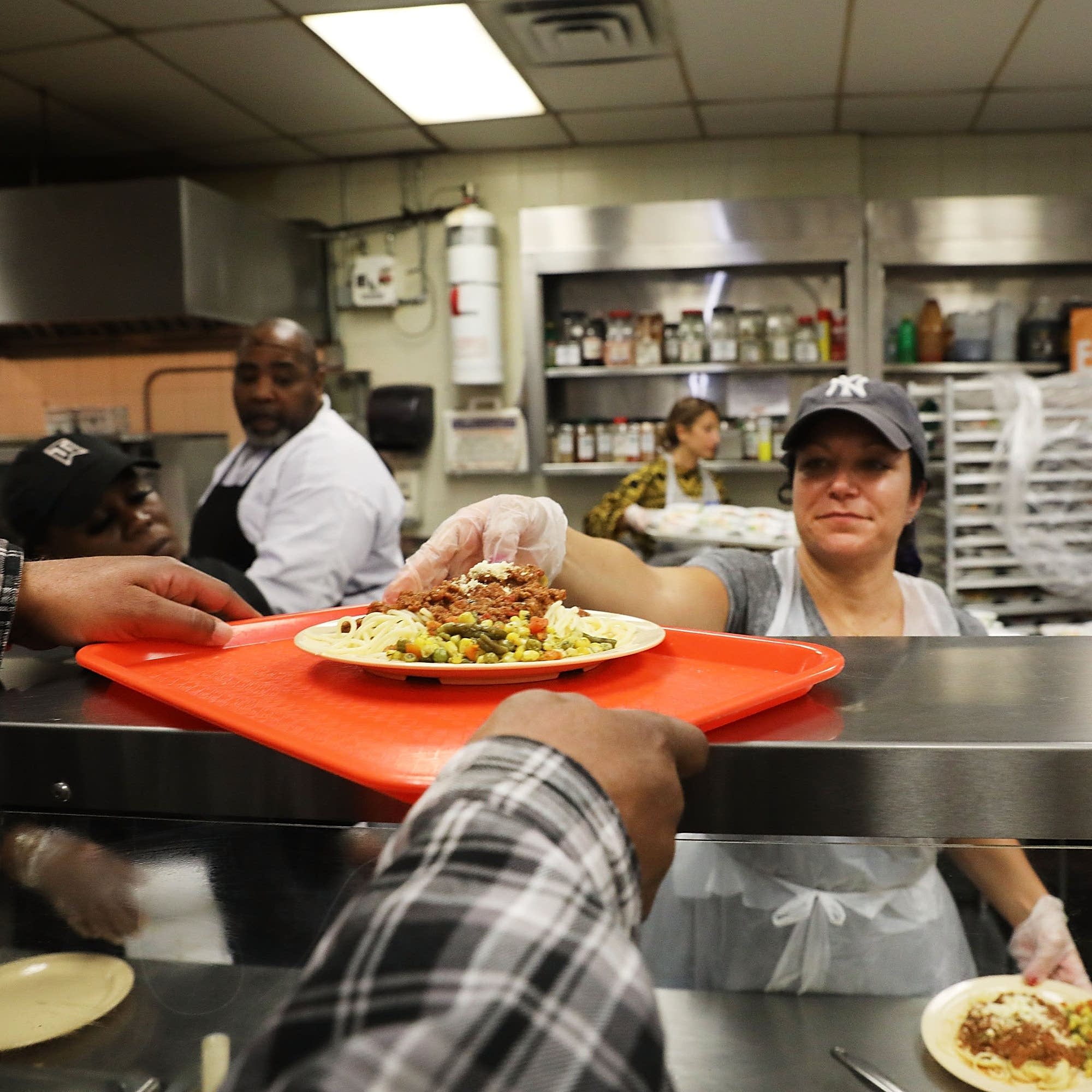
Loading summary
Transcript25 lines
- [00:01]
A
You can turn to Marketplace to hear from powerful leaders and everyday people about the economy and their role in it. Now we hope we can turn to you. Marketplace is facing real threats and challenges as we plan for the future. As a public media program, donations from you are an important part of our budget. Here's one action you can take right now that will have a long lasting impact. Start a monthly donation to support our work. Five bucks a month is a great place to start. Head to marketplace.org donate and thank you.
- [00:35]
B
This podcast is supported by Odoo.
- [00:37]
A
Some say Odoo business management software is.
- [00:39]
B
Like fertilizer for businesses because the simple, efficient software promotes growth. Others say Odoo is like a magic beanstalk because it scales with you and is magically affordable.
- [00:49]
A
And some describe Odoo's programs for manufacturing.
- [00:51]
B
Accounting and more and more as building blocks for creating a custom software suite.
- [00:55]
A
So Odoo is Fertilizer Magic Beanstalk building.
- [00:58]
B
Blocks for business Odoo exactly what businesses need. Sign up@odoo.com that's o d o o.com is there less hunger in America if we stop tracking hunger? I'm David Brancaccio in Los Angeles. Every fall for about three decades, the U.S. department of Agriculture comes out with a report assessing food security in households around the country. In about a month we'll get the latest, but the Trump administration indicates this will be the last. Marketplace's Carla Javier reports.
- [01:30]
A
To prepare the report, the Census Bureau asked some 30,000 people questions about food, hunger and money. Their answers are broken down by household income, state, whether the individual used government food assistance. The USDA says it's terminating these reports because they are, quote, redundant, costly, politicized and extraneous. You know, I'm really shocked by this. That's Colleen Heflin, who researches economic measures of well being at Syracuse University. I don't think it uses any adjectives at all. It's a very dry read. Purposefully. It's not a political document. It doesn't give any policy recommendations. It is just the facts as good federal statistics should be. Heflin says researchers have used the report. So have food security organizations on the ground. Minerva Delgado's with the alliance to End Hunger. They may take their state data and advocate with their congressional offices, or they may be looking at specific populations, she says. There aren't many other data sets that study food security and insecurity in as much depth. I think it's going to make it harder all around to really measure what the impacts of the policies of this particular administration are. A USDA spokesperson pointed us to the department's original announcement of the end of the report. I'm Carla Javier for Marketplace.
- [02:54]
B
Yesterday the Nasdaq closed down a vivid 1%, a contrast to the string of recent highs. It was in part due to a warning to market players that they should not have needed. The Federal Reserve chief saying while interest rates might go down more this year, they also might not. Susan Schmidt is at Exchange Capital Resources.
- [03:14]
A
Just caution. Don't expect this to be a sure thing. Chairman Powell is wisely trying to remind everyone that nothing is set in stone. And then it still all depends on economic data that's rolling in and how inflation looks.
- [03:28]
B
I know, because inflation is not dead. Prices are still going up. We're not at the central bank's target of 2%. And you know, you may want lower interest rates, but you don't want higher inflation.
- [03:39]
A
That's right. We want lower interest rates because it's good for the labor market. But we are still looking out for inflation. Unfortunately, it is creeping up month over month, and Chairman Powell is just trying to put out a word of caution and keep the market from getting ahead of itself. The market has had a spectacular year thus far. When you look back, we're up 17% on the NASDAQ 100. That QQQ ETF and the S&P 500 is up 13% year to date. Not bad. A lot of volatility, but definitely not bad.
- [04:09]
B
Susan Schmidt, the QQQ fund is popular with many investors, attracts the top 100 cream of the crop companies in the NASDAQ index. And here is how the world works after President Trump abruptly switched course yesterday, saying Ukraine could retake all of the territory it lost to Russia. With NATO's help, stocks in European military hardware companies are jumping up this morning. Germany's Renk makes tanks. Hensolt does radar and electronic warf there. Its stock up 4% here. Lockheed Martin closed up 1.3%.
- [05:07]
A
This Marketplace podcast is supported by Dell. Huge Savings on Dell AI PCs are here and it's a big deal. Why? Because Dell AI PCs with Intel Core Ultra processors are newly designed to help you do more faster. It's pretty amazing what they can do in a day's work. They can generate code, edit images, multitask without lag, draft emails, summarize documents, create live translations. They can even extend your battery life so you never have to worry about forgetting your charger. It's like having a personal assistant built right into your PC to cover the menial tasks so you can focus on what matters. That's the power of Dell AI with Intel inside with deals on Dell AI PCs like the Dell 16 plus, starting at $749.99, it's the perfect time to refresh your tech and take back your time. Upgrade your AI PC today by visiting Dell.com deals that's Dell.com deals.
- [06:09]
B
It's been a year since China ended an international adoption program that helped abandoned or orphaned children find families abroad. Over three decades, more than 160,000 children were adopted overseas, with at least half coming to the U.S. many are now adults and seek information about their own backstories. But as Katie Reuther reports, the cost of finding answers is high.
- [06:31]
A
After graduating from college, Beth Henry traveled to China for the first time since her adoption in 1995. It was surreal. There were so many people that looked like me, which is something I've never really experienced. Henry grew up in Arizona, raised by a white American couple. That first trip back to China left her wanting to know more about herself and her past. There's eight or nine months of my life that nobody knows anything about and there's no photos and there's no documents and I'm curious about it. Next April, 30 year old Henry will return to China to look for her birth family, and she's hiring a Chinese searcher to help. They'll spend four days in the city she was adopted from passing out flyers, posting social media videos and talking to government officials. For this, Henry will pay her searcher upwards of US$700. She estimates the total cost of the trip will be around $2,200. She's taken up a side hustle to pay for it. I do pet sitting as my extra income and so all of that money goes straight to China. She found her searcher through word of mouth. Most searchers are individuals who've developed reputations for tracking down information about birth families, but at least one private company also has a piece of the market.
- [07:51]
B
Since I started my China roots In 2012, Birth FamilySearch Services overall have grown.
- [07:56]
A
Hui Han Li is the founder and CEO of My China Roots, a Chinese genealogy company that helps clients trace their ancestry. He attributes the boom in business to.
- [08:06]
B
The increasing number of adoptees reaching an age where they might be more consciously interested in determining their place in this world.
- [08:13]
A
About 200 adoptees and their families have hired Lee's team to gather information about their origins. They pay up to $1,500 for DNA services, social media ads and field research. A custom trip to China can cost up to a few thousand dollars. Lee says advances in technology have shifted the way he does business.
- [08:33]
B
In the first few years we really focused on TV and newspaper ads. Now it's really online social media outreach. Also from really focusing on paper based trails, we moved to a starting focus on DNA.
- [08:49]
A
With these new resources, increasing numbers of adoptees are finding their birth families, but the chances are still low. Many searchers like the one Beth Henry is hiring report only about a 10% success rate. I just want to say that I tried. I just want to know that I did my best. Henry says she'll continue to seek the truth about her origins regardless of how things turn out. I'm Katie Reuther for Marketplace.
- [09:15]
B
Marketplace Morning Report is from APM American Public Media. This week on Million Bazillion, we're giving you an extra special history lesson on bubbles. Economic bubbles, that is. We'll learn all about the housing boom and bust of the 2000s. Plus, we'll explore other famous bubbles like tulips and dot coms, to uncover why they happen and why it's so hard to know you're in one until it pops. Don't miss this week's episode of Million Bazillion. Listen on your favorite podcast.
- [09:45]
A
Apparently.