Loading summary
Transcript22 lines
- [00:01]
A
If you're the purchasing manager at a manufacturing plant, you know having a trusted partner makes all the difference. That's why hands down, you count on Grainger for auto reordering. With on time restocks, your team will have the cut resistant gloves they need at the start of their shift and you can end your day knowing they've got safety well in hand. Call 1-800-GRAINGER Click grainger.com or just stop by Grainger for the ones who get it done.
- [00:32]
B
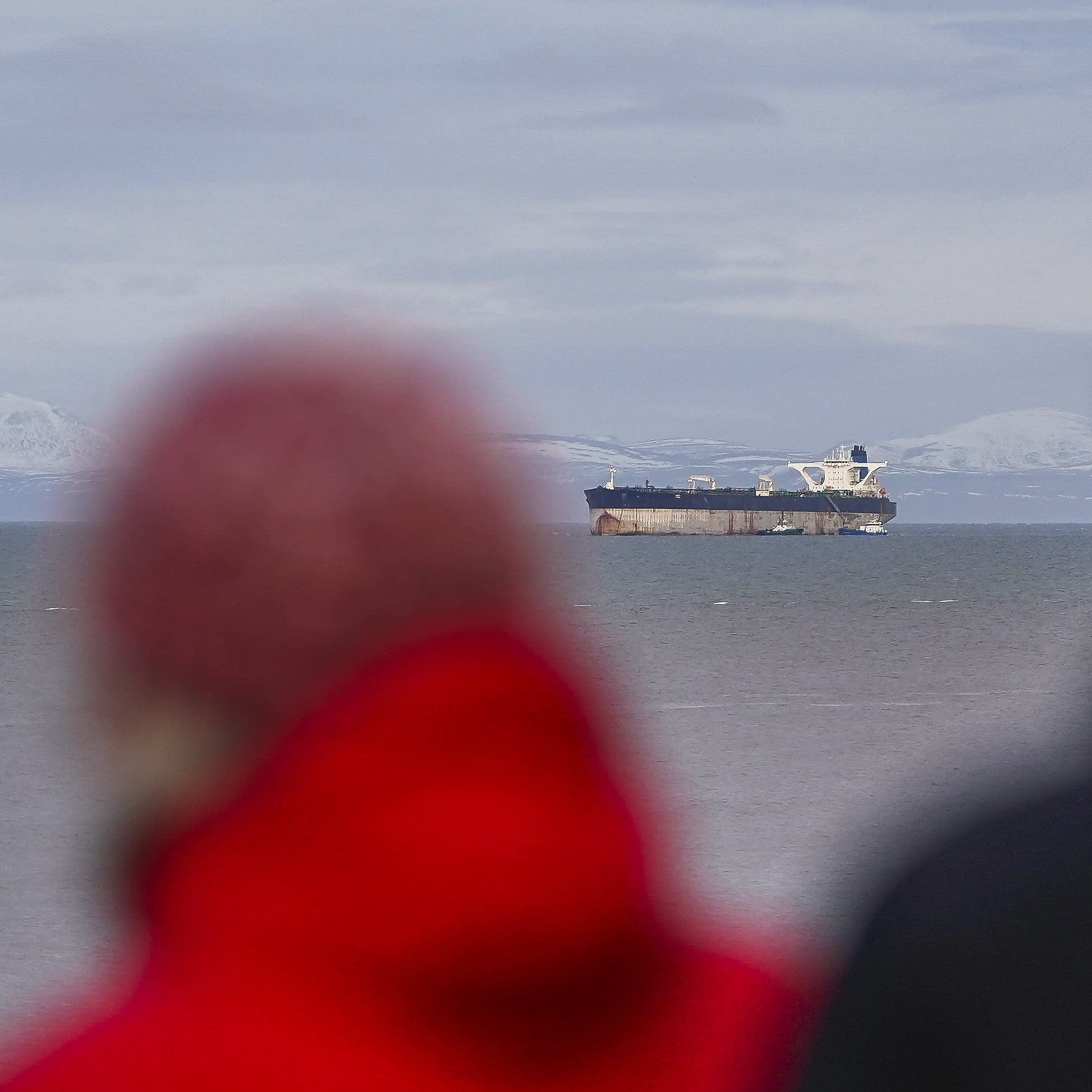
The oil sanctions leaving sailors cut adrift Live from the UK this is the Marketplace morning report from the BBC World Service, I'm Stuart Clarkson. Good morning. The US has been clamping down on the Shadow fleet, aging merchant ships which are used to evade international sanctions by transporting illicit goods. Russia is accused of using ships like these to make money by selling sanctioned oil. The International Transport Workers Federation says the rise in the Shadow fleet could be fueling a surge in something called Seafarer abound abandonment where crew are left stranded without food and pay. There can be other reasons too, like geopolitical instability or if an operator goes bust. This happened to 410 ships last year, up by a third, leaving more than 6,200 seafarers stranded. The BBC's David Waddell has spoken to one sailor still aboard his stranded oil tanker. We're not identifying the location of the ship or the name of the captain.
- [01:24]
C
He was on a Shadow fleet vessel. He's a senior officer on a mid sized oil tanker flying a false Gambian flag, essentially unregistered. And I understand this is the world first broadcast interview from a Shadow fleet vessel. He told me about the conditions he and his crew are experiencing.
- [01:42]
D
We're still at anchor, out of port limit, still waiting. Also we have problem with the salary. It's not transferring more than two months now. We already received for the November and waiting on this week for December. We have shortage with meat, grain, fish, these simple things for surviving. We have shortages. You know, this is effective on our health, on our operational atmosphere. So crew was hungry, crew was angry and we tried to survive only day by day.
- [02:13]
C
So we spoke for about 10 minutes and then his Internet connection cut off. So he was not just short of food, but also short of data.
- [02:22]
B
So what about the cargo? Why can't they get it delivered?
- [02:25]
C
This ship's carrying 100,000 tons of oil, nearly three quarters of a million barrels oil. Ordinarily that would be worth around US$47 million, but it's Russian sanctioned oil. In effect, it's untradeable and as we've seen over the past couple of months, the US is getting much more proactive about tracking down shadow fleet ships like this. They can't just dump the oil, they can't sell it either.
- [02:50]
D
We are taking crude oil from Russia and proceeding to discharge this east side to China. We still don't know what is the destination exactly. It was, you know, our official letters, no one replied. It is also very difficult to us because we don't know what we will expect, what the next provision comes when the salary come, when vessel will go full discharge. So totally quiet, totally silent.
- [03:18]
B
From the ship operator David Waddell reporting there. Let's do the numbers. India's biggest airline, Indigo, has seen a 75% drop in third quarter profits after one of the country's worst aviation cr. It had to cancel thousands of flights in early December due to poor roster planning. And shares in the Swedish telecoms gear maker Ericsson were up 11% this morning after it reported better than forecast earnings. It's Planning to return $1.7 billion to shareholders. Now, when we think of the big car manufacturing nations, countries like Japan, the US or Germany usually spring to mind. So you might be surprised to learn that Slovakia in Eastern Europe makes the highest number of cars per capita, almost a million a year in a country of just 5 million people. The BBC's John Lorenson has been there to see how it became car making powerhouse.
- [04:05]
E
This is the European factory of the Korean car manufacturer Kia, just outside the Slovak city of Jilina. 3,700 people work here, including assembly line worker Simona Kurneva, 23. She works on the doors. She studied business before coming here. She tells me it's not her dream job, but it has its good points.
- [04:26]
F
Half of my family works here, so I wanted to try. I like the people. I like working with people.
- [04:35]
E
Salary is okay?
- [04:37]
F
Yes, it's very good. In comparison with other companies, I earn.
- [04:42]
E
About €1300amonth, just over $1500 lower than the average salary in the factory, which Kia tells me is almost twice that. When Slovakia was part of the Czechoslovak Socialist Republic, the cars it made were by Western standards, shoddy, noisy, thirsty and slow. But after the Velvet Revolution, a non violent transition of power in 1989 sent its communist rulers packing. And the Czechs and Slovaks agreed to split into two independent countries. Volkswagen bought and overhauled the old Czechoslovak carmaker. Skoda and other foreign automobile manufacturers moved in too. Peugeot, Citroen, now Stellantis, Kia, Jaguar, Land Rover, and now Volvo. Peter Prokop is the Czech German head of give, a management consulting firm that advises clients in the automotive sector.
- [05:43]
G
The labor cost was 20% of the labor cost in Germany. On the beginning differently, is it still.
- [05:50]
E
A good bet going to East Central Europe?
- [05:52]
G
Yes, maybe. On one hand you have still lower wages. I would say 60% of the Western wages in Eastern Europe still. But you have also high productivity. So it's definitely competitive.
- [06:10]
E
The president and CEO of Kia Europe is a Frenchman called Marc Andrich. I asked him why Slovakia.
- [06:18]
H
Slovakia is really in the heart of Europe, quite well connected, let's say, to the big markets. The quality of the manpower was also, let's say, very important.
- [06:35]
E
What is happening in Slovakia is also happening all over East Central Europe. In this part of the eu, low wages, a tradition of industry and educating to provide manpower for industry inherited from communist times, mixed with Western and Asian technology and management is proving a winning combination in Zelena, Slovakia. I'm Jon Lawrencen for Marketplace.
- [06:57]
B
And finally, it gets less attention than the main women's event, but this week has been Paris Men's Fashion Week, the premier global platform for menswear trends, which is growing in importance. And the price tag, well, it's an industry valued at around $650 billion in annual sales. Thanks for listening. In the UK I'm Stuart Clarkson with the Marketplace morning report from the BBC World Service.
- [07:22]
I
I'm Reema Reis. And this week on this Is Uncomfortable, fellow podcaster and host of Scamfluencers, Sarah Haggie joins me to sort out your work drama. We answer your questions about scammy bosses, managing workplace friendships and co workers who pushed boundaries a little too far. I'm gonna stay at your place for a bit while I'm breaking up and obviously I'll need a key. And that is how you get a squatter. Listen to this Is Uncomfortable on your favorite podcast, appliance.