Loading summary
Transcript45 lines
- [00:00]
Pam
This Marketplace podcast is supported by Dell introducing the new Dell AI PC powered by Intel Core Ultra processor. It helps do your busy work for you so you can fast forward through editing images, designing presentations, generating code, debugging code, summarizing meeting notes, finding files, managing your schedule, responding to long emails, leaving all the time in the world for the things you actually want to do. Get a new Dell AI PC starting at $699.99 at Dell.com AI PC how those ahead Stay ahead.
- [00:31]
Ryan
This Marketplace podcast is supported by Palo Alto Networks. Enterprises are deploying and experimenting with AI apps and agents, often without the right security in place. Leverage the power of a comprehensive AI platform to secure AI at every step from apps, agents, models and data. Deploy AI bravely with Prisma airs more at Palo Alto networks.com Palm the President.
- [01:00]
Sabrina Short
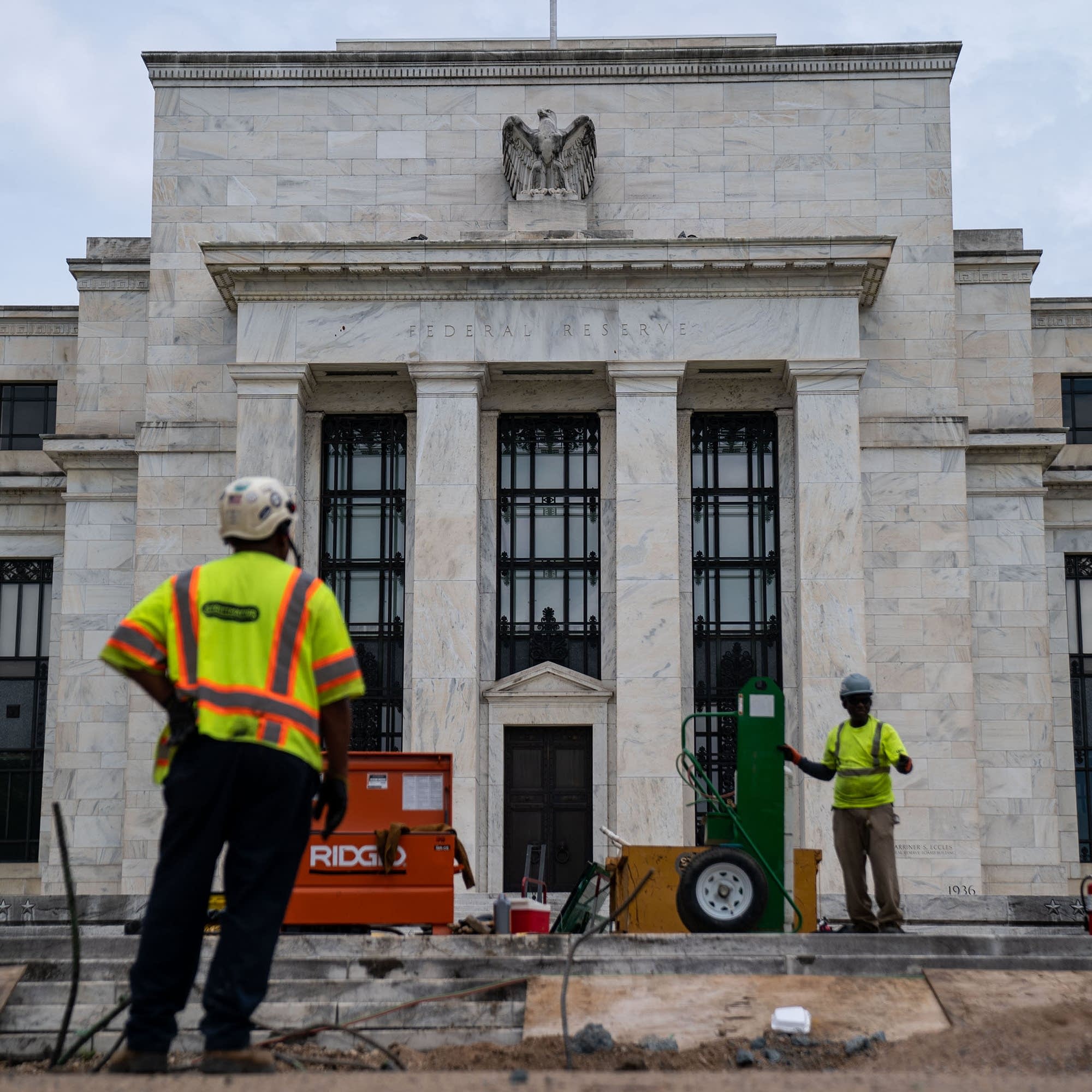
Versus the Fed Chair From Marketplace, I'm Sabrina Short in for David Brancaccio. President Trump wants Federal Reserve Chair Jerome Powell to cut interest rates, but the Fed makes that call based on analyzing the economy, not a president's wishes. This has some concern. The president is looking for an excuse to fire Powell. That excuse would be costly renovations at the Fed's D.C. headquarters. The Fed is supposed to respond to a letter from the White House's Office of Management and Budget questioning these renovations. Trump says he's discussed the idea of firing Powell, but says it's highly unlikely. Marketplace's Nancy Marshall Genser has more.
- [01:36]
Nancy Marshall Genser
The letter gives Powell until July 21 to respond to a series of questions about cost overruns in the nearly two and a half billion dollar renovation. The Fed says the buildings in question haven't been renovated since the 1930s. Former Fed historian Gary Richardson can attest to that.
- [01:54]
Sabrina Short
The bathrooms down in the basement near.
- [01:56]
Nancy Marshall Genser
The library are really kind of scary, richardson says. The water in the sinks was scalding and the buildings were not very accessible for people with limited mobility. The Fed blames the higher price tag on asbestos and contaminated soil removal and says the water table is higher than expected. Former Fed attorney Cornelius Hurley is among the central bank watchers who think the renovation is a pretext to fire Powell.
- [02:21]
Sabrina Short
I think it's a weak case and I think Powell will challenge it, hurley.
- [02:26]
Nancy Marshall Genser
Says President Trump should worry about how markets will react if he does terminate the chair. He should also think about whether such a move would get him what he wants because the chairman of the Fed board is Only one of 12 members of the Federal Open Market Committee, which actually sets interest rates and considers itself, Hurley says, the Fed's establishment.
- [02:47]
Sabrina Short
If Trump were to alienate the establishment. The establishment could exact its own punishment.
- [02:57]
Nancy Marshall Genser
In other words, even if Trump succeeds in replacing Powell, he might not get the lower interest rates he wants. I'm Nancy Marshall Genser for Marketplace.
- [03:07]
Sabrina Short
When a US Business is faced with a tariff, it has some pass that cost onto consumers, drop, try and eat it, or ask suppliers if they can eat some of it, too. Inflation data that's rolled in this week so far suggests the costs are starting to get passed on to consumers. Later this morning, we're going to get a not often talked about piece of economic data called the Import Price Index. It's going to reveal more about just who is paying these tariffs marketplaces. Justin Ho has more.
- [03:34]
Megan Schoenberger
The Import Price Index measures prices when imports arrive at the border, says Megan Schoenberger, senior economist with kpmg.
- [03:42]
Pam
And so it happens before there are any taxes and fees applied to it.
- [03:47]
Megan Schoenberger
Through customs, Schoenberger says. That can tell us how tariff costs are shared. That's because a foreign company that exports to the US Might decide to lower its prices if it's worried that tariffs will make its products too expensive.
- [04:00]
Pam
The foreign exporter doesn't want to lose their whole market, so maybe they start discounting.
- [04:05]
Megan Schoenberger
But Schoenberger says that hasn't really been happening recently. Import prices actually rose a little in April and May. Jason Miller, a professor at Michigan State University, says the price of certain imports from China, for instance, have fallen some.
- [04:19]
Sabrina Short
But when you look, especially if we focus on, you know, items from China, the overall increase in tariffs has been far, far, far larger.
- [04:28]
Megan Schoenberger
Which means foreign exporters aren't absorbing much of the tariffs at all. American importers are, Miller says. That's why the Import Price Index can be an early indicator, because if we're.
- [04:38]
Sabrina Short
Not seeing substantial declines in that, then we know, okay, if there's a 10% tariff on these goods coming from Europe, that's telling me that US Importers are.
- [04:47]
Megan Schoenberger
Paying more, which means businesses and consumers will too. I'm Justin Ho for Marketplace.
- [05:11]
Ryan
And now a next level moment from AT&T business. Say you've sent out a gigantic shipment of pillows and they need to be there in time for International Sleep day. You've got AT and T5G so you're fully confident, but the vendor isn't responding. And International Sleep Day is tomorrow. Luckily, AT&T 5G lets you deal with any issues with ease, so the pillows will get delivered and everyone can sleep soundly, especially you. ATT 5G requires a compatible plan and device coverage not available everywhere. Learn more@att.com 5G Network. This Marketplace podcast is supported by Palo Alto Networks. Enterprises are deploying and experimenting with AI apps and agents, often without the right security in place. Leverage the power of a comprehensive AI platform to secure AI at every step from apps, agents, models and data. Deploy AI bravely with Prisma airs more at PaloAltonetworks.com United Airlines and Delta reported.
- [06:11]
Sabrina Short
This week that business is stabilizing after a slow start to the summer, but there is still a chance of turbulence. Travel is still pretty slow. Marketplaces NovaSafo has more summer is usually.
- [06:23]
Nora Murphy
Go time for the travel industry, and yet prices are down about 3% compared to a year ago. And if you want know why, Nora Murphy can tell you. She owns and operates four Airbnb listings in Jersey City.
- [06:37]
Pam
People usually come to Jersey City not because it's so lovely, which it is, but also because it's proximity to get to Manhattan.
- [06:46]
Nora Murphy
It's right across the river. Murphy's properties would normally be packed right now with mostly European travelers, but she's only half full.
- [06:55]
Pam
There were guests who had already scheduled, but they are calling and canceling because they are afraid to be detained at the airports.
- [07:04]
Nora Murphy
And it's not just international travelers who are pulling back.
- [07:08]
Sabrina Short
One in five Americans have planned less or plan to travel less going forward.
- [07:13]
Nora Murphy
Jeremy Goldman is an analyst at eMarketer.
- [07:16]
Sabrina Short
And more than half of Americans report that the current economic conditions, like tariffs, like rising prices, have indeed affected their travel plans for the year.
- [07:27]
Nora Murphy
So foreign travelers and Americans, a double whammy. Economist Shannon Grine of Wells Fargo sees all of this as part of a bigger pattern, a pullback in discretionary services.
- [07:39]
Pam
Spending, things like eating out travel, personal professional care services, things that maybe we don't need to prioritize, and things that.
- [07:49]
Nora Murphy
Are sensitive to how consumers are feeling.
- [07:52]
Pam
They don't care that inflation's down compared to last year. They're worried about the fact that it's going to go higher and that it's still higher than what they remember pre Covid. So when you throw tariffs on top of that, I think it's really easy to understand why consumers are more pessimistic.
- [08:07]
Nora Murphy
And many are in a wait and see mode. Just ask Nora Murphy, our Airbnb host in Jersey City.
- [08:14]
Pam
Normally at this time, my October, November and December, those are our biggest times. Those would be all booked by now, but I do not have a single booking for those right now.
- [08:25]
Nora Murphy
Murphy is expecting this entire year to be slow. I'm Nova Safo for Marketplace, and in.
- [08:32]
Sabrina Short
New York, I'm Sabri Benishore with the Marketplace morning report from APM American Public Media.
- [08:43]
Ryan
Pam, are you here to game with me?
- [08:45]
Pam
In a minute, Ryan. But first it's time to share what's happening on the 10 News podcast.
- [08:50]
Ryan
The 10 News is a kids news podcast for curious 8 to 12 year olds that even grown ups can learn from. What else is there to say?
- [08:57]
Pam
That we cover everything from the Supreme Court in the war in Ukraine to Pokemon and Minecraft. And we'll always tell you 10 things, things you need to know.
- [09:06]
Ryan
And we're available wherever you get your podcasts. Is it game time now, Pam?
- [09:10]
Pam
It's game time, Ryan.
- [09:12]
Sabrina Short
Let's go.