Loading summary
Transcript34 lines
- [00:02]
Sabri Benishore
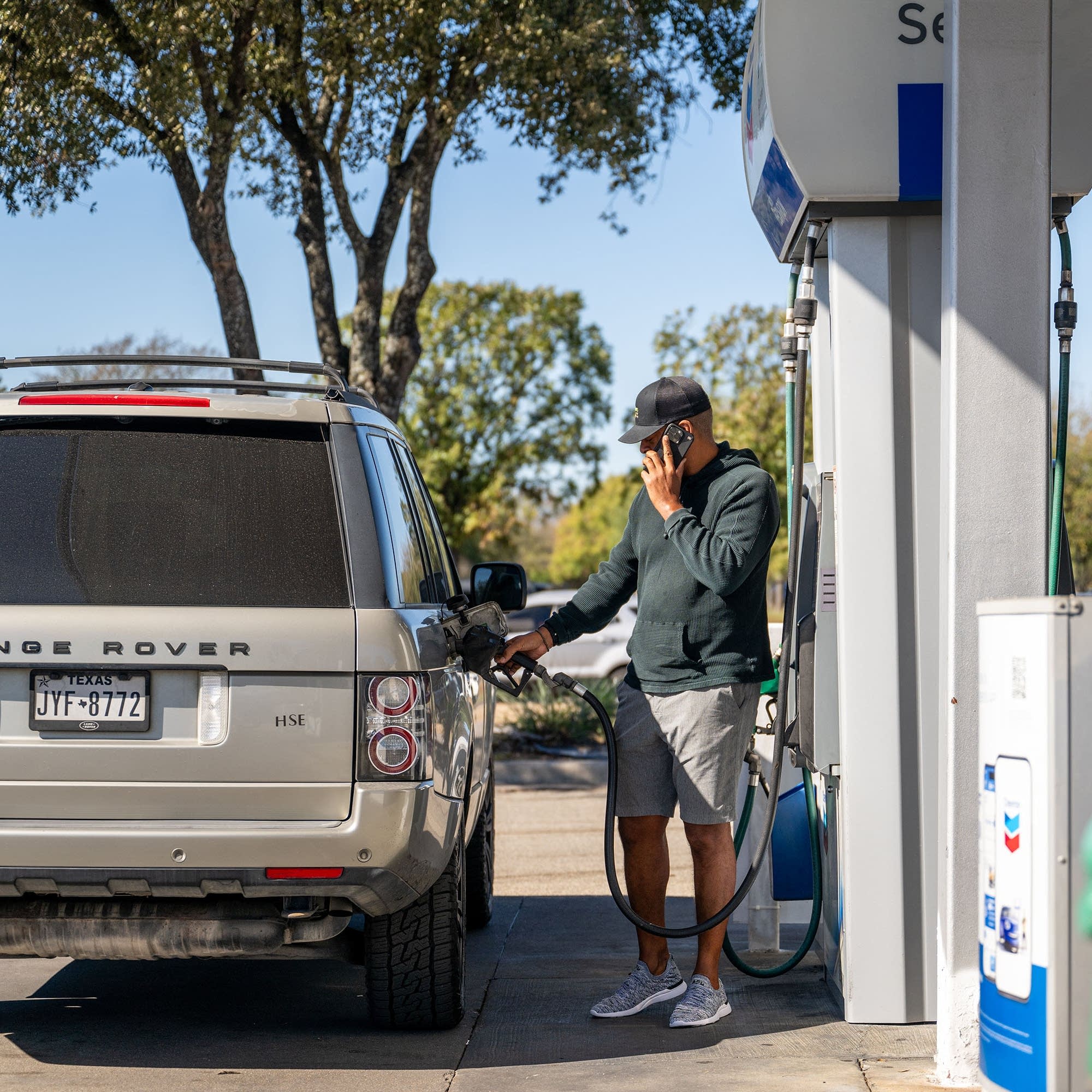
The price of gas is at a three year high. From Marketplace, I'm Sabri Benishore, in for David Brancaccio. President Trump has reportedly told White House aides he is willing to end the war with Iran without reopening the Strait of Hormuz, through which a fifth of the world's oil supply normally moves. This is according to the Wall Street Journal. The president had previously threatened to use force to open the strait, which would have meant a significant escalation such as stock futures rallied on the news. The price of oil, however, is still elevated $115 a barrel, and the average price of gas is now above $4 a gallon for the first time since 2022. Marketplace's Nova Safo has more on that.
- [00:46]
Nova Safo
Some analysts consider the $4 per gallon gasoline price a key psychological barrier above which consumers begin to shift behavior. We breach that milestone overnight. The average national price for a gallon of regular as tracked by aaa rose from $3.99 to $4.02. That's nationwide. Prices vary a lot by state $4.12 in Florida, $5.89 in California. Much of the Northeast is just shy of $4. Diesel prices nationally are up from $3.76 before the war to $5. 4. Diesel is the primary fuel for big trucks, freight trains and farm equipment, meaning large price swings could filter through to other areas of the economy. Rising gasoline prices were already hurting households 55% of respondents to a Reuters survey a week ago said their finances had taken a hit. I'm Nova Safo for Marketplace.
- [01:45]
Sabri Benishore
Tax day is in two and a half weeks and the average tax refund will be higher this year because of the 2025 tax cuts. A lot of could really use that money and it would normally be a little economic boost for consumers. Enter higher gas prices than NOVA was just talking about and depending on how things go economically speaking, it could all just end up being a wash. Marketplace's Justin Ho looked into it.
- [02:11]
Michael Pierce
The new tax law is on track to boost refunds this year by roughly $60 billion compared to last year, says Michael Pierce, chief US economist at Oxford Economics.
- [02:20]
Bill Pierce
And the average refund so far has been something like $3,600 per claiming, so that's up about 10 or 11% from year ago levels.
- [02:28]
Michael Pierce
Problem is those tax benefits start to look a little slimmer when you factor in rising gas prices.
- [02:34]
Bill Pierce
An increase in gasoline prices driven by this war is essentially a new tax on consumers. So one way of thinking about it is this is offsetting some of the benefits that are coming from this tax cut.
- [02:45]
Michael Pierce
Bill Pierce says those benefits will be completely offset if gas Prices average around $3.60 a gallon over the course of this year. And right now gas prices are around $4 nationally.
- [02:56]
Bill Pierce
If they remain there for the rest of the year, then we're going to see that the increase in gas prices more than offset any boost to consumer spending from these tax refunds.
- [03:04]
Michael Pierce
That said, another way of looking at this is that the bigger refunds are helping people afford to spend more on gas.
- [03:11]
Kathy Bastiancik
It provides some cushion to this energy shock. Otherwise the hit to consumer could be much de.
- [03:18]
Michael Pierce
Kathy Bastiancik is chief economist at Nationwide. She says the problem with that argument is that people basically have to spend more money on gas.
- [03:25]
Kathy Bastiancik
Right now my gasoline prices went up, so all of the extra money I got from the refunds is going into the gas tank instead of going out to dinner or buying a gift or going on vacation, things like that.
- [03:36]
Michael Pierce
Not every consumer is going to cut back. Jeff Korzenik is chief economist at Fifth Third Commercial Bank. He says that's because consumer debt levels on average are historically low right now,
- [03:47]
Jeff Korzenik
and that means that the consumer can absorb price shocks more readily than if they were stretched out on debt.
- [03:54]
Michael Pierce
But Korsenik says many consumers are struggling with debt, especially since housing costs are so high.
- [04:00]
Jeff Korzenik
If you're a renter, you felt the pain of rent increases. If you've been a new buyer in the last couple years, you've paid much higher mortgage interest rates.
- [04:08]
Michael Pierce
Korzenik says he expects consumer spending to slow down over the course of this year, which means economic growth will slow too.
- [04:15]
Jeff Korzenik
Our base case is still continued expansion in the US economy, but more modest growth than we would have otherwise had.
- [04:21]
Michael Pierce
And Corzinek expects that inflation will continue to rise. I'm Justin Ho for Marketplace.
- [04:45]
Dell PC Advertiser
Dell PCs with Intel inside are built for the moments that matter. For the moments you plan and the ones you don't. Built for the busy days that turn into all night study sessions. The moment you're working from a cafe and realize every outlet's taken. The times you're deep in your flow and the absolute last thing you need is an auto update throwing off your momentum. That's why Dell builds tech that adapts to the way you actually work. Built with long lasting battery so you're not scrambling for the closest outlet. And built in intelligence that makes updates around your schedule, not in the middle of it. They don't build tech for tech's sake, they build it for you. Find technology built for the way you work at Dell.com/Dell PCs built for you.
- [05:39]
Sabri Benishore
Let's say you want to trade in your old car for a new one, but you have not paid the old one off yet and actually the old one is worth less than what you still owe on it. That is called being underwater or upside down. And roughly a third of people trading in their old cars are underwater on their car loans. That is according to JD Power. Marketplace's Kaylee Wells explains.
- [06:00]
Kaylee Wells
We've got three reasons this is happening. One, new cars have gotten way more expensive, says Sam Fiorani with Auto Forecast Solutions.
- [06:08]
Sam Fiorani
We're seeing fewer and fewer manufacturers offering vehicles under 35 under $30,000. Competition has been pushing price up and nobody is filling the gap at the bottom.
- [06:19]
Kaylee Wells
And unlike a house, whose value typically increases over time, with a car, as
- [06:24]
Sam Fiorani
soon as you drive it off a lot, you owe more than it is worth.
- [06:27]
Kaylee Wells
The second issue car loans are getting longer.
- [06:30]
Sam Fiorani
We went from everyone having 36 month loans at the beginning of the century to now the average consumer is essentially
- [06:37]
Jeff Korzenik
in a 72 month loan.
- [06:39]
Kaylee Wells
Tyson Jamini at JD Power says longer loans mean it takes longer for cars to be worth more than what you owe on them, which over a decade of ownership wouldn't be an issue.
- [06:49]
Sam Fiorani
But no matter what kind of loan consumers have or how long it gets, consumers still return to market pretty consistently around four years.
- [06:59]
Kaylee Wells
Jomini says this trend won't hurt car dealers much since they often provide incentives that clear the old car's balance so buyers can afford a new one. I'm Kailey Wells for Marketplace and in
- [07:11]
Sabri Benishore
New York, I'm Sabree Benishore with the Marketplace Morning Report. From APM American Public Media.
- [07:24]
David Brancaccio
Hey, David Brancaccio here. I hope you're well and that your passport is up to date because I am hosting a trip to Italy this fall and you you are invited stay at a world class Tuscan villa and step into the world of the Medici, the formidable family whose influence and power helped give rise to the Renaissance and the art we still celebrate today. And not to mention the banking system. We're going to visit the world's oldest bank, swim in the thermal spa waters in Montecatini and take in the art of the Uffizi. All of this and then we'll try to put it all into context with great conversation over even better meals and wine tasting. Please join me and know this Buying into this trip will provide essential support for public media. Discover more about this fall's tuscany adventure@marketplace.org travel to reserve your spot today that's Marketplace Org Travel.