Loading summary
Transcript23 lines
- [00:00]
Maggie Smith
For 140 years, MultiCare has been in Washington prioritizing long term solutions, partnering with local communities and expanding access to care. Together, we're building a healthier future.
- [00:13]
Odoo Sponsor
Learn more@ multicare.org this podcast is supported by Odoo. Some say Odoo business management software is like fertilizer for businesses because the simple, efficient software promotes growth. Others say Odoo is like a magic beanstalk because it scales with you and is magically affordable. And some describe Odoo's programs for manufacturing, accounting and more as building blocks for creating a custom software suite. So Odoo is fertilizer Magic Beanstalk building blocks for business. Odoo exactly what businesses need sign up@odoo.com that's o d o-o.com Republicans need help.
- [00:49]
David Brancaccio
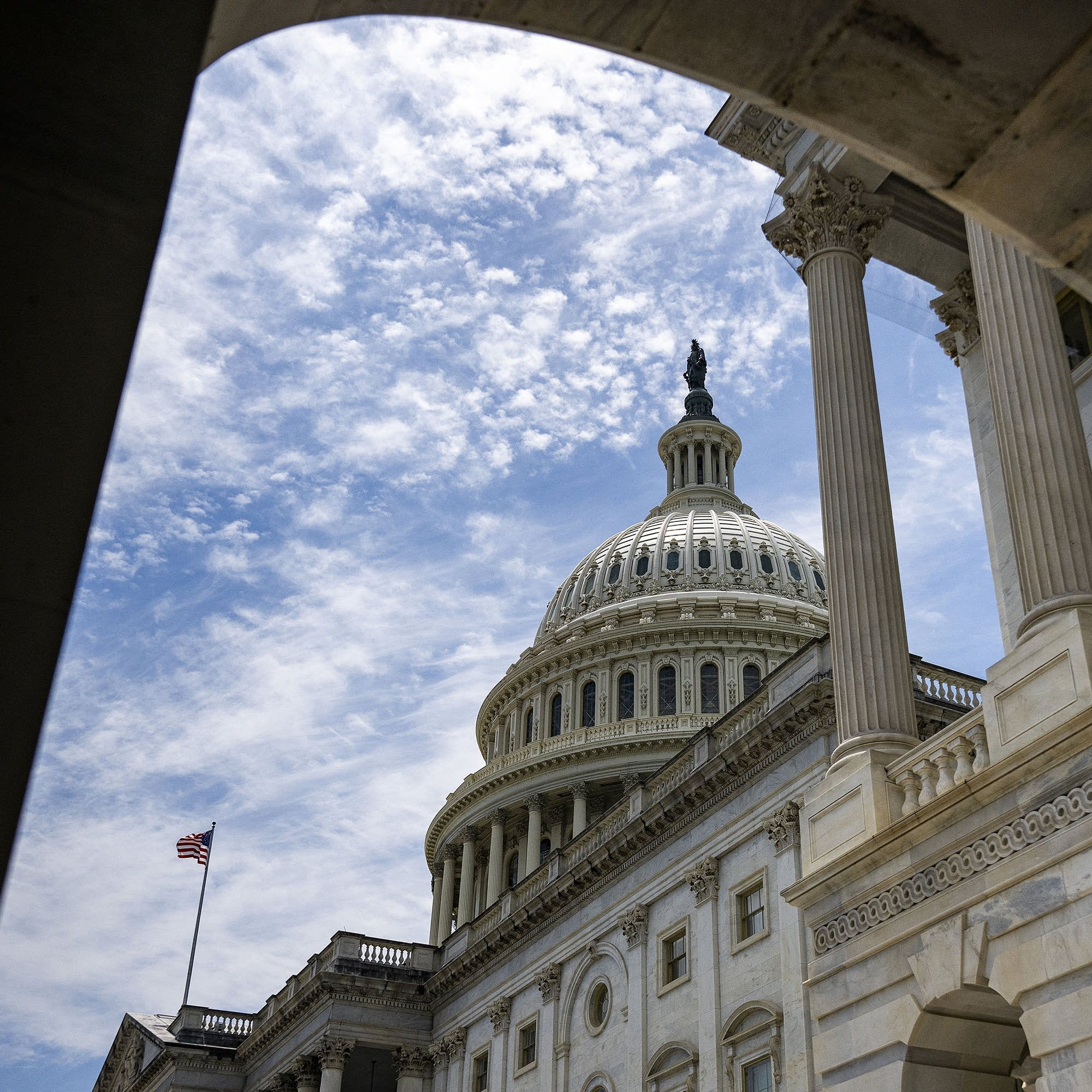
From Democrats to keep the government from running out of money at the end of the month. But bipartisan camaraderie is not the vibe in Washington these days. David I'm David Brancaccio in Los Angeles. Congress is once again playing with the prospect of a government shutdown. Lawmakers have until the end of this month to fund federal agencies for the new accounting year or else. Marketplace's Washington correspondent Nancy Marshall Genzer is a veteran of this trope. Nancy hey, David.
- [01:17]
Nancy Marshall Genzer
House Speaker Mike Johnson wants to keep the government open by having Congress pass a continuing resolution this week. It would continue government funding, mostly at current levels, until just before Thanksgiving. Now, some Republicans don't like the timing on that. Others complain they need new money for their districts, not just a continuation of current funding. Democrats want any stopgap bill to include money for health care, apparently to continue Obamacare subsidies set to expire at this point. Speaker Johnson says that's a December issue, not something to consider now.
- [01:56]
David Brancaccio
And there's a kind of readout on the odds of a shutdown.
- [02:00]
Nancy Marshall Genzer
Yeah, the gambling website Polymarket puts the chances at over 50%. But seasoned political analysts have just 25% shutdown odds.
- [02:11]
David Brancaccio
All right, essential services have to continue in a shutdown. How might most people run into the effects?
- [02:18]
Nancy Marshall Genzer
Right? Social Security, Medicare, Medicaid, they would not be affected in a shutdown. Essential government workers like police and air traffic controllers, they would stay on the job and work, work without pay. But other federal employees would not be allowed to work, so there would be no new Social Security cards issued. You couldn't sign up for new benefits. Food inspections have been delayed in past shutdowns. During the 2018, 2019 shutdown, you may remember, some TSA agents didn't show up for work. And there were long lines at airport security checkpoints.
- [02:51]
David Brancaccio
Thanks, nance. The average 30 year fixed rate mortgage fell sharply yesterday to 6.13%, the lowest in a year, according Mortgage News Daily's calculation. Our coverage is now on the Marketplace morning podcast. In just over six hours, we'll get the Fed's decision on interest rates. They're set to go down one quarter of a percentage point. With new signs. The job market is weakening markets. The dow is up 256 points in early trading, 0.6%. The S& P pretty flat. The Nasdaq is down 0.4%. And FedEx tomorrow is expected to announce quarterly profits crimped a bit by the extension of tariffs to lower value shipments from overseas. The end of the de minimis exemption.
- [03:48]
Instacart Sponsor
Did you see the game last night? Of course you did. Because you used Instacart to do your grocery restock. Plus you got snacks for the game, all without missing a single play. And that's on multitasking. So we're not saying that Instacart is a hack for game day, but it might be the ultimate play this football season. Enjoy. $0 delivery fees on your first three orders. Service fees apply for three orders in 14 days. Excludes restaurants.
- [04:13]
Capella University Sponsor
At Capella University, learning the right skills could make a difference. That's why our business programs teach you relevant skills you can take from the course room to the workplace. A different future is closer than you think with Capella University. Learn more at Capella. Edu.
- [04:30]
David Brancaccio
With less than a week before the autumn equinox, the summer numbers are in for going out to the movies. A blockbuster summer it was not. Let's bring in Abraham Ravid. He's a finance professor at Yeshiva University who watches the entertainment numbers. Professor, welcome.
- [04:47]
Abraham Ravid
Thank you.
- [04:48]
David Brancaccio
I've been reading that there was this, I don't know, mantra, but a line floating around the movie business. It was something like, survive until 25. Well, here we are, 20, 25. What are you seeing? I mean, we're going to the theaters, but we're not flocking en masse, really, are we?
- [05:05]
Abraham Ravid
No, we're not. And I'm afraid, at least as I read the numbers, we will not be flocking back to the theater anytime soon. Basically, there's been a secular decline in movie attendance in the last few decades. So people don't go to the movies as much as they used to. Doesn't mean they don't consume movies. It just means there are other ways to consume movies rather than just, you know, getting a babysitter. Finding parking and going to the theater at specific times rather than streaming it whenever they find it convenient to watch the movie.
- [05:47]
David Brancaccio
Yeah, we could chew on some of the factors involved here. I mean, some of the people are like lost in their phone screens all the time. But speaking screens I just looked up, you can buy right Now, Professor, a 55 inch flat screen, 4K resolution screen TV for less than $300. You can kind of simulate the theatrical experience for not all that much money.
- [06:10]
Abraham Ravid
I do better than that, David. I have 100 inch screen, but not TV screen and a projector and I put it in the basement and you can basically have the same experience as a small movie theater. And by the way, if you look at the stocks of the remaining theater chains, you know, the market is not very optimistic about the future of movie theaters.
- [06:39]
David Brancaccio
So you're seeing some new thinking when it comes to the economic models that guide the streaming side of this.
- [06:48]
Abraham Ravid
So I think the best model would basically be similar to moviegoing. In other words, when you watch something on streaming, you pay for it. And that in that way there's basically a way to quantify how much money you're making. So the creative team can get residuals, can get percentages. And also the companies, the streaming companies could understand how much money this makes. If you don't charge for anything, you just have subscriptions. Very hard to know what's the economic value of any content that you do. On the other hand, people should pay a subscription for streaming sports and news because this is content that's always new and keeps coming in.
- [07:35]
David Brancaccio
Abraham Ravid is a finance professor at Yeshiva University who watches the entertainment industry quite closely. Professor, thank you.
- [07:42]
Abraham Ravid
Thank you very much. Thank you for having me.
- [07:45]
David Brancaccio
Professor Ravid used the term secular at the beginning of that. Economists use that to mean long term secular versus cyclical, in case you've always wondered. And Marketplace has a series called I've Always Wondered to explain what you want to know. Send us your questions marketplace.org wondered in Los Angeles, I'm David Brancaccio with our morning report from apm American Public Media.
- [08:10]
Maggie Smith
Poetry has the power to connect our inner universe and the outer world. I'm Maggie Smith, poet and host of the Slowdown, a podcast from American Public Media. Each weekday, find time to take a breather from your to do list or doom scrolling for that matter, and take in a moment of reflection with a hand picked poem. Listen to the Slowdown wherever you get podcasts.