Loading summary
Transcript34 lines
- [00:00]
Marketplace Announcer
Your new home is now ready. Dr. Horton, America's Builder has new homes that are ready today with new construction communities in Ellensburg and throughout the Greater Seattle area. Dr. Horton has the right home for you. At Dr. Horton, we're still building with flexible living spaces, smart home technology and two and three car garages. More communities and more homes available every day. Find your new home in Ellensburg now ready@dr. Horton.com Dr. Horton, America's builder and equal Housing Opportunity Builder.
- [00:31]
Capella University Advertiser
Is it time to reimagine your future? The right business skills may make a difference in your career. At Capella University, we offer a relevant education that's designed to focus on what you need to know in the business world. We'll teach professional skills to help you pursue your goals like business management, strategic planning and effective communication. And you can apply these skills right away. A different future is closer than you think with Capella University. Learn more@capella.edu.
- [01:03]
Sabri Benishour
All those government layoffs and employee buyouts have hit the labor market. From Marketplace, I'm Sabri Benishour in for David Brancaccio. The U.S. economy gained 64,000 jobs in November, but it lost 105,000 in October. The unemployment rate rose to 4.6%. It was 4.4% in September and 4.2% a year ago. David Kelly is chief global strategist at JP Morgan Funds and joins us to talk about it. Good morning.
- [01:34]
David Kelly
Good morning.
- [01:35]
Sabri Benishour
So overall doesn't sound great. What's your take here?
- [01:40]
David Kelly
No, it's a pretty grinchy report. We've lost jobs in three out of the last seven months and the average job growth has been 17,000 jobs per month, which is miserably low. Now, that was partly because of government cutbacks in the government, but even the private sector, we only saw 46,000 jobs on average created over the last seven months.
- [01:58]
Sabri Benishour
Speaking of government workers, we lost 162,000 government jobs in October. How serious is it when such a huge chunk of workers is suddenly out of work?
- [02:11]
David Kelly
Well, we knew this was coming because what this really is is back in the spring, a lot of federal workers took a buyout. And the way the buyout worked is you got paid through the end of September. So this is really a lot of workers who've not been actually in the office for many, many months and have many of them, I hope, of course, other jobs this stage. So the general weakness in private sector payroll employment growth does say the economy is pretty slow right now.
- [02:35]
Sabri Benishour
What does this mean for the Federal Reserve and what it's going to do with interest rates.
- [02:40]
David Kelly
Well, interestingly, the market expectations for the Fed in January didn't change at all on this. And I think that's partly because with all the problems of the data, we really didn't know what to expect from this report. So markets move when you have something different from expectations. We didn't have good expectations one way or the other. But I think the Fed also realizes that come early 2026, there's going to be a lot of income tax refunds and that could cause consumer spending to pick up a bit and maybe employment growth to pick up a bit. So I think we are very far from calling this a recession.
- [03:10]
Sabri Benishour
David Kelly, chief global strategist at JP Morgan Funds, thank you so much. Anytime the prospects for electric vehicles have dimmed under the Trump administration. In response, Ford announced yesterday that it is scrapping some EVs and focusing on hybrid and gas powered vehicles. Marketplace's Nancy Marshall Genser has that.
- [03:31]
Nancy Marshall Genser
Ford says it will no longer make its fully electric F150 Lightning truck. It's also pulling the plug on a new electric truck it was planning and electric commercial vans. Ford says this is because of lower than expected demand, high costs and regulatory changes. The Trump administration allowed an electric vehicle tax credit to expire. It's also easing up on tax tailpipe emissions regulations. This retooling will cost ford more than $19 billion now. The company will charge ahead with hybrids. The F150 Lightning will become an extended range electric vehicle with a gas powered generator. Ford says about half of its global sales will be hybrids, EVs and extended range EVs by the end of the decade. Ford says it's also repurposing its battery factories to produce storage systems which are in high demand right now as data centers increase demand for power. I'm Nancy Marshall Genser for Marketplace.
- [04:52]
Capella University Advertiser
You've got a big day so you use unstoppable scent boosters to give your laundry non stop freshness. So no matter how long the day goes, you can't stop this power. This walk, this pose, this strut, this look, this talk. Your clothes will be so fresh you can confidently strut into that end of the day meeting like a boss. Boss, boss, boss, boss, boss bosses. Let's talk business in my office. Add new unstoppables beads to your wash for 24 hour non stop freshness so you can smell unstoppable.
- [05:21]
Shopify Advertiser
Businesses that are selling through the roof. Like untuck it make selling and for shoppers buying simple with Shopify home of the number one checkout on the planet. And with Shop Pay, you can boost conversions up to 50%. Businesses that sell more sell on Shopify. Upgrade your business and get the same checkout untuck it uses. Sign up for your $1 per month trial period at shopify.com podcastfree all lowercase go to shopify.com podcastfree to upgrade your selling today.
- [05:52]
Sabri Benishour
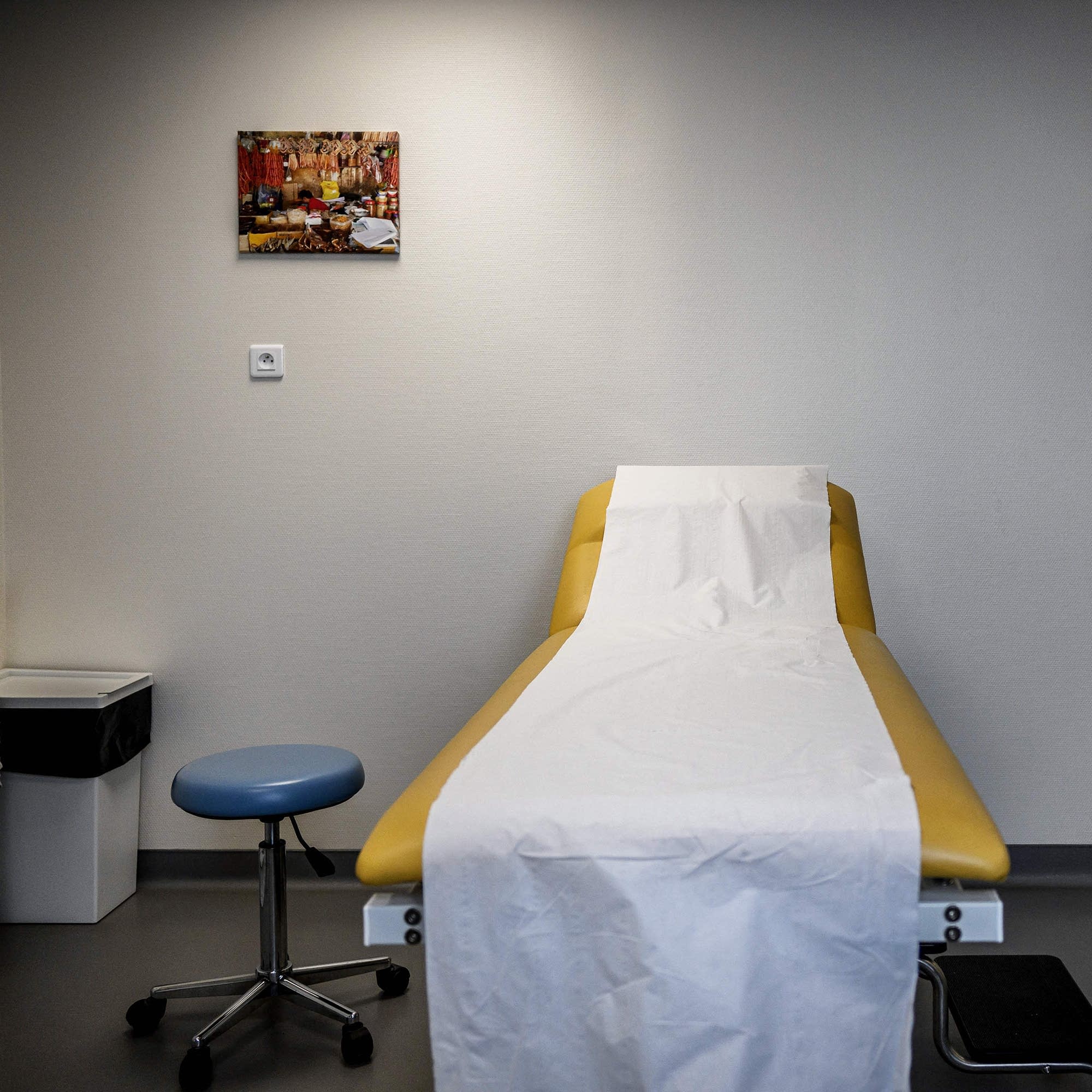
We have talked a lot on this show about how health insurance is getting more and more expensive. And that is aside from the disappearing Affordable Care act subsidies that are going to make it even more expensive for more than 20 million people. All of these factors are fueling interest in a market for cash only doctors. These are doctors who don't take insurance. They just take cash. Reporter Alex Olgen has the story.
- [06:17]
Alex Olgen
In the last six weeks, Brittany Pollard has made more progress on managing her chronic pain than over the last six months. She credits her new doctor in Chicago.
- [06:25]
Amy Schrader
I really felt listened to. Not just a problem to be fixed, you know, not just a billing code.
- [06:32]
Alex Olgen
Pollard works for herself. She's a postpartum doula and helps families with newborn care. She used to buy insurance on the marketplace but was paying hundreds of dollars out of pocket for urgent care visits because of her $9,200 deductible.
- [06:45]
Amy Schrader
Ultimately, I was paying for a plan that I never used.
- [06:47]
Alex Olgen
So she dropped the coverage and signed up for what's called direct primary care, essentially a membership with a physician. Pollard pays $90 a month for unlimited appointments, calls or in office care with her doctor, Amy Schrader.
- [06:59]
Amy Schrader
I feel like I can do a much better job in this model, whereas in the others I felt like I was kind of handicapped.
- [07:04]
Alex Olgen
Schrader says pressure to see more patients and insurance denials often got in the way of care. Now she gets patients discounted cash rates for labs, X rays and other tests.
- [07:14]
Amy Schrader
I love saving people money. I love it when I look up the cost of a lab and I'm like, this only costs $2.
- [07:21]
Alex Olgen
Schrader stresses this is not a substitute for insurance. However, many of her patients are gig workers like Pollard, and they're choosing this cash only model over coverage they can't afford. But other care can be expensive for her patients.
- [07:35]
Amy Schrader
The resources are limited. That's a challenge to be able to hook them up with their, yeah, things like therapy or specialty care.
- [07:45]
Alex Olgen
But people who choose this often understand that going without coverage is risky. Brittany Pollard thinks about what if she gets into a car accident or has cancer?
- [07:54]
Amy Schrader
This is filling a gap. You know, I was falling through the cracks of the system and this has gotten me the support that I need so I can live my life.
- [08:02]
Alex Olgen
This cash only model is spreading. The American Academy of Family Physicians estimates about a tenth of their members offer it triple the amount just a few years ago.
- [08:12]
Marketplace Announcer
So we've kind of reached a critical mass.
- [08:14]
Alex Olgen
That's Dr. Jeffrey Davenport, President of the trade group the Direct Primary Care Alliance. He's seeing the idea spread beyond family physicians.
- [08:22]
Marketplace Announcer
The pediatricians are catching fire, internal medicine doctors, even specialist internal medicine doctors, hematology, rheumatology, endocrinology.
- [08:33]
Alex Olgen
Next year, monthly health insurance premiums are set to more than double for many who buy coverage on the Marketplace, and that's likely going to lead to more patients looking for cash only care. I'm Alex Olgan for Marketplace, and in.
- [08:46]
Sabri Benishour
New York, I'm Sabri Benishore with the Marketplace Morning Report from APM American Public Media.
- [08:56]
Marketplace Announcer
As we head toward the end of the year, Marketplace is here to help you make sense of the economy, what's happening, why it matters, and how it affects you. If this reporting has been valuable to you in 2025, consider becoming a Marketplace investor. Your support powers independent journalism that cuts through the noise and delivers clarity when it counts. Donate now@marketplace.org or click the link in the show notes.