Loading summary
Transcript30 lines
- [00:01]
Henry Epp
My shopping style is more stay at home than try in store so my Amex Blue Cash Everyday card is my go to accessory. When I shop it's easy to earn by getting 3% cash back on US online retail purchases. Each order brings me closer to more cash back so go ahead, add to cart and shop the latest styles. Reinvent your look and reward yourself with Amex and try on the Blue Cash every day card. Learn more@americanexpress.com Explore VCE terms and Cashback Cap Apply
- [00:32]
Sabri Benishour
what's new in your tax return this year? From Marketplace, I'm Sabri Benishore in for David Brancaccio. First, a quick update on the Middle east after President Trump said yesterday morning, shortly before markets opened, that talks with Iran were ongoing. Iran said there were no talks. Iran has continued to attack US Bases in the Persian Gulf. Iran and Israel are still trading fire. Israel continued strikes in Lebanon where a million people have have been displaced. The price of oil is still hovering around $100 a barrel. It is tax season, and thanks to last year's GOP tax and spending law, there are lots of changes to the rules. As Marketplaces senior Washington correspondent Kimberly Adams reports, one of the biggest involves the deduction for state and local taxes.
- [01:18]
Kimberly Adams
So far this tax season, refunds have been trending higher. Rachel Snyderman is managing director of Economic Policy at the Bipartisan Policy Center.
- [01:28]
Reema Reis
We are seeing that average tax refunds are upwards of about $3,600 or $350 higher than that same period last year.
- [01:36]
Kimberly Adams
And one reason for those bigger refunds changes to the state and local tax deduction, or SALT deduction. It used to be taxpayers could only write off $10,000 of their state and local taxes when calculating their federal taxes. But the one big beautiful bill act boosted that to $40,000 with some limits. So for folks who fil about a
- [01:59]
Garrett Watson
quarter of the value of the tax cut that's provided in 2025 will be just from that SALT cap increase.
- [02:08]
Kimberly Adams
Garrett Watson is director of Policy Analysis at the Tax Foundation.
- [02:12]
Garrett Watson
And of course that 25% amount is going to be concentrated in folks who are itemizing, which by our estimate is somewhere around 12 to 13% of filers.
- [02:20]
Kimberly Adams
And those filers tend to have higher incomes. Tim Symonds is the founder of the Simons Group Tax advisory in the D.C. area.
- [02:29]
Garrett Watson
The clients who are above 200,000 and between I'd say 200 to 400 and that are itemizing.
- [02:39]
Kimberly Adams
Simons mainly works with higher income clients and says many of them are getting bigger than usual refund checks. Thanks to the increased SALT deduction, probably
- [02:49]
Garrett Watson
about 15 to 20% of my clients are seeing a significant increase because of that.
- [02:56]
Kimberly Adams
But those bigger refunds come at a cost. According to the Bipartisan Policy center, their estimated budget impact is about $140 billion over the next decade. In Washington, I'm Kimberly Adams for Marketplace.
- [03:30]
Sabri Benishour
In a few months, soccer fans will flock from around the world to 16 cities across North America for the World Cup. The matches are happening from mid June to mid July, and each one is expected to be massive tens of thousands of fans per game. All those fans will need a way to get to the games, and many will take public transit. So a lot of transit agencies in World cup host cities are planning to expand service during the tournament, and in some cases they're making an extra push to finish up big infrastructure projects in time as marketplaces, Henry Epp reports, sometimes
- [04:04]
Henry Bendon
you need a deadline to get a project done. At least I do. And apparently some transit agencies do too. For decades, Seattle has been planning to run a light rail line across Lake Washington, which divides the west and east sides of the metro area.
- [04:18]
Henry Epp
The Cross Lake connection is something that was originally envisioned back in the 60s.
- [04:23]
Henry Bendon
Henry Bendon is a spokesperson for Sound Transit, which runs the region's light rail system. Construction on the line started in 2016. It's faced plenty of delays, but the prospect of tens of thousands of soccer fans descending on the city this summer gave Sound Transit a hard deadline.
- [04:39]
Henry Epp
The World cup was it was a we must have this open moment and
- [04:43]
Henry Bendon
they're going to meet it. The line opens later this week. On the other side of the country, Boston's public transit agency is upgrading a commuter rail station near the home of the New England Patriots in Foxborough, Massachusetts, which will host seven World cup matches. Christian Milneal is editor of Streets Blog Mass, a local transportation news site.
- [05:02]
Garrett Watson
The Foxborough station was just a patch of asphalt next to the tracks, which
- [05:07]
Henry Bendon
just wouldn't cut it for thousands of international soccer fans boarding the train. So by this summer it'll have a new raised platform, ADA compliant, constructed in just one year. That's warp speed by Massachusetts standards, milneil says.
- [05:20]
Garrett Watson
A lot of those projects can take like, up to a decade to get funded and designed and completed.
- [05:26]
Henry Bendon
Upgrades like the ones in Foxborough and Seattle will last long after the tournament, but in the short term, the cup also presents a huge logistical challenge to transit agencies, says Yonah Freemark at the Urban Institute.
- [05:38]
Henry Epp
When you're talking about 60 to 80,000 people coming out of a facility at one time after the conclusion of a game. You know, that can put a huge amount of pressure on even the highest capacity transit systems.
- [05:53]
Henry Bendon
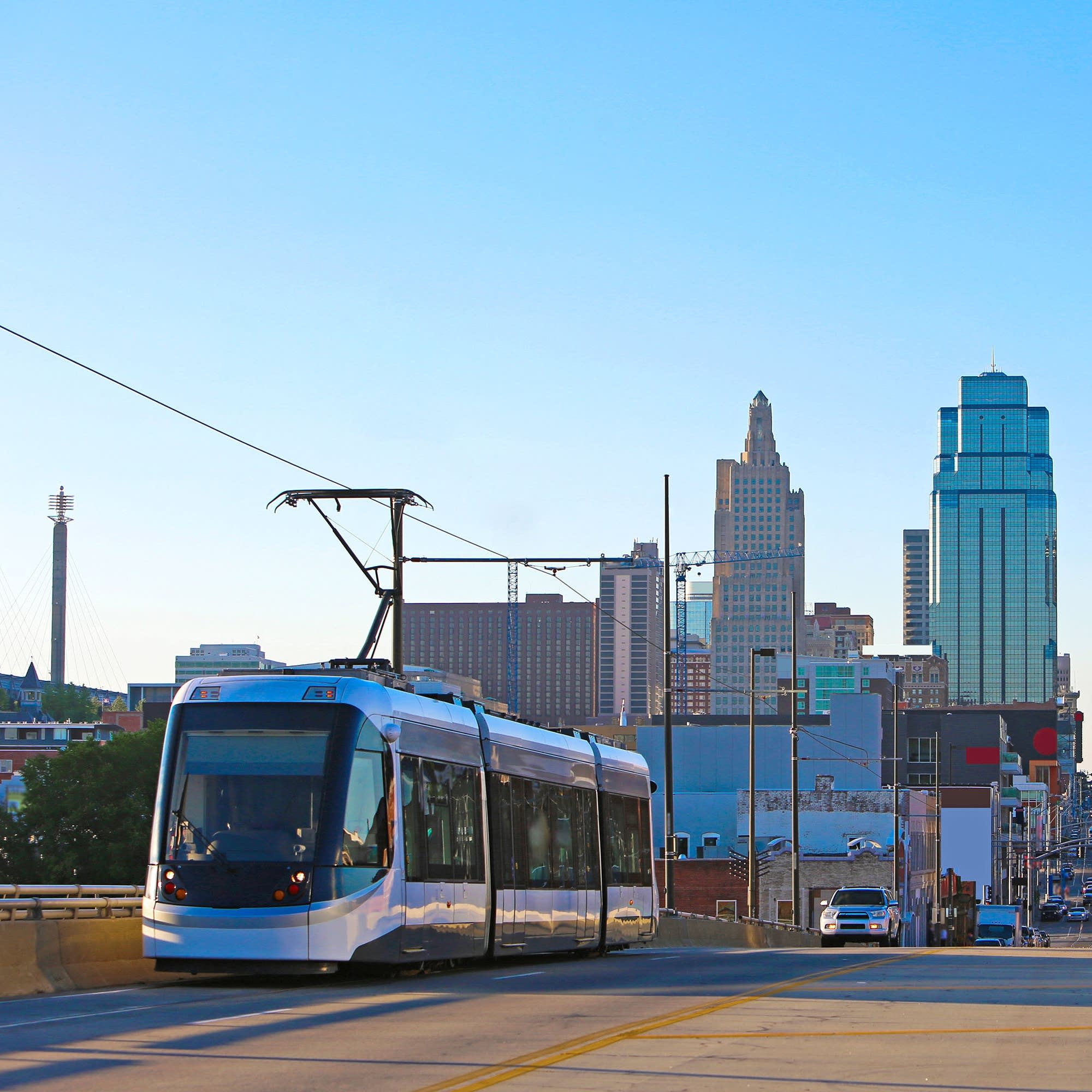
And so most host cities plan to run extra buses and trains before and after games. The federal government will pay for some of that service. And at least for a few weeks, some cities will get a taste of what a more robust public transit system looks like. In Kansas City, for example, the local World cup host committee is renting 200 buses to create new temporary routes all over the region. Eric Bunch is a city council member in Kansas City. He hopes the extra World cup could influence local transit policy after the tournament ends.
- [06:23]
Henry Epp
We have an opportunity here to showcase how it could work here and leverage that for bigger, longer term improvements, ones
- [06:30]
Henry Bendon
to serve local commuters, not just visiting soccer Fans. I'm Henry A.P. for Marketplace.
- [06:36]
Sabri Benishour
Our producers are Emma Condon, Tamar Fagan, Ashley Rodriguez, Arianna Rosas and Erica Soderstrom. Our senior producer is Alex Schroeder. Our supervising senior producer is Meredith Garrettson Morby. And in New York, I'm Sabri Benishour with the Marketplace Morning Report from APM American Public Media.
- [06:59]
Reema Reis
I'm Reema Reis. And this week on my podcast, this is Uncomfortable. We're looking at the rise of prediction markets where you can bet on everything from sports and pop culture to political headlines. A multi billion dollar industry that's growing at a time when more Americans are questioning the traditional paths to wealth. I feel like the kind of quote unquote, American dream is sort of breaking down. Like, how could I possibly, you know, buy a home, be able to afford having a family? And then they're also going online and seeing people that are claiming to make all this money doing these alternative paths to wealth. Be sure to listen to this week's episode of this Is Uncomfortable on your favorite podcast.
- [07:33]
Henry Epp
Applause.