Loading summary
Transcript35 lines
- [00:01]
Pharmaceutical Advertiser
Support is available 247 with VRBoCare. We're here day or night ready whenever you need help because a great trip starts with the right support. Did you know about one in three people with plaque psoriasis may also develop psoriatic arthritis, which causes joint pain, stiffness and swelling. Does this sound like you Listen to what it sounds like to be a million miles away. Trymphyia Guselcomab, taken by injection is a prescription medicine for adults with moderate to severe plaque psoriasis who may benefit from taking injections or pills or phototherapy. And for adults with active psoriatic arthritis, serious allergic reactions and increased risk of infections and liver problems may occur. Before treatment, your doctor should check you for infections and tuberculosis. Tell your doctor if you have an infection, flu like symptoms or if you need a vaccine. Imagine being a million miles away. Explore what's possible. Ask your doctor about Tremphaya. Tap this ad to learn more about Tremphaya, including important safety information.
- [01:17]
Sabri Benishore
When it comes to the inflation from this war, gas is just the beginning. From Marketplace, I'm Sabree Benishore in New York. First, a quick update on the war. Reuters is reporting negotiations between the US And Iran may resume this week. That's after talks failed over the weekend and the US Imposed a blockade of Iranian ports in the Persian Gulf. One nation that's largely remained aloof from the war is China. But today China's President Xi Jinping observed that the international order is crumbling into disarray. The Meanwhile, China's exports slowed sharply last month. Marketplace's Nancy Marshall Genser takes a look at how the war is affecting China's bottom line.
- [02:00]
Nancy Marshall Genser
The Chinese government reported today that exports in March were up just 2.5% from the same time last year. That's a steep decline from the beginning of the year. Part of the drop off could be due to a late Lunar New Year holiday when factories shut down and China is somewhat insulated from the effects of the war. Demand for green products from China, like electric vehicles, is and Beijing has stockpiles of oil. But it is a major importer of Iranian oil, which could be choked off by the U.S. blockade of the Strait of Hormuz. And if the war drags on and consumers have to budget more for fuel, they'll have less money for Chinese exports. I'm Nancy Marshall Genser for Marketplace.
- [02:43]
Sabri Benishore
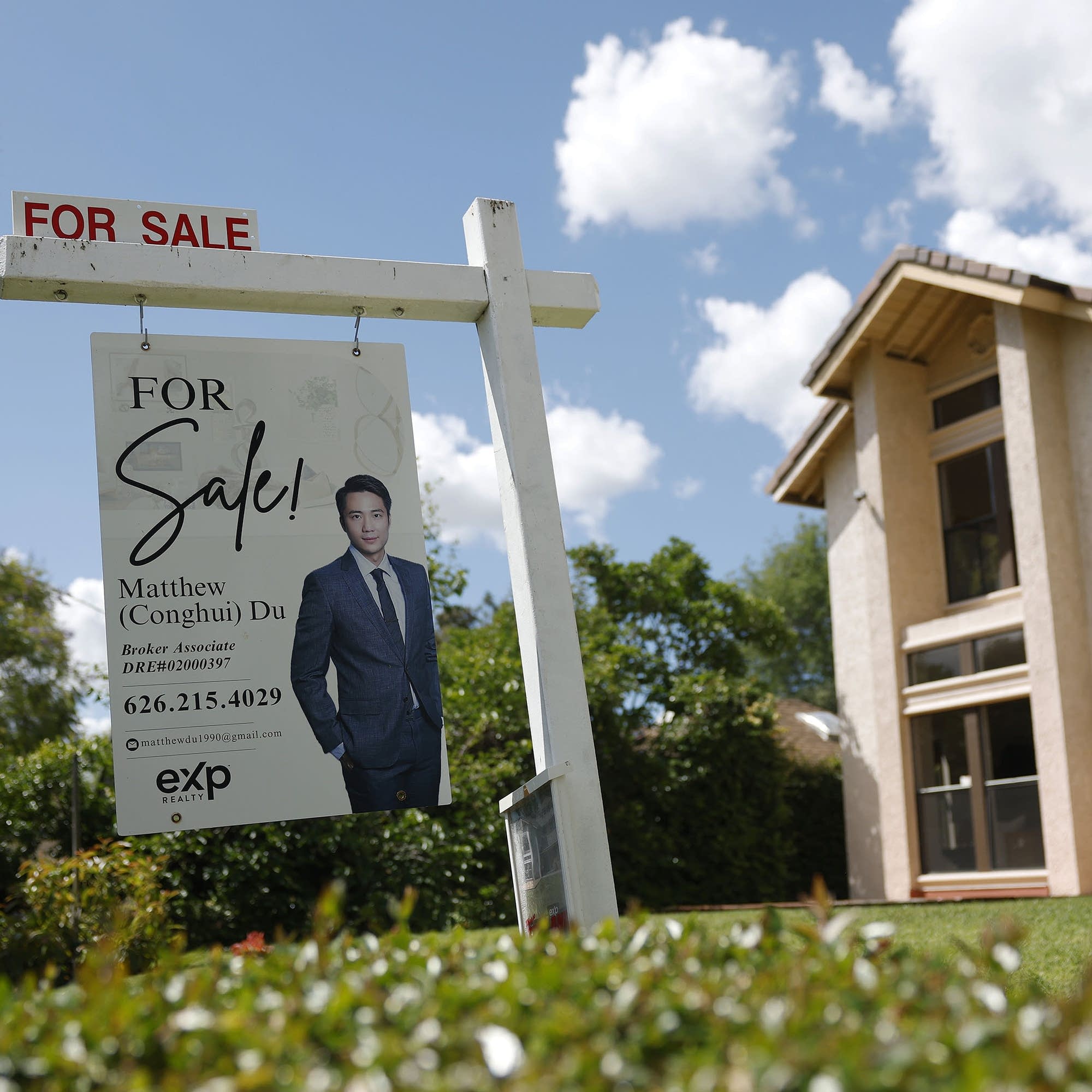
It is spring and the real estate market is supposed to be popping. It is not, at least not as much as usual. New data out this week from the national association of Realtors shows seasonally adjusted sales of existing homes were actually down 3.6%. Marketplace's Carla Javier has that the extent
- [03:01]
Carla Javier
of the drop was a bit unexpected, says Stephanie Moulton at the Ohio State University.
- [03:06]
Stephanie Moulton
I see it more as a symptom, not necessarily that we're going to be constantly down month over month, but that there just is still a lot of uncertainty in the economy.
- [03:16]
Carla Javier
The market is operating about 80% of a normal spring pace, says Nadia Evangelo at the national association of Realtors.
- [03:24]
Stephanie Moulton
So yes, we are seeing more homes hit the market. That's positive. But many of those homes are still priced above what typical households can comfortably
- [03:33]
Carla Javier
afford, especially considering mortgage interest rates. Ellie Wolfe at Zonda points out that the March sales data largely predate the war in Iran.
- [03:42]
Stephanie Moulton
The market already didn't look particularly good going into Iran, and now we don't have perfect data as to how the market has evolved, but I would guess that the market has gotten even slower since, she says.
- [03:55]
Carla Javier
A lot of buyers were already frustrated with interest rates and grocery prices.
- [04:00]
Stephanie Moulton
Now we're layering in the cost of transportation that's gotten more expensive. So I think that that is keeping some consumers on the sidelines as well.
- [04:09]
Carla Javier
A market that continues to be soft, Wolf says, means sellers might get fewer offers while buyers could explore their options and perhaps even negotiate a better deal. I'm Carla Javier from Marketplace.
- [04:39]
Dell Advertiser
Dell PCs with Intel inside are built for the moments that matter, for the moments you plan and the ones you don't. Built for the busy days that turn into all night study sessions. The moment you're working from a cafe and realize every outlet's taken the times you're deep in your flow and the absolute last thing you need is an auto update throwing off your momentum. That's why Dell builds tech that adapts to the way you actually work. Built with long lasting battery so you're not scrambling for the closest outlet. And built in intelligence that makes updates around your schedule, not in the middle of it. They don't build tech for tech's sake. They build it for you. Find technology built for the way you work. @dell.com DellPCS built for you
- [05:32]
Sabri Benishore
prices went up 3.3% in a year in March. And yes, that's mostly the war in Iran driving up gas prices. But gas is just the start. Marketplaces Elizabeth Trovall has more.
- [05:45]
Elizabeth Trovall
At Texas Injection Molding in southeast Houston, machines are heating up plastic and forming it into things like bait buckets and medical grade containers. During our tour of the manufacturing corps, founder Jeff Applegate says the company goes through roughly 8 million pounds of plastic a year.
- [06:03]
Ed Herz
This is polyethylene. Lots and lots and lots of products are made out of polyethylene.
- [06:08]
Elizabeth Trovall
Because of the war in the Middle east, plastics like this are in tighter supply around the world and are getting more and more expensive.
- [06:16]
Ed Herz
And so when your material goes up 10 or 15%, it puts a real squeeze on you really quick. The longer this goes on, the more disruption there is that we'll have to pass some of those costs on to our customers.
- [06:29]
Elizabeth Trovall
Applegate's customers are manufacturers, but eventually price hikes trickle down to consumers, and that goes for all kinds of supply chains that include petrochemical products, says Notre Dame's Christiana Baumeister.
- [06:43]
Stephanie Moulton
Petrochemicals account for around 15% of global oil demand, and they are used in a wide range of everyday products.
- [06:52]
Elizabeth Trovall
Plastics, of course, but also fertilizers and detergents.
- [06:56]
Stephanie Moulton
The increased cost will basically ripple through to the industries that rely on petrochemical inputs.
- [07:04]
Elizabeth Trovall
By May, she says, we'll start feeling those ripples. She expects core inflation, which doesn't include gasoline or other energy price hikes, to rise to 3%. Right now, it's 2.6%. Yelena Shalitcheva with the Conference Board says pass through effects will also come from higher diesel prices.
- [07:25]
Stephanie Moulton
We use diesel to transport goods across the country. It could increase prices of manufacturing. You know, that will have a broader
- [07:37]
Carla Javier
impact on a broader set of goods,
- [07:40]
Elizabeth Trovall
goods that you see at the grocery store every day. Ed Herz is an energy economist with the University of Houston.
- [07:48]
Ed Herz
Here we are in the cheese department, everything wrapped in plastic.
- [07:52]
Elizabeth Trovall
As we walk through this southwest Houston supermarket, he spots many of the consumer products touched by fossil fuels.
- [08:01]
Ed Herz
The meat displays, everything. Plastic wrap, the Styrofoam encasements, all of that comes from petrochemical plants.
- [08:10]
Elizabeth Trovall
It's hard to find anything on the shelves that doesn't have some connection to oil and gas.
- [08:16]
Ed Herz
Over here we've got the energy drinks, the coffee drinks, and even though it's a can, we know that inside is a plastic lining.
- [08:24]
Elizabeth Trovall
Diapers, shoe polish, lighter fluid, shampoo bottles, even Chapstick is made from fossil fuels, which means as the oil and gas disruption stretches on, what we put in our shopping carts is likely to get pricier. In Houston, I'm Elizabeth Troval for Marketplace,
- [08:44]
Sabri Benishore
and in New York, I'm Sabri Benishore with the Marketplace morning Report from 8pm American Public Media.
- [08:53]
David Brancaccio
Hey, David Brancaccio here. I hope you're well and that your passport is up to date, because I am hosting a trip to Italy this fall and you you are invited stay at a world class Tuscan villa and step into the world of the Medici, the formidable family whose influence and power helped give rise to the Renaissance and the art we still celebrate today, not to mention the banking system. We're going to visit the world's oldest bank, swim in the thermal spa waters in Montecatini and take in the art of the Uffizi. All of this. And then we'll try to put it all into context with great conversation over even better meals and wine tastes tasting. Please join me and know this Buying into this trip will provide essential support for public media. Discover more about this fall's tuscany adventure@marketplace.org travel to reserve your spot today, that's marketplace.org travel.