Loading summary
Transcript31 lines
- [00:00]
Dell Advertiser
This Marketplace podcast is supported by Dell introducing the new Dell AI PC powered by Intel Core Ultra processor. It helps do your busy work for you so you can fast forward through editing images, designing presentations, generating code, debugging code, summarizing meeting notes, finding files, managing your schedule, responding to long emails, leaving all the time in the world for the things you actually want to do. Get a new Dell AI PC starting at $699.99 at Dell.com AI PC how those ahead Stay ahead.
- [00:31]
Palo Alto Networks Advertiser
This Marketplace podcast is supported by Palo Alto Networks. Enterprises are deploying and experimenting with AI apps and agents, often without the right security in place. Leverage the power of a comprehensive AI platform to secure AI at every step from apps, agents, models and data. Deploy AI bravely with Prisma airs more at Palo Alto networks.com pal the Supreme.
- [01:00]
Nancy Marshall Genzer
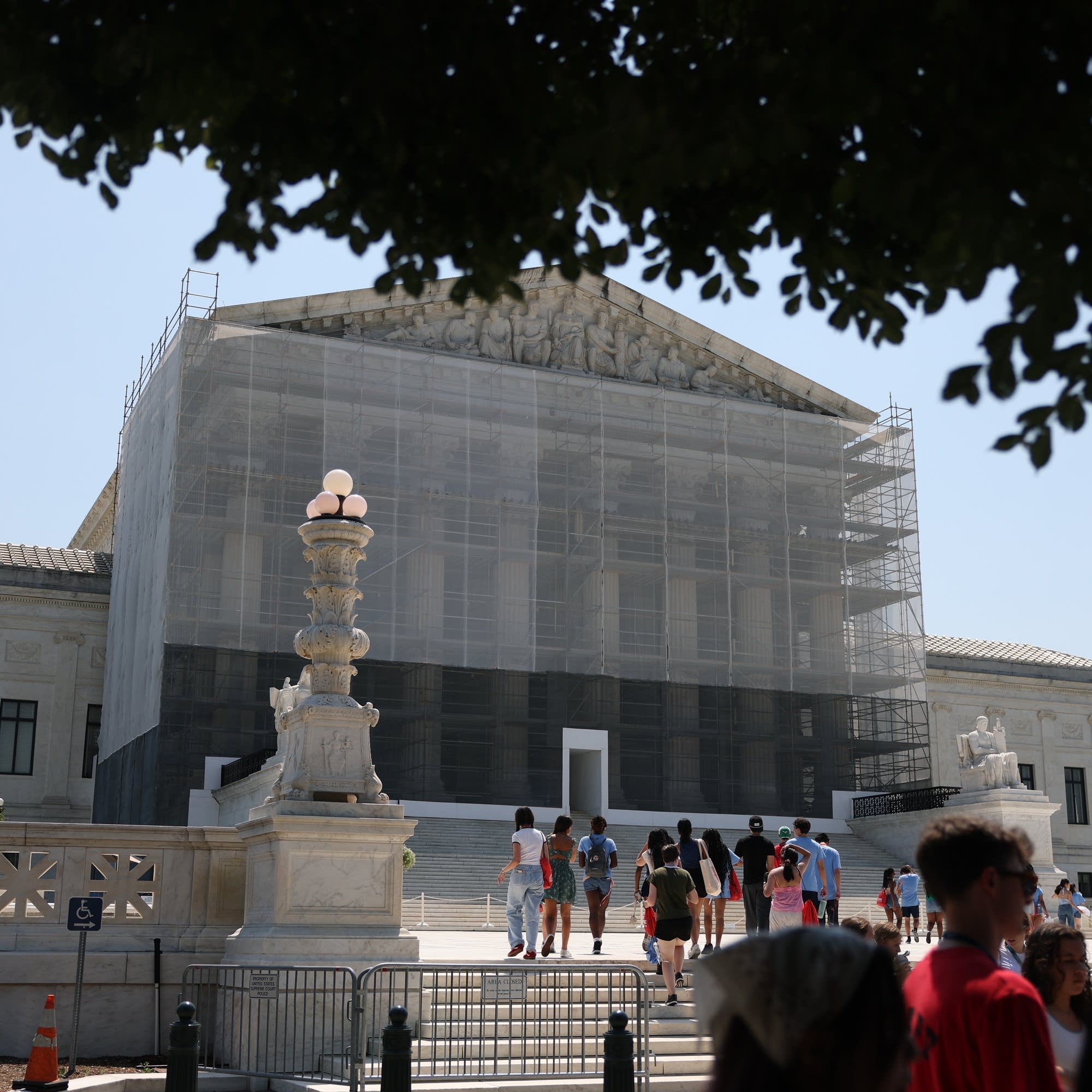
Court Delves Into Campaign Finance Again From Marketplace, I'm Nancy Marshall Genser in for David Brancaccio. Happy Fourth of July. Changes in the interpretation of campaign finance law could be on the horizon. The Supreme Court is revisiting the topic. It's been 15 years since the high court decided that corporations and unions can give unlimited amounts of money to candidates, but political parties have to work within separate limits when it's money used in tandem by the party and the candidate. David Brancaccio is here with more to.
- [01:35]
Palo Alto Networks Advertiser
Understand this, the key word is coordination. Political party and candidate working hand in hand to coordinate where the money goes. Typically the big bucks thing, campaign advertising.
- [01:48]
David Kolker
I can spend all the money. I like saying vote for Jane Smith for president and it's unlimited as long as I don't coordinate with her. But if I coordinate with her and say, Ms. Smith, I'd like to run an ad that highlights your vision on gun control and she says that's fantastic, please do that, then we've coordinated.
- [02:09]
Palo Alto Networks Advertiser
That's David Kolker, senior counsel at the Campaign Legal Center. Now he worked on a previous case involving this coordination issue that also ended up in the Supreme Court. In that one, from 2001, the High Court decided to keep limits on coordinated political party spending in an effort to minimize the effect of donors buying political influence.
- [02:31]
David Kolker
And then what the court has said is that because of the coordination, the potential for corruption is as great as if I had just written her a check. So when there's coordination it's equivalent to contributions and therefore it can be subject to limits.
- [02:50]
Palo Alto Networks Advertiser
But now the Supreme Court has agreed to look at this again after a Republican backed challenge which claims the coordinated money restrictions violate free speech rules. If the supreme court next year sides with that argument. Kolker argues it'll cause a new surge of campaign money from multiple directions.
- [03:10]
David Kolker
It's potentially going to lead to a huge circumvention of the limits that everybody lives with when they want to make direct contributions to candidates. You can only give about three or four thousand dollars to a candidate, but you can give a lot more than that to a political party. And if the political parties can take your money and then spend unlimited money to support a candidate, the incentive for you to give the maximum to the parties that they then use to help the candidates increases.
- [03:42]
Nancy Marshall Genzer
That's David Kolker with the Campaign Legal center in Washington, who spoke with Marketplace's David Brancaccio. Social media is now the number one place Americans turn to for their news updates. That's from a report by the Reuters Institute for the Study of Journalism at the University University of Oxford. It finds that across the political spectrum, Americans use social media more than television or print. Our program Marketplace Tech spoke with Nick Newman, a co author of the report, to talk about the state of news consumption in the US Certainly in the.
- [04:16]
Nick Newman
Last year we've seen a very significant increase in the percentage saying that they consume via some kind of social video network. So that's now over 50% and much higher with younger demographics as well. So that feels like a watershed moment and I think it's fueled by some of the other trends that we see in the US Market. So the rise of the creator economy, individuals, personalities leaving traditional media organizations, setting up on their own because they think they can have more control and ultimately they can reach audiences in new ways at a much cheaper cost.
- [04:52]
Nancy Marshall Genzer
And you can hear the full interview@Marketplace.org US markets are closed for Independence Day. They'll reopen Monday morning at 9:30 Wall street.
- [05:19]
Dell Advertiser
This Marketplace podcast is supported by Dell. The Black Friday in July event from Dell Technologies is here. There has never been a better time to upgrade. Now's your chance for great offers on popular trusted technology. You'll also discover huge deals on exciting new AI ready laptops like the Dell 14 plus featuring Intel Core Ultra processors starting at $699.99. Don't forget to explore big savings on top electronics and accessories. Plus enjoy fast free shipping and other exclusive benefits like Dell Rewards Premium support and DellCare Premium, which provides 24. 7 support with no hidden fees or deductibles. Upgrade for a limited time only@dell.com deals that's dell.com deals.
- [06:10]
Palo Alto Networks Advertiser
This Marketplace podcast is supported by Mercury. Mercury offers banking and Financial software to help businesses send money, create invoices, pay bills, and more all in one place. Learn more@mercury.com it's been a little over.
- [06:26]
Nancy Marshall Genzer
A year since the Supreme Court ruled that cities can break up homeless encampments even if no alternative housing is available. Since then, state and local governments have ramped up efforts to move people into shelters. Today we hear more about a new approach in Northern California for people living in RVs. From KQED in San Francisco, Vanessa Roncagno reports.
- [06:49]
Dell Advertiser
Elvia Guzman, her husband and their pit bull had been living in an RV for about four years when they ended up in an industrial corner of Berkeley. There was a lot of RVs and.
- [07:00]
David Kolker
A little community there.
- [07:01]
Dell Advertiser
They couldn't afford an apartment, and the RV provided some privacy, security and independence. But it wasn't ideal. Everything is like 10 times harder in an RV. Sometimes you don't have water.
- [07:13]
David Kolker
Sometimes it's too cold or too hot.
- [07:15]
Dell Advertiser
Not enough space. And over time, the area got more chaotic. Residents lined up to complain at city council meetings.
- [07:24]
Nancy Marshall Genzer
Trash is spewn everywhere, feces, urine, spoiled food, rats screaming.
- [07:32]
Dell Advertiser
The city decided it had to shut the encampment down. Peter Radu, who runs Berkeley's homeless response team, says past shelter offers to the residents had mostly failed.
- [07:43]
David Kolker
These folks largely don't consider themselves to be unsheltered.
- [07:48]
Dell Advertiser
So Radu and his team decided to test a new strategy to get people out of their RVs.
- [07:53]
David Kolker
What if we could buy it for them? Would that change their willingness to engage with us?
- [07:59]
Dell Advertiser
If RV owners agreed to move into a motel shelter, the city would pay cash based on their vehicle size. Guzman and her husband got about $3,000 for their RV and promptly put it into savings. The that gives them some reassurance in case they get kicked out of the shelter or the program runs out of funding.
- [08:18]
David Kolker
We don't have another RV to go.
- [08:20]
Dell Advertiser
To or like a plan B, you know, so we gotta have something. By late spring, the motel shelter was full of the 32 RVs outreach workers came across in the encampment. Just three remain on the streets.
- [08:34]
David Kolker
By that metric, it was a resounding success and something that we're looking to expand upon.
- [08:39]
Dell Advertiser
In other encampments In West Berkeley, there's little trace of the encampment. The heaps of garbage are gone and dozens of new street signs threaten would be lodgers with arrest. There's not an RV in sight, and 36 people who are on the street are now living in a city leased motel. The idea is to get those folks into permanent housing as soon as possible. In Berkeley, I'm Vanessa Rancagno for Marketplace.
- [09:06]
Nancy Marshall Genzer
And in Washington, I'm Nancy Marshall Genzer with the Marketplace Morning Report from APM American Public Media. From Emmy Award winning series this Old House comes a new podcast. This Old House Radio Hour. We tell stories of the artisans, builders and visionaries that keep the spirit of craftsmanship alive. We also uncover America's forgotten homes with cheap old houses hosts Elizabeth and Ethan Finkelstein. Places with history, soul and price tags that seem too good to be true. Listen and follow this Old House Radio Hour from LAS Studios and American Public Media. Wherever you get your podcasts.