Loading summary
Transcript31 lines
- [00:00]
Marketplace Host
This Marketplace podcast is supported by Palo Alto Networks. Listen to threatvector, the Palo Alto Networks podcast, for in depth discussions with industry leaders and experts providing crucial insights for security decision makers. Whether you're looking to stay ahead of the curve with innovative solutions or understand the evolving cybersecurity landscape, ThreatVector equips you with the knowledge needed to safeguard your organization. Tune in and subscribe to threatvector wherever you get your podcasts. This Marketplace podcast is supported by Dell Introducing the New Dell AI PC. Powered by Intel Core Ultra processor, it helps do your busy work for you so you can fast forward through editing images, designing presentations, generating code, debugging code, summarizing meeting notes, finding files, managing your schedule, responding to long emails, leaving all the time in the world for the things you actually want to do. Get a new Dell AI PC starting at $699.99 at Dell.com AI PC how those ahead? Stay ahead.
- [01:02]
Sabri Beneshore
Putting the T in Tariff from Marketplace I'm Sabri Ben, ashore in for David Brancaccio. First, a look at inflation. The Consumer Price Index is out this morning and it shows price increases are accelerating. Prices overall in the economy rose 3/10 of a percent in June. That is up from 1/10 in May. Core inflation, that's when you take out food and energy, rose 2.9% year over year. That's up from 2.6% the month before. Ernie Tedeschi is Director of Economics at the Budget Lab at Yale and joins us to talk about it. Good morning Ernie.
- [01:33]
Ernie Tedeschi
Good morning. How are you hanging in there?
- [01:36]
Sabri Beneshore
So according to Inflation Insights, core goods prices, if you take out Automobiles, increased by almost 6.10 of a percent. That's the biggest monthly increase since November of 2021. Is this tariffs? Is this what we're seeing here?
- [01:49]
Ernie Tedeschi
It probably is at this point. So when you dig into especially the commodity part of cpi, so think of appliances, electronics, furniture, that sort of thing, you're starting to see much more clear price increases than we have in the past.
- [02:08]
Sabri Beneshore
So if we are seeing tariffs start to hit, what can we expect in the next few months? Like how much more do you think there there is to go here?
- [02:20]
Ernie Tedeschi
There's a lot of uncertainty, so I don't have a perfect answer for you. I think what we've learned so far is a couple of things. One is that tariffs are not like the pandemic. It's not like you wake up one morning and the world is entirely different. Tariffs phase in over time and you don't see the tariff cost increases until businesses run out of stock and order more. Right. And different businesses can be on different timelines for that. I think that this process will probably take a year or two before tariffs are fully incorporated into the price data. So we just need to be patient and we can't declare victory over tariffs.
- [03:04]
Sabri Beneshore
Prematurely if indeed tariffs do continue to hit, but they take a while to sort of soak into the economy. Do you see them as a threat to growth overall in the US I'm.
- [03:15]
Ernie Tedeschi
More concerned about the threat to growth than I am to inflation. Overall, tariffs increase prices, but goods prices are only a small portion of what we see in the overall economy. Most of what we buy in the economy actually is services, hospital services, you know, going to the barber or the salon, that sort of thing. And that part of the economy is much less directly impacted than tariffs than the good side of the economy is. I think, though, where they could threaten to have a bigger impact on the economy is growth, the size of the economy in general. So that really concerns me, and I think that eventually that could have consequences for the labor market as well, raising the unemployment rate, possibly impacting wage growth.
- [04:06]
Sabri Beneshore
Ernie Tedeschi, director of economics at the Budget Lab at Yale. Thanks so much.
- [04:11]
Ernie Tedeschi
Thanks for having me. This Marketplace podcast is supported by Mercury. Mercury offers banking and financial software to.
- [04:36]
Sabri Beneshore
Help businesses send money, create invoices, pay.
- [04:39]
Ernie Tedeschi
Bills, and more all in one place.
- [04:42]
Sabri Beneshore
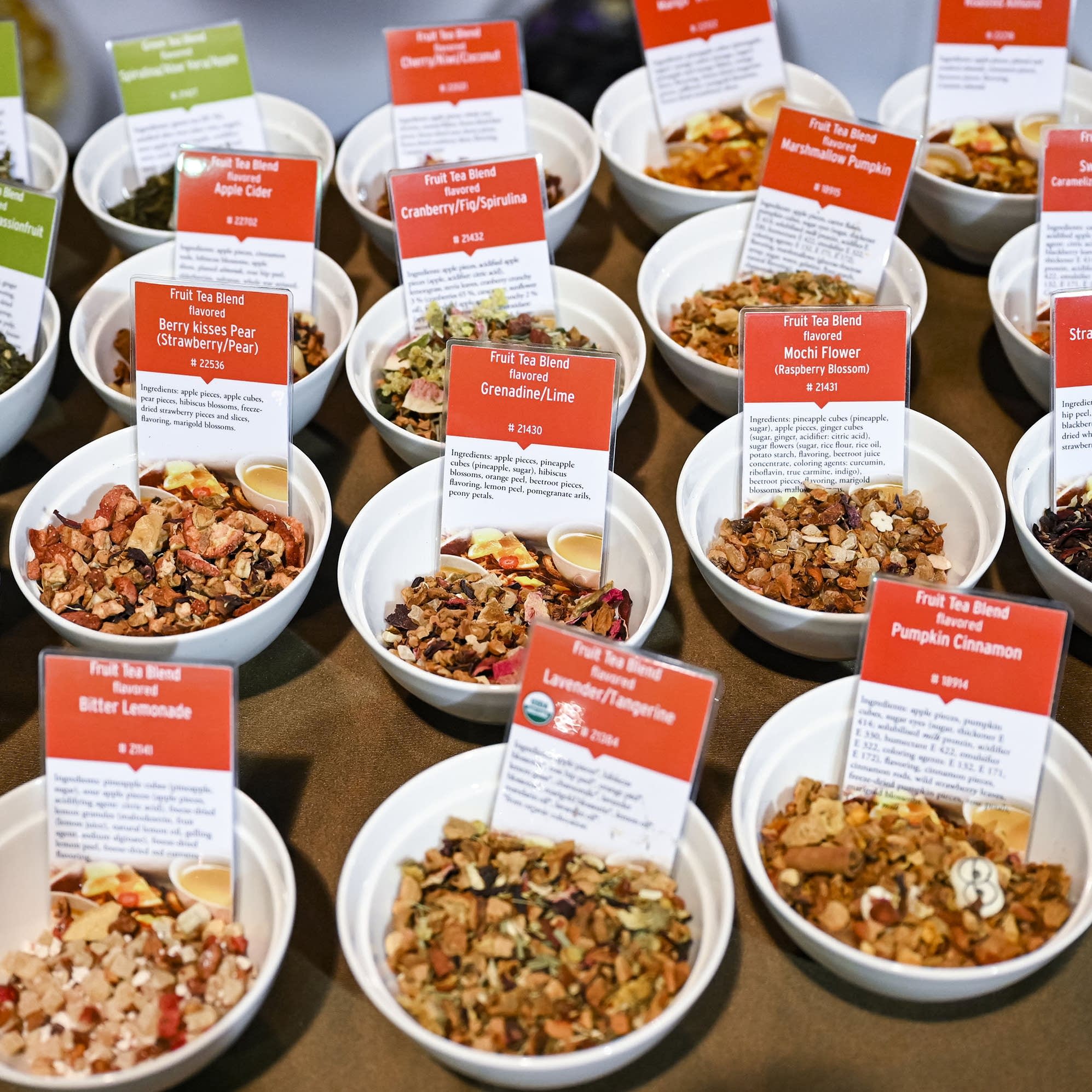
Learn more@mercury.com New tariff threats are piling up. The US is now charging a 17% tax on Mexican tomatoes. The president has threatened higher tariffs on goods from the EU and on anyone who trades with Russia. The EU is preparing retaliatory tariffs. Stuck in the middle of all of this are small businesses run by people just trying to make a living. Today we check in with one of them. Rachel Rosner is the owner of Eldon Street Tea Shop in Reston, Virginia. Good morning.
- [05:10]
Rachel Rosner
Good morning.
- [05:11]
Sabri Beneshore
So what kind of teas do you sell? Where are they from?
- [05:13]
Rachel Rosner
We have tea all over the world. China, Japan, India. We have tea from Taiwan, Brazil. We also work with small craft tea blenders in the United States as well.
- [05:26]
Sabri Beneshore
Can you get tea from the US Is that something that we grow here?
- [05:29]
Rachel Rosner
We do have a small group of American tea farmers in the US but they are not a sustainable farm for the large tea industry as well as the many tea shops and tea houses in the United States. We also, I think, have about 400 acres total in the United States of tea farms. So it's not as sustainable for the commercial industry of tea, for sure.
- [05:55]
Sabri Beneshore
Yeah. What tariffs are you having to pay.
- [05:58]
Rachel Rosner
Now, currently we are having to pay tariffs in China. In fact, I have order that's going to be coming in in the next couple of weeks that we're having to pay about a 27% tariff on currently.
- [06:13]
Sabri Beneshore
Are tares something that you are able to to eat or share along the supply chain?
- [06:20]
Rachel Rosner
The answer is right now we're kind of just holding on as much as possible, trying not to increase our prices. Eventually, we are going to have to increase our prices because what happens is the tea comes over from a broker. We usually buy it from a middleman, the middleman puts on their margin on it and then we pay. But actually, we are kind of taking a different avenue. Right. Actually purchased a wholesale tea company in order to circumvent some of the middle tea companies in order to buy direct to avoid these tariffs. If the tariffs go up any higher, say 30% or higher, that's when we're going to have to start really thinking about what we're bringing in as well as our price increases.
- [07:07]
Sabri Beneshore
How do you plan for that? Can you plan for that?
- [07:12]
Rachel Rosner
Well, right now, currently I am working with 50 other tea businesses and coffee businesses to ask for a reduction in the tariffs to zero. Tea has never been tariffed. It has been taxed. And I have a sign at my shop that literally says the last time tea was taxed, there was a revolution. And it's kind of to provoke something that people are able to relate to on a daily basis. People don't necessarily understand the impact of aluminum and steel on tariffs, but they do understand if their tea or coffee is impacted.
- [07:50]
Sabri Beneshore
Rachel Rosner, she's the owner of Eldon Street Tea Shop in Reston, Virginia. Thanks again.
- [07:56]
Rachel Rosner
Thank you so much.
- [07:58]
Sabri Beneshore
Over on Marketplace's afternoon show, Kai Rysdal and team have spent the past few months exploring demographic changes we are going through as a country right now. Specifically, they're taking a look at how an aging labor force in developed countries like the US will affect the economy here and globally. For the next installment in their series, Age of Work, they are in the UK which is a little bit ahead of the US when it comes to aging. By 2050, 1 in 4 people there will be 65 or older. Here's the story of one family business in London.
- [08:31]
Leo Epstein
My name's Leo Epstein. I'm the owner of EPRA EPA Fabrics in Brick Lane. And we've been here so far 69 years. I'm 92 and a half. When we started or even after many years after we started, this was the center of what they used to call the rag trade, anything to do with fabrics, dresses, haberdashery, were all around here slowly because they said it's trendy. The rents have gone up crazy. And it's all wine bars and restaurants and those sort of things that have opened. So, I mean, I don't like it, but ain't going anywhere so far. Well, we own the place, but I could never buy it. Today you talk about millions, you know, but in those days, bricklaying, you, you could buy things because it was a cheap area. But today it's just crazy. Actually, it's my grandson who's sitting in the office because he's young and keen. You know, you lose a little bit of get up and go, you know, I've been there, done it, you know, got chasing him again. But he's young, so he's keen and he tries and so on. So we got three generations, me, my son and my grandson, running the business. I'm lucky that they said, let me come in. If I stay at home, what would I do all day? Walk from one room to the other, Go nuts. You know, it gives you something to think about and to talk to and chase a few customers. There's always something to do for me.
- [10:17]
Sabri Beneshore
In New York, I'm Sabri Benishore with the Marketplace morning report from APM American Public Media.
- [10:28]
Marketplace Host
From Emmy award winning series this Old House comes a new podcast, this Old House Radio Hour. We tell stories of the artisans, builders and visionaries that keep the spirit of craftsmanship alive. We also uncover America's forgotten homes with cheap old houses. Hosts Elizabeth and Ethan Finkelstein. Places with history, soul and price tags and that seem too good to be true. Listen and follow this Old House Radio Hour from LAS Studios and American Public Media. Wherever you get your podcasts.