Loading summary
Transcript18 lines
- [00:00]
Wix Advertiser
So you've got a business, but what about a brand? The difference? More of you. Wix gives you the freedom to create your website, own your brand and do it on your own, exactly how you envisioned it. Experience limitless customization. Boost your creativity and efficiency with AI tools for every part of your business journey. Scale up with built in SEO, e comm and scheduling features. Put more of you in your business. Go to Wix.com and do it all yourself. For 140 years MultiCare has been in Washington prioritizing long term solutions, partnering with local communities and expanding access to care. Together we're building a healthier future. Learn more@mycare.org.
- [00:47]
Sarah Rogers
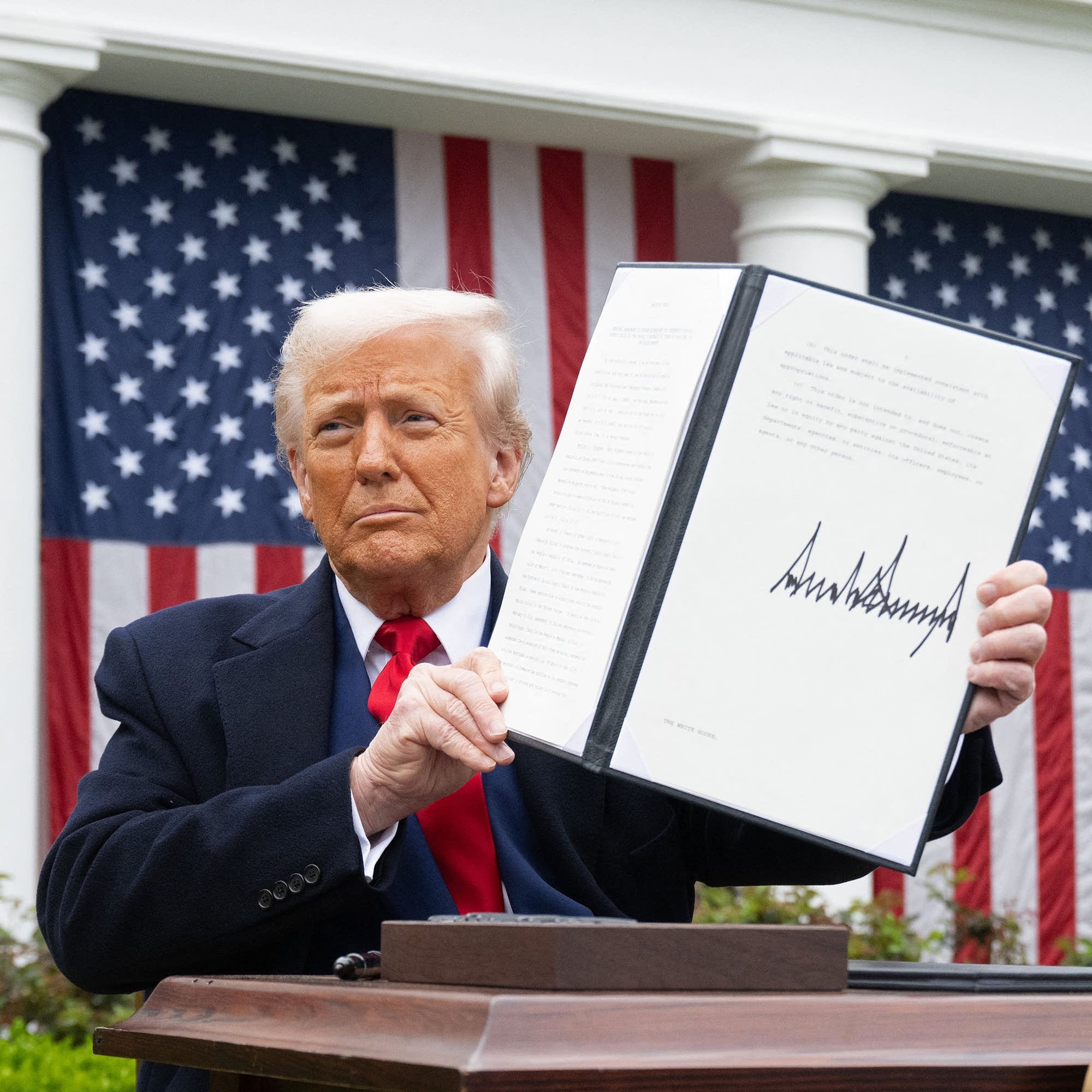
As US trade tariffs sweep the globe, let's take stock of what it all means. Live from the UK this is this is the Marketplace Morning report from the BBC World Service. I'm Sarah Rogers. Good morning. From today, President Trump's tariffs are now in effect. They range from 10% to as high as 50%, depending on where in the world you are. From Singapore. Here's the BBC.
- [01:10]
Sarajane Tiwari
Sarajane Tiwari, Many products, including those from the European Union, Japan and South Korea now face a 15% tariff even with trade deals struck with Washington to avert steeper levies. Hours before the higher tariffs came in, the US president threatened to impose a 100% duty on foreign made computer chips. Some of Asia's biggest chipmakers will be exempt because Mr. Trump said those with factories in the US would not have to pay. But experts say smaller American businesses will be affected, especially those importing chips from countries like Malaysia and the Philippines.
- [01:50]
Sarah Rogers
Saranjana Tiwari There now, some countries negotiated a trade deal to avoid those higher tariffs. But some, like Switzerland, which is facing a 39% levy, fail to get an agreement through in time. Its government will hold crisis talks on what to do next. From today, India faces a 25% duty and it will be hit with an additional 25% in three weeks because the country imports oil from Russia. The BBC's Divina Gupta is in Delhi as businesses assess the impact of that announ announcement.
- [02:22]
Vidhur Nag
Well, I'm at a commercial district in the capital city. Around me there are shops which are selling garments and bags and shoes and there's a truck which is unloading rolls of cloth. So this is the place where you would find wholesale dealers which are also exporting these products to the US and they are extremely worried with these additional tariffs. Vidhur Nag is a garment exporter to the US and he told me how worried he is.
- [02:50]
Divina Gupta
Well, the impact is going to be pretty significant given that the US is our largest export market. And you know, it's almost 30% of our exports across industries, employs a huge amount of people. So there's also that human and social side to this story. And I think it's just going to lead to drying up of orders and you know, a very severe demand destruction, something on the lines of COVID where buyers would just stop placing orders. And our hope is that these are not permanent in nature and you know, the US and India reach a mutually beneficial deal.
- [03:19]
Sarah Rogers
Garment exporter Vidhar Nath speaking to Davina Gumpta. Now, while the tariffs are far reaching, some countries are less exposed. Copper is a major export from Zambia and some copper exports are taxed at 50% whilst other products from the country will be charged at a 15% rate. But most of its exports head to commodity traders in Europe. So here's Trevor Hambayi, the financial analyst in Lusaka at Development Finance Associates.
- [03:46]
Trevor Hambayi
Zambia only has exports to the US of the value of around 170 million, which is less than 1% of the country's exports. So in terms of the tariffs, obviously the ones that will pay the price are the American people because that is where the cost is going to lie as for Zambia, is that it is a gap that needs to be filled and it will be filled by alternative sources. China has already offered the African continent free trade access to the Chinese market. And this is an alternative that these countries will be looking at.
- [04:18]
Sarah Rogers
Okay, let's do the numbers. Asian equities rose as investors look past those US plans to impose 100% tariffs on chips and optimism for interest rate cuts from the Fed. Oil prices are recovering from a five day decline on signs of a steady demand in the United States. Although concerns over the economic impact of tariffs capped gains. Officials in Mexico have accused the sportswear company Adidas of cultural appropriation over a pair of sandals which closely resemble a traditional indigenous design. Adidas has not yet responded. In June, Prada faced a similar accusation after unveiling footwear line which closely resembled traditional Indian Kolapuri sandals. And how far do you travel to pick up your groceries? Well, for people living in the rural Australian settlement of Barungara, going shopping used to mean a 10 hour or 500 mile round trip. But that's changed after a new shop opened. BBC's James Graham spoke to Samantha Dalton, the principal of the Barangara Remote Community School.
- [05:24]
Samantha Dalton
The community would drive in to Carnarvon to do a shop at Woolworths Woolies. That's five hours each way. So we would kind of see the kids go and then they just wouldn't come back. People have family in Carnarvon so they would stay with family or friends. Just a simple food shop would take weeks. But now we've got the Barangarra shop. People are staying and the kids are coming to school and our attendance has just gone through the roof at school.
- [05:59]
Interviewer
So it's obviously benefiting school attendance. But if you can just explain the other benefits.
- [06:03]
Samantha Dalton
It's better for me to recruit teachers when I can say, oh, we've got fresh fruit and veggies every week. People don't want to be that isolated, working remote. It's a hard job but sometimes you just need a, you know, a Cornetto at the end of, end of the week. So all the fruit and veggies are there and it's really competitive pricing.
- [06:26]
Interviewer
It must have a big impact on just the quality of life if you haven't got to dedicate all that time and effort to traveling to, to get food.
- [06:34]
Samantha Dalton
Food insecurity is a really big thing and I don't think you should have a community without a shop. I used to work at another community at Yoga Jinnah which is also in the Midwest and that didn't have a shop and it just felt like a bit of a ghost town. Barangara is the shop is its backbone. You see everyone there, it's got a real community feeling, it's got the fuel there. It's just what you do on a Saturday morning is like go down and have a chat to everyone.
- [07:03]
Interviewer
So this is actually a pilot project and it's been supported with government grants. Will it continue?
- [07:08]
Samantha Dalton
Because we're not on gold country or iron ore country. You don't have that injection that other communities have of mining royalty money and stuff like that. So we're on cattle country, but yeah, hopefully we continue to have our shop forevermore because it's a really, really good thing when I'm recruiting teachers.
- [07:28]
Sarah Rogers
Samantha Dalton and in the uk I'm Sarah Rogers with the Marketplace Morning Report from the BBC World Service.
- [07:36]
Wix Advertiser
It's time to turn your daydream into your dream job. WIX gives you the power to turn your passion into a moneymaker with a website that fits your unique vision and drives you towards your goals. Let your ideas flow with AI tools that guide you but give you full control and flexibility. Manage your business from one dashboard and keep it growing with built in marketing features. Get everything you need to turn your part time passion into a full time business. Go to wix.com.