Loading summary
Transcript15 lines
- [00:02]
A
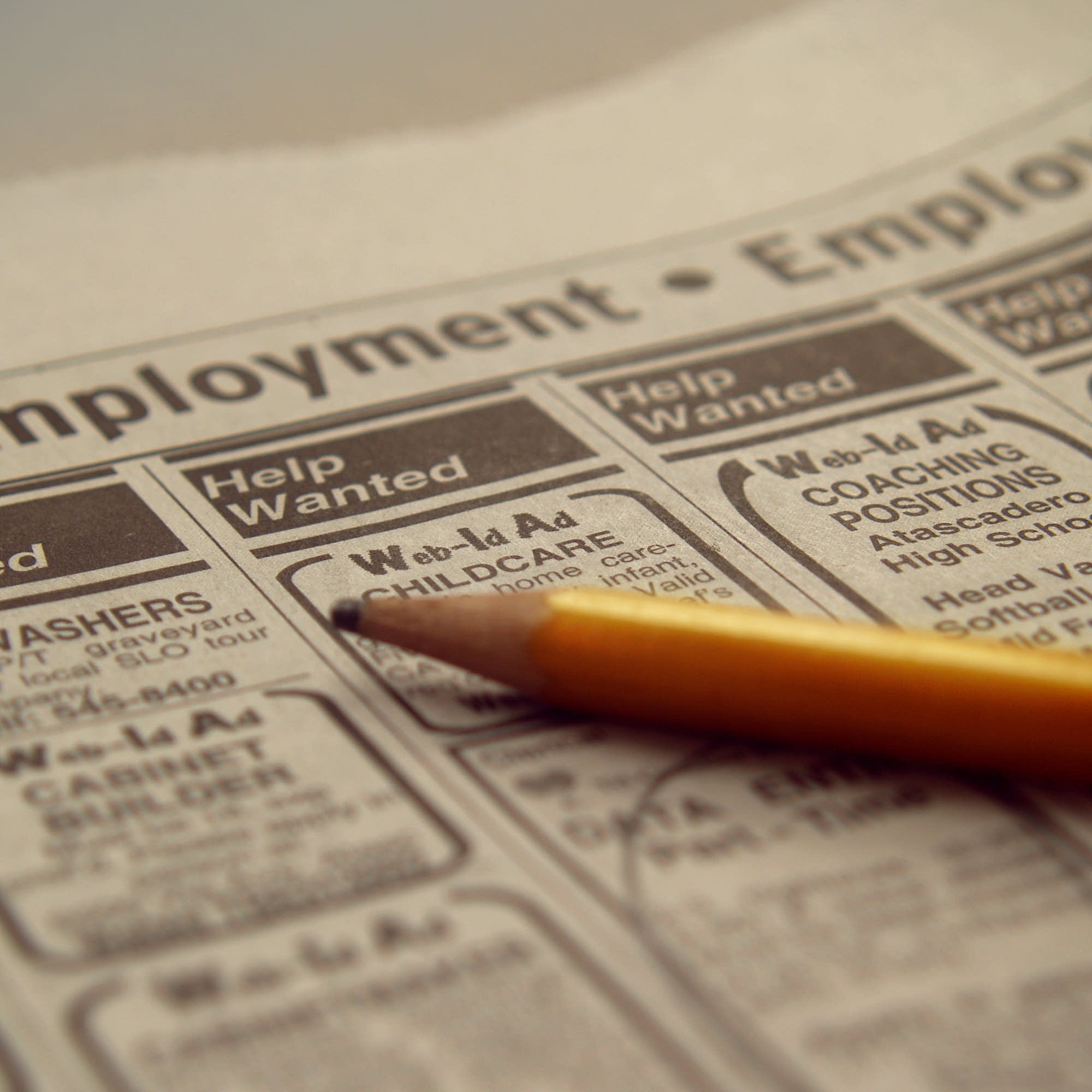
We just got a lackluster jobs report. I'm David Brancaccio in Los Angeles. First, there's news. Fewer than expected people were hired in the month just ended. Just 50,000 more were hired. And there were major revisions downward to payroll data going back several months. And watch out for the headlines on the unemployment rate moving down a notch. Diane Swonk is chief economist at the audit, tax and advisory firm KPMG.
- [00:27]
B
We've got 584,000 jobs created in 2025. That is the lowest level since 2020 and the second lowest level for hiring since the global financial crisis in 2009. What we did see on the positive side was a rebound in leisure and hospitality, leading gains this month. And that's because of the catch up due to the government shutdown, flight delays, everything like that. Also, all of the month of December was sort of the entire was compressed into one month along with holiday travel. So that showed up in December that hiring instead of November.
- [01:07]
A
Much will be made of the unemployment rate going in the quote, right direction, ticking down a notch to 4.4%. Did it tick down for the right reasons?
- [01:16]
B
Well, participation in the labor force actually receded in the month of November. So that's the wrong reason to see the unemployment rate go down. The other important issue in the overall data is that we've seen those people having to accept part time instead of full time work swelled to almost a million this year. That sort of reflects the underlying stress in the Labor Market. The U6, which is that stress measure that we do of unemployment, which includes marginalized workers, that fell to 8.4%, which is still 2.2% above the levels we saw back in 2019. And it's really a sense that the overall unemployment rate is no longer representative how people feel about the labor market. Essentially those who have a job clinging on, while those who do not have a job and trying to get a job are feeling locked out.
- [02:26]
A
Eighteen high school students from in and around areas hit by the terrible California fires one year ago got a taste of nonfict storytelling. It's a youth initiative out of the University of Southern California's Annenberg School of Communication. The high schoolers gathered oral histories from fire survivors and chronicled their own experiences. One team asked people from the fire zones about objects lost and objects found. Some experts here now, starting with Jonathan Gottlieb and his daughter Samara.
- [02:56]
C
Okay, this is Blue Bear. He's like the thing my dad got from our house. Other than like what was in the safe, like our passports, everything like that. But I've had him since I was a baby, and, like, he's really special to me. So, like, I'm glad I have him.
- [03:19]
D
We lost everything. There are a few things that stand out. One is that both my parents died. So I had all of my family history, which I saved a very little bit of boxes of report cards and immigration papers and photos from my parents that no longer exist in the world.
- [03:43]
E
Everything, everything's gone. I think what I miss the most is the kids artwork and kids schoolwork and letters. That's what I wish. If I'd had more time that day, I would have grabbed those things. It was really more my daughter than my son. My son only found a couple of things, and they weren't that meaningful to him. She was able to find some jewelry, so I think it made her feel more connected, a little bit less isolated.
- [04:14]
F
Maybe when the house was built, they, you know, in California, they would press dates into things. I found a lot of Acme bricks. And then digging through, I went, oh, my God. This is like a cornerstone of the house that we have to carry. You're just. You're digging through crumbled bricks and debris, and you've got a mask on and it's hot and you're sweaty and you've got your Tyvek stuff on. You've got your work boots because, you know, you don't want to step on nails. So I had to buy a pair of industrial work boots. And then all of a sudden you go, I found this chain, what looked like a chain. I wasn't sure if it was a chain. And then I pulled it up and that was there. I think the loss is the physicality of a house that we loved, that we raised our family in. It was the first house we ever bought, and it was the house we were going to die in.
- [05:12]
G
We lost, like, things that my grandparents had given to me or things that my grandparents had given to Olivia. But most of the time, what I miss is the little stuff, the coffee mugs that we had as our Christmas decorations. It's all that little stuff. I think what we found is a lot of intangibles. I think that we found a new way to work together as a family. I think we found a new adventure living in a different place, living in a new neighborhood. And what we didn't lose was the strength of being a family through a difficult time.
- [05:51]
A
Objects lost and objects found in the ashes of the wildfires. One year ago, you heard Samara and Jonathan Gottlieb, Ashley Burkhart Ninki, Dalton Egley and Matt Mooney. These were drawn from a high school reporting initiative out of USC's Annenberg School. @ my burned house in Altadena, we found only two valued objects in the ash. A bird shaped brass door knocker and a singed copper flas that before the fire held water from the glacier that feeds the Ganges river in India, a memento from a climate change TV story I'd done from the Himalayas. We're hoping the water that vaporized somehow blesses everyone trying to get their lives back together in the wake of this ongoing mess. All of our stories on the fires one year later are streamable from marketplace.org in Los Angeles, I'm David Brancaccio with the Marketplace morning report from APM American Public.
- [06:48]
H
Media. Hey, everybody, it's Kai Rysdal, the host of Marketplace. It has been a year since the fires here in Los Angeles, and businesses that burned are still.
- [06:58]
D
Struggling. You know, I won't lie. I've looked, I've looked at, you know, hey, maybe, maybe we move the store. It just, it wouldn't be the.
- [07:05]
H
Same hardware store on the ground reporting and what the year ahead has in store for business owners still recovering. Listen to Marketplace on your favorite.
- [07:13]
F
Podcast.