Loading summary
Transcript19 lines
- [00:00]
A
What does 268 horsepower sound like? You're hearing it right now. The all new Audi A5. Precision crafted to bring the thrill to every turn. This is powerful performance. The all new Audi A5.
- [00:15]
B
This podcast is supported by Odoo. Some say Odoo business management software is like fertilizer for businesses because the simple, efficient software promotes growth. Others say Odoo is like a magic beanstalk because it scales with you and is magically affordable. And some describe Odoo's programs for manufacturing, accounting and more as building blocks for creating a custom software suite. So Odoo is fertilizer magic beanstalk building blocks for business. Odoo exactly what businesses need. Sign up@odoo.com that's o d o o.com.
- [00:47]
C
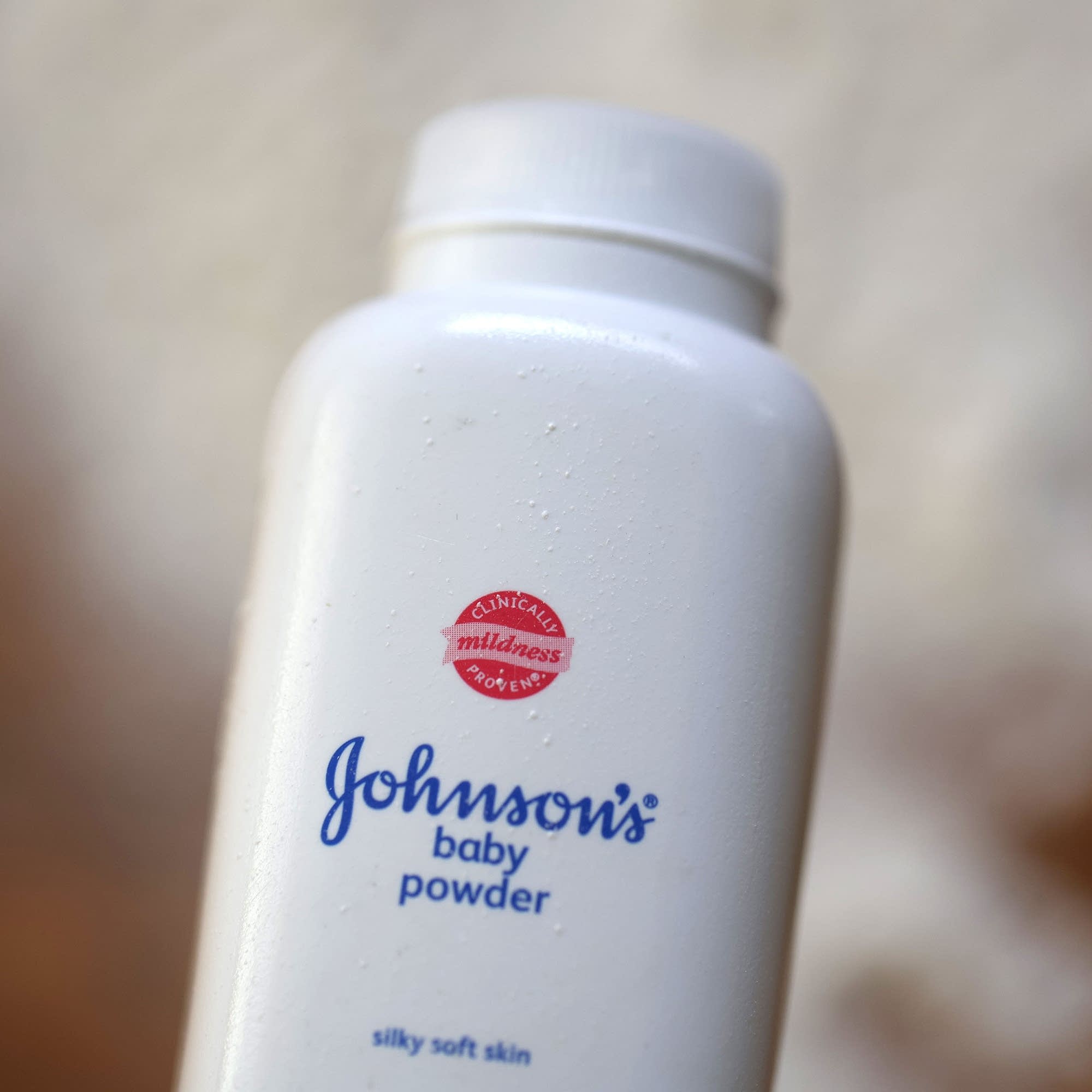
Thousands of people are taking a pharmaceutical giant to court over claims one of its products is linked to cancer. Live from the UK this is the Marketplace Morning Report from the BBC World Service. I'm William Lee Adams. Good morning. We begin in the UK where Johnson Johnson is being sued by 3,000 people who say the company knowingly sold baby powder contaminated with carcinogens, including asbestos. Johnson and Johnson denies the allegations. The BBC's Chloe Hayward reports.
- [01:16]
D
For decades, Johnson and Johnson's baby powder was marketed as safe for infants and families. But a new group Action alleges that internal documents show that company executives knew the powder contained cancer linked fibrous minerals, including asbestos, yet failed to warn consumers. The civil lawsuit involves more than 3,000 claimants, all who say they used the baby powder for an extended period and are now suffering from severe illnesses including ovarian cancer and mesothelioma. The case mirrors massive litigation in the US where billions of dollars in damages have been awarded to the plaintiffs. UK lawyers say this case could become the largest product liability case in British history. JJ denies the allegations, insisting its powder met regulatory standards and doesn't cause cancer.
- [02:05]
C
The BBC's Chloe Hayward Swiss food company Nestle, known for brands like Nespresso and KitKat, is cutting 16,000 jobs worldwide over the next two years. That's around 6% of its workforce. The food and drink giant hopes to save over $1.2 billion with the cuts. The news sent its shares up 8% in early trading. Nestle has suffered two years of slowing sales growth as shoppers trade brand names for che paper own label goods. And last month its previous chief executive, Laurent Frex, was fired over an undisclosed romantic relationship. Next to India, which has agreed to stop buying Russian oil. At least that's according to Donald Trump however, that's not quite the story we're hearing from India this morning. The US President said he had received assurances from Narendra Modi as part of efforts to put economic pressure on Moscow to end the war in Ukraine. However, India says it will continue to prioritize the country's needs in what it's calling a volatile energy. The BBC's Arunade Mukherjee reports from Delhi.
- [03:07]
E
India has consistently resisted growing pressure from the US over its Russian oil imports, saying it needs to secure its energy requirements given the rising population and rapidly growing economy. In a statement, the Foreign Ministry indicated, however, that the government was open to diversifying as appropriate to meet market conditions. Reacting to President Trump's remarks, the the statement said discussions were ongoing with the US Administration, which they said had shown interest in deepening energy cooperation with India. Delhi has always maintained close ties with Moscow, and Prime Minister Modi for months has stood his ground, citing India's neutral stand in the Russia, Ukraine war.
- [03:47]
C
Arunade Mukherjee in Delhi let's do the numbers. Well, those claims we've just heard about from Donald Trump has seen the price of oil jump 1%. Brent crude futures rose above $62 a barre, and chipmaker TSMC says third quarter profit is up 39%, hitting a record profit of just under $15 billion. That's amid surging demand for semiconductors used in AI applications. Now to the continuing political turmoil in France, where Prime Minister Sebastian Le Cornu has survived one vote of no confidence but still faces another. Lecournu, who has already resigned once, has agreed to freeze President Macron's pension reforms, which raised the retirement age to 64. The country is facing a debt crisis and still needs to get next year's budget agreed. Now countries around the world are racing to get the big tech firms to build AI infrastructure within their borders. Right now, 90% of the world's data centers are owned by US and Chinese companies. The two economic superpowers dominate the field of AI. So what does that mean for the rest of the world? It's something the BBC's Hannah Mullane has been looking into.
- [04:57]
F
Nicholas Vlovic is a computer science professor at the National University of Cordoba in Argentina. He is running what counts as one of his country's most advanced AI computing hubs from a converted room at the university, a stark difference from the infrastructure you might find in the US let's enter.
- [05:14]
G
But the noise will be unbearable.
- [05:22]
F
Nicholas has been repurposing a lot of old computer equipment to run the site.
- [05:26]
G
We used very old servers that were from 2012 and we repurposed them adding GPUs. So we added stuff like that to get a new life to the computer. It was the only way to get something related to AI working.
- [05:44]
F
It's a theme replicated in many parts of the world. Lack of investment and infrastructure holding countries back from developing homegrown artificial intelligence businesses. In Kenya's capital Nairobi, software engineers for the AI startup called Carla head into the office at 3:30am they develop artificial intelligence software for businesses around the world, but they don't have local data centers to power their business, so they have to use compute power from other parts of the world.
- [06:12]
H
You have to find time when not everybody's hogging their resources.
- [06:17]
F
Shiko Gutao is the CEO of Carla.
- [06:19]
H
When you're training a model, you're sending large files of data to computer system somewhere. The further it is, the slower it is. Sometimes the engineers leave it overnight to run so that when Americans have gone to sleep, they're able to run their work. Before Europe wakes up, you're able to run their work, but relying on the.
- [06:40]
F
US and China for that computing power isn't ideal for Carla and other AI startups. Some companies are concerned about protecting proprietary data and are now looking to Europe for cloud providers. I'm the BBC's Hannah Mullane for Marketplace.
- [06:56]
C
And in the UK I'm William Lee Adams with Morning Report from the BBC World Service. On behalf of the entire team, thanks for listening.
- [07:11]
I
I'm Kimberly Adams, host of Make Me Smart, a podcast from Marketplace that makes today make sense. Join me throughout the week as I dig into the biggest stories in tech culture and the economy. Whether it's a vibe check on the job market or the latest on China US relations, Make Me Smart helps you understand how the headlines actually impact your daily life. Listen to Make Me Smart on your favorite podcast.
- [07:37]
J
Apparently.