Loading summary
Transcript20 lines
- [00:00]
Morgan Stanley Host
This episode is sponsored by Morgan Stanley's Thoughts on the Market. Today's financial markets move fast. Morgan Stanley moves faster with their daily podcast, Thoughts on the Market. Thoughts on the Market covers daily trends across the global investment landscape with actionable insights from Morgan Stanley's leading economists and strategists. And with most episodes under five minutes long, staying informed has never been easier. Listen and subscribe to Thoughts on the Market wherever you get your podcasts.
- [00:30]
Odoo Advertiser
Running a business is hard enough, so why make it harder with a dozen different apps that don't talk to each other? Introducing Odoo, the only business software you'll ever need. It's an all in one fully integrated platform that makes your work easier from CRM, accounting, inventory, e commerce and more. And the best part? Odoo replaces multiple expensive platforms for a fraction of the cost. This is why over thousands of businesses have made the switch. So why not you try Odoo for free@odoo.com that's o d o o.com TikTok's.
- [01:02]
Nick Qureshi
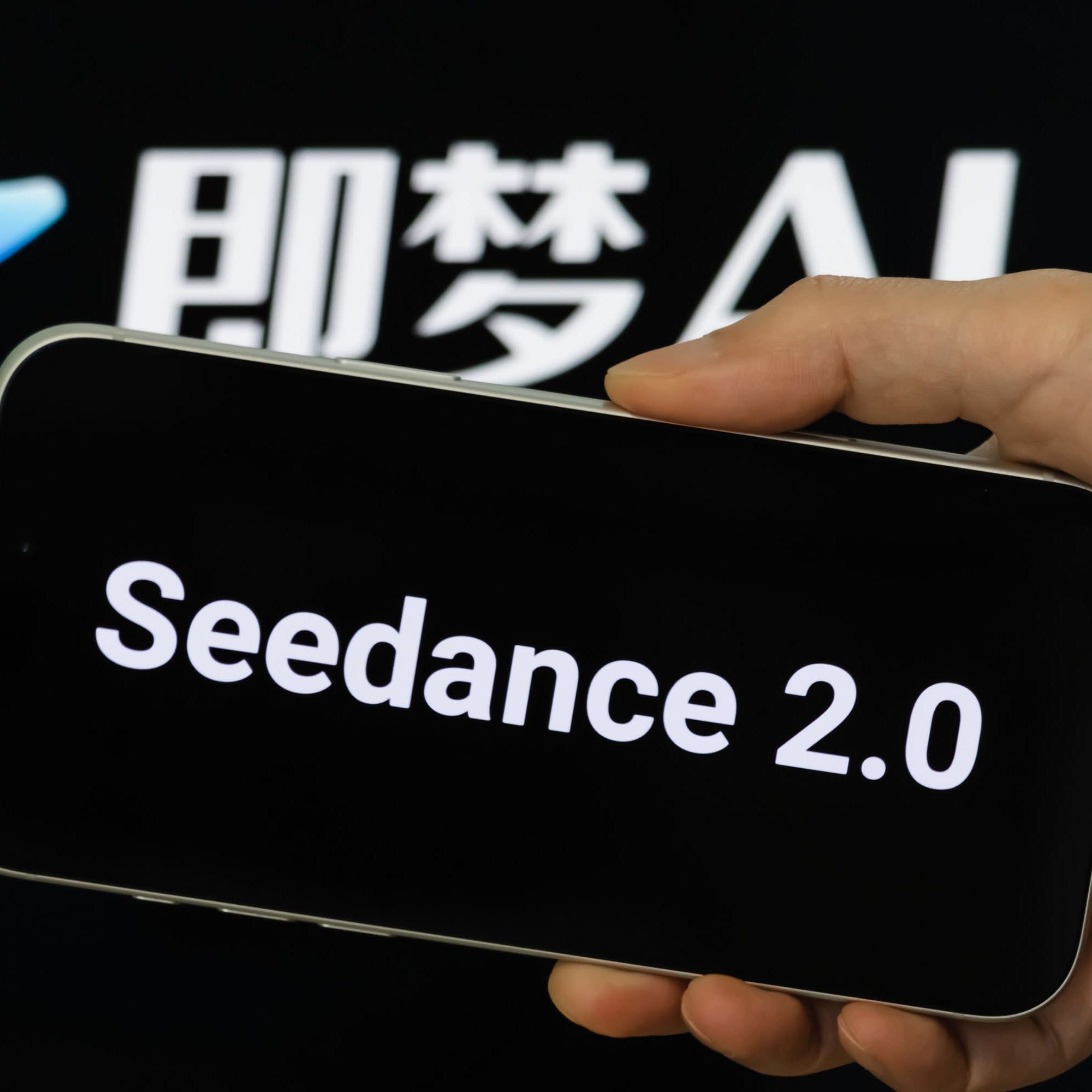
Parent company pledges AI safeguards after anger in Hollywood live from the UK this is the Marketplace Morning Report from the BBC World Service. Hello, I'm Nick Qureshi. There's a theme running through a lot of today's program artificial intelligence. After huge proliferation of the tech in the last year, industry and governments are continuing to grapple with its impact. First off, the Chinese tech company ByteDance, which owns TikTok, has told the BBC it will curb its artificial intelligence video app CDance. The app is being used to create viral life like clips of Hollywood stars and entertainment giants including Disney Hadthra, and legal action over their intellectual property rights. More from the BBC's Nick Marsh Seed.
- [01:44]
Nick Marsh
Dance 2.0 was only launched publicly a few days ago and already these cease and desist letters are piling up. Disney also got Paramount Sky Dance, the Motion Picture association in Hollywood as well, all alleging that Seed Dance that Bite Dance is essentially infringing their intellectual property and even potentially training its model on their content. Now, we did reach out to ByteDance. They told us that the company respects intellectual property rights. It's taking steps to strengthen current safeguards to prevent the unauthorized use of of intellectual property.
- [02:24]
Nick Qureshi
Nick Marsh the UK Government says it will review its regulation of AI to better protect children online. Its current legislation was written before the release and widespread use of many chatbots. Lawmakers now want to close legal loopholes around the tech. The British government also wants to force tech companies to retain children's online data if they DIE here's the BBC's Zoe Kleinman.
- [02:47]
Zoe Kleinman
While the wheels were already in motion for some of the measures announced today, they're a clear sign from Downing street that protecting children online remains a top priority. The Online Safety act was written before the release of AI chatbots such as ChatGPT. The government says it intends to close loopholes in the legislation so the tech is included. New rules aim to speed up coroners informing Ofcom about the death of a child so the regulator can order tech companies to preserve their data if it's relevant to how they died.
- [03:16]
Nick Qureshi
That was Zoe Kleinman. Let's do some numbers. Japan's economy limped back to lacklustre growth in the fourth quarter of 2025. It rose 0.2, bringing 1.1% overall growth for the year. And shares in UK defence companies rose on Monday over reports the British government could bring forward its target to spend 3% of GDP on defense. The coffee retailer Starbucks is betting that artificial intelligence can speed up orders at its outlets whilst allowing staff to have a better relationship with customers. One year into CEO Brian Nicholls effort at turning the company round, sales are starting to rise. Than though it seems profits are still lagging. He's been sitting down with the BBC's Michelle Fleury to explain how he hopes AI will improve your morning coffee.
- [04:01]
Brian Niccol
Technology is both a behind the scenes tool and then it's also a way for us to make the experience less, you know, have less friction. And behind the scenes is our smart queue technology, right? This is organizing orders and production time for the Drive Thru Mobile Order Cafe so that we can hit those timelines that we want to hit for our customers. Then there are other things with like AI where we're getting smarter, smarter supply chain management, smarter scheduling. And then there are other things where it's like we're piloting this right now where when you pull up in the drive thru we still want you to have a person to person connection but the order is actually being inputted by AI. So even though you're talking to a person, they're not having to now actually input the order because it's actually just going straight into our system which then queues up the order because they know there's three cars in front of you. This is the time to start pulling the shot. This is the time to start making the egg bites. And then when you go all the way down to the app, you're going to be able to hold up your phone and say, you know what, I've got an appointment at 9 o' clock it's at this location. Find me the nearest Starbucks. I want my, in my case, vanilla protein latte ready at 8:45. Give me the directions and it'll just load the order in, give you the directions and when you show up, your coffee is ready to go. So it is really a powerful tool that can make our baristas spend more time on the craft and the connection or give them more time to do that and at the same token, give the customer access in ways they've never had access before.
- [05:35]
Michelle Fleury
Yeah, I was reading about one of the technologies you introduced, Green Dot, which is a real time assistant for baristas. I mean, does that help empower the baristas or is it helping them sort of enforce both the speed but also the kind of continuity that people expect, the standards that people expect from.
- [05:54]
Brian Niccol
Yeah, yeah, no, absolutely. It does all of those things because now it can also help solve problems. You know, if you have somebody call off what's the right way to deploy for the day. You know, it also can help them if they're having to troubleshoot something, solve the problem at hand. And then also it has the ability to give them an idea of what their day might look like based on, you know, like in this case it snowed. Right. So it's going to have a little different travel pattern or yeah. Visitation pattern than we've had historically. So it definitely sets them up for success.
- [06:28]
Michelle Fleury
And clearly, I mean, there is this tension about, you know, you hear understaffing or staffing issues, the pressure that baristas feel to deliver on, on sort of the connection and the service levels. This seems to be something you've thought a lot about. You know, when we talk on the operational side.
- [06:44]
Brian Niccol
Absolutely.
- [06:45]
Michelle Fleury
How are you sort of addressing that?
- [06:47]
Brian Niccol
Yeah, look, the biggest thing we've done since I've gotten here is we put a, I think it's 500, $600 million investment into our partners ability to provide that service experience. And we want the rosters to be staffed correctly. We want to give them the guidance so that they're deployed correctly. And then we're going to give them the tools that make hopefully the job a lot easier to manage. You know, we've simplified a lot of things, especially the way the metrics that we ask you to be accountable for. There used to be this thing called the health pyramid where there were like, I don't know, 100, 200 metrics in here. We've simplified that down to five things. And the five things are in our partners control. It's very visible for them, they'll be rewarded for it.
- [07:30]
Michelle Fleury
And what are the five things?
- [07:32]
Brian Niccol
So basically it's going to be staffing correctly, customer experience, throughput and in stock, being in stock on items. So you know that right there just simplifies what you need to be doing.
- [07:46]
Nick Qureshi
Brian Niccol, the CEO of Starbucks in the uk this is the Marketplace Morning Report. I'm Nick Qureshi. Thanks for listening.
- [08:00]
Reema Grais
Hey everyone. I'm Reema Grais. And this week on this is Uncomfortable, I'm joined by my fellow podcaster Sam Sanders for a special Love advice episode. We tackle listener questions about money and relationships, everything from secret investment accounts to parents making risky financial choices.
- [08:19]
Sam Sanders
I have told people all the time when you are experiencing an adult in your life who is acting like a child, that is the time at which you most need to be an adult.
- [08:30]
Reema Grais
Listen to this is Uncomfortable on your favorite podcast app.