Loading summary
Transcript23 lines
- [00:00]
A
The new year brings new health goals and wealth goals. Protecting your identity is an important step. Your info is in endless places that could expose you to identity theft, leading to lost funds. LifeLock monitors millions of data points per second. If your identity is stolen, our restoration specialists will fix it, guaranteed or your money back. Resolve to make identity, health and wealth part of your New year's goals. With LifeLock, save up to 40% your first year. Visit LifeLock.com SpecialOffer terms apply.
- [00:32]
B
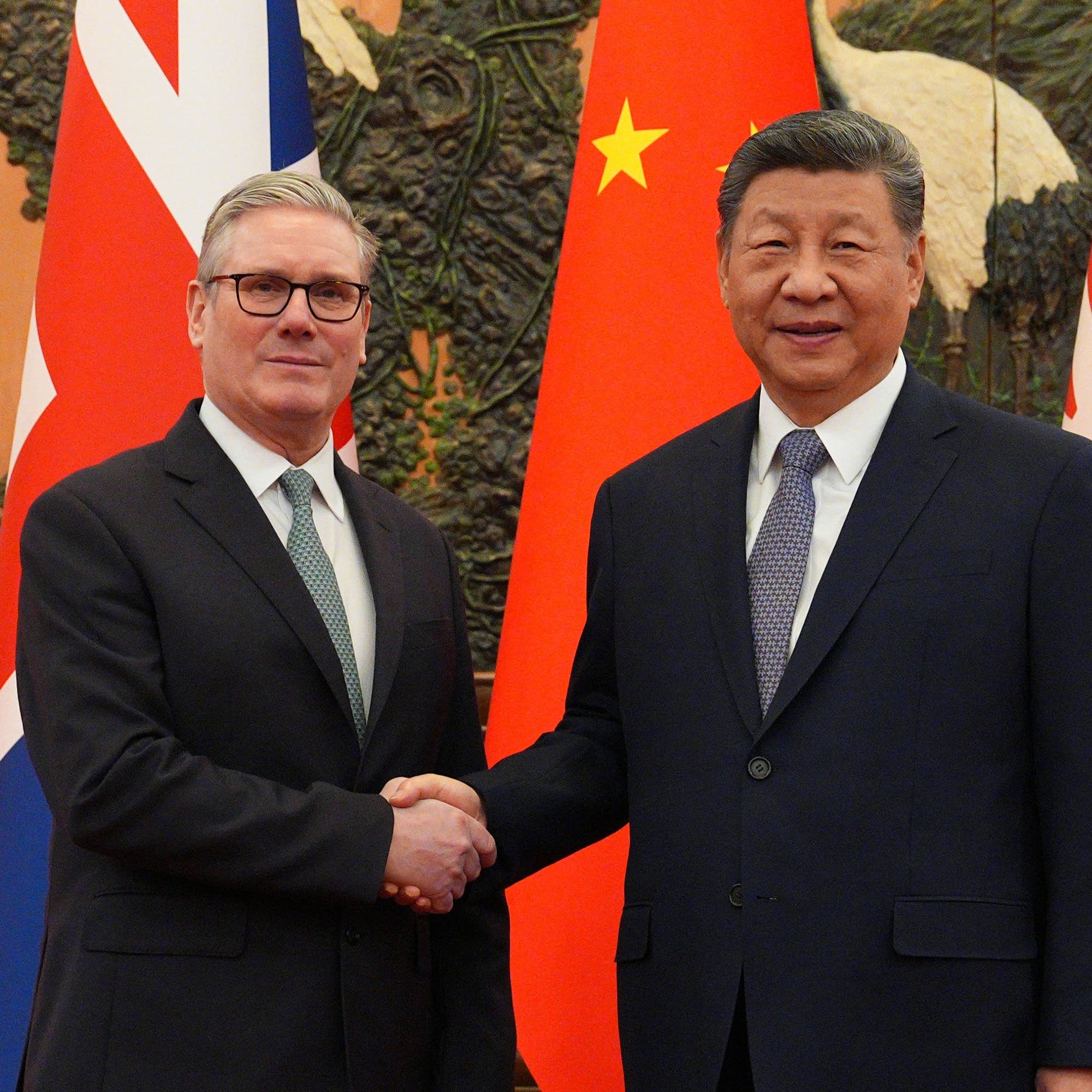
Will Keir Starmer's trip to China give the British economy a boost? Live from the uk, this is the Marketplace Morning report from the BBC World Service. I'm William Lee Adams. Good morning. The British Prime Minister, Sir Keir Starmer, is in Beijing working on the UK's trade ties with China. The BBC's Sir Anjana Tiwari has been following the trip. Hi, Sir. And Johnna.
- [00:53]
C
Hi there.
- [00:54]
B
So the British Prime Minister isn't just in China to talk diplomacy. Business is on the agenda. What's being discussed?
- [01:02]
C
Yes. So the two leaders met earlier today and Sir Keir Starmer said that he wanted a more sophisticated relationship with China. Now he's in China with dozens of business leaders, some of the world's biggest companies, AstraZeneca, HSBC, Octopus Energy among them. Jaguar Land Rover is another one. And it's expected that the two sides will agree on some economic partnerships, perhaps some deals in order to strengthen in their trade relationship. Both of these economies are not doing so well. Growth is slow, demand is down, investment is down as well. So the trip comes at a time when the two leaders really need each other for their own economies as well.
- [01:46]
B
Has anything concrete been agreed or is it too early?
- [01:51]
C
We haven't had any deals yet, but there have been lots of talk around which sectors there might be deals in. There might be agreements and future partnerships as well. And those are areas where the uk, for example, is very competitive. Think financial services, education services and green technology as well. That's an area that China is really buckling down on and investing in. And it needs some of the services that the UK supplies.
- [02:18]
B
Several Western leaders have been in Beijing recently. Are these visits connected to their more fractious relationship with the us?
- [02:26]
C
Yeah, I think that's what we saw, especially with the Canadian Prime Minister, Mark Carney, going there earlier this month and striking some very significant trade deals on EVs. Keir Starmer seems to be very hopeful, very optimistic about the expansion of the trade relationship with China. He is facing quite a bit of political scrutiny at home because of the visit. Having said that Keir Starmer says it's very important to engage China, not just for the UK economy's benefit, but also for global issues and geopolitics in general.
- [02:58]
B
Saranjana, thanks for joining us on Marketplace.
- [03:01]
C
Thanks a lot.
- [03:02]
B
And we're just seeing on the news wires that they've now agreed on visa free travel for Britons to China for 30 days. Alright, let's do the numbers. Swiss watch. Exports rose 3.3% year on year in December to hit $2.7 billion. A reduced U.S. tariff helped reverse four months of declines. And one of Russia's largest oil companies, Lukoil, has agreed to sell most of its foreign assets, thought to be worth around $20 billion, to the US private equity firm, the Carlyle Group. South Africa has been grappling with 30% US tariffs since August, restricting key industries like automotive and agriculture. But farmers there are also looking to China, hoping a deal to export stone fruits can present new opportunities. Here's the BBC's Mo Ali.
- [03:50]
D
I'm at the Bon Esperance farm in the beautiful winelands and farming region of Stellenbosch, about 45 kilometres east of Cape Town. Plums are one of the five stone fruits alongside apricots, peaches, nectarines and prunes that will soon be exported from South Africa to China under a new trade deal. Pietro du Plessis runs the operations at Bon Esperance.
- [04:15]
E
Sunflower production and export is pretty much about supply and demand. So if there's an extra market that's opening up for us, it's hugely exciting. In the same time, we've got extra tariffs from the usa, so it's bit of a dampening on that side and you have a new market. China, one of the biggest economies of the world. It is really exciting and we are happy to see some fruit to China.
- [04:41]
D
The workers at Bon Esperance are busy trimming the taller branches of the plum trees to allow the fruit to get maximum exposure to the sun in preparation for the harvest early in the new year. Stone fruit producers like Pietro are fully aware of the different tastes of their markets and they produce accordingly.
- [05:01]
E
The traditional markets like the UK and Europe, consumers are tending to prefer fruit with a sweet, sour taste. The Middle east tend to go over to more sweetness and the Far east very sweet. So in terms of what's happening in China, we are definitely going to shift a little bit more to big red fruit.
- [05:21]
D
John Stearnhaysen is South Africa's Minister of Agriculture.
- [05:25]
F
The stone fruit protocol was very important. It's the first time China's done more than one fruit at a time and we have got five through and we hope it's going to be followed up soon with blueberries and cherries.
- [05:35]
D
He's excited about the prospect of fruit exports reaching a potentially lucrative new market.
- [05:42]
F
Big news for our stone fruit producers in South Africa being able to have access to the Chinese market. It's a large market, it's a huge opportunity. And South Africa's fruit products already have an incredibly good name in China. And this opens up an opportunity for even more to be exported.
- [05:57]
D
According to China's customs data, the country's appetite for stone fruit continues to surge, with imports reaching 21 million cartons of peaches and nectarines and 20 million cartons of plums. And in 2024 alone, volumes that exceed South Africa's entire seasonal export capacity. The agreement provides a great opportunity for expansion in South Africa's stone fruit farming industry. After the gloom following the announcement In April of 30% tariffs on their products exported to the US, there's now a renewed sense of optimism among stone fruit farmers in South Africa as a big new market in China beckons. In Cape town, I'm the BBC's Mo Ali for Marketplace.
- [06:45]
B
And in the UK, I'm William Lee Adams with the Marketplace Morning Report from the BBC World Service.
- [06:56]
G
Ready to make the most of your money? Sign up to receive weekly tips from Marketplace designed to help you make smarter financial decisions. Plus, you'll also be the first to know about exclusive Marketplace merchandise and local events. Text Marketplace to 80568 to sign up.