Loading summary
Transcript32 lines
- [00:00]
Comcast Business Representative
Comcast business helps retailers become seamlessly restocking, frictionless paying favorite shopping destinations. It's how nationwide restaurants become touchscreen ordering, quick serving eateries and how hospitals become the patient scanning data, managing health care facilities that we all depend on. With leading networking and connectivity, advanced cybersecurity and expert partnership, Comcast business is powering the engine of modern business powering possibilities. Restrictions apply.
- [00:30]
David Brancaccio
Amid trade tensions what happens when Minnesota Nice meets Ontario Nice? I'm David Brancaccio in Los Angeles. First farmers are struggling to pay their debts. This is clear from an analysis by Bloomberg Law of bankruptcy filings. And this is before the new higher tariffs started to kick in, Marketplace's Savannah Peters reports.
- [00:51]
Savannah Peters
Bloomberg found farm bankruptcies were up 55% in 2024 and they're trending even higher this year. That tracks with what bankruptcy attorney Don Swanson is seeing.
- [01:03]
David Brancaccio
In fact, I've got a chapter 12 going right now.
- [01:07]
Savannah Peters
That's the section of the bankruptcy code for farmers. And Swanson says his firm Coley Jessen in Omaha has a few more of those cases in the works.
- [01:16]
David Brancaccio
Every debtor has their own issues that are unique to them, but 2024 was a terrible year for farming.
- [01:22]
Savannah Peters
Farmers have been dealing with high input costs and low crop prices, and if all the proposed tariffs go through, that.
- [01:29]
Rabel Chandio
Negative pressure is just going to intensify.
- [01:32]
Savannah Peters
Rabel Chandio is a professor of agricultural economics at Iowa State University. She says whether farm bankruptcy rates rise even faster depends on how long steep tariffs on China last and whether the Trump administration offers relief payments to cover affected farmers losses like it did during the last trade war. I'm Savannah Peters for Marketplace Markets.
- [01:55]
David Brancaccio
It has been three up days in a row for the S&P 500 stock index. S and P futures are down a quarter percent now. Nasdaq futures also just turned down 2. 10%. The S&P is down 2.2% in April so far. The Dow is down 4.5% month so far. A published report says Apple is moving to produce all the iPhones sold in the US In India, a pivot away from China. Remember, it says designed by Apple in California. Doesn't say made. The Financial Times has the India scoop today. Now to video gaming. It was delayed for several weeks because of the Trump administration's tariff announcements. But overnight retailers started taking pre orders for the Nintendo Switch 2 console, Walmart, best Buy and others that are part of this rollout report. Major demand. The boxes are set to start selling in earnest on June 5th. You say legend of Zelda, Tears of the Kingdom, I say animal Crossing new horizons. Now to the nexus of the US And Canada. At a time of fraught trade relations, Marketplace's senior economics contributor Chris Farrell forded the chasm between Minnesota, USA and Ontario, Canada, to the Canadian border town of Thunder Bay. Hi, Chris.
- [03:29]
Chris Farrell
David.
- [03:30]
David Brancaccio
So you get just across the border to Canada. Did you get the stink eye?
- [03:34]
Chris Farrell
Mr. U.S. citize people were incredibly nice, David. I just have to emphasize that, you know, Thunder Bay, it's this port city, it's a railway hub. People from Thunder Bay, they cross over into Minnesota, northern Minnesota, and people in northern Minnesota, they go do their shopping in Thunder Bay.
- [03:53]
Rabel Chandio
We have a lot of sort of back and forth, you know, whether it's business or whether it's individuals, you know, just going to Grand Marais for the weekend, those kinds of things. Going to Duluth, going that back and forth, activity, hockey teams, soccer teams, et cetera.
- [04:08]
Chris Farrell
Charlotte Robinson is president of the Thunder Bay Chamber of Commerce. And as you could hear, we met in a diner.
- [04:14]
Rabel Chandio
Certainly from a business perspective, it's also been a close relationship. We do a fair bit of trade between some of our larger industries with.
- [04:22]
David Brancaccio
Minnesota specifically, she said it's been a close relationship, but now with President Trump's tariffs, 25% on a lot of things, 10% on some energy products, and Canada responding. What's it now? I don't know. Testy, this relationship.
- [04:38]
Chris Farrell
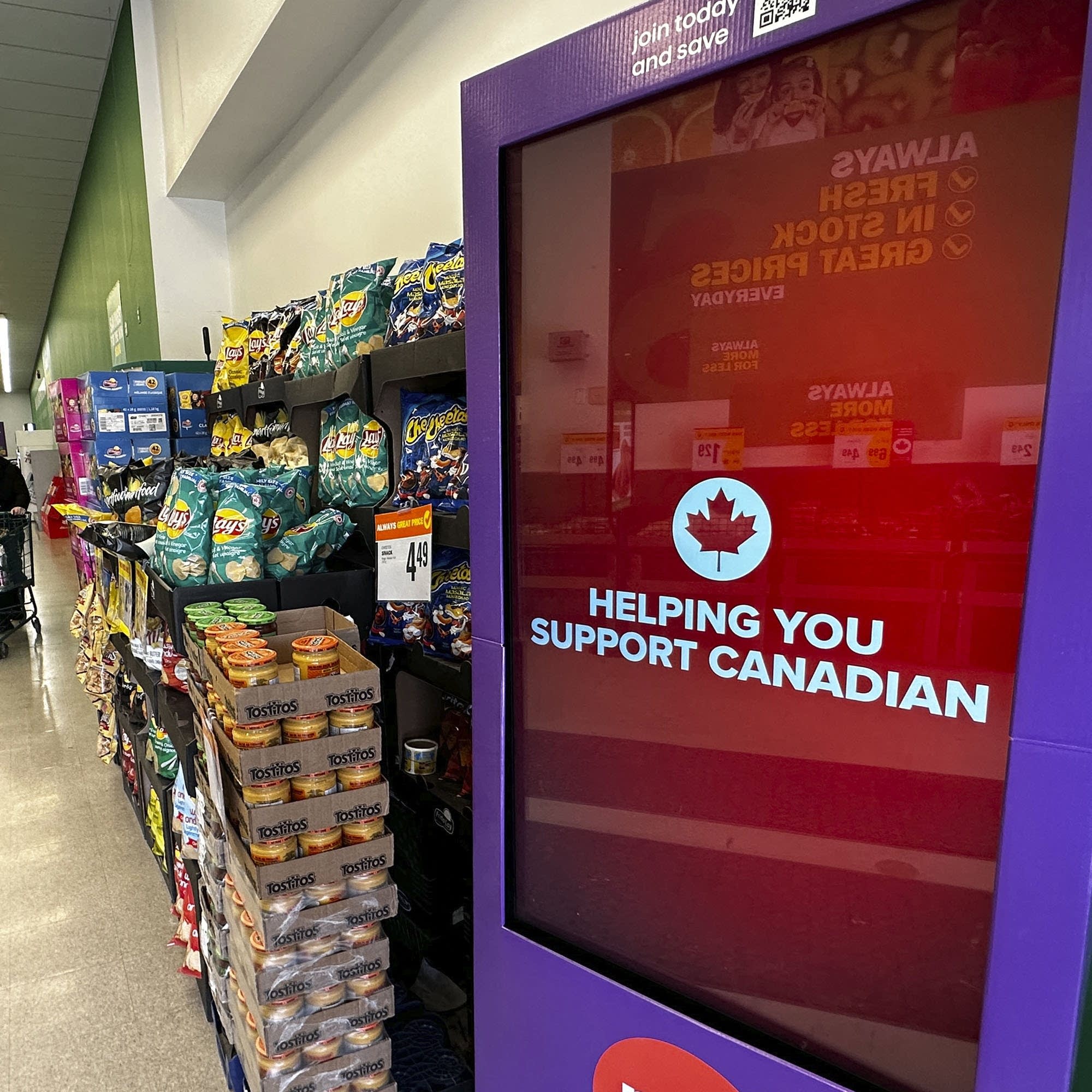
You know, the word that we heard a lot, David, is betrayal. You know, they're unhappy with Trump's insistence that Canada should become the 51st state. And the way they're expressing their displeasure is with their wallets. Cross border travel is down. Vacation plans to the US Are canceled. American liquor, wine and beer, it's been pulled off the shelves in Thunder Bay and Ottawa. And Livio de Matteo, he's an economics professor at Lakehead University in Thunder Bay, notes that even groc grocery store aisles have changed.
- [05:09]
Rabel Chandio
We found oranges from Morocco and Egypt. We'd never really seen that before.
- [05:13]
David Brancaccio
So even the retailers are already making the effort. You know, the broccoli has been coming from Mexico.
- [05:18]
Rabel Chandio
We've noticed the blueberries from Peru.
- [05:20]
David Brancaccio
All right, so some agility there. But can the Canadian economy decouple itself.
- [05:25]
Chris Farrell
From the U.S. 30% of Canada's economy is export oriented, and 3/4 of its exports go to the U.S. but in the interviews we had, David, Canadian business owners seem determined to reduce their reliance on the US they're creating stronger business ties within Canada, and they're forging direct economic relations with other countries. So James folds. He's the founder of Border giant. It's based in Thunder Bay. And the company's software smooths cross border transactions for small businesses and individuals.
- [05:56]
James Folds
Pretty much every business right across Canada, they're going to start looking at other options in the supply chain rather than usa, even for, you know, distributors and everything. So between the pricing going up and the uncertainty and even the emotional response to like, you know, the, the rhetoric with the 51st state and everything like that is okay. There's really not a path forward. So we need to cut out like the ties as best we can and move on to a more certain path.
- [06:22]
David Brancaccio
Chris Once trust goes away, not easy to get back.
- [06:26]
Chris Farrell
No, it isn't. And it's, you know, it's. Trust isn't easy to measure like land or capital. It's more like a, a recipe that allows for all kinds of economic activity and innovation. Again, James folds Once that trust is.
- [06:38]
James Folds
Broken and you have to go somewhere else, you've done the work to look for something else. You've formed another relationship and you don't tend to go back to that.
- [06:46]
Chris Farrell
No one knows how deep the rupture between the two economies is, but Canadian entrepreneurs and businesses, they aren't waiting to find out. They're acting now.
- [06:55]
David Brancaccio
Marketplace's senior economics contributor Chris Farrell back in Minnesota after a reporting trip to Thunder Bay, Ontario. Chris, thank you very much.
- [07:03]
Chris Farrell
Thanks a lot.
- [07:04]
David Brancaccio
And I'll have the global investment management firm with provolone, banana peppers, private equity and a hedge fund. Did you know Blackstone Group now owns Jersey Mike's? Subs. Taste the portfolio. In every bite, there's news. The founder of Jersey Mike's Peter. Not Mike. Peter Cancro is leaving the CEO position. Now that it's Blackstone, a guy also not named Mike from Wingstop Chicken Wings now takes over. Our executive producer is Kelly Silvera. Digital producer Dylan Mietanen, engineers Brian Allison and John Brewington. You're listening to the Marketplace morning report from APM American Public Media.
- [07:45]
Janelie Espinal
If there's one thing we know about social media, it's that misinformation is everywhere, especially when it comes to personal finance. Financially Inclined from Marketplace is a podcast you can trust to help you get serious about your money so you can build a life you've always dreamed of. I'm the host, Janelie Espinal, and each week I ask experts important money questions, like how to negotiate job offers, how to choose a college that you can afford, and how to talk about money with friends and family. Listen to Financially Inclined wherever you get your podcasts.