Loading summary
Transcript32 lines
- [00:00]
A
This podcast is supported by Odoo. Some say Odoo business management software is like fertilizer for businesses because the simple, efficient software promotes growth. Others say Odoo is like a magic beanstalk because it scales with you and is magically affordable. And some describe Odoo's programs for manufacturing, accounting, and more as building blocks for creating a custom software suite. So Odoo is fertilizer, Magic beanstalk building blocks for business. Odoo. Exactly what businesses need. Sign up@odoo.com that's o d o o.com.
- [00:32]
B
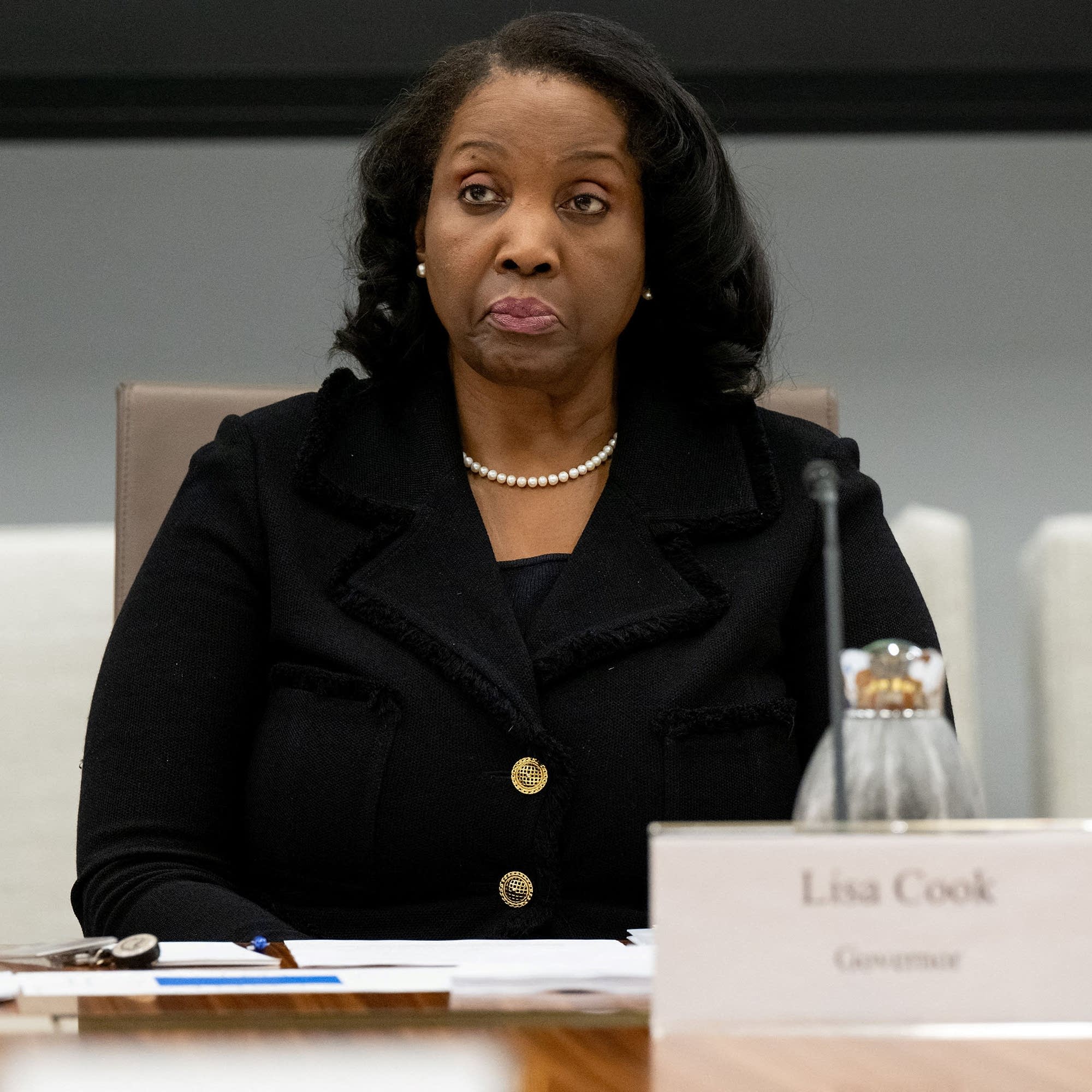
A Federal Reserve official says she's being bullied by the President and his team. A top Federal Reserve official is refusing President Trump's demand that she resign immediately. The president is posting about fraud involving a mortgage application. Fed Governor Lisa Cook says she will not step down. Marketplace's Nancy Marshall Genser is following this.
- [00:54]
C
This all started when US Federal Housing Finance Agency Director Bill Pulte accused Cook of mortgage fraud. He claimed two properties as her primary residence to get a lower mortgage rate. In a post on social media, President Trump said Cook should resign. But in a statement, Cook said she has no intention of being, quote, bullied to step down, and she's, quote, gathering the accurate information to answer any legitimate questions.
- [01:20]
B
And in an online post, Pulte said President Trump now, quote, has cause to fire Cook for cause. Nancy can work.
- [01:30]
D
Yeah.
- [01:30]
C
The Banking act of 1935 just says federal Reserve governors can only be removed by the president for cause. It's not clear what that entails, but it's been interpreted as corruption or serious misconduct.
- [01:44]
B
This is all happening as President Trump has been pressuring the central bank to lower interest rates. If Cook were to resign, would the president get what he wants?
- [01:52]
C
Not necessarily, David. The Federal Open market committee, the FOMC, it sets interest rates. It has 12 members, the Fed chair, members of the Fed's Board of Governors, but also a rotating list of the presidents of the regional Fed banks. I talked to Mark Spindell about this. He's chief Investment Officer at Potomac River Capital.
- [02:15]
E
Just gaining an additional vote from the Board of Governors is just one more vote in favor, but not, not a guarantee that, that Trump would get what he wants. And let's be clear, what he wants is lower interest rates.
- [02:28]
C
And even if Trump tried to fire Cook, Spindell says it looks like she would go to court to fight for her job.
- [02:36]
B
All right, Nancy, thank you. This is all playing out during the marquee event of the year for central banks like the Fed. The yearly policy symposium in, excuse me, Jackson Hole, Wyoming chair Powell is set to speak tomorrow in setting interest rates. Tariffs are a key part, but so is hiring marketplaces. Justin Ho has that one.
- [02:55]
F
The labor market has lost momentum over the last few months, but if you're looking for a job, the odds seem to be in your favor.
- [03:02]
E
We have as many vacancies as there are people looking for work.
- [03:06]
F
That's Peter Urazam, an economics professor at Iowa State University. He says the number of people looking for work has come down.
- [03:13]
E
And so from that perspective, what's really holding back the economy is we just don't have enough workers to fill all the jobs that firms want to employ.
- [03:23]
F
In other words, Erasm says the labor market is slowing down, but it's not waving any red flags, at least not yet. Preston Moy, an economist with the research group Employ America, says the jobs market is basically treading water.
- [03:35]
D
But you can't tread water forever, and there's a real question about how long things can continue like this.
- [03:41]
F
Moy says employers have been putting off decisions about hiring in large part because tariff policy has been so uncertain. But if that becomes more clear, eventually.
- [03:50]
D
At some point they might have to make a decision about whether or not they're going to cut hiring even further or if they might even start laying off some workers.
- [03:59]
F
Moyes says that is what the Federal Reserve is concerned about. If the job market gets even weaker, the central bank might have to step in and support it by cutting interest rates instead of just waiting to see what happens.
- [04:11]
D
We saw low job growth numbers over the previous three months, and now they're starting to think maybe we don't have the luxury of waiting.
- [04:19]
F
That said, a rate cut at the Fed's next meeting in September isn't necessarily a done deal. For one, we're going to get a lot of additional jobs data before then. On top of that, inflation has been sticking around. Winnie Caesar is head of strategy at credit sites.
- [04:33]
G
It's always that delicate balance of labor inflation, labor inflation, and it seems that those two have been really kind of switching places in terms of the order of importance.
- [04:45]
F
But Caesar says the Fed already has a lot of evidence that the labor market is starting to become more of a concern. That's why Caesar says she's going to pay close attention to the tone Jay Powell uses this week when he describes.
- [04:55]
G
The labor market, how he explains the most recent data, how he explains the interplay between inflation not having moved down all that much since they began cutting rates last year versus the labor markets, which have objectively shown some signs of meaningful pressure.
- [05:13]
F
Caesar says if the labor market continues to weaken, the Fed will have the evidence it needs to start cutting rates again. I'm Justin Ho for Marketplace.
- [05:21]
B
Walmart just now reported its sales went up 4.5% in the spring into summer quarter as shoppers looked for deals given inflation. But the retailer also said its tariff related costs are going up. Profits were lower than expected. Stock down 5% now.
- [05:50]
H
Ever wanted to stay on vacation longer? Us too. With VRBO's long stay discounts, you can stay longer and save more on select properties. Gotta love a win win book the perfect summer getaway today with VRBO Private Vacation Rentals. Your future self will thank you later. Shop the Sherwin Williams Labor Day sale and get 35% off paints and stains August 22nd through September 4th with prices starting at 31.84. It's the price of perfect time to transform your space with color. Whether you're looking to revamp your interior or exterior, we have you covered with bold hues, soothing neutrals and everything in between. Visit your neighborhood Sherwin Williams store or shop the sale online. Delivery available on qualifying orders. Click the banner to learn more. Retail sales only some exclusions apply. See Store for details.
- [06:37]
B
Listen to who says he's lying awake at night worried about artificial intelligence playing into or causing mental illness? The person losing sleep is the head of Microsoft's artificial intelligence division, a reference to what some call AI psychosis. This is when people start believing AI chatbots are someone real and not software. Zoe Kleinman with our partners at the.
- [06:58]
I
BBC has more chatbots responses tend to be friendly and flattering in order to retain users interests. There are already stories of people who become convinced that a generative AI tool is in love with them, that they've unlocked a secret human inside one, or even that one is trying to harm them. Mustafa Suleiman called on the tech industry to share safeguards to prevent people using AI products from being fooled into thinking they were sentient.
- [07:24]
B
Zoe Kleinman, BBC and there are fresh details in just now on the deal the U.S. and the European Union reached last month. The U.S. will cap import taxes on European medicines at 15%. Same for lumber and semiconductors. But the current 27.5% tariff on EU cars will stay unless Europe reduces its own tariffs on certain food and farm products. In Los Angeles, I'm David Brancaccio Marketplace Morning Report from APM American Public Media.
- [07:55]
J
Poetry has the power to connect our inner universe and the outer world. I'm Maggie Smith, poet and host of the Slowdown, a podcast from American public media each weekday. Find time to take a breather from your to do list, or doom scrolling for that matter, and take in a moment of reflection with a hand picked poem. Listen to the slowdown wherever you get podcasts.