Loading summary
Transcript25 lines
- [00:00]
Mackenzie
My name is Mackenzie and I started a GoFundMe for the adoptive mother of a nonverbal autistic child. The mother had lost her job because she wasn't able to find adequate care for this autistic child. So she really needed some help with living expenses, paying some back bills. So I launched a GoFundMe to help support them during this crisis. And we raised about $10,000 within just a couple of months. I think that the surprising thing was by telling a clear story and just like really being very clear about what we needed, we had some really generous donations from people who were really moved by the situation that this family was struggling with.
- [00:47]
GoFundMe Announcer
GoFundMe is the world's number one fundraising platform, trusted by over 200 million people. Start your GoFundMe today at gofundme.com that's gofundme.com gofundme.com this podcast is supported by GoFundMe.
- [01:01]
Grainger Announcer
If you're the purchasing manager at a manufacturing plant, you know having a trusted partner makes all the difference. That's why, hands down, you count on Grainger for auto reordering. With on time restocks, your team will have the cut resistant gloves they need at the start of their shift and you can end your day knowing they've got safety well in hand. Call 1-800-GRAINGER click granger.com or just stop by Granger for the ones who get it done.
- [01:32]
Nancy Marshall Genzer
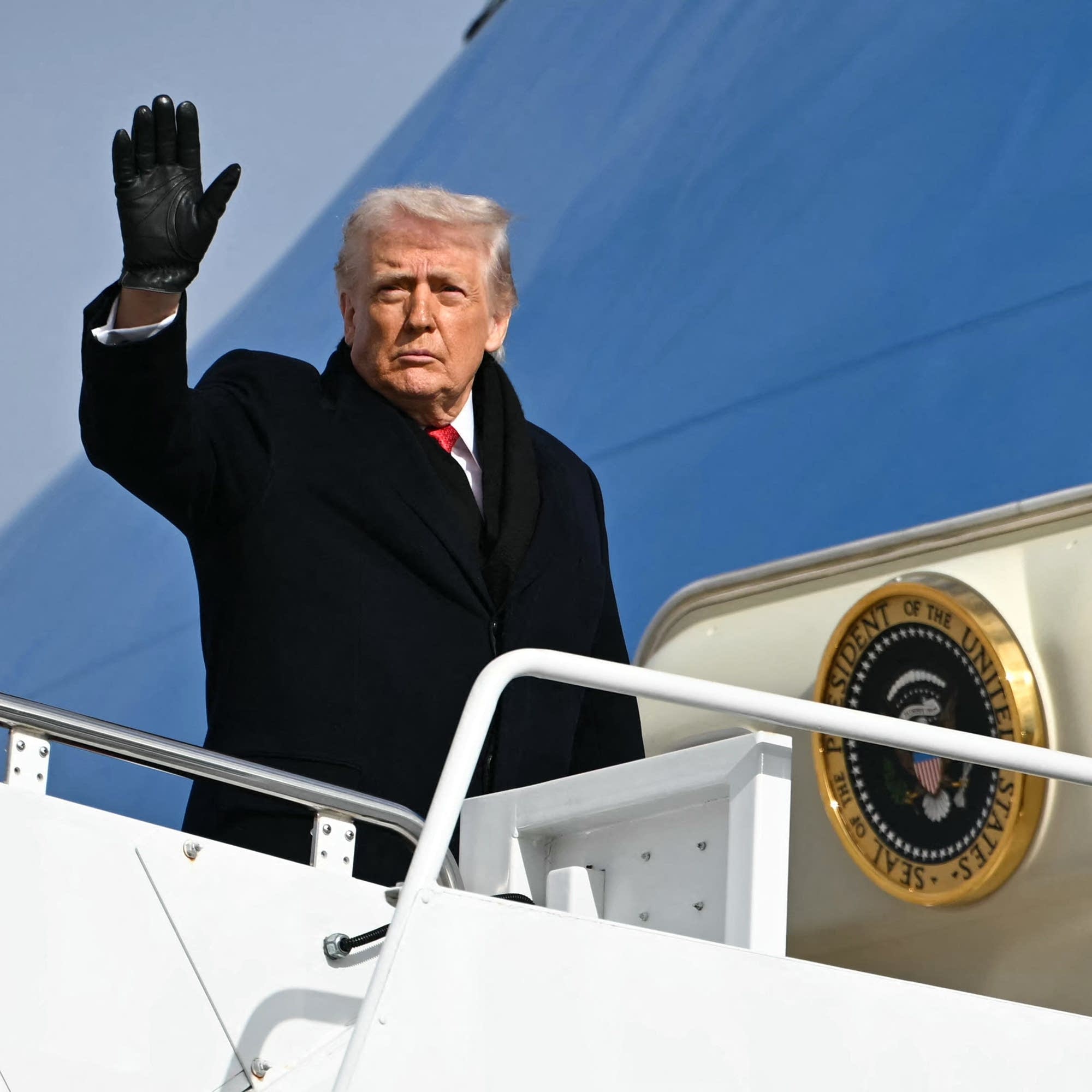
President Trump heads to Davos from Marketplace, I'm Nancy Marshall Genzer in for David Boncaccio. First, Larry Adam joins us to talk housing and tariffs. He's chief Investment officer at Raymond James, which is a Marketplace underwriter. I started by asking what he expects when we get pending home sales tomorrow.
- [01:52]
Larry Adam
Well, I think you're going to continue to see some weakness in the housing market because we still have some affordability issues. You know, one thing that we've been hoping for, that we'd see mortgage rates come down, which has been the positive so far. But if you look at the markets, you know, just over the last couple of days, you're starting to see interest rates start to tick higher. So continue to think that's going to be a very slow recovery in the housing market going forward.
- [02:13]
Nancy Marshall Genzer
Pivoting to tariffs, they have contributed to costs. I know President Trump has said consistently that foreign firms pay for tariffs, but. But there's new research from a German think tank that found that only about 4% of the burden of tariffs is actually shouldered by exporters. Why do you think exporters don't foot much of the bill.
- [02:32]
Larry Adam
So I think if you just look broadly in the context of corporate America, they're very resilient and I think that they've found different ways to try and mitigate those costs. If you look, for example, I do think that they've switched some of their suppliers. As you know, energy prices around the world have been cut, so that's reduced some of the spending, if you will, when it costs to transport. I think AI has had a big part of this in trying to reduce some costs as companies have gotten more efficient. So I think you have to look at all of that in the context of how we really haven't seen the big boost.
- [03:05]
Nancy Marshall Genzer
Yeah. And consumers have been expecting prices to rise, but that hasn't happened that much because of tariffs. So who's absorbing these costs? Suppliers, wholesalers, retailers.
- [03:17]
Larry Adam
For some reason, it hasn't really been as much as people think. As I mentioned, they become more efficient. If you look at each one of those components, the consumer really hasn't been paying. If you look at cpi, if you look at corporate America, margins are pretty much at historically elevated levels, which tells me that they're not necessarily taking in a lot of the costs. And as you mentioned, corporations around the world haven't really eaten a lot of the costs. So I think it's just everybody becoming much more efficient in the whole supply chain trying to make sure that these costs did not get put onto the end consumer.
- [03:50]
Nancy Marshall Genzer
The U.S. larry Adam is Chief Investment Officer at Raymond James. Thanks for joining us.
- [03:56]
David Brancaccio
Thank you.
- [04:12]
Fundrise Announcer
This Marketplace podcast is supported by Fundrise. Billion dollar investors don't typically park their cash in high yield savings accounts. Instead, they often use one of the premier strategies for institutional investors, private credit. Now the same passive income strategy is available to investors of all sizes thanks to the Fundrise Income fund, which has more than $600 million invested and a 7.97% distribution rate. With traditional savings yields falling, it's no wonder private credit has grown to be a trillion dollar. Learn more@fundrise.com marketplace. The fund's total return in 2025 was 8%, and the average annual total return since inception is 7.8%. Past performance does not guarantee future results. Current distribution rate as of 1231, 2025, carefully consider the investment material before investing, including objectives, risks, charges and expenses. This and other information can be found in the Income funds prospectus@fundrise.com income. This is a paid advertisement.
- [05:13]
Nancy Marshall Genzer
The annual World Economic Forum meeting in Davos, Switzerland, is in its second day today. It's a meeting of some world's most powerful people, one that often attracts protests. Among the biggest names, the heads of Microsoft and Nvidia, the Chancellor of Germany. And after a six year in person absence, President Trump is returning to the forum, where he plans to use a key address tomorrow to lay out his plans for making housing more affordable. For more on what we can expect, my colleague David Brancaccio turned to Henry Kerr, economics editor and deputy business affairs editor for the Economist magazine. He's in Davos.
- [05:49]
David Brancaccio
The folks gathering in Davos, I think, have something to talk about this year, right? I mean, since they gathered a year ago, somebody drove a bulldozer through their world trading system and I think globalization as they knew it.
- [06:02]
Henry Kerr
Yeah, that's absolutely right. Of course, Davos last year coincided with the start of the Trump administration, but it was still a bit unclear what the return of Donald Trump to the White House really meant for the world and whether it would be something that looked more like the first Trump term, when a lot changed, but nothing like as radically as it has over the past year. With respect, as you say, to the trading order, to the geopolitical order, and to an extent, to the domestic order in the US as well.
- [06:33]
David Brancaccio
Henry, what do you think you've been before? I mean, does work get done at that ski resort? And if you think so, how does that work get done? I mean, it's not just speeches from podiums.
- [06:45]
Henry Kerr
The real value of the conference of the World Economic Forum is the amazing list of attendees. Really, what this is is one giant networking event, the best in the world. And so, yes, I think real work gets done there, but it's not what you'll see on the stage. If you're in the conference room, among.
- [07:04]
David Brancaccio
The dignitaries coming for the first time in six years will be President Trump, and he will speak. I would guess that the President sees his speech as the keynote of the whole gathering. I mean, is it the big ticket?
- [07:18]
Henry Kerr
Yes, I think that's completely fair. I think an interesting question is whether the President will be able to resist breaking news somehow on Greenland, which is, of course, what everybody in Europe is most interested in hearing about. People want to hear what he has to say, given the extent of change that's going on. Also, of course, don't forget we're still waiting for the Supreme Court ruling on tariffs, which could at any moment upend again the global trading system and the Trump administration's economic policy.
- [07:55]
David Brancaccio
You know, I was looking at the overall theme for this year. At first blush, it seemed bland in the extreme. I think it's a spirit of dialogue. But then when you think about it, when you step back a little bit, in the polarized politics we see, especially in the US Even just civil dialogue may be an edgy topic.
- [08:15]
Henry Kerr
Yes, definitely. And you know, because the main appeal of this conference is the attendees, those official topics are always pretty bland. The theme of the conference really ends up what's going on in the world at the time. Last year, it was the incredible breakthrough in AI in China with the release of the deep seat model. Those themes respond in a loose way to what's going on politically, but they're never the dominant takeaway from Davos.
- [08:43]
David Brancaccio
All right, Henry. Well, dress warmly. Henry Kerr is economics editor for the Economist. Thank you so much.
- [08:49]
Henry Kerr
Thanks for having me.
- [08:51]
Nancy Marshall Genzer
Our producers are Emma Condon, Tamar Fagan, Ashley Rodriguez, Ariana Rosas, and Erika Soderstrom. Our senior producer is Alex Schroeder. Our supervising senior producer is Meredith Garretson Morby. In Washington, I'm Nancy Marshall Genzer with the Marketplace Morning Report from apm American Public Media.
- [09:15]
Marketplace Promotions Announcer
Want even more Marketplace? Sign up to receive weekly tips from our editorial team to help you make the most of your money. Plus, you'll also be the first to know about exclusive Marketplace merchandise and local events. Text Marketplace to 80568 to sign up.