Loading summary
Transcript22 lines
- [00:00]
A
Think you know your breaking point? If you're a woman with weak bones due to osteoporosis after menopause, sadly, you may not. Women can lose up to 20% of their bone density within five to seven years after menopause, making bones weaker and more likely to break. And after the first fracture, we're five times more likely to break another bone within a year. It could happen from a simple slip or just bending to lift a bag of groceries. Don't wait for a breaking point. Visit bonebreakingpoint.com to learn about how osteoporosis medications can reduce the risk of fractures.
- [00:32]
B
This is the story of the One as head of maintenance at a concert hall, he knows the show must always go on. That's why he works behind the scenes, ensuring every light is working, the H Vac is humming, and his facility shines with Grainger's supplies and solutions for every challenge he faces. Plus 24. 7 customer support. His venue never misses a beat. Call quickgranger.com or just stop by Granger for the ones who get it done.
- [01:03]
C
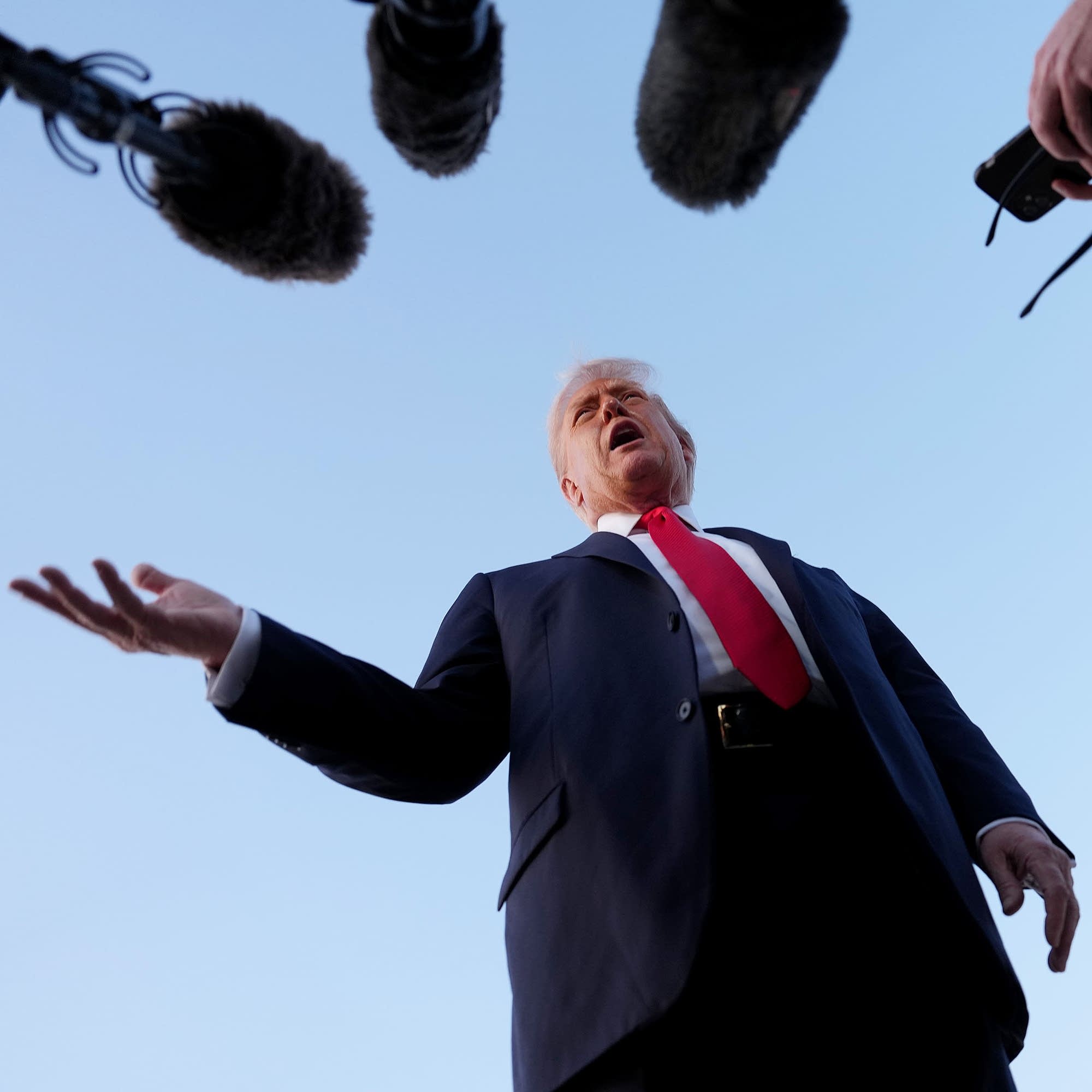
Trump lobbies the EU to Pressure Moscow Live from the UK this is the Marketplace Morning Report from the BBC World Service. Hello, I'm Nick Qureshi. US President Donald Trump is calling on the European Union to hit China and India, two major buyers of Russian oil with tariffs of up to 100%. It's part of efforts to force Vladimir Putin to end the war in Ukraine. The BBC's Katie Silver joins us on MarketPL. Hi Katie.
- [01:30]
D
Hi Nick.
- [01:31]
C
How's this all come about? What's he had to say?
- [01:33]
D
So we understand that the demands were made or the requests during a meeting between Washington and EU officials on Tuesday. President Trump, of course, has been trying, and some would say failing, to broker a peace deal between Moscow and Kyiv. Most notably, of course, that all important, highly anticipated summit that was held with President Putin just last month in Alaska. But despite this involvement, we have seen Russia intensifying its strikes in Ukraine and really economics or tariffs or sanctions have been seen as the way to try and bring Moscow to the negotiating table.
- [02:09]
C
And significant because China and India are major buyers of Russian oil.
- [02:13]
D
That's right. And we have of course heard from President Trump trying to keep the pressure up on the likes of China and India in just the last day or so. We've also seen him posting on Truth Social saying that the US And India were continuing negotiations to address the trade barriers and that he expects that he's going to speak to India's Prime Minister Narendra Modi in the coming weeks and hopes that there might be, to quote him, a successful conclusion to their trade talks. Now, it was just last month that we saw the US imposing a 50% huge tariff on goods from India, including a 25% penalty for its transactions with Russia. We've also heard as well from Narendra Modi saying that the two countries were close friends and natural partners. And so whether or not we might finally see a trade deal when it comes to India, that's something we'll be watching out for in the coming days.
- [03:00]
C
All right, Katie, good to talk to you. Thanks for updating us on Marketplace.
- [03:03]
D
Thanks for having me, Nick.
- [03:05]
C
Meanwhile, the President of the European Commission is defending her trade deal with the US At a State of the Union address this morning. A 15% tariff on most EU exports to the United States secured what Ursula von der Leyen said was the best deal.
- [03:19]
E
I do not believe in terrorists. Tariffs are taxes. But the deal provides crucial stability in our relations with the United States at a time of grave global insecurity. Think of the repercussions of a full fledged trade war with the United States. Picture the chaos.
- [03:40]
C
Ursula von der Leyen also said she plans to seek sanctions and a partial trade suspension against Israel over the war in Gaza. Okay, onto the numbers. Geopolitics is impacting the price of oil. Brent crude futures up 61 cents at $67 a barrel. And that follows the U.S. pressure to impose those at 100% tariffs. And after Israel's attack on the Hamas leadership in Qatar, now the Danish pharmaceutical company Novo Nordisk, the maker of weight loss drugs Wegovy and ezempic, is cutting 9,000 jobs. Shares jumped 2% following the announcement. The company says it'll save just over one and a quarter billion dollars a year. Protesters in Mexico City have held several demonstrations over the growing issue of gentrification in the neighbourhood of Lo Candesa. Activists estimate as many as one in five homes is now a short term rental or tourist letting, forcing out long term residents. The BBC's Will Grant reports.
- [04:39]
F
The timing of the anti gentrification protest in Mexico City was no coincidence. The 4th of July US Independence Day. It began as a peaceful march over aggressive rent hikes, unregulated holiday lettings and the endless influx of Americans and Europeans into the capital's trendy neighbourhoods of La Condesa and Roma. But it soon descended into violence. Radical demonstrators attacked coffee shops and boutique stores aimed at tourists while chanting gringos out. Two days later, President Claudia Schoenbaum, who'd previously served as the mayor of Mexico City, condemned the protest as xenophobic. No matter how legitimate the cause, as with gentrification, the demand can never be to just say get out to people of other nationalities, she said. Her administration would support the mayor Clara Brugada in tackling the issue, she added. Mayor Brugada then set out a 14 point plan to regulate rent prices, protect long term residents and build new social housing at affordable prices. For many, though, the mayor's promises came too late. Activist Sergio Gonzalez says in the past decade his group has recorded more than 4,000 cases of forced displacement of long term residents from his neighborhood of La Juarez alone. He was one of them.
- [06:03]
C
The first apartment I rented here cost around 4,000 pesos a month in 2007. Today that same apartment costs more than 10 times as much.
- [06:15]
F
In La Juarez, I met Erica Aguilar, whose family had lived in the same building for 45 years. In March 2017, officials came to every apartment in the building and told us we had until the end of the month to vacate the premises. Erika now lives almost two hours away by public transportation. Her old home is now a building site as the new owners convert it into luxury apartments. Combined with the high cost of living in the US the draw of the leafy streets of Condesa is obvious. It's peaceful. We've really enjoyed it. Alexis and Richard also Brooks are on a short trip to Mexico City from Portland, Oregon with they say half a mind to maybe settle here one day.
- [06:59]
D
Obviously we don't want to contribute to gentrification.
- [07:02]
F
I think as long as you treat those around you with respect and you try to be a part of the community, I think it goes a lot further.
- [07:09]
G
Learn the language, yeah.
- [07:14]
F
But for displaced resident Erika Aguilar, the radical demonstrators don't represent her cause. Still, she has advice to anyone planning to relocate to Mexico City. Learn Spanish and pay your taxes.
- [07:28]
C
That was the BBC's Will Grant in Mexico City. In the UK I'm Nick Qureshi with the Marketplace Morning report from the BBC World Service. Thanks for listening.
- [07:42]
G
Poetry has the power to connect our inner universe and the outer world. I'm Maggie Smith, poet and host of the Slowdown, a podcast from American Public Media. Each weekday find time to take a breather from your to do list or doom scrolling for that matter and take in a moment of reflection with a hand picked poem. Listen to the Slowdown wherever you get podcasts.