Loading summary
Transcript30 lines
- [00:00]
Dell Advertisement
This Marketplace podcast is supported by Dell introducing the new Dell AI PC. Powered by Intel Core Ultra processor. It helps do your busy work for you so you can fast forward through editing images, designing presentations, generating code, debugging code, summarizing meeting notes, finding files, managing your schedule, responding to long emails, leaving all the time in the world for the things you actually want to do. Get a new Dell AI PC starting at $699.99 at Dell.com AI PC how those ahead Stay ahead.
- [00:31]
Palo Alto Networks Advertisement
This Marketplace podcast is supported by Palo Alto Networks. Listen to threatvector, the Palo Alto Networks podcast, for in depth discussions with industry leaders and experts providing crucial insights for security decision makers. Whether you're looking to stay ahead of the curve with innovative solutions or understand the evolving cybersecurity landscape, ThreatVector equips you with the knowledge needed to safeguard your organization. Tune in and subscribe to threatvector wherever you get your podcasts.
- [01:01]
Liana Byrne
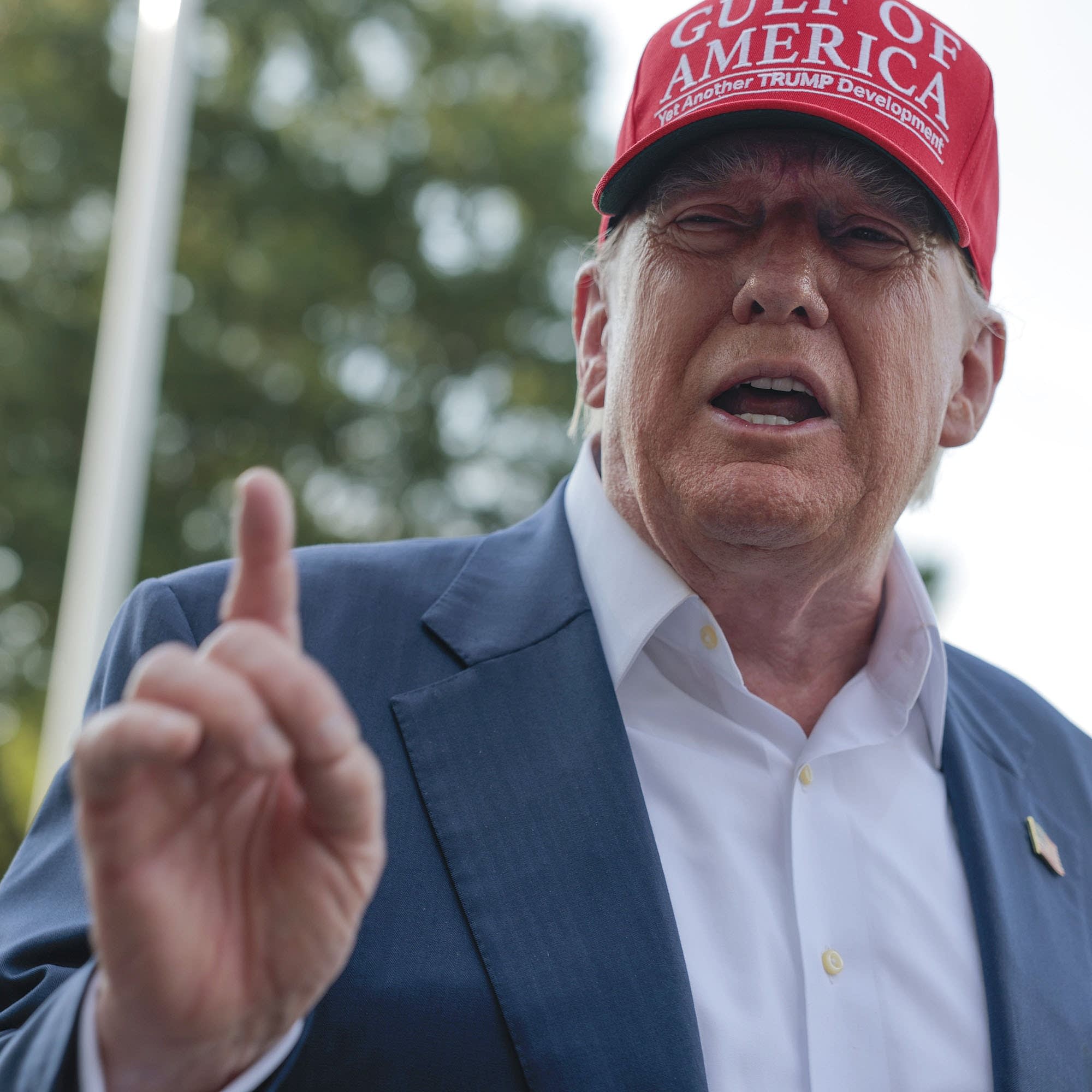
Even with trade tensions and a property crisis, China is still growing. Live from the UK this is the Marketplace Morning Report from the BBC World Service. I'm Liana Byrne. Good morning. But first, President Trump has said he now backs NATO, now that countries in the military alliance are paying their bills. The president's comments are part of a wide ranging exclusive interview with the BBC and follows a deal to send more US Weapons to Ukraine in conjunction with European allies and the threat of tariffs from Russia if there's no ceasefire with Ukraine in 50 days. Trump also talked about trade, Brexit and his US spending bill. But first, my colleague, the BBC's Gary O' Donohue asked about defense spending bill.
- [01:42]
Donald Trump
We made last week is amazing. The, you know, the 5%, nobody thought that was possible and it amounts to over a trillion dollars a year on that deal.
- [01:53]
BBC Journalist
You once said that NATO was, was obsolete.
- [01:56]
Donald Trump
I think NATO is now becoming the opposite of that. I do think it was passed and it was very unfair because the United States paid for almost 100% of it. But now they're paying their own bills and I think that's much better.
- [02:11]
BBC Journalist
Can I ask you about Britain? Because you're going to, you're having the state visit in September. I know you're looking forward to that.
- [02:18]
Donald Trump
I do, I do. I look forward to it.
- [02:20]
BBC Journalist
Do you think Britain's made the most of Brexit that it could.
- [02:23]
Donald Trump
No, I think it's been on the sloppy side, but I think it's getting straightened out. I really like the prime minister a lot, even though he's a liberal. You know, he did a good trade Deal with us, which a lot of company, a lot of countries haven't been able to do.
- [02:41]
Liana Byrne
And you can listen to the rest of that exclusive interview on the BBC news website. Now back to China, where its economy has outpaced expectations. And that's despite pressure from President Trump's tariffs and a deepening property crisis. Official figures show the world's second largest largest economy grew by 5.2% in three months to June compared to a year earlier. That's slightly ahead of economists forecasts, but a touch below the previous quarter. The BBC's Katy Silver is on this one. Hello.
- [03:09]
Archana Shukla
Hi.
- [03:09]
Liana Byrne
So the Chinese authorities, they must be breathing a bit of a sigh of relief today with all of these official figures.
- [03:15]
Katy Silver
We do have to remember that they are released by the Chinese authorities and so sometimes we do need to take them with a grain of salt. But according to the National Bureau of Statistics, they say that the economy withstood pressure and made steady improvements despite the challenges. And of course, those challenges are the trade war. For over a month of that three month period, China faced triple digit tariffs from the U.S. if you remember, it got as high as 145%. Of course afterwards we saw those pretty productive conversations held in Geneva and in London, tariffs being reduced to about 30%. So there is potentially a suggestion that there was almost a backloading or a front loading, whatever you'd like to call it, towards the end of the quarter where we saw manufacturing pick up and indeed there was a 6.4% increase or expansion when it came to manufacturing, potentially because of that impasse when it came to really high tariffs.
- [04:04]
Liana Byrne
So what parts of the economy have actually been performing well?
- [04:07]
Katy Silver
There was particularly high demand for the likes of 3D printing devices, electric vehicles as well as industrial robots. Services also going well. So things like transport, finance and technology all making gains. One area of slight concern was retail sales in the month of June particularly. So for example, it slowed to about 4,5% from a year earlier. That was a pretty significant drop on May. And what it does suggest is, you know, when it comes to confidence, if you're facing these tariffs from the world's largest economy and there's a lot of uncertainty, despite the fact that we have seen Beijing acting in a pretty robust fashion, all of that creates a level of uncertainty and it does seem to be weighing on consumer confidence if we're looking at those retail sales figures.
- [04:48]
Liana Byrne
The BBC's Katie Silver, thank you so much for joining us on Marketplace Place.
- [04:52]
Katy Silver
Thanks for having me.
- [04:53]
Liana Byrne
And more positive news for China. The US technology giant Nvidia says it will soon resume sales of its high end artificial intelligence chips to the country. The move reverses a ban on its sales of its chips to Beijing, a ban imposed by President Donald Trump's administration in April over national security concerns. Okay, let's do the numbers. Cuba's economy shrank by 1.1% last year, the second year it's contracted as the country's been hit by US sanctions, natural disasters and weak tourism post Covid. Meanwhile, the UK's largest water company, Thames Water, which covers London and the south of England, reported a $2.2 billion loss as pressure builds over its debt and fears of nationalization grow. So Tesla is finally making its move into India as it's set to launch operations there today, opening a Tesla Experience center in Mumbai. The BBC's Arch in a Shockland is covering this one for us. Hello.
- [05:47]
Archana Shukla
Hi, Liana.
- [05:47]
Liana Byrne
Archana, why is Tesla making this move now?
- [05:50]
Archana Shukla
India's electric vehicle market is one of the fastest growing and overall also India is the third largest car market. And you know, with Tesla's global sales falling in some of their other key markets like the us, China or even the European markets, Tesla is looking at India to somewhere start at least bridging that gap. Tesla has been wanting to enter India for a long time. And there was a long conversation with the Indian government where India wanted Tesla to come build cars locally here. They were offered subsidies, they were even offered some tax breaks on imports if they commit to manufacturing here in India. But none of that has happened. All those efforts have failed. Tesla has certainly come here, but all of their cars that they would be selling now would be imported either from their Berlin or Shanghai plants.
- [06:36]
Liana Byrne
Is India set up for EVs? What's the infrastructure like there?
- [06:40]
Archana Shukla
The electric vehicle penetration in India is just 4%. So the infrastructure also is really at that level. But there has been efforts by the government to expand that infrastructure. Even Tesla said they will be setting up some 16 superchargers and four charging stations in Bombay and Mumbai and then in Delhi when they launch there. But yes, it's still limited.
- [07:02]
Liana Byrne
And Archana, who is Tesla competing with? Because there are Indian EV players, aren't there?
- [07:07]
Archana Shukla
The larger competition will come from the homegrown brands like the Tata Motors or the MG who have a full set up here in India. So the competition is increasing in the India market for Tesla.
- [07:18]
Liana Byrne
Archana Shukla, thank you so much for joining us in Marketplace.
- [07:21]
Archana Shukla
Thank you.
- [07:22]
Liana Byrne
And if you just tuned in and missed the BBC's exclusive interview with President Donald Trump, you can check it out on the BBC News website. I'm Liana Byrne, the Marketplace Morning Report from the BBC World Service.
- [07:40]
Marketplace Podcast Host
Summer's here and it's time for your kids to have fun in the sun. But it's also a great time to nurture growing minds. Million Bazillion, a podcast from Marketplace, teaches your kids about something that impacts all of us money. From a fun explainer on tariffs, yes, it's possible to why some athletes make so much money. Million Bazillion tackles big questions with easy to understand answers. Listen to Million Bazillion all summer long, available wherever you get your podcasts.