Loading summary
Transcript14 lines
- [00:01]
Marketplace Host
You can turn to Marketplace to hear from powerful leaders and everyday people about the economy and their role in it. Now we hope we can turn to you. Marketplace is facing real threats and challenges as we plan for the future. As a public media program, donations from you are an important part of our budget. Here's one action you can take right now that will have a long lasting impact. Start a monthly donation to support our work. Five bucks a month is a great place to start. Head to marketplace.org donate and thank you.
- [00:35]
Odoo Sponsor Announcer
This podcast is supported by Odoo. Some say Odoo business management software is like fertilizer for businesses because the simple, efficient software promotes growth. Others say Odoo is like a magic beanstalk because it scales with you and is magically affordable. And some describe Odoo's programs for manufacturing, accounting and more and more as building blocks for creating a custom software suite. So Odoo is Fertilizer Magic Beanstalk building blocks for business Odoo exactly what businesses need. Sign up@odoo.com that's o d o o.com.
- [01:06]
William Lee Adams
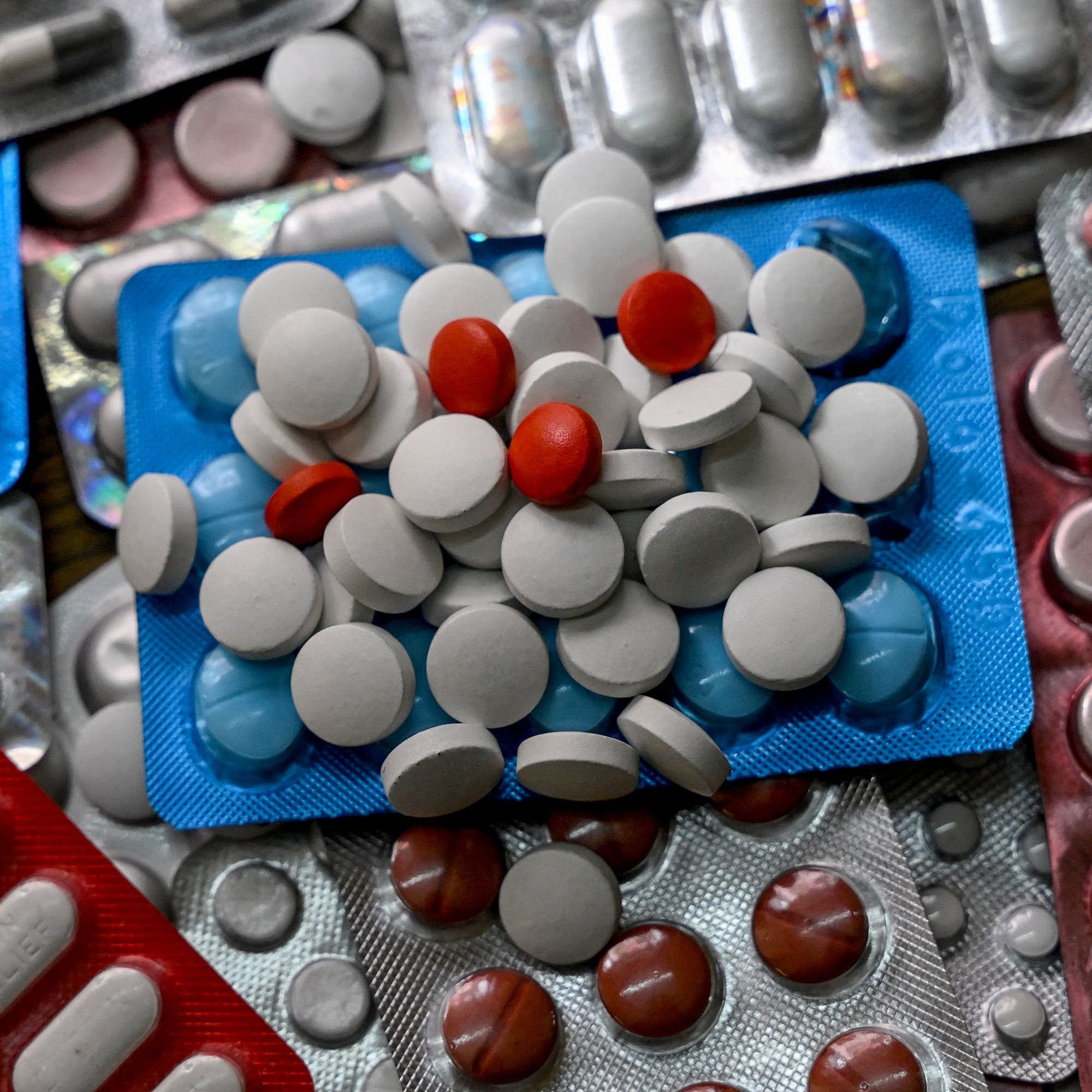
President Trump slaps Tariffs on Imported Drugs Live from the UK this is the Marketplace Morning Report from the BBC World Service. I'm William Lee Adams. Good morning. US President Donald Trump has announced a new wave of tariffs, including 100% levy on branded or patented drug import from 1 October. That's unless a company is building a factory in the US. Here's the BBC's Katie Silver with more details.
- [01:32]
Katie Silver
It's part of a new wave of tariffs, but by far pharma the most hit with that big, big triple digit figure. But he says if pharma companies already have factory construction underway, they'll be exempt. But that is likely to be very few and far between. We're likely to see companies from across the uk, Ireland, Germany, Sweden, Switzerland and Japan being the most impacted. The UK for its part, exports about $6 billion worth of pharmaceutical products, according to the United nations to the US So they're certainly going to feel the hit. But it's as I said, this is part of a new wave across a number of different sectors. So he's also announced or posted that he's going to be putting a 25% levy on big trucks, a 50% levy on furniture, things like kitchen and bathroom cabinets when one does renovations, and a 30% tariff on furniture itself. Said it was due to the large scale flooding of these products into the US by some other countries.
- [02:30]
William Lee Adams
Katie Silver the prospect of tariffs has rattled the sector. So says Jane Sydenham a director at the investment firm Rathbones.
- [02:38]
Jane Sydenham
It's been quite a roller coaster ride, hasn't it? They were initially exempted, but there was a sort of warning flag raised. And certainly the pharmaceutical sector in terms of share prices has under pressure for quite some time, both in the UK and the United States and Europe. Nobody likes uncertainty and that's been keeping a cloud over the sector for a while. There's been this ongoing narrative that the UK can't attract investment and we're a low growth economy. But the reality in this particular sector is it is really more about Donald Trump's agenda and the uncertainty that that's creating for these companies and where they might need to invest to handle the tariff proposals.
- [03:17]
William Lee Adams
Jane Sydenham, Lots of reaction coming into this this morning and the situation is far from clear cut. The European Union says it's already signed a maximum 15% tariff with the US on pharmaceutical exports. And Ireland's trade minister said that the deal agreed in August made it clear that any new tariff would be capped at that rate. Let's do the numbers now. Stocks in Asia fell on the news of Trump's pharma tariffs. South Korea's Kospi index tumbled nearly 3% while Indian stocks drop by half a percent. Shares in Europe's biggest pharma companies were steady after an early dip. Elsewhere, oil prices are on track for their biggest weekly gain in more than three months. Brent traded above $69 a barrel for a weekly gain of 4.4%. West Texas Intermediate was at more than $65 a barrel. Ethiopia is officially inaugurating a controversial megadam built over the River Nile which is Africa's largest hydroelectric plant. It will connect millions of Ethiop, the power grid. But the project has been at the center of a diplomatic row with Sudan and Egypt, which fear the dam will affect essential water supplies. The BBC's Kalkadan Yebital reports.
- [04:33]
Kalkadan Yebital
This is Get Enish Village, Alamura in southern Ethiopia, a small farming community that grows bananas and maize. They also raise livestock. The village is less than 10km away from Hawassa, one of the country's major cities, yet it doesn't have access to electricity. Getines and her family use kerosene powered lamps for light and firewood for cooking. Their small mud walled and straw roofed hut is filled with dark smoke when 35 year old get cooks meals for her three children.
- [05:11]
Get Enish (Interviewee)
When we run out of fuel, we might spend nights in darkness. Sometimes we use firewood as a source of light. Sometimes we can't even have enough wood.
- [05:22]
Kalkadan Yebital
Now she's hopeful her household will have electric power. And that's because a massive hydroelectric dam built over the Blue Nile has been completed in the western part of Ethiopia. The plant, officially known as the Grand Ethiopian Renaissance Dam, will massively increase the country's electric supply. And for the tens of millions like Kit Enish, it could herald the dawn of a brighter day. For more than a decade, her husband, Girmesa Galcia, has been contributing to the fundraising campaign for the construction of the dam. I feel incredibly happy because this is our shared ambition. I don't even have words to explain my excitement. Ethiopia hopes the $4 billion hydropower project will boost its electric exports to regional neighbors. But it has created issues with downstream countries, Sudan and Egypt, that fear the water levels could be affected, particularly during times of drought, something Ethiopia denies. Jacob Arsanou is a professor of hydropolitics in Addis Ababa. He was also part of Ethiopia's negotiation team during several rounds of talks among the three countries. He says dialogue should continue.
- [06:38]
Jacob Arsanou
I think negotiations will continue not like they have been, but they must find a common ground, that water belongs to everybody, and everybody has to on a common ground, on a common use, on a collaborative kind of future, so that opportunities for each country can expand.
- [06:59]
Kalkadan Yebital
The Grand Ethiopian Renaissance Dam is a source of pride and a rare sense of unity for a country blithed by conflicts in recent years. And millions hope electricity will finally reach their homes.
- [07:11]
William Lee Adams
The BBC's Kalkadan Yebital reporting there. And finally, China has launched a campaign to keep killjoys off the Internet. Beijing's Cyberspace administration wants to discourage what it calls excessively exaggerated, negative and pessimistic sentiments that it worries might encourage laziness and disillusionment. Some influencers have had their social media accounts scrubbed in the uk. I'm William Lee Adams with the Marketplace morning report from the BBC World Service.
- [07:50]
David Brancaccio
Hey, David Brancaccio here. Big news. Half priced hoodie weekend is back. That means this weekend only you can get a Marketplace zip up hoodie when you donate $10 a month more, support public service journalism and pick up a cozy new hoodie just in time for the cooler weather. Get yours before this deal ends at midnight Sunday. What you do is go to marketplace.org donate.