Loading summary
Transcript32 lines
- [00:00]
Dr. Horton Advertiser
Your new home is now ready. Dr. Horton, America's Builder has new homes that are ready today with new construction communities in Ellensburg and throughout the Greater Seattle area. Dr. Horton has the right home for you. @ Dr. Horton. We're still building with flexible living spaces, smart home technology and two and three car garages. More communities and more homes available every day. Find your new home in Ellensburg now ready at Dr. Horton.com Dr. Horton America's builder and Equal Housing Opportunity Builder.
- [00:31]
Odoo Advertiser
This podcast is supported by Odoo. Some say Odoo business management software is like fertilizer for businesses because the simple, efficient software promotes growth. Others say Odoo is like a magic beanstalk because it scales with you and is magically affordable. And some describe Odoo's programs for manufacturing, accounting and more as building blocks for creating a custom software suite. So Odoo is fertilizer Magic beanstalk building blocks for business. Odoo exactly what businesses need. Sign up@odoo.com, that's O D O O.com.
- [01:02]
David Brancaccio
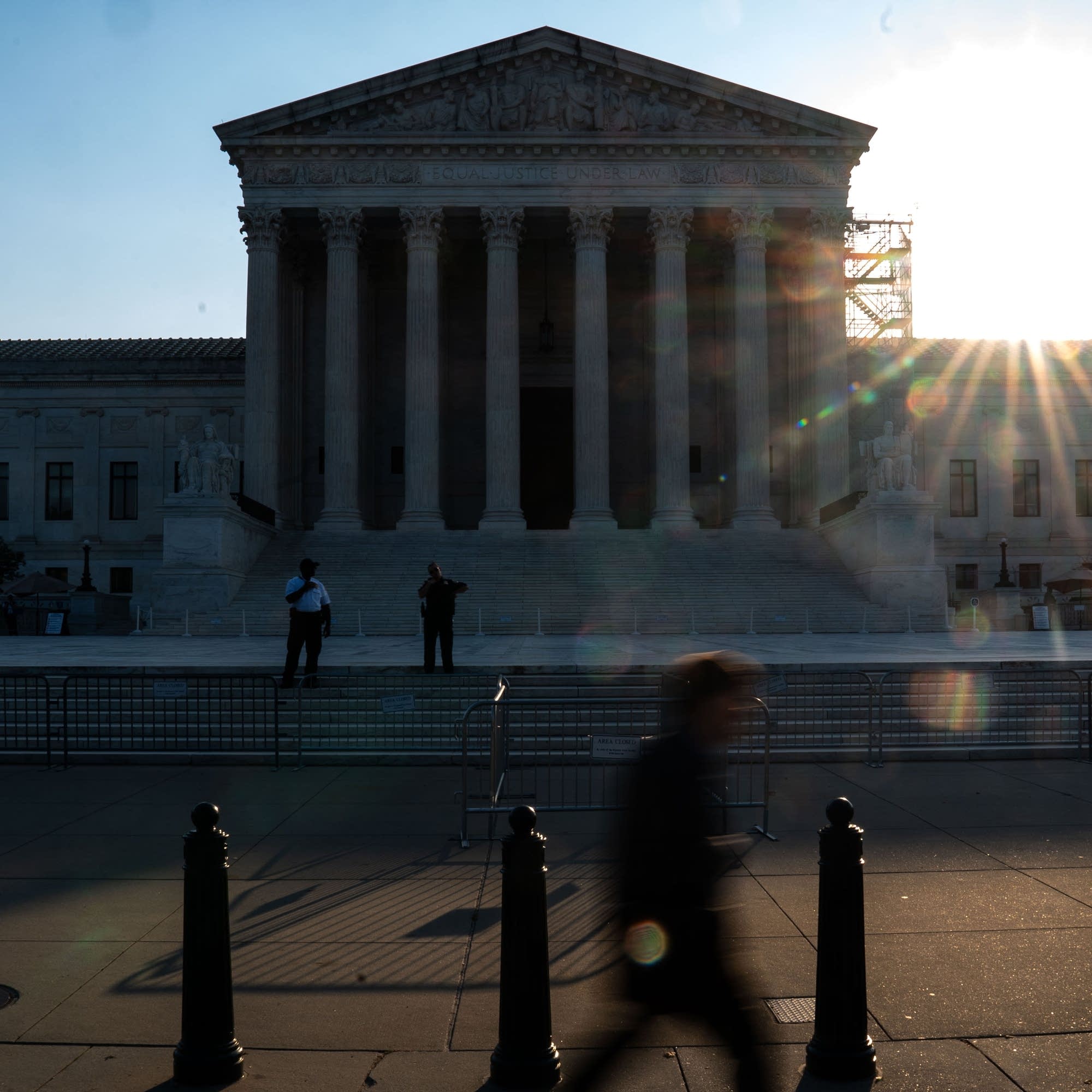
A subset of Trump Tariffs get Their day in Court the High Court I'm David Brancaccio in Los Angeles. The Supreme Court is set to hear arguments today on whether the president can use emergency powers to impose tariffs. A series of lower courts have ruled against the president. Marketplace's Nancy Marshall Genzer will be monitoring.
- [01:21]
Nancy Marshall Genzer
Today's hearing focuses on two cases the Supreme Court consolidated. They were brought by a group of states and businesses who say they're being hurt by president tariffs. Henrietta Treyes, co founder of the consulting firm Vada Partners, says one lead plaintiff is an Illinois toy company that brought its case because the tariffs are punitive and have materially hurt their business to the point of making them borderline bankrupt. The company, Learning Resources, says It'll pay about $100 million in import taxes this year, up from around 2 million last year. President Trump imposed these tariffs under the International Emergency economic powers of 1977, or IEEPA. Elizabeth Goytin is an attorney at the Brennan center for justice, which filed a friend of the court brief in support of Learning Resources. There's a long list of actions that.
- [02:15]
Bridget
A president can take under ipa.
- [02:18]
Nancy Marshall Genzer
That list does not include the word tariffs. Another plaintiff argument tariffs are taxes and only Congress has the power to tax, but it didn't specifically delegate that power to the president. Alden Abbott was general counsel for the Federal Trade Commission in administration. He's now at the Mercatus Center. He says the Trump administration is arguing that AIPA gives the president broad emergency powers and that the US Trade imbalance is an emergency because the trade deficits.
- [02:48]
Alden Abbott
Have national security implications.
- [02:51]
Nancy Marshall Genzer
The president's lawyers also say AIPA lets the president regulate trade and tariffs are part of that even if the law doesn't specifically mention them. Abbott says the administration's strongest argument is probably that Congress and the courts should keep their noses of foreign affairs.
- [03:07]
Alden Abbott
If any president has broad authority to try and advance his or her foreign affairs agenda in a broad manner, and that certainly should include tariffs.
- [03:17]
Nancy Marshall Genzer
Alden says Learning Resources and the other plaintiffs have a strong case, but it's not insurmountable. I'm Nancy Marshall Genser for Marketplace.
- [03:28]
David Brancaccio
China's government is hosting a big trade show. China's premier said a recent surge in trade restrictions had hurt the global economy, adding that Beijing would push for reforms to international international rules. Big US Companies are turning out in force at this International Import Expo as they look to increase sales in China at a moment this trade truce was declared when the US and China presidents met last week. The BBC's Stephen McDonnell has more.
- [03:54]
Stephen McDonnell
Notable amongst exhibitors is the US soybean industry, which now hopes to ramp up exports to China following commitments made when Xi Jinping met Donald Trump last week. Major American corporations are also here attempting to increase sales into China during during this period of trade war detente. Car brands Ford and General Motors, tech companies like Boston Scientific as well as semiconductor producer Qualcomm all have a presence at the expo. When Premier Li Chung launched the event today, he spoke of the severe impact which protectionist measures have had on the global economy recently, but said Beijing would work to make trade rules fairer, more reasonable and transparent.
- [04:36]
David Brancaccio
BBC's China correspondent Stephen McDonnell it is now the longest US federal government shutdown in history, 35 complete days going into the 36th. Among key issues, the future of the Affordable Care act premium set to shoot upward without action.
- [05:13]
Dr. Horton Advertiser
A Sapphire Reserve story from Ella Langley.
- [05:15]
Esme
I kind of say my first concert ever was for cows. I would climb up to the top of the barn and just perform. Now I still do that listening to Apple music which I get through my Sapphire Reserve card. And when moo can sound very close to boo, it toughens a girl up.
- [05:29]
Dr. Horton Advertiser
Sapphire Reserve now comes with Apple music Chase Sapphire Reserve now even more rewarding. See More rewards@chase.com Reserve IT cards issued by JPMorgan Chase bank and a member FDIC subject to credit approval terms apply. Apple and the Apple logo are trademarks of Apple Inc. Registered in the US and other countries.
- [05:44]
David Brancaccio
Using fresh calculations from Auto Data and Wards Intelligence Car and truck sales are down 6.7% September to October. This is a reading on Consumer Sentiment Marketplaces. Mitchell Hartman reports.
- [05:57]
Mitchell Hartman
Motor vehicle sales didn't fall into a pothole in October because consumers are tapped out from inflation or because automakers have jacked up prices because of tariffs. Instead, it's all about federal subsidies for electric vehicles, or EVs. They've been in place for years until the Trump administration canceled them beginning October 1st. So says nationwide economist Ben Ayres, August.
- [06:23]
Alden Abbott
And September, anyone who still wanted to get that credit tried to buy a electric vehicle. And once that expired, EV sales really fell off the table.
- [06:31]
Mitchell Hartman
With federal subsidies, EVs reached about 8% of overall sales in the U.S. drivers like them, environmentalists like them. But with subsidies gone, EV sales aren't likely to fully rebound for months or years, says Garrett Nelson at CFRA Research. For just one reason, cost.
- [06:52]
Alden Abbott
The average EV is 16% more expensive. So if you look at September, about $58,000. The average new vehicle cost about 50,000, which was record high.
- [07:04]
Mitchell Hartman
And now with federal support for EVs gone, automakers aren't likely to invest in new technology and production.
- [07:11]
Alden Abbott
Instead, Nelson says, we're expecting to see internal combustion engine vehicles retake some of that market share from EVs that they had lost over the last few years.
- [07:21]
Mitchell Hartman
Gas electric hybrids, meanwhile, aren't affected by the end of federal EV subsidies.
- [07:27]
Alden Abbott
The hybrid market is red hot right now. Four automakers invested very heavily now benefiting from that in terms of market share gains. Toyota, Honda, Ford and Hyundai Kia.
- [07:39]
Mitchell Hartman
EV sales are still growing strongly abroad, especially in Europe and China. Tesla is the only major US based auto company making a significant play in those markets. But lately it's been struggling. Sales in Europe have fallen sharply, partly because of Elon Musk's political unpopularity there, says Columbia Business School climate economist Gernot Wagner. He says in China, Tesla's problem isn't politics, it's prices.
- [08:08]
Alden Abbott
There Are cheaper, better electric vehicles available on the market?
- [08:14]
Mitchell Hartman
Tesla's fiercest competitor, Chinese automaker BYD, sells new EVs for as little as $10,000, just a fraction of the cost of a new Tesla. I'm Mitchell Hartman for Marketplace and after.
- [08:27]
David Brancaccio
The cargo plane crash in Louisville that killed seven people last evening. Also note that many UPS package shipments will be affected, with shifts cancelled at the major UPS hub nearby. In Los Angeles, I'm David Brancaccio. Marketplace Morning Report from APM American Public Media.
- [08:46]
Bridget
Hey everyone, it's Bridget, host of Million Bazillion, a podcast from Marketplace. You've probably heard about the government shutdown, but if you're anything like our young caller Esme, whose dad is a federal worker, you might still have questions.
- [08:59]
Esme
I've noticed that my dad hasn't been going to work, and I don't know when the government shutdown will stop and my dad can go back to work.
- [09:08]
Bridget
We can help tune into our recent episode where we explain what you and the young ones in your life need to know about government shutdowns. Listen to Million Bazillion on your favorite podcast app.