← Marketplace Morning Report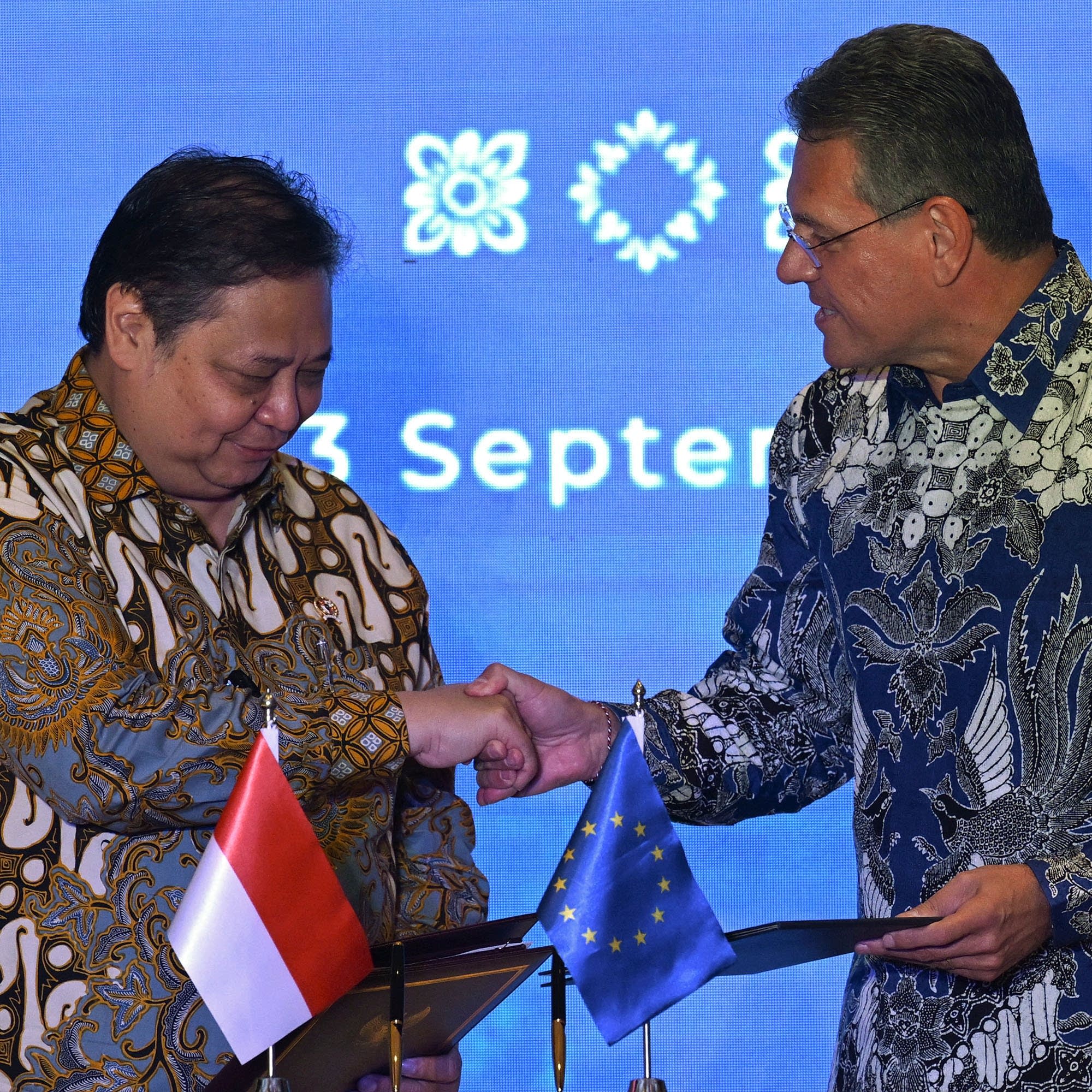
Loading summary
Transcript14 lines
- [00:01]
Marketplace Host
You can turn to Marketplace to hear from powerful leaders and everyday people about the economy and their role in it. Now we hope we can turn to you. Marketplace is facing real threats and challenges as we plan for the future. As a public media program, donations from you are an important part of our budget. Here's one action you can take right now that will have a long lasting impact. Start a monthly donation to support our work. Five bucks a month is a great place to start. Head to marketplace.org donate and thank you.
- [00:35]
Podcast Sponsor Announcer
This podcast is supported by Odoo. Some say Odoo business management software is like fertilizer for businesses because the simple, efficient software promotes growth. Others say Odoo is like a magic beanstalk because it scales with you and is magically affordable. And some describe Odoo's programs for manufacturing, accounting and more and more as building blocks for creating a custom software suite. So Odoo is Fertilizer magic beanstalk building blocks for business. Odoo exactly what businesses need. Sign up@odoo.com that's o d o o.com.
- [01:06]
William Lee Adams
Trump's tariffs push Indonesia and the EU to agree a new trade deal live from the UK this is the Marketplace Morning Report from the BBC World Service. I'm William Lee Adams. Good morning. After nearly a decade of negotiations, the European Union and Indonesia have agreed a trade deal. Indonesia's Minister for Economic Affairs, Airlonga Har Toto, said the trade agreement will take effect in 2027. It's the third trade deal the EU has struck with countries in Southeast Asia, but it's been among the longest to negotiate. The BBC's Maura Fogarty joins us now from Singapore. Maura Hai hi there. So first off, this trade deal is meant to boost exports, but is it also aimed offsetting some of the effects of President Trump's tariffs?
- [01:53]
Maura Fogarty
Yeah, that's a pretty good way of looking at it, William. So first of all, the tariff negotiations have been going on for nearly 10 years between Indonesia and the EU. But it really got a lot of momentum after President Trump initiated the tariffs placed on not just Indonesia, the eu, but also the rest of the world and many other trading partners of the U.S. what you're seeing is many of these countries and regional blocs are looking for new trading partners that they can do more business with as well and that they hope will offer set some of the loss of exports that they expect to see from their goods going into the United States.
- [02:28]
William Lee Adams
More how are each side in this deal going to benefit?
- [02:31]
Maura Fogarty
So for Indonesia, they say that about 80% of their exports to the EU will essentially be tariff free. So you're looking at products in palm oil, you're looking at textile products, for example, footwear. The Indonesians think that they can also sell more coffee to the European Union. On the EU side, they will see a lot of tariffs coming down as well across different areas. So right now, for example, for example, if you're an EU carmaker exporting cars to Indonesia, you're facing tariffs that are at around 50% that will go down over a series of five years. So that makes your car products much more affordable in Indonesia compared to other companies selling cars to Indonesia. But critically for the eu, it allows for investment by European companies into the critical mineral sector in Indonesia. And as we all know, with the move towards more green and clean energy products, EVs, for example, we are seeing countries in a race for these rare earths, materials that are very important to the entire renewable energy sector.
- [03:33]
William Lee Adams
Maura, thanks so much for joining us on marketplace.
- [03:36]
Maura Fogarty
All right, cheers.
- [03:37]
William Lee Adams
Okay, let's do the numbers. Shares in China's Alibaba surged over 6% after its chief executive announced plans to boost spending in artificial intelligence. In Saudi Arabia, the Tadawul all share index leapt 5% amid reports the Kingdom of May lift limits on foreigners owning majority stakes in public companies. And New Zealand has appointed a Swedish economist, Anna Bremen, to head its central bank. Nigeria has cut its interest rate for the first time in five years in response to lower inflation and positive predictions for the economy. The rate was reduced by half a point. Here's the BBC's pall.
- [04:17]
Paul Moss
It might not sound like good news. Nigeria's base interest rate is now only 27%. In the US it's a little over four for Eurozone, just two and a bit. But it's direction of travel, which often counts in economics. And a cut is a cut. Nigeria's sky high rates were a response to inflation so bad it provoked riots. The Nigerian government's hoping for a strong autumn harvest which would bring down food prices and for a rise in oil exports that would boost Nigeria's currency, so making further interest rate cuts more likely.
- [04:53]
William Lee Adams
Paul Moss there. The British government says it saved around $600 million last year using a new artificial intelligence tool to combat fraud. More than a third of the recovered money related to illegal activity during the COVID pandemic. The AI system will now be rolled out across other government departments. From this week, people in India are finding a host of products from everyday essentials like milk and medicines to cars and TVs getting less expensive. It's because of a sweeping overhaul of India's goods and services tax prime. Narendra Modi's government has cut four different tax rates down to two. It's a move to simplify the tax code and revive household spending at a time when US tariffs threaten to slow growth in Asia's third largest economy. The BBC's Archana Shukla reports from Mumbai.
- [05:47]
Archana Shukla
Narrow, crowded lanes, glittering lights. The din of shoppers haggling over clothes and jewelry. Mumbai's Crawford market is in full festive swing. And there's reason to cheer. New tax cuts are expected to draw in a lot more shoppers like Varsha. If the text will come down so automatically, our pocket will allow to spend some more. The markets are already preparing. It's the start of the biggest festive season and with tax cuts across the hundreds of product categories from clothes to shampoo, sweets to even cars and motorcycles. The hope is that millions more people will come out shopping and it will keep the economy rolling. The government hopes it could also absorb some of the impact of the US Trade tariffs. Small cars and motorbikes, often seen as a gauge of the broader economy are now 10% cheaper. And automakers are betting this will rev up slow sales. At the showroom of Hero Motocorp, the largest two wheeler brand, buyers are already trickling in. Many are still making enquiries and comparing prices. Mumbai is some certain market wherein but heroes. Mumbai regional head Sachin Ghanavat tells me sales could jump 25%. We are telling customer to pre book so that they will get their desired model on time. New model has come into the Hero special. I've seen the reviews also. I met Vishal Pawar here too. He wants to upgrade his motorbike and feels now is the right time. It's of course beneficial. Being 10% discount is much better if you buy on the festival seasons. It's this consumer confidence that the government hopes will keep the economy rolling amidst falling exports and US trade tariffs. I'm paying a lot of tax here which I don't know in the long run even if I'm getting benefit out of. But not everyone's jumping in just yet. Muskaan, who runs a small clothing brand says she's waiting to watch how the tax cuts play out. I'm hopeful that it works as per plan. If it does, of course it's going to be beneficial for all of us. But this isn't just about city shoppers. Companies have their eyes set on the smaller price sensitive towns and villages where 2/3 of India lives. We are preparing for the 22nd. This is what Sabyasachi Gupta tells me. He heads the air conditioners division at Godrej Appliances, one of India's biggest consumer goods companies. In the metropolitan cities there the affordability is more the next rung cities, the Moda rural sub rural. The GST cut will have a much bigger impact. There gap between affordability and ambition will now reduce. That's the cheer for another car so sold at the dealership. But experts say these festive sales will only cushion some of the global trade shocks. Whether India's economy can sustain its pace will depend on how much of these savings trickle down and how long the spending continues. In India, I'm the BBC's Akshna Shukla for Marketplace.
- [08:55]
William Lee Adams
And in the UK, I'm William Lee Adams with the Marketplace Morning Report.
- [09:00]
Podcast Sponsor Announcer
How many times have you wished you could be in two places at once? With wix, you practically can. Wix's website builder is packed with powerful AI tools to make running your business online easier. Build a full site just by talking with AI, get an AI agent to manage your sales and marketing, or work like a 10 person team, even if it's just you. So you don't need superpowers to get everything done, you just need Wix. Try it out for yourself@wix.com.