Loading summary
Transcript28 lines
- [00:00]
Base 44 Representative
Think about the app you've been wanting to build, sell something you've created, run your community, manage your business, or launch your next idea. Now imagine it's live. Before today's over, meet base 44, the fastest way to turn any idea into a fully functional app. No code, no waiting. Just describe what you want and watch it come together. Backend design and all in minutes. A real product ready to share. From idea to live app Fast Start building today. @base44.com.
- [00:31]
Lowe's Advertiser
Lowe's knows how to get you ready for holiday hosting with up to 35% off select home decor and get up to 35% off select major appliances. Plus, members get free delivery, hallway, basic installation Parts and a two year Lowe's Protection Plan when you spend $2,500 or more on select LG major appliances valid through 10. One Member Offer excludes Massachusetts, Maryland, Wisconsin, New Jersey and Florida. Installed by independent contractors. Exclusions lowe's.com for more details when it.
- [01:02]
David Brancaccio
Comes to grocery prices, what goes up hardly ever goes down I'm David Brancaccio in Los Angeles. First, let's acknowledge that we all carry our own personal Consumer Price Index with us at all times. We experience the prices we ourselves pay, but we can also learn from diving into the nationwide numbers. The Fresh Consumer Price Index came out yesterday. It was up more than expected one slice. The price of food to use at home was up six tenths of 1% from just July to August, Marketplace's Carla Javier reports.
- [01:34]
Carla Javier
If you're wondering if tariffs are to blame, they're not the main driver of higher grocery prices. That's according to Bobby Gibbs, who's a retail consultant at Oliver Wyman. He says other input costs are the culprits, including, you know, weather and other production impacts.
- [01:49]
David Brancaccio
Some of that comes from labor shortages and labor availability, which is a potentially kind of ongoing cost impact for them, gibbs says.
- [01:57]
Carla Javier
Small profit margins for grocery stores mean they can't absorb higher costs, and that leaves consumers in a tough spot, says Charlotte Ambrzek in the department of Applied Economics at the University of Minnesota. She says demand for some staples like meat is inelastic, which means when prices.
- [02:15]
Charlotte Ambrzek
Go up, people will probably just be stuck paying higher prices and compensating for that in other ways. In their budget, fruits and vegetables might.
- [02:23]
Carla Javier
Be slightly more elastic, meaning consumers might buy less or swap them out for more affordable alternatives. That's if they bother making a meal at all.
- [02:33]
Charlotte Ambrzek
When we see food away from home prices are not going up as fast as food at home prices, I think it's totally plausible that, you know, people will eat more meals, especially at fast casual or fast service restaurants, which amphorsec.
- [02:49]
Carla Javier
Says could save them the cost of the groceries plus the time it takes to figure out what to make and actually cook it. I'm Carla Javier from Marketplace.
- [02:58]
David Brancaccio
Video images of South Korean workers in US custody shackled with chains on wrists, ankles and waists are caused, causing a wave of anti US anger in South Korea. Close ally and strategic ally more than 300 workers detained in an immigration raid in Georgia are now back in Korea after a week in detention. They were among about 475 people taken into custody at a construction site on the Hyundai campus near Savannah, one of the top economic development projects in the state of Georgia.
- [03:37]
Justin Wolfers
Foreign.
- [03:46]
Dell Advertiser
This Marketplace podcast is supported by Dell Huge savings DELL AI PCs are here and it's a big deal. Why? Because Dell AI PCs with Intel Core Ultra processors are newly designed to help you do more faster. It's pretty amazing what they can do in a day's work. They can generate code, edit images, multitask without lag, draft emails, summarize documents quick create live translations. They can even extend your battery life so you never have to worry about forgetting your charger. It's like having a personal assistant built right into your PC to cover the menial tasks so you can focus on what matters. That's the power of Dell AI with Intel inside with deals on Dell AI PCs like the Dell 16 plus starting at $749.99, it's the perfect time to refresh your tech and take back your time. Upgrade your AIPC today by visiting Dell.comdeals that's Dell.com deals.
- [04:48]
David Brancaccio
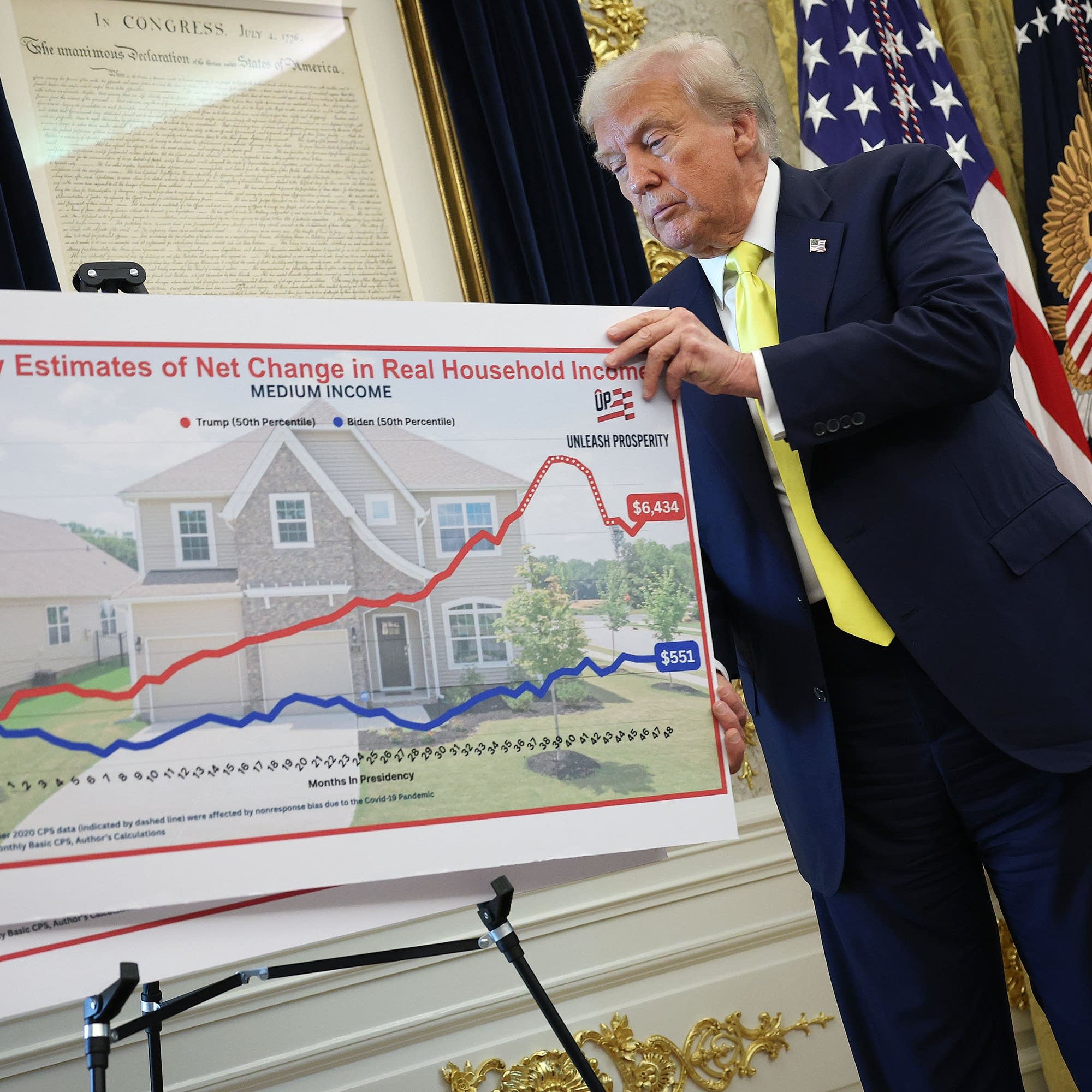
This week we've been covering a Labor Department internal investigation into how the Bureau of Labor Statistics collects data on jobs, inflation and other aspects of the economy. The BLS has always made revisions to data as new information comes in over the months and each year. But revised findings that the economy created fewer jobs under under Presidents Biden and Trump has angered President Trump, who recently fired the head of the BLS and wants to put in an ally to run the statistical agency, which generates data closely watched by businesses, investors and the public. I spoke to Justin Wolfers, an economist and a public policy expert at the University of Michigan.
- [05:25]
Justin Wolfers
The way this story started is a little bit too revealing. The president got told some bad numbers about the economy and then insist on firing the person who delivers those numbers. Look, when you face bad economic numbers, you've got two choices. Fix the economy or attack the numbers. And he chose the latter. The chief complaint from those who've backed up the president has been the Bureau's numbers are imperfect, and they absolutely are, because it's such a difficult task to measure how many people are in work. In an economy of our size and an economy in which 6 million people gain and lose jobs every month, that's not the right way to think about the value of statistics. The question is, is there a way of doing it that's less imperfect? And so far, no one has come up with any approach that's less imperfect than what the Bureau of Labor Statistics is doing.
- [06:24]
David Brancaccio
Some have drawn comparisons with In China, they stopped reporting youth unemployment when it started looking inconvenient some years ago.
- [06:33]
Justin Wolfers
Yep. And in Argentina, they falsified the inflation data. And this is something that happens not in serious first world economies that borrow trillions of dollars at very low rates in international capital markets. This comes from countries without the tradition of democracy, often driven by autocrats. Look, it's this simple truth is what statistics are all about. I think we're served by having more truth. I can't imagine a way in which having less truth leads to better economic policy. I can see how it leads to better political outcomes for one person.
- [07:15]
David Brancaccio
I mean, there are real consequences. This may sound arcane to some people, but it could lead to higher costs of borrowing on your credit cards if our statistics is called into question.
- [07:26]
Justin Wolfers
Absolutely. So that is the story of Argentina, which is you can try and suppress statistics, but you can't suppress reality. And there's one other thing, which is we do we borrow trillions of dollars in international markets. Now, of course, I'm willing to lend you money if I know that you're a really safe person to lend money to. But if you're not willing to tell me the truth about your finances, what is it I'm going to infer about you? I'm going to infer that the reality must be terrible. As a result, foreign lenders are going to lend money to the US as if we are a basket case economy, which would be a very bad outcome if the reality is that we're actually a good, strong, vibrant economy who are able to repay our debts on time and in full.
- [08:08]
David Brancaccio
Justin Wolfers is a professor of economics and public policy at the Gerald R. Ford School of Public Policy at the University of Michigan. Justin, thank you so much.
- [08:17]
Justin Wolfers
Great pleasure, man.
- [08:20]
David Brancaccio
Overall, President Trump's interventions into private businesses represents a stark break with free market orthodoxy often promoted by his Republican Party. Professor Wolfers and I dive into what some are calling state capitalism. Next week here on the Marketplace Morning Report. In Los Angeles. I'm David Brancaccio from apm, American Public Media.
- [08:49]
Carla Javier
America is changing and so is the world.
- [08:53]
Justin Wolfers
But what's happening in America isn't just the cause of global upheaval. It's also a symptom of disruption that's happening everywhere.
- [09:01]
Carla Javier
I'm Asma Khalid in Washington, D.C. i'm.
- [09:04]
Justin Wolfers
Tristan Redman in London. And this is the Global Story.
- [09:08]
Carla Javier
Every weekday, we'll bring you a story from this intersection where the world and America meet.
- [09:13]
Justin Wolfers
Listen on BBC.com or wherever you get your podcasts.