Loading summary
Transcript28 lines
- [00:00]
Wix Advertiser
Say what you want about AI, but it's here and it's helping businesses get more done in a day. Wix's website builder is infused with AI so you can stay ahead. Create a beautiful, functional website just by describing your idea, track how your site appears in AI search results, create custom images on demand, or launch an entire campaign in a matter of minutes. Wix gives you AI wherever you need it. Try it now for free@wix.com this podcast.
- [00:29]
Odoo Advertiser
Is supported by Odoo. Some say Odoo business management software is like fertilizer for businesses because the simple, efficient software promotes growth. Others say Odoo is like a magic beanstalk because it scales with you and is magically affordable. And some describe Odoo's programs for manufacturing, accounting and more as building blocks for creating a custom software suite. So Odoo is fertilizer magic Beanstalk building blocks for business Odoo exactly what businesses need. Sign up@odoo.com that's o d o o.com.
- [01:00]
Sabri Benishour
Trying to keep a fragile Trade Truce alive From Marketplace, I'm Sabri Benishour in for David Brancaccio. U.S. and Chinese officials are getting together on the sidelines of International Monetary Fund and World bank meetings in Washington to try and preserve a fraying trade truce. Yesterday, Treasury Secretary Scott Bessen offered a ray of hope. Marketplace's Nancy Marshall Genser has the latest.
- [01:24]
Nancy Marshall Genser
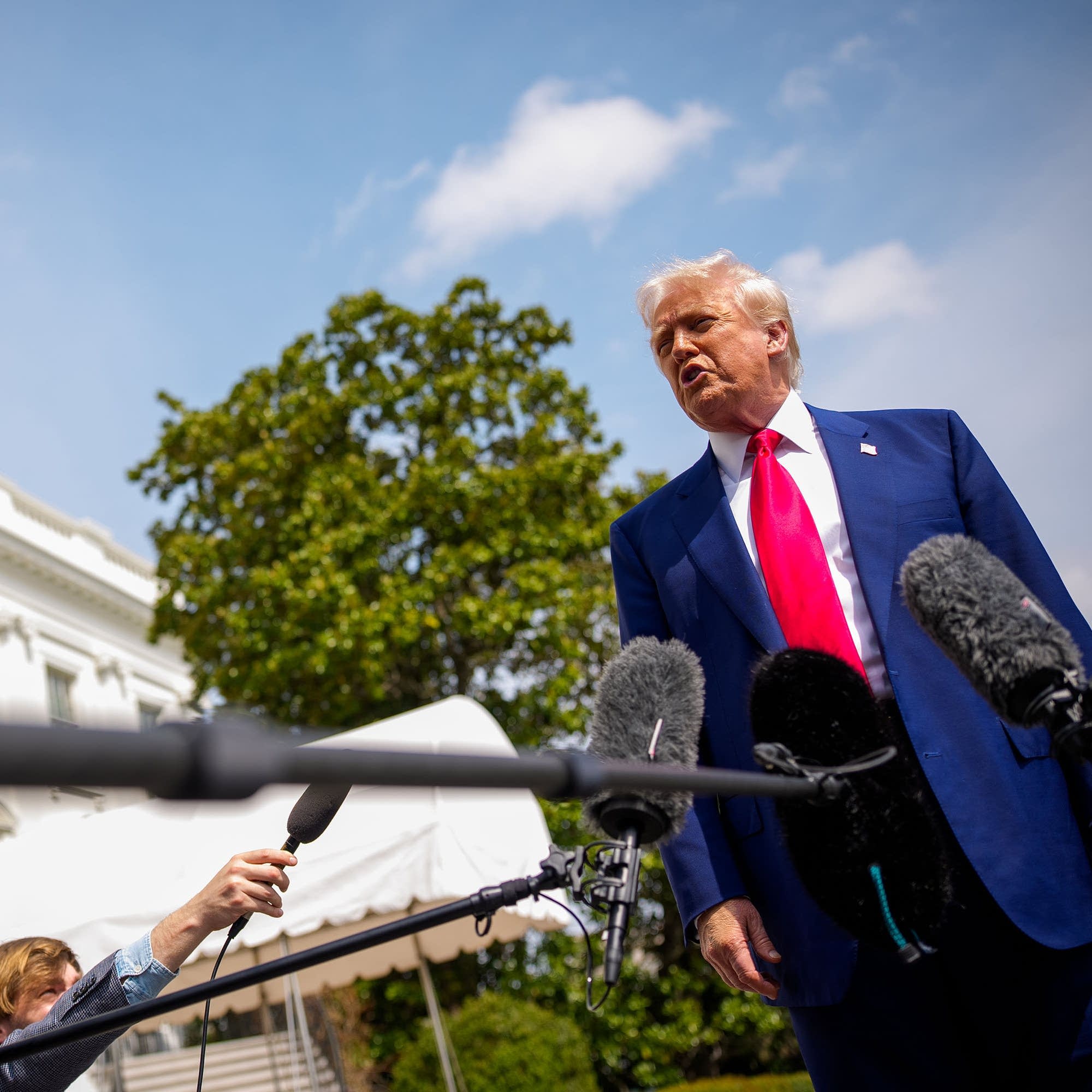
In the latest trade spat, President Trump threatened China with an additional 100% tariff, and Beijing said it would tighten export controls on rare earths. Both sides rolled out port fees on each other's ships. There has been a shaky tariff truce for the past six months, which kept lower duties in place. It's set to expire November 10th. Yesterday, Treasury Secretary Scott Besant said it could be extended in if China holds off on the rare earth export controls.
- [01:53]
Narrator/Reporter
So is it possible that we could go to a longer roll in return for a delay? Perhaps. But all that's going to be negotiated in the coming weeks before the leaders meet in Korea.
- [02:08]
Nancy Marshall Genser
South Korea will be hosting the Asia Pacific Economic Cooperation forum at the end of this month, Besant said. As of Tuesday night, President Trump was expecting to meet with Chinese President Xi. On the sidelines of that, U.S. trade Representative Jamison Greer said yesterday he doesn't think China will actually impose the restrictions it's threatening on rare earth exports. Besant says the US doesn't want to economically decouple from Beijing, but it does have levers it can pull on US Products the Chinese need. I'm Nancy Marshall Genser for Marketplace.
- [02:43]
Sabri Benishour
With the government shutdown ongoing, there is a lot of government data we are not getting. But there are lots of other sources of information offering up clues as to how the economy is doing. Diane Swonk is here to help us understand what this data is saying. She's chief economist at tax audit and advisory firm kpmg. Morning, Diane.
- [03:04]
Diane Swonk
Good morning.
- [03:05]
Sabri Benishour
So we've got the Beige Book that's kind of like the storybook of the economy anecdotes from the economy that the Federal Reserve puts out. We've also got some manufacturing surveys from the Federal Reserve banks of New York and Philadelphia. What's the picture all that is painting for us right now?
- [03:22]
Diane Swonk
The labor market, although weak, is not falling out of bed. It is still weak. And that is something the Fed is trying to hedge against. But at the same time we're starting to see that sort of whiff of stagflation. We're still seeing input prices go up and we're seeing some what the Fed termed as opportunistic price increases and stickiness in service sector inflation. Those are things they'd rather not see at this stage of the game as they're dealing with and trying to tease out the effects of tariffs and hoping mean that they're not permanent.
- [03:53]
Sabri Benishour
In terms of inflation, what is opportunistic pricing? What does the Fed mean by that?
- [03:59]
Diane Swonk
Yeah, that's an interesting term. It's basically meaning that people are seeing competition diminished in response to tariffs and in response to that diminished competition by their competitors. They're able, even if they're not feeling the tariffs to raise prices as well. That's sort of this contagion and spillover effect and that's exact opposite of what you'd like to see when you want to look through the tariff based inflation and say it's just a one time or in this case, you know, it's come in waves. We've seen tariffs levied in waves, several step functions. But there's an end point and when you see that contagion, you worry the end point won't be there.
- [04:37]
Sabri Benishour
Diane Swunk is chief economist at the audit, tax and advisory firm kpmg. Thank you so much.
- [04:43]
Diane Swonk
Thank you.
- [04:59]
Wix Advertiser
No one knows your business better than you, so who better to create your website than, well, you. Wix's website builder puts it all in your hands. Create a beautiful website just by talking with AI or choosing from thousands of templates. Customize every detail with simple drag and drop tools and get everything you need to start running business your way. Build more, think bigger and do it all yourself on Wix.
- [05:26]
LifeLock Advertiser
Go to wix.com it's Cybersecurity Awareness Month and LifeLock is here with tips to help protect your identity Use strong passwords, set up multi factor authentication and report phishing scams. And for comprehensive identity protection, Lifelock is your best choice. LifeLock alerts you to suspicious uses of your personal information and also fixes identity theft. Guaranteed or your money back. Stay smart, stay safe and stay protected. With a 30 day free trial at lifelock.com specialoffer terms apply.
- [05:59]
Sabri Benishour
China and the US dominate the field of AI 90% of the world's data centers are owned by US and Chinese companies. But a lot of other countries want a piece of the revolution, hoping to get the big tech firms to build some infrastructure within their borders. The BBC's Hannah Mullane has that one.
- [06:18]
Hannah Mullane
Nicholas Vulevic is a computer science professor at the National University of Cordoba in Argentina. He is running what counts as one of his country's most advanced AI computing hubs from a converted room at the university, a stark difference from the infrastructure you might find in the us.
- [06:35]
Narrator/Reporter
Let's enter, but the noise will be unbelievable.
- [06:43]
Hannah Mullane
Nicholas has been repurposing a lot of old computer equipment to run the site.
- [06:48]
Narrator/Reporter
We used very old servers that were from 2012 and we repurposed them adding GPUs. So we added stuff like that to get a new life to the computer. It was the only way to get something related to AI working.
- [07:06]
Hannah Mullane
It's a theme replicated in many parts of the world. Lack of investment and infrastructure holding countries back from developing homegrown artificial intelligence businesses. In Kenya's capital Nairobi, software engineers for the AI startup called Carla head into the office at 3:30am they develop artificial intelligence software for businesses around the world, but they don't have local data centers to power their business, so they have to use compute power from other parts of the world.
- [07:34]
Shiko Kutao
You have to find time when not everybody's hogging their resources.
- [07:38]
Hannah Mullane
Shiko Kutao is the CEO of Carla.
- [07:41]
Shiko Kutao
When you're training a model, you're sending large files of data to computer system somewhere. The further it is, the slower it is. Sometimes the engineers leave it overnight to run so that when Americans have gone to sleep, they're able to run their work. Before Europe wakes up, you're able to run their work.
- [08:01]
Hannah Mullane
But relying on the US and China for that computing power isn't ideal for Carla and other AI startups. Some companies are concerned about protecting proprietary data and are now looking to Europe for cloud providers I'm the BBC's Hannah Mullane for Marketplace, and in New York.
- [08:18]
Sabri Benishour
I'm Sabri Benishore with the Marketplace from APM American Public Media.
- [08:29]
Kimberly Adams
I'm Kimberly Adams, host of Make Me Smart, a podcast from Marketplace that makes today make sense. Join me throughout the week as I dig into the biggest stories in tech culture and the economy. Whether it's a vibe check on the job market or the latest on China US Relations, Make Me Smart helps you understand how the headlines actually impact your daily life. Listen to Make Me Smart on your favorite podcast app.