Loading summary
Transcript24 lines
- [00:01]
Jack Welch Management Institute Announcer
The Jack Welch Management Institute at Strayer University helps you go from I know the way to I've arrived with our top 10 ranked online MBA. Gain skills you can learn today and apply tomorrow. Get ready to go from make it happen to made it happen and keep striving. Visit strayer.edu Jack Welchmba to learn more. Strayer University is certified to operate in Virginia by Chev and has many campuses, including at 2121 15th Street north in Arlington, Virginia.
- [00:30]
ThirdLove Advertiser
ThirdLove makes bras that actually fit so they know if your bra feels uncomfortable, the problem isn't your body, it's the bra. ThirdLove designs for comfort first, soft fabrics support that doesn't dig, pinch or slip bras that feel good and look good under everything you wear. Shop ThirdLove and explore over 60 sizes, including AA through H and half cup sizes you won't find anywhere else. Get $15 off your first purchase at thirdlove.com with CODE podcast 15
- [01:03]
David Brancaccio
the Cruel Math of unemployment is not about too few working, it's about too many. I'm David Brancaccio in Los Angeles. Good morning to you. First, we'll get a key measure of inflation this morning, the one preferred by the guardians of interest rates at the Federal Reserve. This is the one with the clumsy name, the Personal Consumption Expenditures Price Index. It'll be for December and it's out in about an hour and a half. President talked about prices yesterday in Georgia. Marketplace's Nancy Marshall Genser has more.
- [01:32]
News Reporter
President Trump pointed to lower prices for things like gas to make this claim yesterday.
- [01:37]
President Trump
What word have you not heard over the last two weeks? Affordability. Because I've won. I've won affordability.
- [01:46]
News Reporter
The cost of used cars is also down. President Trump is expected to continue talking about lower prices and affordability in his State of the Union speech this Tuesday. But inflation is still above the Federal Reserve's 2% target and consumers feel the pinch, especially at the grocery store. A left leaning think tank, the center for American Progress, has unveiled a plan for price caps. It was written by former Biden administration economist Jared Bernstein. The proposal would freeze the price of more than 20 different foods for at least two years, including staples like meat, milk, cheese and butter. The cap program would be voluntary. The plan would offer breaks on credit card swipe fees as an incentive for stores to participate. I'm Nancy Marshall Genser for Marketplace.
- [02:49]
ThirdLove Advertiser
Thirdlove makes bras that actually fit, so they know if your bra feels uncomfortable, the problem isn't your body, it's the bra. ThirdLove designs for comfort first soft fabrics support that doesn't dig, pinch or slip bras that feel good and look good under everything you wear. Shop ThirdLove and explore over 60 sizes, including double A through H and half cup sizes you won't find anywhere else. Get $15 off your first purchase@thirdlove.com with Code Podcast 15
- [03:21]
TurboTax Advertiser
taxes was feeling unwelcome. Now Taxes is an open do similarly to new TurboTax stores. Meet our experts in person.
- [03:33]
ThirdLove Advertiser
Hi, welcome in.
- [03:34]
TurboTax Advertiser
They're powered by smart tech and ready to do your taxes for you. Get real time updates while you go about your day. Confident your taxes are done Right now this is taxes intuit turbotax turbotax store is opening soon. Real time updates only in iOS mobile
- [03:49]
David Brancaccio
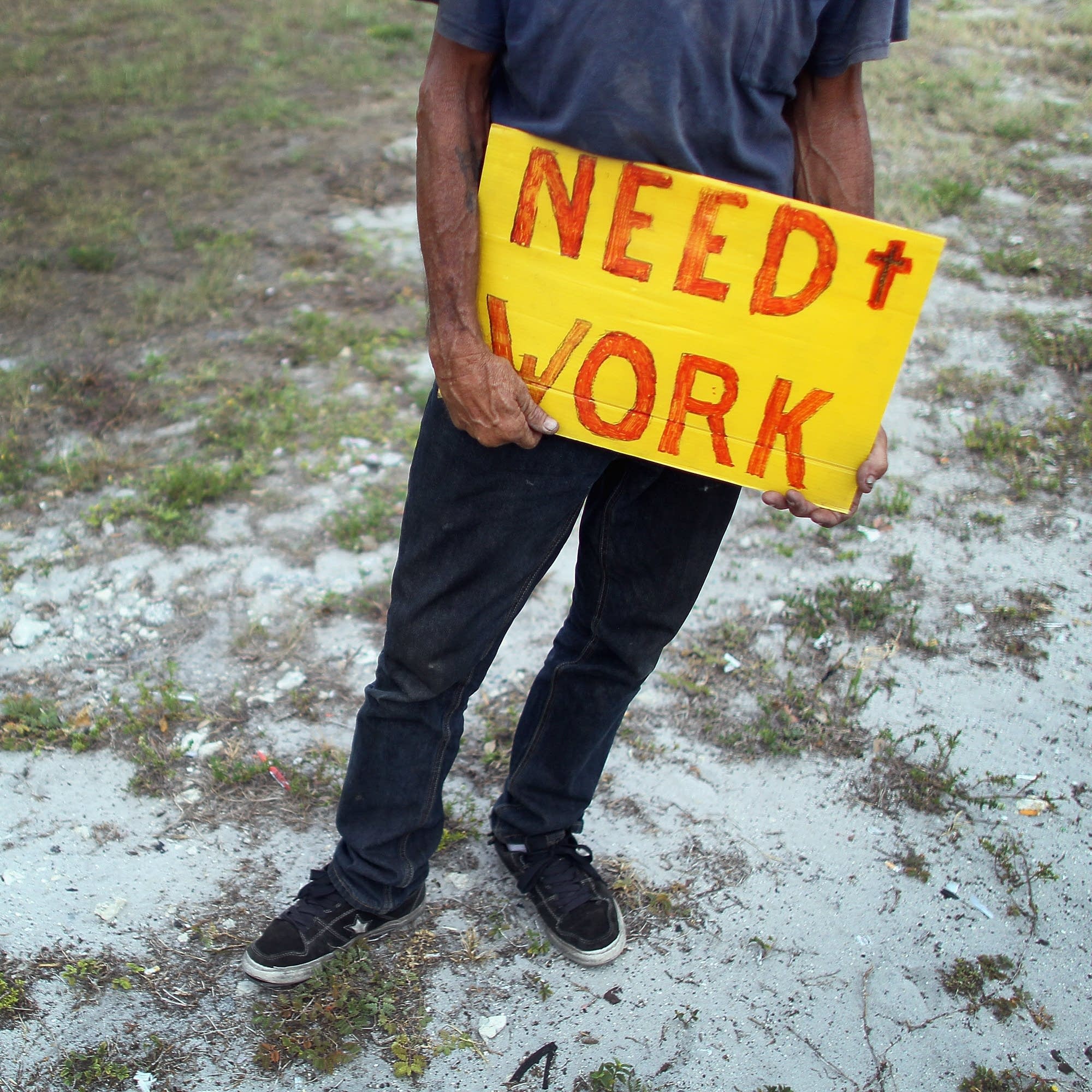
app is unemployment able to work but unable to find work, a liability or an asset? It's not an asset to the worker in search of livelihood, of course, but mainstream economics acknowledges that some joblessness helps to keep prices down, and from the corporate point of view, it helps to keep profits up. It's one of the reasons that to most economists, ideal unemployment is not zero unemployment. This is one of the critiques of the economic system we live in. Clara Matei teaches economics at the University of Tulsa. Her new book is called Escape from an Intervention, where she calls some of this the cruel math of unemployment. Dr. Matei, welcome.
- [04:32]
Clara Matei
Thank you so much, David, for having me.
- [04:34]
David Brancaccio
What's the cruel math?
- [04:35]
Clara Matei
The cruel math is that unemployment is not a problem for our system, but it's actually a solution for it.
- [04:42]
David Brancaccio
It's not a bug, it's weirdly a feature. It's like the standard math of economics in our market system insists that unlike eating Reese's peanut butter cups, there can be too much employment. Businesses and regular economists get nervous if what too many of us have jobs.
- [04:59]
Clara Matei
Us having jobs means that the bargaining power of workers goes up and workers can be empowered to actually start problematizing why they have to go work for a wage that is so low and might start mobilizing for a different socioeconomic system, which is very bad for a capitalist economy.
- [05:17]
David Brancaccio
We just had this big natural experiment in some of this when we were coming out of the COVID pandemic, the unemployment rate got really low and employees or potential employees could say, hey, you want to hire me and you gotta pay me more. The way we reported this was that that sparked a lot of destructive inflation. You're saying, what if you have to pay employees more because a lot of people are employed? Why couldn't that come out of shareholder Profits, not necessarily putting it into prices.
- [05:45]
Clara Matei
In 2023, when unemployment was 3.4%, all the technocrats running central banks were freaking out. And they were able, by increasing interest rates, to increase the unemployment rate to much higher. And this is the point, increases in interest rates, which is fundamental austerity policies don't necessarily work to actually cure inflation. But what they do work for is to cure the rate of exploitation, because in fact, by dropping wages because of higher unemployment, there is more profit share over wage share, meaning that more value is extracted from workers.
- [06:24]
David Brancaccio
Let's talk about the world we live in now in the United States. It isn't really these technocrats who are in full power. The current powers that be are led by President Trump, who's working very hard to stop immigration. That lowers the ranks of the unemployed and does in fact do what I think you want to have happen, which is in part a move to raise compensation.
- [06:52]
Clara Matei
In America, the scramble for resources is not between the peanuts that those at the bottom get, but it's really the very, very, very rich people who not only accumulate millions a day, they also don't pay taxes because we know that capital, so long as it's invested, is not taxed. Capital gains are really taxed to very low levels. Corporate tax rates are constantly going down. This is part of austerity. So the problem here is really at the top, not at the bo. So the idea that people will do better if we kick out the immigrants is just a way to fool people in thinking that the problem are not those who benefit from a system that is based on war, suffering and exploitation.
- [07:38]
David Brancaccio
The new book is called Escape from an Intervention. Economics Professor Clara Matei is also founder of a grassroots organization called Forum for Real Economic Emancipation or Free Professor. Thank you.
- [07:50]
Clara Matei
Thank you so much for having me.
- [07:51]
David Brancaccio
David and this old House Radio hour and Marketplace here work together on a one hour special called Building Tomorrow where we explore what a house for the next hundred years might look like. Given disasters like hurricanes, tornadoes, wildfires and more, given the affordability crisis in housing, given our evolving needs for how we want to live, there's another chance to catch this program. This weekend. We're putting it in the Marketplace Morning Report podcast feed. You know where to find podcasts in Los Angeles. I'm David Brancaccio. We're from APM American Public Media.
- [08:26]
Marketplace Promotions Announcer
Want even more Marketplace. Sign up to receive weekly tips from our editorial team to help you make the most of your money. Plus, you'll also be the first to know about exclusive Marketplace merchandise and local events. Text Marketplace to 80568 to sign up.