Loading summary
Transcript19 lines
- [00:00]
Liana Byrne
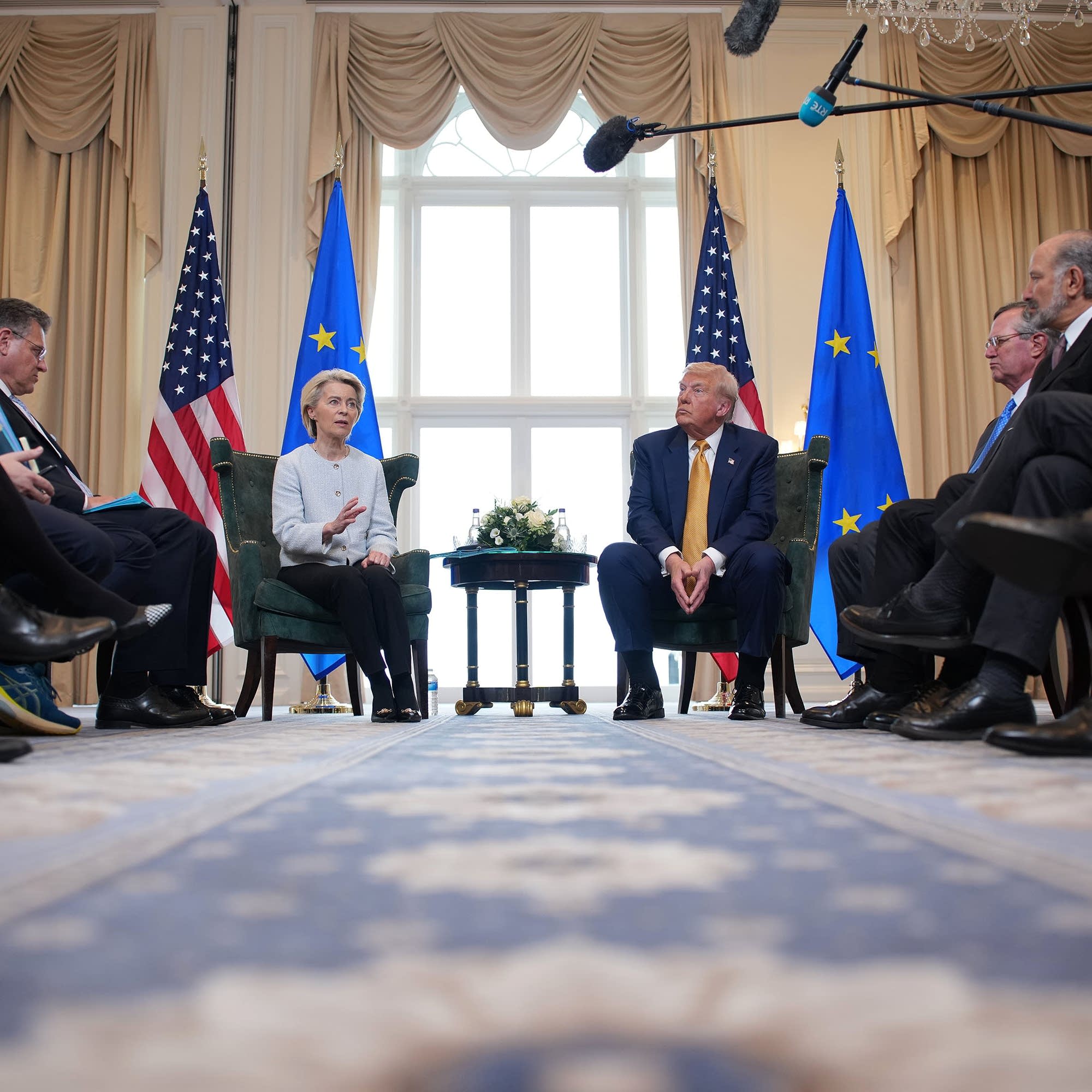
This Marketplace podcast is supported by Palo Alto Networks. Listen to threatvector, the Palo Alto Networks podcast, for in depth discussions with industry leaders and experts providing crucial insights for security decision makers. Whether you're looking to stay ahead of the curve with innovative solutions or understand the evolving cybersecurity landscape, ThreatVector equips you with the knowledge needed to safeguard your organization. Tune in and subscribe to threatvector wherever you get your podcasts. This Marketplace podcast is supported by Dell Introducing the new Dell AI PC. Powered by Intel Core Ultra processor, it helps do your busy work for you so you can fast forward through editing images, designing presentations, generating code, debugging code, summarizing meeting notes, finding files, managing your schedule, responding to long emails, leaving all the time in the world for the things you actually want to do. Get a new Dell AI PC starting at $699.99 at Dell.com AI PC how those ahead? Stay ahead. A major transatlantic trade row has been avoided for now. Life in the UK this is the Marketplace Morning Report from the BBC World Service. I'm Liana Byrne. Good morning. So EU leaders are being briefed today on a new deal with the United States that halves the tower of President Trump threatened to put on European goods, but the Compromise still means a 15 import tax on most products. German exporters say the agreement is a relief, but not everyone is happy. Hungary's Viktor Orban called it a humiliation, and the French prime minister says it's a submission. Neil Richmond is Minister of State in Ireland.
- [01:38]
Theo Leggett
To be honest, this is a less bad deal than what we were looking at 48 hours ago. What we can take from this deal is two things. One, it does provide that element of certainty to businesses across the European Union that we actually know what we're dealing with now and can continue on our daily business. And secondly, it just could have been a lot worse.
- [01:55]
Liana Byrne
That was Irish Minister Neil Richmond. So who's really got the better end of the deal? And what does this mean for businesses? Let's ask the BBC's Theo Leggett. Hello.
- [02:04]
Theo Leggett
Hello, Liana.
- [02:05]
Liana Byrne
So what's the significance of this deal?
- [02:07]
Theo Leggett
It's pretty clear that the Trump administration was determined to ratchet up tariffs on imports from the European Union because, as we know, President Trump does not like trade deficits with other countries. So with the European Union, the US Has a significant trade deficit, so it left the EU a choice. They could either accept a higher tariff rate and try and come to some sort of compromise, or enter what could be a hugely damaging trade war with the United States. So what Silhouette von der Leyen and the rest of the European Commission have done is accept a compromise under which they pay a flat rate of 15% on most products and allow some products into the European Union tariff free.
- [02:51]
Liana Byrne
I'm wondering though, why did the EU feel pressured to accept a deal that some leaders like we heard earlier, are calling a defeat?
- [02:58]
Theo Leggett
Well, don't Forget that the EU is not one nation. It's 27 nations. And it is hard to get agreement between those nations. And there was not that level of agreement between them, I think. But also the EU had drawn up a list of 93 billion euros worth of products which could have been subject to retaliatory tariffs. But if you go in that direction and the US then decides to ratchet up tariffs of its own, you have an all out trade war and that's extremely damaging.
- [03:27]
Liana Byrne
Can we make an assessment? Can we say has the EU or the US come out on top?
- [03:31]
Theo Leggett
Well, in terms of the numbers, the United States seems to have got the better of this. You know, there will still be a significant ratcheting up of tariffs on EU trade to the United States compared to what we had at the start of the year. And the United States does appear to have got some concessions. We still don't know the detail of this deal. We haven't seen a text of it. But it does seem that the United States on that basis has got the better of it. However, you do have to remember as well that these tariffs have to be paid for by somebody. And President Trump assumes it is the exporter who will pay. In fact, it is highly likely that a large portion of those extra costs will be absorbed by American companies and American consumers.
- [04:19]
Liana Byrne
All right, the BBC's Theo Leggatt. Thank you so much for joining us in marketplace.
- [04:22]
Theo Leggett
It's a pleasure.
- [04:23]
Liana Byrne
Now let's do the numbers. A deal has pushed markets in Europe and Asia higher. European stocks extended their gains. The regionwide Stoxx 600 and Paris CAC 40 are both up 6/10 of a percent. And Hong Kong's Hang Seng closed up six tenths of a percent. Chile holds the world's biggest lithium reserves. It's a key ingredient for electric car batteries. The government plans to approve new big mining contracts this year to boost production, saying it's essential to tackle global climate change. But lithium extraction uses huge amounts of water and can devastate local ecosystems. New technology is being developed to make the mining more environmentally friendly. Yet it's dividing opinion. Here's the BBC's Ione Wells walking through Chile's Atacama Desert feels a bit like walking on a moon. Miles and miles of flat white land, big crags of crunchy white salt underfoot and surrounded by big red mountains. This is home to the world's biggest reserves of lithium, the key ingredient for batteries in things like electric cars. A lot of it is still untapped though, but the government wants to change that. It says this is crucial for the global fight against climate change. But local indigenous communities are not so sure. I'm at a small farm now that is shared by the Payne indigenous community. Raquel says her family lived here for years before her and she's seen a lot of changes. The Vega wasn't like this in the past.
- [06:01]
Theo Leggett
It was all green and big.
- [06:03]
Liana Byrne
Look how dry it is now. Sara is another member of the community here. She's worried that the potential benefits for the local area of lithium mining don't outweigh the negative impact of it. One day it went, mining will end. And what are the people here going to do without water, without agriculture? Maybe I won't see because of my age, but our children, grandchildren, the whole generation that comes after will. It's painful, isn't it? Mining companies mostly extract lithium by pumping brine from underneath Chile's salt flats to evaporation pools on the surface, extracting vast amounts of water in this already drought prone region. At the industrial plant of Eskimo, Chile's biggest lithium company, they're piloting new technology they say could save water, like extracting lithium directly from brine or capturing the evaporated water and re injecting it to the ground. Valentin Barrera is from SQM's sustainability department. Here we have a technology that allow us to recover water, actually 1 million cubic meter a year.
- [07:19]
Theo Leggett
So this is a kind of pilot, but in a larger scale.
- [07:23]
Liana Byrne
And we are going to just put.
- [07:26]
Theo Leggett
The same technology into our processes. In Saratogaman, currently we have 120 liters.
- [07:32]
Liana Byrne
Per second and we are going to reduce to close to zero. Sergio Corbilios is the president of the Pain indigenous community. He recognizes why lithium is needed for the green revolution, but is worried about the impact on his community here. There is of course the issue of climate change, that it doesn't rain anymore. But the main impact here has been caused by mining. They use millions and millions of cubic meters of brine. We understand that the world needs to transform conventional energy into renewable energy, and for that lithium is very important. But we also don't want to be the bargaining chip for that development. The Chilean government says production is being increased in dialogue with indigenous communities and incorporating new technologies to minimize the social and environmental impact. It says it will bring economic opportunities and that 30% of the salt flats and lagoons will be protected. Faviola is a biologist from the indigenous community here. She doesn't think it's fair that these lithium companies are using millions of litres of water in the name of tackling climate change to the detriment of the ecosystems here. Lithium mining has changed the lagoons here. Now they are smaller. We've seen a decrease in the reproduction of flamingos. If they reinject water and return it to the Salar de Atacama, it will not be the same. We don't know if the rock will resist it. Unfortunately, we think the Salar de Atacama will be like an experiment, a laboratory. Companies and the government are obviously keen to sell the benefits of this new technology and hope it could provide some green solutions. But for people like Fabiola, she's unclear why their lives should change in order to help other people keep living their lifestyles. That was the BBC's Ione Wells reporting. And I'm Liana Byrne with the Marketplace morning Report from the BBC World Service. Have a great day. Thanks for listening. This Old House Radio Hour is your new home improvement podcast. In each episode, we answer your questions. Whether you're fixing a leak, refinishing a floor or restoring a century old house, our roster of experts have the answers to help you get the job done. Right. I never thought I'd be saying this to a bunch of people I'm just meeting, but I have a stinky house. Tell us more. I want the details. Find this Old House Radio Hour in your favorite podcast. APPLAUSE.