Loading summary
Transcript16 lines
- [00:00]
NetCredit Representative
NETCredit is here to say yes because you're more than a credit score. Apply in minutes and get a decision as soon as the same day. Loans offered by NetCredit or lending partner banks and serviced by NetCredit applications subject to review and approval. Learn more at netcredit.com partners NetCredit credit.
- [00:14]
AT&T Business Representative
To the People and now a next level moment from ATT Business. Say you've sent out a gigantic shipment of pillows and they need to be there in time for International Sleep day. You've got AT and T5G so you're fully confident, but the vendor isn't responding. And International Sleep Day is tomorrow. Luckily, AT&T 5G launched lets you deal with any issues with ease so the pillows will get delivered and everyone can sleep soundly, especially you. AT&T5G requires a compatible plan and device. Coverage not available everywhere. Learn more@att.com 5G Network.
- [00:47]
Liana Byrne
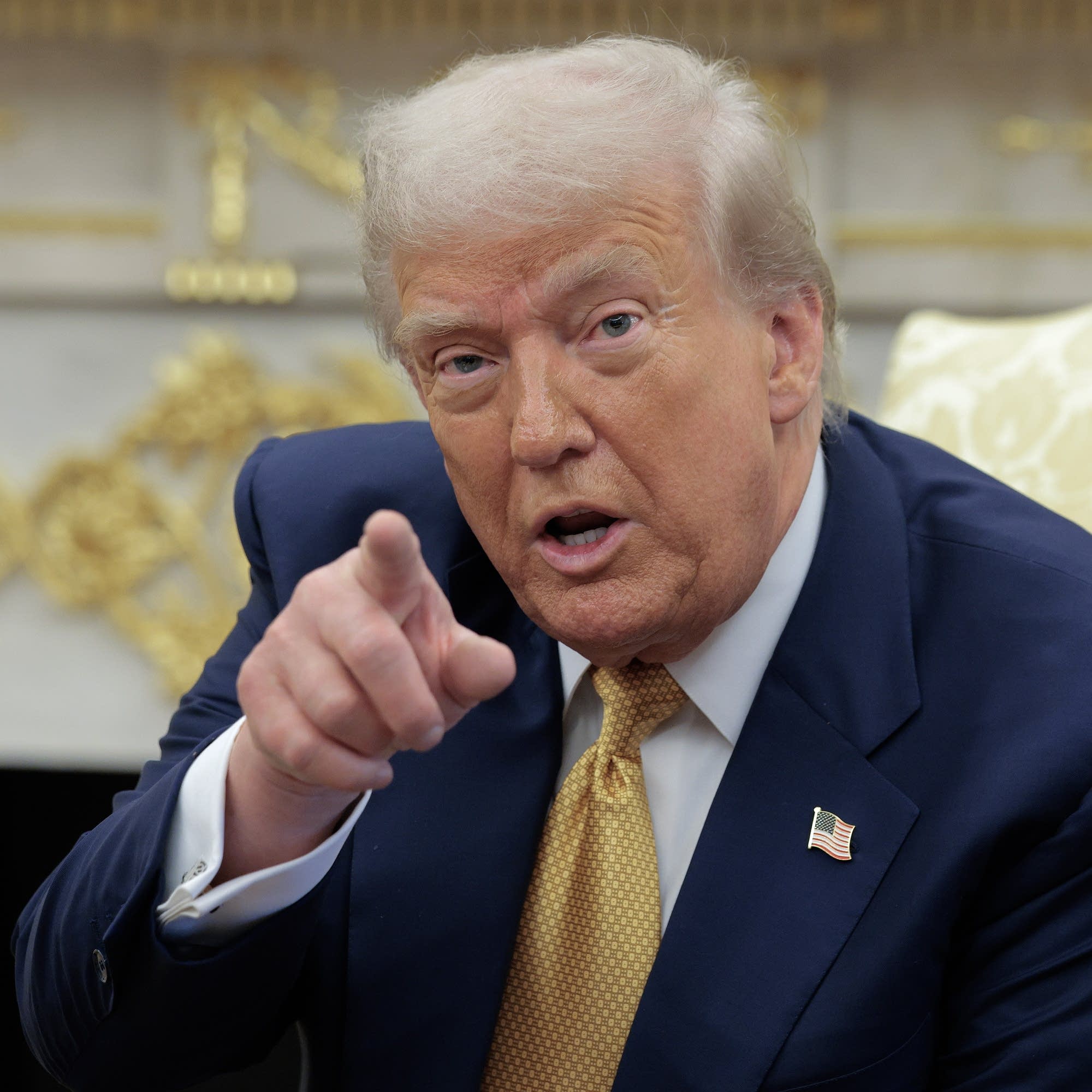
The day has arrived. What do new US tariffs mean around the world? Hello, this is the Marketplace Morning Report and we're live from the BBC World Service. I'm Liana Byrne. So President Trump's long delayed tariff deadline has fallen, finally passed. And for countries without a deal, the import taxes are steep, the highest in almost a century. On Thursday, Trump signed an executive order hiking tariffs on Canadian goods from 25% to 35%. Dozens of other nations are now on the list too, with even tougher levies for Syria, Laos and Switzerland. Those kick in next week. Mexico, though, has won a 90 day reprieve as it scrambles to cut a deal with Washington. Here's the BBC's Darshini David with the latest.
- [01:33]
Darshini David
The the detail is dizzying. It feels like another day, another raft of tariffs from President Trump. But look, key thing to remember in all of this is that the vast majority of American imports already had their tariffs settled ahead of this deadline through those trade deals or arrangements. We should say that were done and also various tariff letters. But what we've learned in recent hours is what other countries will face. And there's been disappointment for some. For example, Canada's some exports there will face 35%. And there's been disappointment too for the likes of Taiwan and Switzerland. But some smaller countries actually will face smaller tariffs than they had initially presumed. Lesotho is one which with 10%, for example. But the key thing to remember here is that the vast amount of uncertainty about what this tariff regime would look like has now gone, which helps businesses around the world. And also overall on the whole, what we know so far, these tariffs are less aggressive than what President Trump had threatened in April, and therefore the risk to the global economy is smaller than it was this time round. Markets have been much more muted in their reaction. In fact, we've seen American shares actually gaining ground in recent weeks. Make no mistake, though, that what we are seeing are far higher levels of tariffs for goods going in to the US Than we had at the start of the year. So back then it was about 2% on average. Now economists say it's around 15%. So like the rest of us, the markets will be watching quite carefully to see how all of this lands.
- [03:10]
Liana Byrne
Dashini David reporting. Meanwhile, Thailand is among the countries breathing a sigh of relief. Its revised tariffs aren't as high as feared. As the BBC's Jonathan Head reports, Thailand.
- [03:21]
Jonathan Head
Is highly dependent on U.S. exports. A fifth of its exports go to the U.S. its economy depends on exports in general. But Thailand has a big agricultural sector which the US Wants access to. Thailand was actually told two days ago that they had a deal, but they weren't told the number until this big announcement from Donald Trump. And I think that 90% compared to 36%, which is what they were facing, will be a big relief.
- [03:46]
Liana Byrne
Jonathan Head there. Now let's do the numbers. While it was good news for some countries, tariffs are taking a toll on global markets. In Asia, South Korea's Kospi closed down 3.8%. Japan's Nikkei 225 closed 6.10of a percent. European markets are also trading lower as investors worry about the economic fallout. Carmakers are already counting the cost of tariffs. A 25% import tax on vehicles and vehicle parts came in earlier. There are some exceptions like the UK and the eu, which got better deals. Mercedes Benz says it'll face a $415 million hit. For Porsche, it could be more than $1.267 billion. British sports car maker Aston Martin has even cut production and scaled back US Exports to cope. So what's next for the car industry? Let's ask Stephen Norman, former commercial chief at Stellantis and an ex Renault and Opel Vauxhall executive.
- [04:42]
Stephen Norman
Hello, good morning to you.
- [04:43]
Liana Byrne
Do you think European politicians failed the auto industry by not striking a deal with Trump earlier?
- [04:49]
Stephen Norman
Well, I think the, the facile answer would be yes, but it is a complicated industry. And I have to say that in the European industry, the American issue, both in terms of the market and vehicles coming back in from North America, has never been top of mind. We've always been much more passionate about ourselves about in the first instance, Japan and more lately, China and even India. I don't think really we have given due consideration in broad terms to the North American market or to vehicles coming in from North America. I think we've possibly been our own, perhaps not best friends, I wouldn't say worst enemies, but we certainly not be. We've not helped ourselves.
- [05:36]
Liana Byrne
I think, I guess on one side the positive is that there is a deal. But even with this deal, tariffs are still much higher than before, as you mentioned. And there's also a lot of uncertainty on the deals too. So do you expect more disruption for the industry in the months ahead?
- [05:51]
Stephen Norman
It's almost impossible to imagine that there should be more disruption after everything that's going on in pretty much every region. If I think back to my time working with cars, Carlos Go, and I always remember him, he used to say that the worst thing that can happen is that we have trouble in each of the regions. And right now it would appear that there are headwinds in every single region in the world in terms of the automotive sector. So it is hard, I think, to imagine that it could get much worse. What we do have to remember, and I think everybody listening is at least aware of this, the investment decisions in the motor industry are decisions that you take with a perspective of probably between 7 to 15 years in terms of the life cycle of a product plus its facelift and even to resource or to re implement a manufacture, for example, in North America instead of Europe. It's not something that you can do in weeks and months like if you were making toothpaste or perfume. It takes years. So this is going to require a lot of serious thought before motor manufacturers jump in and say, right, we're going to now manufacture in North America. I think they're going to be much, much more prudent than that.
- [07:09]
Liana Byrne
Okay. Stephen Norman, former worldwide commercial director of Stellantis thank you so much for joining us in Marketplace.
- [07:15]
Stephen Norman
Thank you. A pleasure.
- [07:16]
Liana Byrne
I'm Liana Byrne with the Marketplace morning report from the BBC World Service. Have a great weekend. Thanks for listening.
- [07:31]
Million Bazillion Host
Summer's here and it's time for your kids to have fun in the sun. But it's also a great time to nurture growing minds. Million Bazillion, a podcast from Marketplace teaches your kids about something that impacts all of us money. From a fun explainer on tariffs. Yes, it's possible to why some athletes make so much money. Million Bazillion tackles big questions with easy to understand answers. Listen to Million Bazillion all summer long. Available wherever you get your podcasts.