Loading summary
Transcript37 lines
- [00:01]
A
If you're an H vac technician and a call comes in, Grainger knows that you need a partner that helps you find the right product fast and hassle free. And you know that when the first problem of the day is a clanking blower motor, there's no need to break a sweat. With Grainger's easy to use website and product details, you're confident you'll soon have everything humming right along. Call 1-800-GRAINGER Click grainger.com or just stop by Grainger for the ones who get it done.
- [00:30]
B
Running a business is hard enough, so why make it harder with a dozen different apps that don't talk to each other? Introducing Odoo, the only business software you'll ever need. It's an all in one fully integrated platform that makes your work easier from CRM, accounting, inventory, e commerce and more. And the best part, Odoo replaces multiple expensive platforms for a fraction of the cost. This is why over thousands of businesses have made the switch since. So why not you try Odoo for free@odoo.com that's o d o o.com
- [01:02]
A
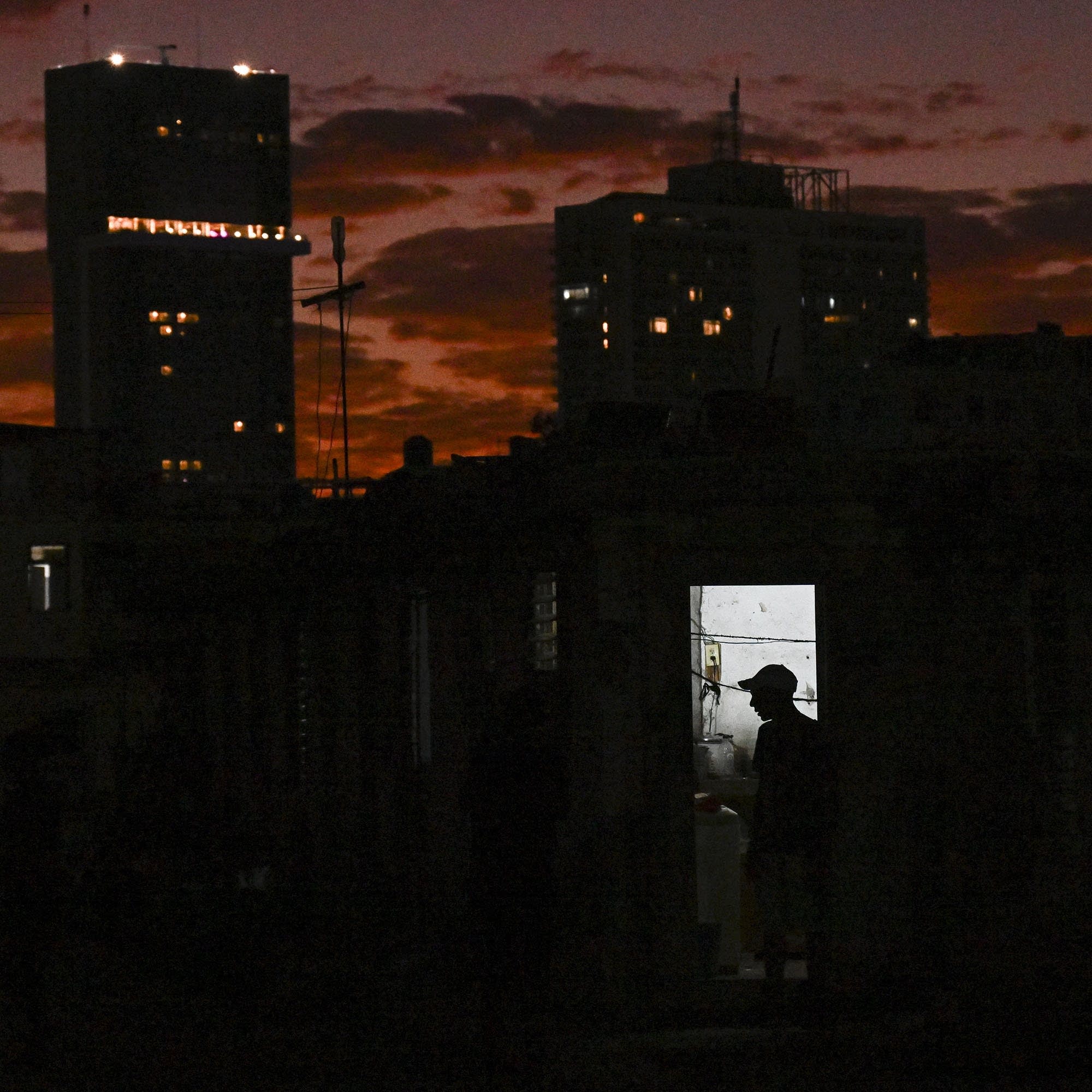
as tensions continue in the Caribbean, the US allows Cuba to get access to some Venezuelan oil. Live from the uk, this is the Marketplace morning report from the BBC World Service. I'm Liana Byrne. Good morning. The United States says it will allow some small Venezuelan oil shipments to reach Cuba through its private sector, providing a lifeline to the Caribbean island. As Washington's blockade is worse, a crisis there. Tensions between the White House and Havana are high. Just yesterday, Cuba reported that its border forces killed four people and wounded six when a Florida registered speedboat crossed into its waters. The thing is, Cuba's entire electricity system runs on imported fuel. Its own production is limited, its infrastructure is decades old and without foreign oil, the lights simply don't stay on. One resident recently told the BBC about the impact of the oil shortages.
- [01:55]
B
Some days it feels like the whole
- [01:56]
C
town is standing still.
- [01:58]
B
No public transport and extremely limited private transport.
- [02:01]
C
Nothing's moving in town.
- [02:03]
B
Power cuts, which were bad before are now even worse. We rarely have two hours of electricity a day on average.
- [02:11]
A
For more, here's the BBC's Michelle Fleury in New York.
- [02:14]
D
Very slowly and gradually, daily life starts to grind to a halt. And that's why you're starting to also see countries like Canada saying that they will try and provide some aid to Cuba. But we've also seen obviously the US administration and the Treasury Department now taking action, essentially saying they're going to let companies in The US who want licenses to resell Venezuelan oil to Cuba, they will let that proceed as long as the sale of that oil is to private companies and not to the Cuban government or anything tied to the Cuban government. The thing to remember here is that the US has had a blockade on Cuba for many years, but this latest squeeze really has pushed things kind of to another level. And that humanity sectarian concern you can start to see is creeping in.
- [03:01]
A
Michelle Fleury there. Now, let's see the numbers. Shares of the advertising giant WPP are down about 7% after it revealed plans to cut $670 million a year in costs by 2028. But shares of Rolls Royce, the UK aerospace company, are up 5% after it raised its profit targets and announced a share buyback of up to $12 billion. Meanwhile, the European Court of Justice has upheld a $915 million fine on 13 airlines for running an air freight cartel which collaborated on pricing between 1999 and 2006. The case has been in the courts for the past 16 years and this latest ruling dismisses an appeal by the airlines on an earlier verdict. Now, for years the UK has been grappling with the decline of retail in many places, often blamed on out of town malls, online competition and high overheads. A proliferation of charity thrift stores is often considered to be a sign of this decline. But James Graham's has been to the north of England where one town is trying to make a virtue of its 13 charity shops.
- [04:12]
B
Anita Jones is showing me around her charity shop, Mamana Matoto, in selby, Yorkshire, about 200 miles north of London. It raises money for maternity projects in Kenya, but also provides new mums in the town with free supplies.
- [04:28]
D
I think it's really good to have charity shops. I think it shows that people are giving locally, but also you're benefiting the local people.
- [04:35]
B
In the uk, most thrift stores are run by non profit organisations, so are known as charity shops. Anita's store is one of the 13 charity shops that line the main street in Selby. They're now part of a trail that is being promoted to attract shoppers to the town.
- [04:50]
D
The trail's been brilliant. People are coming to Selby to do the charity trail. We get a lot of people in, I think think the footfalls increased.
- [04:58]
B
A short walk away at the town's 1,000 year old abbey, I meet Matt Fisher from Up for Yorkshire, which supports communities in the region and has developed the charity trail.
- [05:09]
C
Really the mission is to make Selby thrive.
- [05:12]
B
Unless you've got a reason to come
- [05:13]
C
here that you know people you know or you live locally. We don't get a lot of visitors.
- [05:19]
B
Across the uk, there are plenty of places like Selby where there's a battle to attract shoppers. Online retail now accounts for 30% of sales, according to official government figures. That's up from 3% 20 years ago. Analysts at the Centre for retail research estimate 17,000 shops closed across the UK last year, citing a combination of the weak economy and rising costs. Matt says what's happening in Selby reflects the situation for most towns in the last 10 years. The number of nail bars and hairdressers
- [05:54]
C
and vape shops and betting shops have been increasing at the expense of some of the more interesting independent shops.
- [06:02]
B
But there are very few vacant shops. So there's obviously interest in setting up businesses here.
- [06:09]
C
It's just very difficult.
- [06:11]
B
I made my way around the trail on a cold, wet February afternoon. Both these shoppers had travelled specifically to hunt out some bargains.
- [06:20]
A
It feels like I'm doing something good and sometimes you find something which is really a bit of a treat, like a secret cashmere jumper, which is always a win.
- [06:28]
D
You know, there's a good variety. I think charity shops are a great thing and especially at the moment with the cost of living for people, it's a godsend, especially if you've got kids.
- [06:42]
B
But how about established retailers in the town? Do they think this is making a difference? Richard Schofield has been running the gift shop Heaven and home for 27 years.
- [06:52]
C
I think any initiative for the town to bring people in is a good idea. I think they've got probably far too many charity shops in the town, but they're here for a reason and that's because they can't get anybody else in. I don't think it's particularly helped me and I don't think their customers are particularly, particularly my customers.
- [07:09]
B
One reason why there are so many charity shops is they pay less property tax than regular retailers. They get an 80% reduction on business rates charged by local authorities. That's an issue for Richard.
- [07:21]
C
I do have a slight concern with that in that they don't pay the same to be here as we do. Not that that's a bad thing, but I think as long as they're selling second hand and donated goods, but if they're selling new goods, they're competing with me and that's a little bit unfair, I think. I mean, charity shops do keep the town busy because they are filling units that could be empty. There's nothing worse than having boarded up units because nobody would come to the town.
- [07:46]
B
Then across the road, Carol Holiday manages the refill it zero waste shop. Well, we've had people that have been doing the trail that have actually come into the shop, but what they've actually
- [07:56]
D
done is come by train and stopped
- [07:59]
B
at other local places as well. But that brought them into our shop. So we were quite happy. I think it is a positive, especially
- [08:06]
D
in the summer months. We're bound to get more people around.
- [08:09]
B
The organisers are now working on ways to measure footfall to prove whether some shoppers love of a bargain is bringing wider benefits to the town. In Selby, England, I'm the BBC's James Graham for Marketplace.
- [08:22]
A
And finally, a humanoid robot has conducted the Danish National Symphony Orchestra at performance in Copenhagen. Members of the orchestra praised the robot for its ability to keep precise rhythm, but said it lacked facial expressions. In the uk, I'm Liana Byrne with the Marketplace Morning Report from the BBC World Service. Have a great day and thanks so much for listening.
- [08:52]
B
Ready to make the most of your money? Sign up to receive weekly tips from Marketplace designed to help you make smarter financial decisions. Plus, you'll also be the first to know about exclusive Marketplace Marketplace merchandise and local events. Text Marketplace to 80568 to sign up.