← Marketplace Morning Report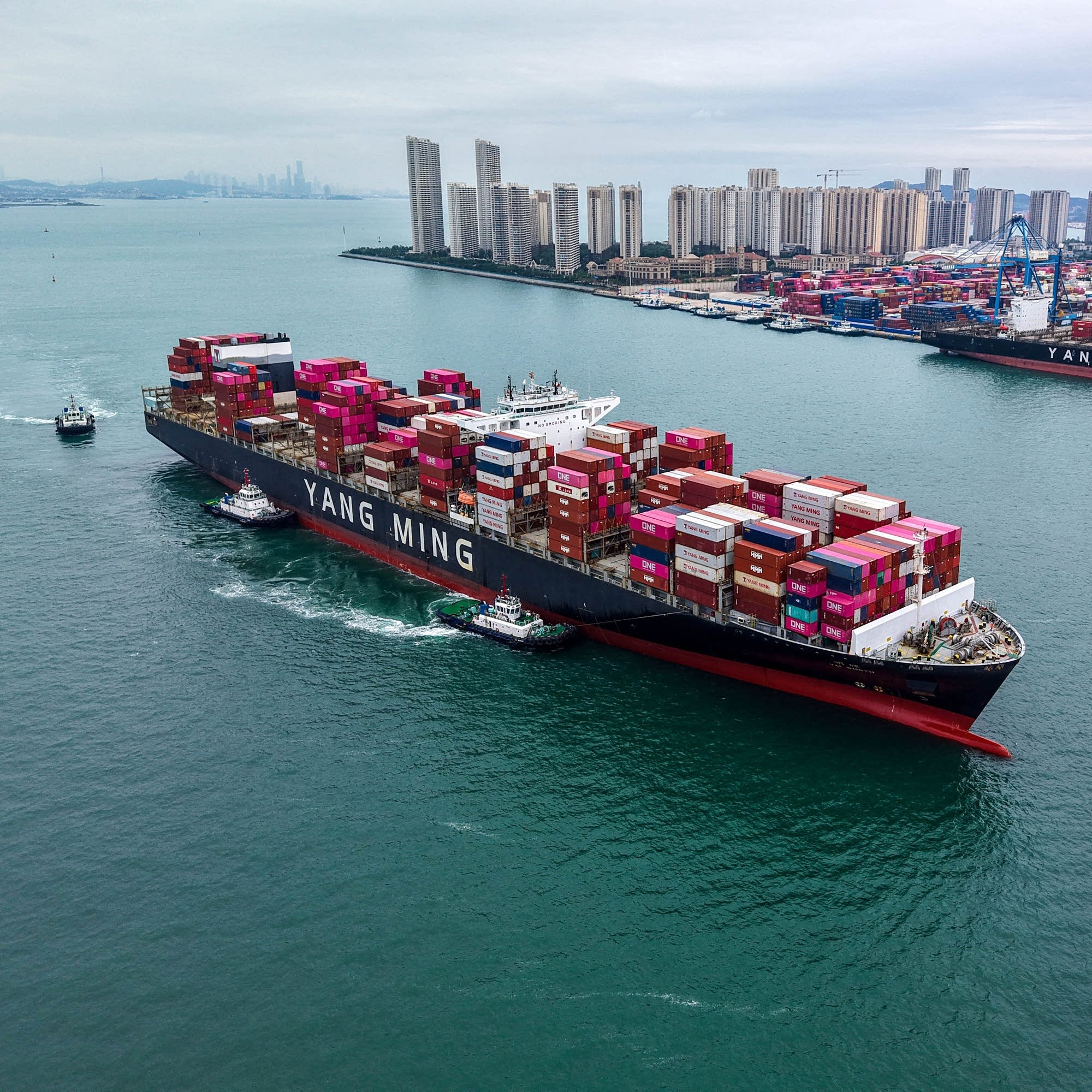
Loading summary
Transcript39 lines
- [00:00]
Kimberly Adams
Say what you want about AI, but it's here and it's helping businesses get more done in a day. Wix's website builder is infused with AI so you can stay ahead. Create a beautiful, functional website just by describing your idea, track how your site appears in AI search results, create custom images on demand, or launch an entire campaign in a matter of minutes. Wix gives you AI wherever you need it. Try it out for yourself@wix.com this podcast.
- [00:29]
Odoo Sponsor Announcer
Is supported by Odoo. Some say Odoo business management software is like fertilizer for businesses because the simple, efficient software promotes growth. Others say Odoo is like a magic beanstalk because it scales with you and is magically affordable. And some describe Odoo's programs for manufacturing, accounting and more as building blocks for creating a custom software suite. So Odoo is fertilizer magic beanstalk building blocks for business. Odoo exactly what businesses need. Sign up@odoo.com that's o d o o.com.
- [01:00]
William Lee Adams
Will the US block a global deal to tax carbon emissions from shipping? Live from the uk, this is the Marketplace Morning Report from the BBC World Service. I'm William Lee Adams. Good morning. We begin with a landmark global agreement to charge shipping companies over their carbon emissions, an agreement that's at risk of collapsing after America urged countries to oppose it. The deal was set to be signed in lond by representatives from most International Maritime Organization member countries. The BBC's Climate and Science correspondent Esme Stallard joins us now. Esme, hi.
- [01:34]
Esme Stallard
Hi there.
- [01:35]
William Lee Adams
So this deal has been called historic. Can you tell us what it actually involves?
- [01:40]
Esme Stallard
Of course. So this deal was first agreed back in April and it was 10 years in the making. What countries agreed was that they would set effectively emission standards. So a bit like with your car, for example, and over time they would ramp up so ships would have to use an increasing amount of green or cleaner fuels. And if they don't, then they'll have to pay a fine and that will go into a central pot and that money will be redistributed to help with infrastructure for this program this week in London. It was just meant to be signing on the dotted line and getting on with the key details, but it seems that we might not have quite reached the finish just yet.
- [02:14]
William Lee Adams
And this obviously has a cost to businesses and potentially consumers. And now US officials have intervened, haven't they?
- [02:21]
Esme Stallard
They're saying, first of all, as you mentioned, the potential risk or the cost to consumers. Now it's worth pointing out those costs will vary quite significantly depending on the particular good. So for very high end goods, so clothes, trainers, things like that, the cost increase will be marginal. You probably won't notice it as a consumer for what we call lower value goods, fruit and veg, that cost increase might be noticeable, particularly for those in developing countries. And that's something the US has really hung onto you. Even last night, Trump took to true social to say that he would not agree to screenstamp bureaucracy and anything that increased costs for his citizens.
- [02:56]
William Lee Adams
What happens if the deal falls through?
- [02:59]
Esme Stallard
Effectively, it's probably the emissions will just continue to go up. And I think it will be very worrying going into the UN Climate Change Conference next month in Brazil. COP30 because this demonstrates that despite agreements already having happened, the US can and will very vocally intervene and could actually undo some progress that's already been made.
- [03:19]
William Lee Adams
Esme, thanks for joining us on Marketplace.
- [03:21]
Esme Stallard
Thank you.
- [03:23]
William Lee Adams
Okay, let's do the numbers. Shares of Danish drugmaker Novo Nordisk plunged 6% after President Trump suggested the price of its blockbuster drug Ozempic could fall. And UK Based engineering company Smiths Group has agreed to sell its high tech division, Smith's interconnect to US components maker Molex Electronic for $1.75 billion following investor pressure to break up the firm. Now, you will have heard of Black Friday, but what about Singles Day? Well, that's China's biggest online shopping event celebrating singles. It normally takes place on 11 November, but it started early this year as weak consumption dogs the world's second largest economy. Earlier this week, figures reported consumer prices continued to fall in September. Let's hear more now from the BBC's Nick Marshall.
- [04:11]
Odoo Sponsor Announcer
This is an event that turns over hundreds of billions of dollars. I mean, it's like 10 times, 15.
- [04:17]
Martin McIver
Times more than Black Friday.
- [04:19]
Odoo Sponsor Announcer
Some companies have started their sales already. So we're in mid October and Singles Day, as it were, has already started. And it's no coincidence because the Chinese economy is struggling. The government wants people to spend more, get money circulating around the economy. And a good way to do that is by extending these popular, you know, sales events like Singles Day.
- [04:38]
William Lee Adams
NICK marsh. They might have once been reserved for rock stars or sailors, but tattoos have become increasingly culturally accepted around the world. Now it's predicted the global industry could grow to $6.5 billion by 2033. The BBC's Sarah Rogers has been finding out more.
- [04:56]
Sarah Rogers
The buzz of the tattoo pen making its mark on the next willing customer in an industry that appears to be drawing profits as well as pictures.
- [05:04]
Martin McIver
Hi I'm Martin McIver, one of the organizers of the big London Tattoo show. We have 520amazing tattoo artists. We have some of the world's best.
- [05:13]
Sarah Rogers
Tattooists here and it's no small convention organizers say there's room for 10,000 visitors. Last year, the industry was worth $3.5 billion worldwide and that's projected to nearly double in under a decade, according to estimates from market research Intellect. With the US leading the scene, I.
- [05:33]
Martin McIver
Would actually think it's more than that now. Already it's just been growing system the dawn of Miami ink.
- [05:38]
Sarah Rogers
Well, these days tattooists don't need TV fame, just talent and a strong social media game. Here are artists Jen Pin and John Arton.
- [05:46]
Martin McIver
I do realism, so portraits, animals, realistic things.
- [05:50]
Esme Stallard
So I do ornamental. There's definitely more people coming to get tattoos now than there's ever, ever been. How much does tattoo cost?
- [05:56]
Martin McIver
How long's a piece of string? It depends what you want.
- [05:59]
Esme Stallard
We charge by the day, so a sleeve, you're looking around.
- [06:02]
Sarah Rogers
Ten sessions a day.
- [06:04]
Kimberly Adams
Right.
- [06:04]
Sarah Rogers
And tattoos are everywhere, from your barista to your boss. It's estimated almost half of Italians are inked. And in the UK that figures around one in four. But the rising numbers also mean more regrets, removals and cover ups.
- [06:18]
Martin McIver
Sadly, yeah.
- [06:20]
Sarah Rogers
The very first person to get tattooed at the convention is Merryn. She's already got around 15 and and has spent a lot on her body art. I won't be having avocado toast for a very long time. It's all to do with kind of.
- [06:34]
Esme Stallard
Contributing to the skill of the artist and kind of the hygiene and the.
- [06:37]
Sarah Rogers
Safety and that matters, especially as tattoo studios multiply. Victor Chiganov opened his store seven years ago.
- [06:44]
Martin McIver
I'm the director at Southgate Tattoo Studio. A lot of new studios opened recently. Creates more competition for the studios like ours. It used to be more personal back in the days. Now it's mostly fashion.
- [07:00]
Sarah Rogers
But if that trend changes, does that mean less skin in the game for businesses? Here's Martin McIver again.
- [07:07]
Martin McIver
It's always weathered recessions pretty well, by and large. Pretty good.
- [07:12]
Sarah Rogers
Well, for now, at least, the buzz continues. In London, I'm Sarah Rogers for Marketplace.
- [07:18]
William Lee Adams
And in the uk, I'm William Lee Adams with the Marketplace Morning Report from the BBC World Service.
- [07:26]
Kimberly Adams
I'm Kimberly Adams, host of Make Me Smart, a podcast from Marketplace that makes today make sense. Join me throughout the week as I dig into the biggest stories in tech culture and the economy. Whether it's a vibe check on the job market or the latest on China US Relations Make Me Smart helps you understand how the headlines actually impact your daily life. Listen to Make Me Smart on your favorite podcast, Applied.