← Marketplace Morning Report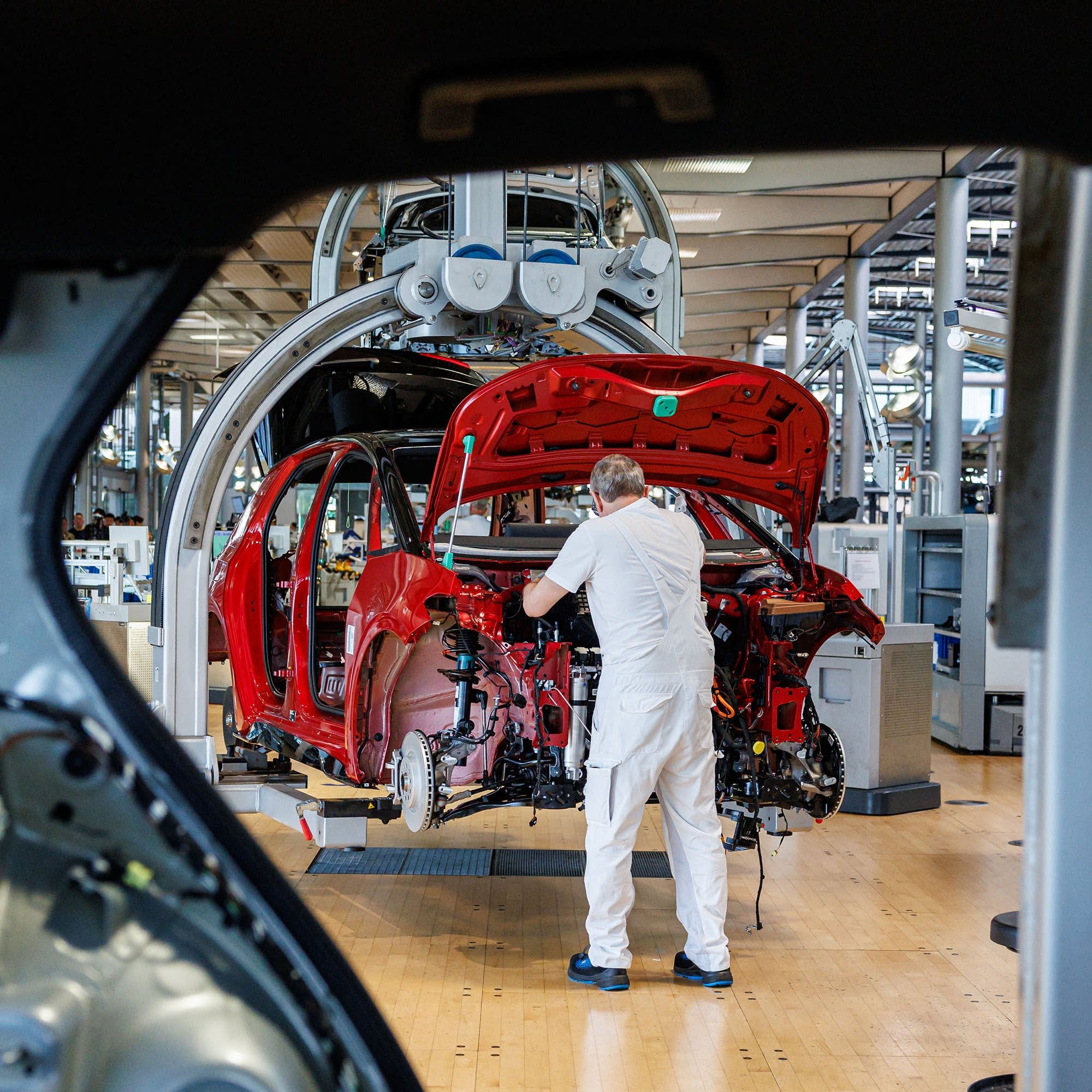
Loading summary
Transcript43 lines
- [00:01]
Wix Advertiser
Wix is the website builder that just keeps on giving. It's giving.
- [00:05]
Wix User
I just built my whole site in under an hour.
- [00:07]
Wix Advertiser
It's giving. I actually made that.
- [00:10]
Podcast Host
Whoa.
- [00:10]
Wix Advertiser
It's giving.
- [00:11]
Podcast Host
Our sales are through the roof.
- [00:13]
Wix Advertiser
So whether you need help expressing yourself or just need something to make your life easier, Wix has you covered. Try it out@wix.com.
- [00:24]
Podcast Host
This podcast is supported by Odoo. Some say Odoo business management software is like fertilizer for businesses because the simple, efficient software provides, promotes growth. Others say Odoo is like a magic beanstalk because it scales with you and is magically affordable. And some describe Odoo's programs for manufacturing, accounting and more as building blocks for creating a custom software suite. So Odoo is fertilizer magic beanstalk building blocks for business. Odoo. Exactly what businesses need. Sign up@odoo.com that's o d o o.com.
- [00:56]
Gideon Long
For the first time ever, Volkswagen closes a plant in Germany. Live from the uk, this is the Marketplace Morning Report from the BBC World Service, I'm Gideon Long.
- [01:06]
BBC Reporter
Good morning.
- [01:07]
Gideon Long
Volkswagen has been making cars in Germany for 88 years. And in all that time, it has never closed a manufacturing plant in its.
- [01:15]
BBC Reporter
Home country until now.
- [01:17]
Gideon Long
Later on Tuesday, the last vehicle will roll off the assembly line at VW's plant in Dresden. It comes as the company is struggling with the transition to electric vehicles. Alexander Demling, the automotive correspondent at Der Spiegel newspaper, is in the Ger city of Cologne. Hi, Alexander.
- [01:34]
Alexander Demling
Hi, Gideon.
- [01:35]
Gideon Long
So the first time ever that Volkswagen.
- [01:38]
BBC Reporter
Has closed a plant in Germany, what does this closure tell us about the state of Volkswagen at the moment, do you think?
- [01:44]
Alexander Demling
It tells us that Volkswagen needs to save money? I mean, they agreed last year with the unions that they would cut 35,000 jobs and close two smaller plants, of which this is in Dresden is one. And they need to save money because they have a ton of problems right now. They have the Trump tariffs that hit Audi and Porsche, for example, which are brands of them. They have problems in China and also they have problems with the lower adoption of electric cars.
- [02:14]
BBC Reporter
Yeah, that last point. To what extent is that the problem?
- [02:18]
Alexander Demling
I mean, it's one of the big problems they have because they expected a few years ago that they would be selling many more electric cars all over the world at this point. They invested billions and billions in these platforms and in these models, and. And so these investments don't pay back as much as they expected to. And so they need to adjust and they need to find cost savings somewhere else.
- [02:42]
BBC Reporter
And on the subject of electric cars, we understand that the European Commission is due to make a big announcement later on Tuesday about its rules on carbon emissions. At the moment, the idea is that by 2035, Europe's carmakers will no longer be making cars that emit carbon. But that might be about to change. The rules might be about to change, is that right?
- [03:02]
Alexander Demling
Yeah. So what we know already about the package is that they will soften these rules. They will probably allow carmakers like VW to reduce their CO2 footprint not by 100% in 2035, but more like 90% compared to 2021. And that means they can sell more plug in hybrids or even like just internal combustion engine cars like the Porsche 911 or stuff like.
- [03:31]
BBC Reporter
And if that is indeed what the European Commission announces later, how significant will that be?
- [03:37]
Alexander Demling
It is a step down. They are admitting that their ambitions were too big for this historic shift in this industry. It also could mean not a lot because with the market realities that electric cars just get cheaper and cheaper when they get mass produced more and more. Maybe these 90% that I mentioned aren't that different from these 100%, because in 2035, maybe internal combustion engine car just isn't very economical anymore because if it's just a tiny minority of cars, then it's not really economical for a car maker to produce them. And so it really depends on the customer. Now, do the customers, are they now confused and do they keep buying internal combustion engine cars because they don't believe in this electric future or, or are they just adopting electric cars more and more and then maybe we get the shift anyway, no matter the regulation.
- [04:37]
BBC Reporter
Alexander Demling, thanks for joining us here on Marketplace.
- [04:40]
Alexander Demling
Thank you.
- [04:46]
Gideon Long
Let's do the numbers. US$220 billion. That's what natural disasters cost the global economy in 2025. According to the reinsurance company Swiss Re. It's a lot of money, but it's actually down by a third from last year. That's due to a more benign hurricane season in the Caribbean. And China has dramatically reduced its tariff on imports of pork from the European Union. It had threatened levies of up to 62%. Now it slashed that figure to less than 20%. Britain and South Korea have finalised a trade deal. It means most goods and services traded between the two countries will continue to be tariff free. The deal was made necessary by the UK's decision to leave leave the European Union. Here's the BBC's Simon Jack.
- [05:35]
Simon Jack
South Korea is the UK's 25th largest trading partner. Britain had previously benefited from a deal struck when it was a member of the eu, the terms of which were extended but were due to expire at the end of this year. The Government said the new deal was an improvement, claiming it will boost service exports to South Korea. It's the latest in a series of post Brexit trade deals struck by the government, following agreements with India, the EU and the us. But the independent budget forecast of the OBR has so far deemed deals done with those larger partners as unlikely to make a measurable impact on the UK economy by 2030.
- [06:10]
Gideon Long
Simon? Jack there, the head of Ukraine's largest energy provider, has told the BBC his company is living in permanent crisis mode as Russia steps up attacks on the country's energy grid. Maxim Timchenko, the head of Dtech, which provides power to 5.6 million Ukrainians, spoke to the BBC's Jonathan Beale.
- [06:29]
Maxim Timchenko
Russians started so massive and intense attacks on every power station we operate, then we just don't have time to recover. Waves of attacks by drones, cruise and ballistic missiles, all types of weapons.
- [06:43]
Jonathan Beale
More recently, has it become more intense?
- [06:46]
Maxim Timchenko
Yeah, absolutely. You can imagine that at one of our power stations, five ballistic missiles landed. So we had never experienced such attacks.
- [06:54]
Jonathan Beale
How often are they targeting your power plants recently?
- [06:58]
Maxim Timchenko
For the last weeks, every third, fourth day.
- [07:01]
Jonathan Beale
And are you able to repair those facilities?
- [07:03]
Maxim Timchenko
Of course we do our best, but we cannot repair it 100%. It's just impossible.
- [07:07]
Jonathan Beale
What do you think the Russians goal here is?
- [07:10]
Maxim Timchenko
They want to break spirit of Ukrainian people, bring more suffering to our people, more fear to our people.
- [07:14]
Jonathan Beale
Can you carry on?
- [07:16]
Maxim Timchenko
Do we have any choice? So if you ask, either you want to lose your motherland or you want to stay and fight. And of course most of the people say yes, we are staying in fight. Mother with kids, going to bomb shelter every second night. They also fighting because they stay in Ukraine and they supporting their husbands on the front line. And they understand that every night we have air raid and it's better to go to bomb shelter. So it's the same for me and for my colleagues, the company. So we have full responsibility for this mother and millions of mothers so that they have power and heat. We need peace and security guarantees so that we can recover our country. We can bring more companies, more investors, we can rebuild energy sector, we can rebuild Ukraine.
- [08:11]
Jonathan Beale
I mean, you grew up in Donetsk, so are you prepared to. When Russia says it wants the whole of the Donbas region, what do you say?
- [08:22]
Maxim Timchenko
What Russians brought to Donetsk, they brought destruction, pain. In my opinion, there is no future for Donetsk under Russian occupation.
- [08:32]
Gideon Long
Maxim Timchenko There in the uk I'm Gideon Long with the Marketplace Morning Report from the BBC World Service.
- [08:43]
Marina Reyes
Hey everyone. You already listened to Marketplace podcasts, so you know that it's important to understand how economic forces shape our lives. And that feels especially important now as we're all trying to make sense of the latest headlines. I'm Marina Reyes, host of Marketplaces. This is Uncomfortable, a show that explores how money bumps up against our relationships, our choices, and the parts of life we don't always say aloud. And starting January 15th, we are back every single week. New stories, new questions, and the kind of conversations that make you feel less alone in this quickly changing economy. We're tackling questions like should I turn my hobby into a money making side hustle? How do I deal with layoff anxiety? Or what do we owe our parents financially? Don't miss an episode. Subscribe to this is Uncomfortable from Marketplace. Wherever you get your podcasts.