Loading summary
Transcript29 lines
- [00:01]
GoFundMe Announcer
Want to make a difference in your community, but not sure how? Go to GoFundMe.com right now and start a GoFundMe. Seriously. Your next fundraiser doesn't have to start in a school parking lot or a church basement. You can start a GoFundMe today in just minutes. Fundraise for yourself, a friend or family member or an organization. All that matters is that you care about them. GoFundMe is the trusted place to fundraise for what you care about. With no pressure to hit your fundraising goal, but tons of tools to help you reach it, you can confidently start fundraising right now. Whether it's creative, local or critical, your cause matters. And there's a reason why GoFundMe is backed by millions and chosen by fundraisers everywhere. It works and it matters. GoFundMe helps you make a real difference. Start your GoFundMe today at gofundme.com that's gofundme.com G O F U N D me dot com this is a commercial message brought to you by GoFundMe.
- [01:00]
Oregon Lottery Announcer
Looking for a last minute gift for your people? You know, your people, that weird bunch of friends and family that you love dearly. Well, here's an easy idea. Oregon Lottery Holiday Scratch it. Because your people, they're the ones that amidst all the holiday crowds and endless notifications, help you find the fun, which calls for a little gift that brings big cheers. Oregon Lottery Holiday Scratch it's. You know where to find them. Grab some today. Must be 18 or older to play. Lottery games are based on chance and should be played for entertainment only.
- [01:31]
David Brancaccio
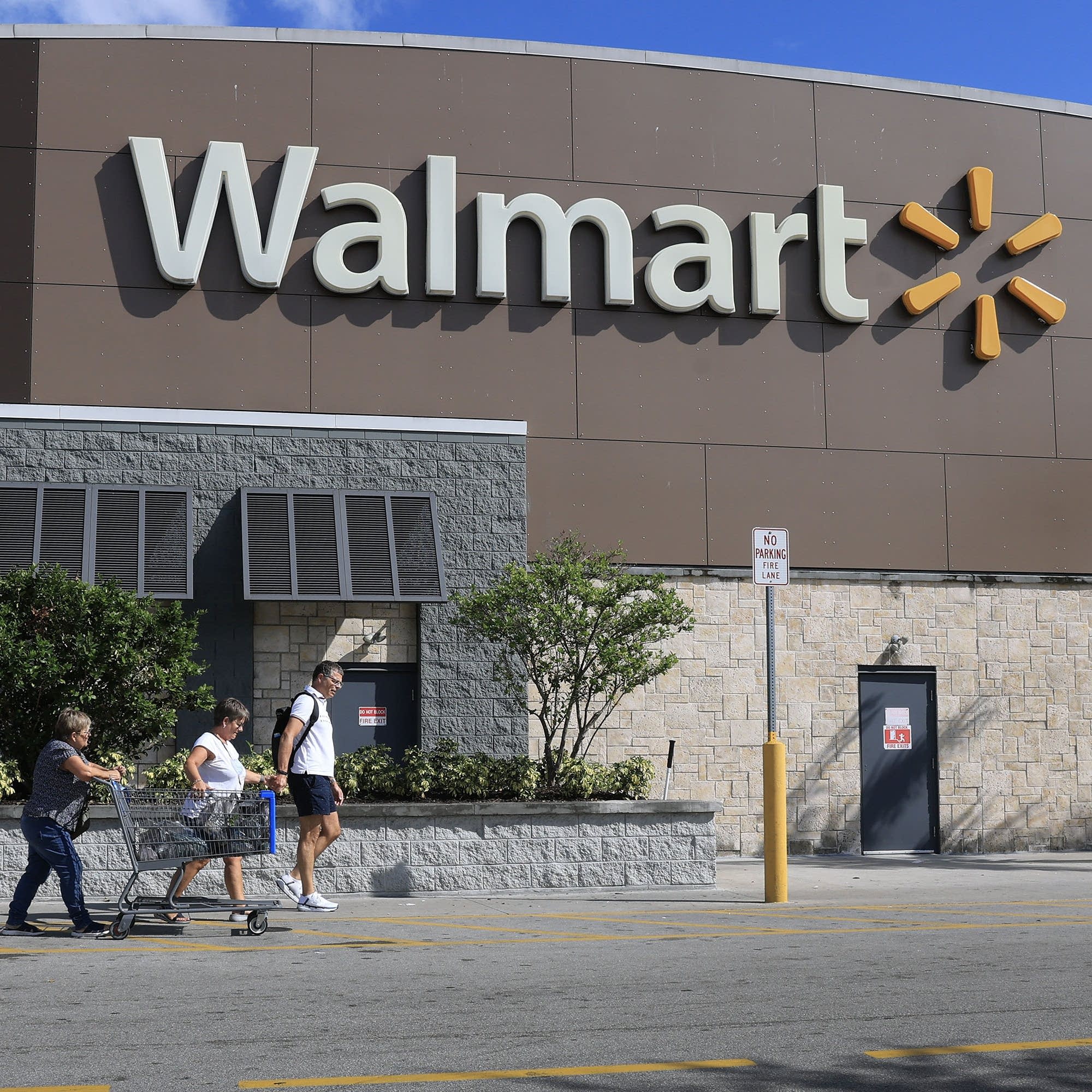
Does the Nasdaq make you cool? I'm David Brancaccio in Los Angeles. Good morning to you. Walmart is moving from the New York Stock Exchange to the NASDAQ market. It's the biggest company to ever make the switch from platforming its stock down on New York's Wall street to a company with a showroom on New York's Times Square. The thing is, NASDAQ has a cool kids growth through tech vibe and it's where the stocks of Apple, Microsoft, Amazon and Nvidia live. To understand this better, let's bring in Jay Ritter, professor of Finance at the University of Florida. Good morning.
- [02:04]
Jay Ritter
Good morning.
- [02:05]
David Brancaccio
Let's be fair to Walmart here, right? You think of them as a big box retailer, but they have a sizable online presence that is a stiff competitor for tech company Amazon.
- [02:17]
Jay Ritter
Absolutely. Indeed. Because of the growth in their online business and successful competition against Amazon, Walmart is now selling at a higher price. Earnings ratio than most of the so called Magnificent Seven.
- [02:33]
David Brancaccio
You know, it's a popular way to invest these days is to buy the whole S&P 500 index. And so if you're in that index, companies stand to benefit just by virtue of that inclusion. Is there kind of bump that Walmart might get for being included on the Nasdaq market, which is not an index in itself?
- [02:52]
Jay Ritter
By moving to Nasdaq, Walmart is able to be not only in the S&P 500 index, but also in Nasdaq's QQQ index for the hundred largest companies on Nasdaq. And while not as much money is indexed there as with the S&P 500, some IS and an estimate is another $20 billion is going to be invested in Walmart as a result.
- [03:17]
David Brancaccio
Now if you go visit Nasdaq, it's computer driven. Go over the New York Stock Exchange. It's secretly computer driven, but there are still some humans wandering around. That's where you still get the still photographs at the end of a bad market days over at the New York Stock Exchange. Do you think the New York Stock Exchange needs to do some rethinking about its brand?
- [03:41]
Jay Ritter
Not necessarily. There are many markets where the individual stocks get traded. So just because a stock changes from the New York Stock Exchange to Nasdaq where it's listed, that doesn't actually mean that much of the trading volume is going to be changing. It is still the case that the New York Stock Exchange does provide certain certification. And in recent months Nasdaq has been under a little bit of scrutiny because of a lot of penny stock IPOs that have been listing there, many of which have been manipulated and most of which have crashed and burned.
- [04:22]
David Brancaccio
Jay Ritter at the University of Florida, thank you so much.
- [04:25]
Jay Ritter
You're very welcome.
- [04:26]
David Brancaccio
As always, consumers are feeling worse about their current and future financial situations. That's among key findings from the latest survey of consumer expectations out this week from the Federal Reserve bank of New York Marketplace's Carla Javier reports.
- [04:42]
Elizabeth Renter
Consumers have greater awareness of what's going on in the economy than they get credit for, says NerdWallet's Elizabeth Renter. Most of us shop for groceries, most of us buy gasoline. And in that way we can be in tune with what inflation is doing, even if we're not watching the numbers that come from the bls. And with government reports delayed or canceled due to the shutdown, consumer expectations are especially useful, says Justin Wolfers at the University of Michigan.
- [05:09]
GoFundMe Announcer
So in the absence of that hard data, looking instead to how people are feeling becomes all the more important, and.
- [05:15]
Elizabeth Renter
How people feel can actually impact the economy.
- [05:18]
GoFundMe Announcer
If I'm worried about losing my job next year, I might pull back a little bit, tighten the purse strings.
- [05:23]
Elizabeth Renter
That could affect businesses, which could affect hiring. You get the idea. When Vicki Bogan at Duke looked at the latest survey from the New York Fed, she noticed somewhat mixed findings.
- [05:34]
GoFundMe Announcer
You could say employment expectations improved slightly.
- [05:37]
Elizabeth Renter
But the survey did show that people think medical costs will increase. Medical costs are one of the leading.
- [05:43]
David Brancaccio
Causes of bankruptcy for households in general.
- [05:46]
Elizabeth Renter
Another key takeaway. Consumers told the New York Fed that they expect the inflation rate to remain steady over the next year. I'm Carla Javier for Marketplace and the.
- [05:56]
David Brancaccio
Environmental group the National Resources Defense Council wants more people to use recycled toilet paper in its latest scorecard. The group gives failing grades again to some of the biggest toilet roll brands, which are largely made by cutting down tre often in Canada, the NRDC claims that if every American used just one roll of recycled 100% recycled, it would be like getting 72,000 cars off the road for a year. Now. Whole foods and Trader Joe's 100% recycled, among some others, did get A pluses, and the NRDC praised Procter and Gamble for breaking out of the F category finally, with its sustainably certified bamboo toilet paper. This is drawn from the NRDC's seventh annual report titled the Issue with Tissue.
- [06:57]
Superhuman Announcer
This Marketplace podcast is supported by Superhuman. The world is buzzing with AI tools, but instead of making things easier, they've made your workflow overwhelming. You're stuck copying and pasting, context switching and juggling too many apps. There's now a better way that outsmarts the work ch. Meet Superhuman, the AI productivity suite that gives you superpowers everywhere. You work with Grammarly, mail and coda working together, you get proactive help across your workflow, from writing to preparing for meetings, presentations, and so much more. Think of Superhuman as your AI dream team, proactively helping you go from to do to done faster. Superhuman knows what you might need and offers suggestions whether you're drafting emails, creating documents, or more. It guides you in the moment so you can sound like your best self and stay focused on what matters. There are even specialized agents designed to collaborate seamlessly and amplify your impact. Unleash your Superhuman potential today. Learn more@superhuman.com podcast. That's superhuman.com podcast.
- [07:56]
Wix Announcer
How many times have you wished you could be in two places at once? With wix, you practically can. Wix's website builder is packed with powerful AI tools to make running your business online easier. Build a full site just by talking with AI, get an AI agent to manage your sales and marketing, or work like a 10 person team, even if it's just you. So you don't need superpowers to get everything done. You just need Wix. Try it out for yourself@wix.com There's a.
- [08:25]
David Brancaccio
Battle brewing over who's going to regulate artificial intelligence. Some states have stepped in, but the Trump administration is now trying to head that off. Marketplace's Nancy Marshall Genser reports.
- [08:35]
Nancy Marshall Genser
President Trump says he'll sign an executive order this week to establish what he calls one rule on AI. He says too many state rules will keep the US from leading the global AI race. Since there's no broad federal legislation, states have enacted their own laws. The National Conference of State Legislatures says 38 states adopted or enacted around 100 AI measures this year. For example, Oregon prohibits AI from using licensed professionals titles such as registered Nurse. And North Dakota prohibits people from using AI powered robots to harass others. It's not clear that President Trump can block these state laws. His executive order could face legal challenges. I'm Nancy Marshall Genser for Marketplace.
- [09:20]
David Brancaccio
Our producers are Tamar Fagan, Ashley Rodriguez, Ariana Rosas and Erica Soderstrom. Our senior producer is Alex Schroeder. Our supervising senior producer is Meredith Garretson Morby. In Los Angeles, I'm David Brancaccio. This is the Marketplace Morning Report from APM American Public Media.
- [09:41]
Dear Listener, this week only you can get your very own Marketplace hoodie for half the price. Yes, it's officially half price hoodie week. They say it's soft, it's cozy, and it's our way of saying thanks when you make your year end donation a little early. Well, don't wait though. The deal ends on Friday and once it's gone, it is gone. Give now@marketplace.org or click the link in the show notes.