Loading summary
Transcript42 lines
- [00:00]
Marketplace Morning Report Announcer
The Marketplace Morning Report podcast is supported by three Day Blinds. Shop for blinds from the comfort of your home with a local professional design consultant who brings physical samples, measures your space and handles expert installation. See what works in your space before you buy. Book a free no obligation consultation and save with buy one. Get one 50% off at three day blinds.com morning that's the number 3D a yblinds.com morning Reshoring to the US is
- [00:32]
Puerto Rico Economic Development Representative
a strategic decision, and where you land matters. In Puerto Rico, Companies like Amgen, AbbVie and Boston Scientific run advanced manufacturing and life science operations serving global markets. As a US Jurisdiction, Puerto Rico offers regulatory alignment, strong IP protections, seamless access to the mainland, competitive tax incentives, and a deep bench of stem trained bilingual talent that helps build resilient supply chains. See why industry leaders are already here? It's not what's next, it's where. Puerto rico visit invest pr.org
- [01:10]
Narrator/Reporter (possibly Kirk Carapeza)
We've had
- [01:10]
Sabri Ben-Achour
a gas tax for almost a century. What does it do? From Marketplace, I'm Sabri Ben Assure in New York. President Trump and some congressional Republicans want to temporarily pause the federal gas tax to help with costs at the pump. Democrats prefer to tax oil companies and pass that along as tax rebates. As that debate goes on, we thought it would be a good time to to take a closer look at the gas tax and how it shows up in our everyday lives. Marketplace's Caitlin Tan has that if you've
- [01:39]
Caitlin Tan
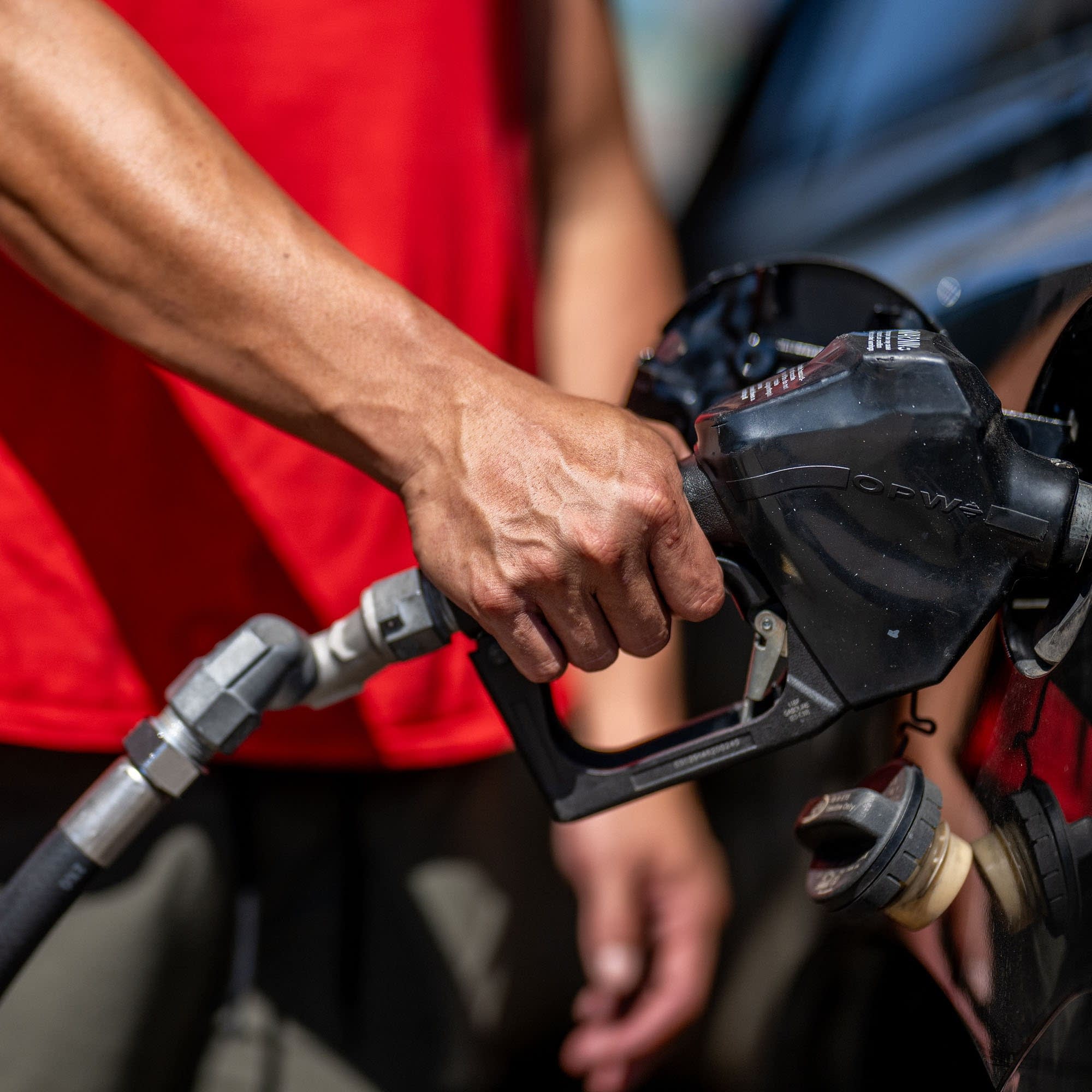
ever driven to see the sunrise in the Grand Canyon or grizzly bear romp in Yellowstone, chances are the federal gas tax helped you get there.
- [01:49]
Narrator/Reporter (possibly Kirk Carapeza)
So I think we've had a gas
- [01:50]
Caitlin Tan
tax like nearly 90 years, 94 to be exact. That's Andy Winkler with the Bipartisan Policy Center. The the tax goes into all kinds
- [02:00]
Adam Hoffer
of different projects around the country, highways,
- [02:03]
Caitlin Tan
bridges, and even buses and light rail. But the tax collector for all those projects lives in your gas pump. Adam Hoffer is with the Tax Foundation.
- [02:14]
Adam Hoffer
If you drive more, you buy more gas, you pay more in tax.
- [02:18]
Caitlin Tan
Depending on the size of your car, it's about two bucks every time you fill up. The gas tax hasn't been boosted since 1993.
- [02:27]
Adam Hoffer
The gas tax is never going to win a popularity contest. Almost everyone dislikes gas taxes, but bad
- [02:34]
Caitlin Tan
roads are unpopular too, which Hoffer says is related.
- [02:38]
Adam Hoffer
Really? In the past decade, the gas tax really hasn't kept up with the amount of federal expenditures on roads.
- [02:47]
Caitlin Tan
A growing economy requires a lot of roads and bridges and upkeep to move those products. But you gotta pay for all that, and that's key. Getting a little hard. As cars get more efficient and electrified,
- [02:59]
Puerto Rico Economic Development Representative
it's a challenge to tax those users
- [03:01]
Narrator/Reporter (possibly Kirk Carapeza)
because they don't use gasoline.
- [03:03]
Caitlin Tan
Rob Godby is a University of Wyoming economics professor. He says if we were to eliminate the gas tax even for say four months, that could be an $11 billion revenue hit.
- [03:16]
Narrator/Reporter (possibly Kirk Carapeza)
It's probably borrowing more money and that's just worsening an already more significant problem in terms of government budget deficit.
- [03:27]
Caitlin Tan
Borrowing money because those roadway projects have to happen. Projects like a new $4 billion bridge over the Ohio river and really that connects the Northern Kentucky region to Cincinnati. Gracie Kelly with the Kentucky League of Cities is talking about the Brent Spence Bridge. That's an example of what that federal
- [03:47]
Amanda Fernandez
gas tax goes towards.
- [03:49]
Caitlin Tan
On one side of that new bridge in Kentucky, the governor ordered up a 10 cent reduction in the state gas tax temporarily. I'm Caitlin Tan for marketplace inflation from
- [04:01]
Sabri Ben-Achour
the perspective of wholesalers was up a massive 1.4% in just the month of April. Prices were up 6% year over year. These are the biggest jumps in four years. And it was not just gas and oil prices. A big piece of this was was in services.
- [04:41]
Dell Commercial Voiceover
Dell PCs with Intel inside are built for the moments that matter. For the moments you plan and the ones you don't. Built for the busy days that turn into all night study sessions. The moment you're working from a cafe and realize every outlet's taken. The times you're deep in your flow and the absolute last thing you need is an auto update throwing off your momentum. That's why Dell builds tech that adapts to the way you actually work. Built with long lasting battery so you're not scrambling for the closest outlet. And built in intelligence that makes updates around your schedule, not in the middle of it. They don't build tech for tech's sake. They build it for you. Find technology built for the way you work@dell.com DellPCS built for you if you're a business leader. Intuit QuickBooks Payroll is an essential tool that completely integrates payroll, time, tracking, HR and your financials in a powerful all in one command center. No more juggling platforms or switching between vendors. All your data synced into one platform. Offering clarity and confidence to make smarter decisions and focus on what matters. This summer, QuickBooks Payroll evolves to support the entire team life cycle. HR, time, benefits and payroll all working together in one connected system that fully integrates with your books. You'll be able to onboard employees in one seamless flow that feeds directly into payroll Configure automated HR workflows for things like promotions or off and track performance, time off and benefits alongside payroll. Upgrade your workflow with QuickBooks Payroll Today and get ready for the brand new tools coming soon. More@quickbooks.com workforce that's quickbooks.com workforce there is
- [06:36]
Sabri Ben-Achour
about to be a shortage of 18 year olds. It's demographics. The birth rate dropped around the time of the Great Recession and has not fully recovered. The this is a particular issue for colleges who will face a shrinking pool of applicants. But one population group eager to apply is still growing Latino students. From GBH in Boston, Kirk Carapeza reports.
- [06:57]
Narrator/Reporter (possibly Kirk Carapeza)
The main administrative building on the former Pine Manor College campus sits on a hill in Brookline, Massachusetts. It's a 19th century shingle style mansion. Shuttles are running from here to Boston College. That's because in 2020 Boston College acquired Pine Manor and then four years later it launched a new school, Messina College, a residential two year junior college. Its stated mission serve low income first generation students.
- [07:28]
Father Eric Berryessa
Pine Manor College was facing enrollment declines and the pandemic hit at that moment. And so I think BC saw an alignment of missions.
- [07:37]
Narrator/Reporter (possibly Kirk Carapeza)
Father Eric Berryessa is a Jesuit priest and founding dean of Messina. He's the son of Mexican immigrants and a first generation college graduate.
- [07:46]
Father Eric Berryessa
When I was a college student over 20 years ago now, we didn't have models like this. It was a sink or swim model. You just sort of had to figure it out or you didn't. You try to find a mentor or you didn't. And we want to take some of that guessing out of the equation.
- [08:02]
Narrator/Reporter (possibly Kirk Carapeza)
Messina enrolls more than 200 students. About 40% are Latino, double the national average. The college offers students an associate's degree and a pathway to a bachelor's. Nationwide, according to federal data, about half of Latino students complete a degree within six years, compared with roughly 70% of white students.
- [08:23]
Amanda Fernandez
That's been really consistent for many years.
- [08:26]
Narrator/Reporter (possibly Kirk Carapeza)
Amanda Fernandez is the CEO of the nonprofit Latinos for Education. As the federal government caps international student enrollment, she says closing the Latino college completion gap is critical.
- [08:39]
Amanda Fernandez
If Latinos are not also contributing to the economy, then it affects every person in the country.
- [08:48]
Narrator/Reporter (possibly Kirk Carapeza)
Inside a lab at Messina College, students are checking their heart rates.
- [08:52]
Amanda Fernandez
Is it on? Turn it on.
- [08:55]
Narrator/Reporter (possibly Kirk Carapeza)
First year student Kaylee Castillo is the daughter of Dominican immigrants. She hopes to become a nurse and says financial aid drew her here.
- [09:03]
Amanda Fernandez
I was kind of scared to go to college because I knew that like a lot of people come out with debt.
- [09:08]
Narrator/Reporter (possibly Kirk Carapeza)
Castillo spends time on the main Boston College campus, but says she feels most at home here at Messina with fewer students.
- [09:16]
Amanda Fernandez
If you're in the dining hall, it's not, you know, you're not, like, scrambling to find a seat. You can laugh a little louder here.
- [09:23]
Narrator/Reporter (possibly Kirk Carapeza)
Messina's first class graduates in May, and 40 students have already been offered spots at Boston College to continue toward a bachelor's degree. In Boston, I'm Kirk Carapeza for Marketplace.
- [09:36]
Sabri Ben-Achour
And in New York, I'm Sabri Benishore with the Marketplace morning report from apm. American Public Media.
- [09:46]
Adam Hoffer
Anxiety, depression, bipolar disorder. At least half of us will experience a mental illness in our lifetime. In a new series of special reports from Call to Mind, we hear about the mental health impact of stress, climate change, immigration and more. Tune in for conversations with people managing hardship and experts seeking solutions. Listen to Call to Mind from American Public Media.