← Marketplace Morning Report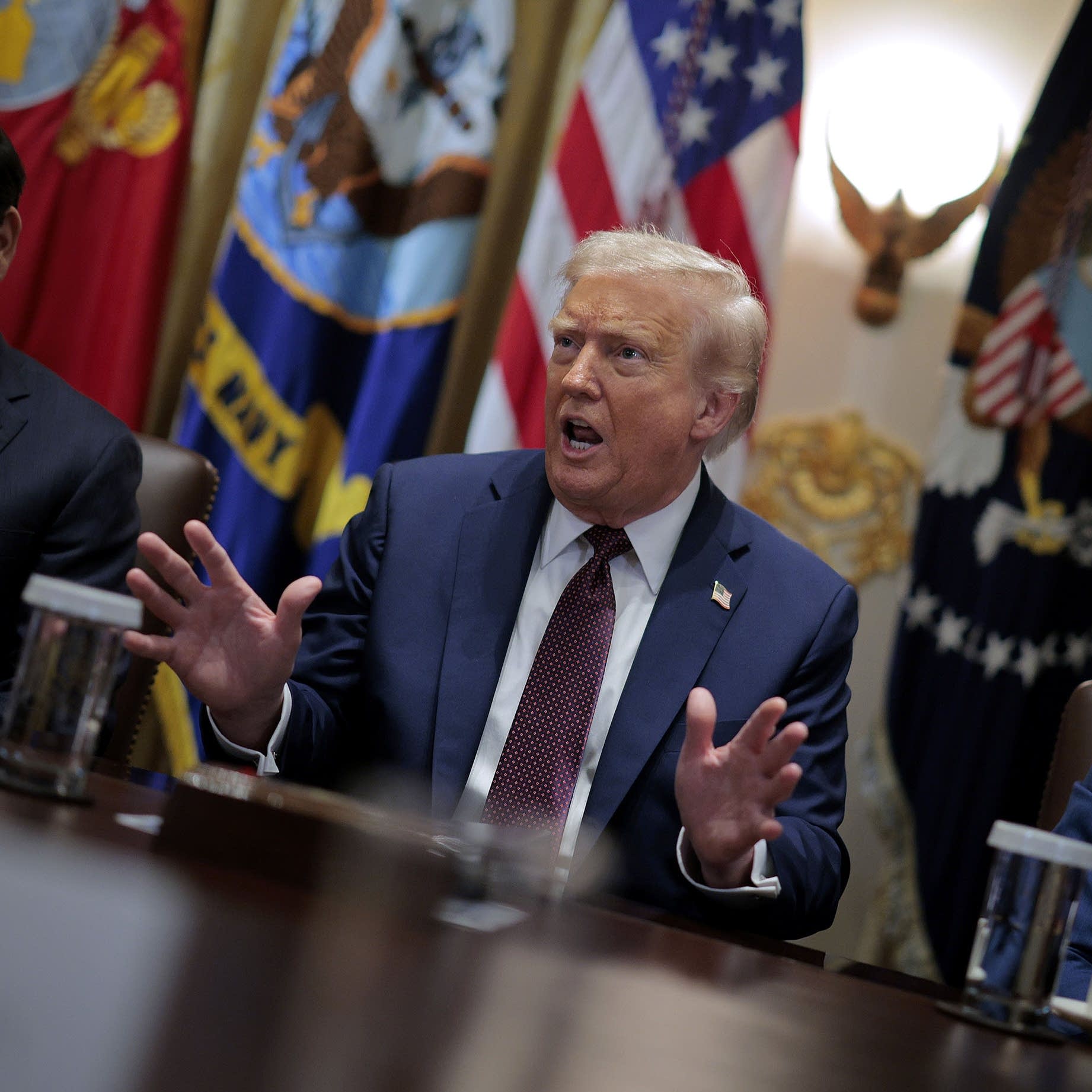
Loading summary
Transcript39 lines
- [00:00]
A
And now a next level moment from ATT Business. Say you've sent out a gigantic shipment of pillows and they need to be there in time for International Sleep day. You've got AT and T5G so you're fully confident, but the vendor isn't responding and International Sleep Day is tomorrow. Luckily, AT&T 5G lets you deal with any issues with ease, so the pillows will get delivered and everyone can sleep soundly, especially you. AT&T 5G requires a compatible plan and device coverage not available everywhere. Learn more@att.com 5G Network.
- [00:30]
B
This podcast is supported by Odoo. Some say Odoo business management software is like fertilizer for businesses because the simple, efficient software promotes growth. Others say Odoo is like a magic beanstalk because it scales with you and is magically affordable. And some describe Odoo's programs for manufacturing, accounting and more as building blocks for creating a custom software suite. So Odoo is fertilizer Magic beanstalk building blocks for business Odoo exactly what businesses need. Sign up@odoo.com, that's odoo.com what's in store.
- [01:03]
C
For Nvidia From Marketplace I'm Sabri Benishore in for David Brancaccio. Nvidia, maker of AI and gaming chips, is not quite meeting Wall Street's lofty expectations. The company announced second quarter results yesterday which were pretty good, but they fell short in one key area marketplaces Nancy Marshall Genser and has that Nvidia computer.
- [01:27]
D
Chips help power AI and the data centers being built by the likes of Google and Meta. Its newest chip, the Blackwell, is selling briskly. But Nvidia's data center revenue came in below analysts expectations, sparking fears of a slowdown in AI spending. Still, the company reported overall revenue for the second quarter of more than $46 billion, up 6% from the last quarter. It's expecting to rake in even more money this quarter. Nvidia designed a special chip for China, but it didn't sell any of them to China in the second quarter and doesn't include any China's sales of the chip in estimates for this quarter. I'm Nancy Marshall Genser for Marketplace.
- [02:08]
C
President Trump has been relentlessly trying to gain control over the Federal Reserve, attacking its independence, most recently with the ongoing attempt to fire Fed Governor Lisa Cook. But what specifically does the president want from from the central bank? Well, he wants lower interest rates, the current federal funds rate. These are the short term rates between banks that spill over into the rest of the economy. The current rate is around four and a half percent. The president would like it down to 1%. So what if that happened? Marketplace's Justin Ho has that.
- [02:45]
E
Let's say the Federal Reserve cuts the federal funds rate to 1% tomorrow. George Perks, macro strategist at Bespoke Investment Group, says the first place he'd see a reaction would be in government bond yields.
- [02:56]
F
So interest rates would drop across the entire benchmark treasury curve, meaning both short.
- [03:02]
E
Term and long term rates. Perk says those influence all kinds of credit throughout the economy.
- [03:07]
F
One example would be auto loans. So for a given dollar amount that you can spend on a car payment every month, you would be able to buy a lot more car because you have a lower interest rate that you have to pay on your borrowing.
- [03:20]
E
Business loans would also get cheaper. Perk says companies would likely borrow more to expand and to hire people.
- [03:26]
F
Taken together, you just see a range of factors that would point to a hotter economy, certainly, but also significantly higher inflation than the already above target inflation we have right now.
- [03:37]
E
That's because more demand for workers would push up wages. More demand from consumers and businesses would push up prices. And if inflation picks up again, there would be some unintended consequences.
- [03:49]
F
We would see, ironically, yields on long term debt increase.
- [03:55]
E
That's Darrell Fairweather, chief economist at Redfin. She says investors would demand higher yields on longer term debt because inflation would otherwise eat away at their returns. And remember, yields on longer term bonds affect the cost of mortgages.
- [04:09]
F
Mortgage rates, they would go up and it would actually make it more expensive for people getting long term debt. And that would probably hurt the housing market.
- [04:20]
E
Even though President Trump has argued that the Federal Reserve is the one hurting the housing market by keeping rates too high. So I asked Fairweather whether a lower federal funds rate would make mortgages more affordable.
- [04:31]
F
No, no, that is not going to accomplish that goal.
- [04:35]
E
One thing a drastic rate cut would do is undermine the credibility of the Federal Reserve.
- [04:40]
D
Then that could lead to an exodus of capital.
- [04:45]
E
Ann Villemill is an economics professor at the University of Iowa. She says that exodus could push interest rates on government bonds higher too, to.
- [04:53]
D
Compensate for the risk of the Fed losing its credibility. And that's what markets do, they price out risks.
- [05:02]
E
That's why even if the President thinks lower rates would be good for the economy, markets would think otherwise.
- [05:07]
F
Justin.
- [05:08]
E
I'm Justin Ho for Marketplace.
- [05:27]
C
After backlash on social media and from President Trump himself, Cracker Barrel said it's scrapping its new logo for Wall street was relieved. The stock rose 8% yesterday. And closed higher than before the company announced the now canceled change. This comes just weeks after American Eagle doubled down on its controversial campaign featuring actress Sydney Sweeney. Trump liked that one. Marketplace's Kristen Schwab looks at marketing in this politically driven moment, Cracker Barrel announced.
- [05:56]
G
It'S bringing back what it calls its Old Timer logo. The guy with the barrel, Kimberly Whitler, a marketing professor at the University of Virginia, says it's not every day a company walks back an expensive rebrand.
- [06:09]
F
The CEO literally admitted that they made a mistake.
- [06:12]
H
That is rare.
- [06:13]
G
It shows the growing influence of consumers, social media, shareholders and now politicians, Whitler says. Cracker Barrel lost track of its core customers while trying to reach new ones.
- [06:25]
F
They're trying to shift the target and rather than expand the target, the logo.
- [06:30]
G
Walk back may not signal a full retreat, but more of a compromise, says Tim Calkins, a marketing professor at Northwestern. He thinks the brand is still likely to follow through on changing its menu and dining room design.
- [06:43]
F
But by announcing this logo pullback, I think they've addressed a lot of the concern and they've certainly indicated that they've listened and they've heard the feedback, cawkins says.
- [06:52]
G
Consumers want to feel seen and if executed well, this moment might actually help fire the brand's comeback.
- [06:59]
F
We are thinking more about Cracker Barrel than I think we've thought about Cracker Barrel in a very, very long time.
- [07:04]
G
We live in an attention economy, says Calkins. And right now, Cracker Barrel has everyone's attention. I'm Kristen Schwab for Marketplace in New York.
- [07:15]
C
I'm Sabri Benishore with the Marketplace Morning.
- [07:18]
G
Report.
- [07:20]
C
From APM American Public Media.
- [07:23]
H
Poetry has the power to connect our inner universe in the outer world. I'm Maggie Smith, poet and host of the Slowdown, a podcast from American Public Media. Each weekday, find time to take a breather from your to do list or doom scrolling for that matter, and take in a moment of reflection with a hand picked poem. Listen to the Slowdown wherever you get podcasts.