Loading summary
Transcript33 lines
- [00:00]
Multicare Representative
Our state has changed a lot in the last 140 years. We know because Multicare has been here guided by a single making our communities healthier. That comes from making courageous decisions, partnering with local communities to grow programs and services, and expanding healthcare access to those who need it most. Together, we're building a healthier future. Learn more@mycare.org.
- [00:33]
Sabri Benishore
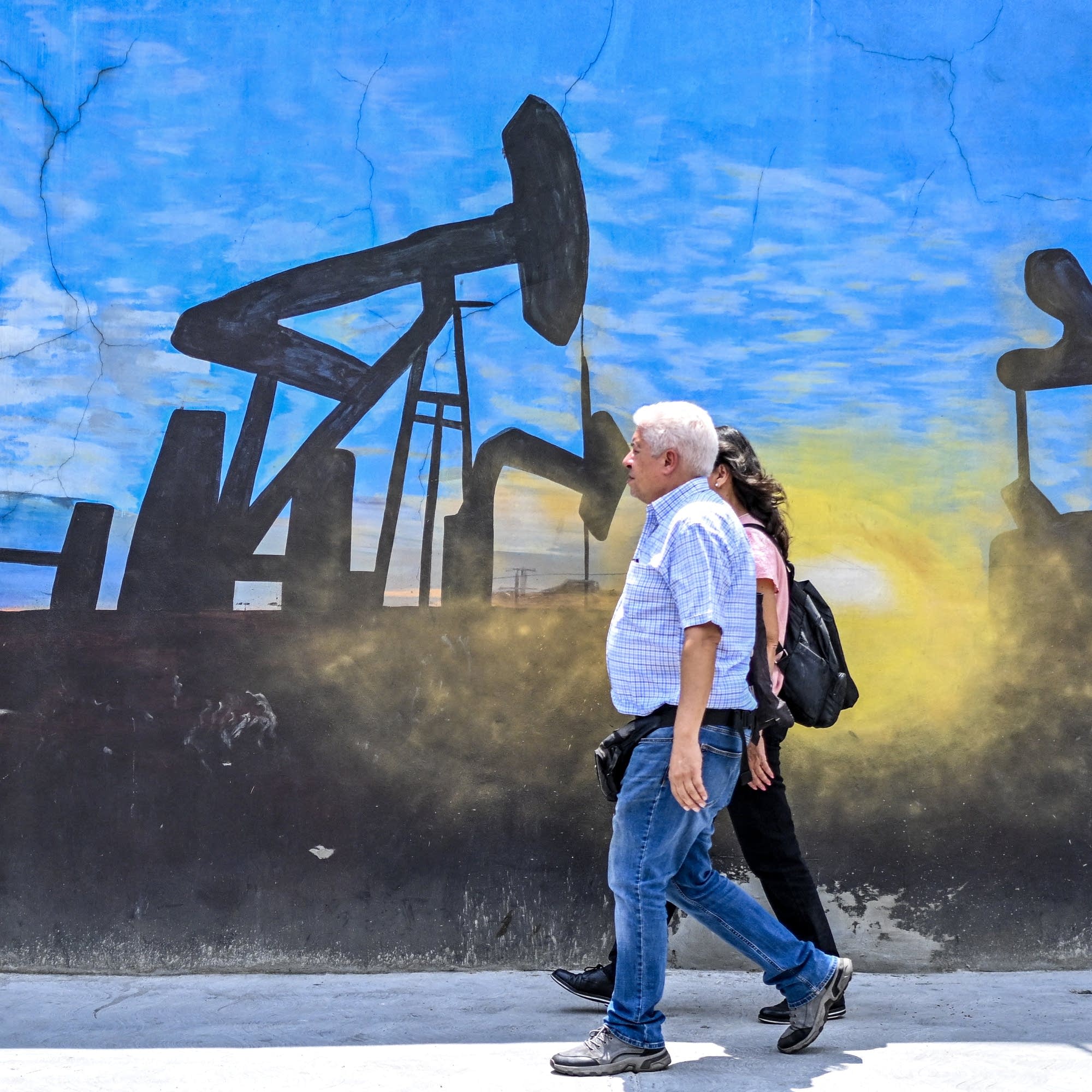
New Russia sanctions have sent ripples through global oil markets From Marketplace, I'm Sabree Benishore in for David Brancaccio. The price of a barrel of Brent crude oil is at about $66 this morning. That is about 6% higher than it was before President Trump announced new sanctions on on a couple of Russian oil companies Wednesday. Marketplace's Matt Levin has more on how the global oil market is responding.
- [00:59]
Matt Levin
The stock market usually doesn't freak out anymore when the Trump administration announces new tariffs, partly because there's a good chance those tariffs get rolled back or softened. ABHI Rajenderan at Rice University's center for Energy Studies says global oil traders have applied that lesson to these sanctions.
- [01:19]
Sabri Benishore
That's partly playing into why we're only.
- [01:21]
Matt Levin
Seeing kind of a couple of dollar.
- [01:22]
Sabri Benishore
Response, even though you know, the potential for disruption on paper could be quite large.
- [01:27]
Matt Levin
The price of oil going up $4 in a matter of days is significant, but Rajendran doesn't expect it to rattle the global economy, a global economy that's already slowing down and doesn't need as much oil.
- [01:41]
Sabri Benishore
You know, the market does have the cushion to whether maybe a modest supply disruption.
- [01:46]
Matt Levin
China and India import a lot of Russian crude, but economist Yuri Gorodnachenko at UC Berkeley says American drivers will likely be spared significantly higher gas prices, which is good news for the Fed's fight against inflation.
- [02:01]
Sabri Benishore
We know, for example, that households have very sensitive inflation expectations. They're very sensitive to the price of gasoline, price of oil.
- [02:10]
Matt Levin
If Americans do see those big black numbers above gas stations going up, research suggests they expect prices of other goods to rise too, which can be a self fulfilling expectation. I'm Matt Levin for Marketplace.
- [02:24]
Sabri Benishore
K Pop Demon Hunters has become Netflix's most popular film of all time. But toy makers did not know that was going to happen and so they did not sign licensing agreements to make merchants ahead of time. Now they are. Netflix has signed a deal with Mattel and Hasbro to turn K Pop Demon Hunters into toys, dolls, action figures, board games, the rest of it. But you will probably have to wait until January to get your hands on them. Mattel stock is up half a percent in pre market trading, Hasbro stock is down 1.2%.
- [03:10]
Amy Scott
Foreign.
- [03:16]
LifeLock Advertiser
It's Cybersecurity Awareness Month and LifeLock is here with tips to help protect your identity. Use strong passwords, set up multi factor authentication and report phishing scams. And for comprehensive identity protection, Lifelock is your best choice. LifeLock alerts you to suspicious users of your personal information and also fixes identity theft. Guaranteed or your money back. Stay smart, stay safe and stay protected. With a 30 day free trial at lifelock.com specialoffer terms apply.
- [03:47]
Sabri Benishore
How humanity feeds itself has a huge impact on greenhouse gas emissions. Two out of every five acres of habitable land on the planet are used for agriculture. So some farmers and scientists are looking for ways to make more food on less land with less climate effects. How exactly to do that is something Marketplace's climate podcast How We Survive is taking a look at this season. Yesterday, host Amy Scott reported on regenerative agriculture, where cattle have lots of space. Today, in part two, Amy looks at doing more with less.
- [04:22]
Amy Scott
About an hour's drive northeast of Denver, I roll up to Magnum Feed Yard in Wiggins, Colorado, where I'm greeted by an I heart beef sign, followed by this guy.
- [04:34]
Steve Gable
Good morning.
- [04:35]
Amy Scott
Good morning. You must be Steve. Steve Gable runs Magnum Feed Yard. He's owned the place since 1993, and his priority here is efficiency, producing as much beef per input as possible.
- [04:50]
Steve Gable
There's 35,000 cattle here today that have to eat two times every day.
- [04:58]
Amy Scott
So you're. You're basically fattening them up.
- [05:02]
Steve Gable
Exactly. We challenge the livestock from a performance perspective. If they're going to gain two pounds a day, when genetically they have the ability to gain £4 a day, you can understand what that does to economics. So our goal is to maximize performance.
- [05:22]
Amy Scott
To see how Gable's operation maximizes performance, I climb into his truck for a tour. Gable likes to describe the feed yard as a hotel. He says the pens are the cattle's bedrooms and the mill facility where they produce the cattle's food.
- [05:38]
Steve Gable
This would be the kitchen area, so extremely important to us. We're feeding about $90,000 worth of food eat every day.
- [05:50]
Amy Scott
Today they're processing yellow corn to make corn flakes, and they'll mix that with alfalfa hay and a protein supplement, plus vitamins and probiotics that get added in microdoses. Gable drives us to the pens to see the cattle. I'm looking at hundreds, if not thousands, of black steers munching at the concrete feed bunk or standing out in the dirt.
- [06:15]
Steve Gable
Just listen.
- [06:22]
Amy Scott
Pretty quiet.
- [06:23]
Steve Gable
There's 35,000 cattle here. You hear anybody that sounds like they're being abused?
- [06:32]
Amy Scott
The cattle have about 250 square feet of pen space per animal, compared to 1 to 10 acres at Stemple Creek, the regenerative ranch we profiled yesterday. Climate journalist Michael Grunewald says there are other downsides to factory farms, from animal welfare to air and water pollution.
- [06:54]
Sabri Benishore
But the fact is, if you care about the climate, you need to care.
- [06:58]
LifeLock Advertiser
About making beef more efficiently, because that's.
- [07:01]
Amy Scott
Where the emissions are even better, he says eating less beef, which he says pound for pound, generates five 50 times more greenhouse gas emissions than coal. I'm Amy Scott for Marketplace.
- [07:15]
Sabri Benishore
To hear more about the debate over regenerative versus conventional beef and other adventures in eating for the climate, check out the new season of our Marketplace podcast, how We Survive. That's available now, whenever, wherever you get your podcasts. In New York, I'm Sabri Benishore with the Marketplace Morning Report from APM American Public Media.
- [07:43]
Million Bazillion Host
Sometimes kids ask questions that reveal just how much adults still need to learn, like can you explain what causes an economic bubble? And why are things so expensive at the airport? Or how much national debt might be too much? Fear not. Million Bazillion is back with a new season to help you and your kids become pros at understanding how money shapes your the answers to all those questions and more. Listen to the latest season of Million Bazillion on your favorite podcast. Apparently.