Loading summary
Transcript25 lines
- [00:01]
Comcast Business Announcer
The world of business is constantly evolving and Comcast business keeps you in step with secure AI backed networking in more than 100 countries powering 90% of the Fortune 500 and millions of small businesses. And behind it all, thousands of experts answering your call at 2:00am like it's 2:00pm One partner. That's it. Powering how business gets done for companies around the globe. When you add it all up, no one does business like Comcast business.
- [00:30]
Renewal by Andersen Announcer
Your home holds the story of your life. Renewal by Andersen Windows are built to weather every season with you. They frame the little moments and the big ones, from first steps to graduation to new beginnings. While life keeps moving, our windows stand strong through every chapter. Let Renewal by Andersen be part of your story. Windows built to last. Visit renewal by AndersonHolm.com to learn more.
- [01:02]
Sabri Benishore
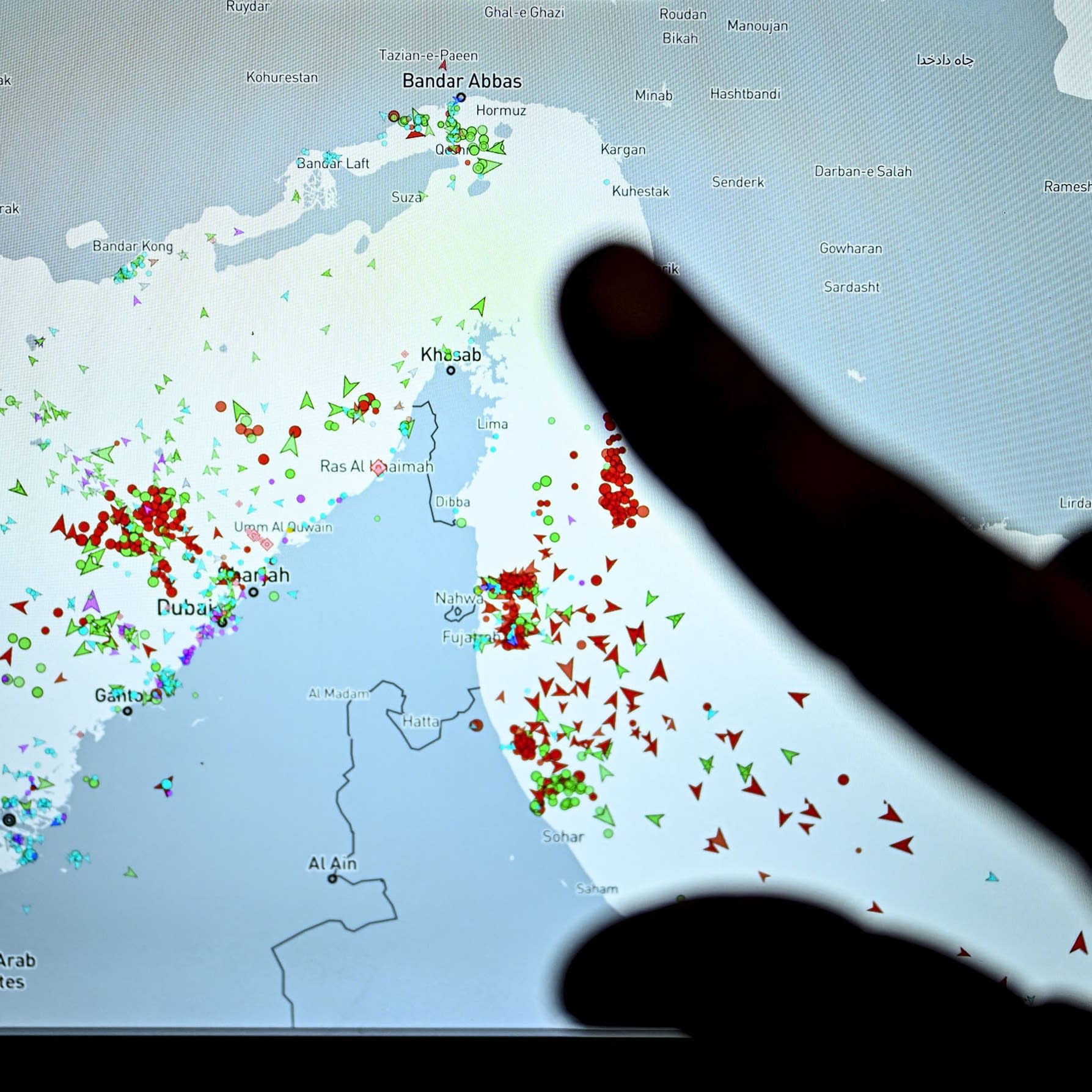
It is not just Oil Supply chains from aluminum to helium are getting choked off by the war from marketplace. I'm Sabri Benishore in for David Brancaccio. Three cargo ships were hit in the Strait of Hormuz today. Reuters says they were hit by unknown projectiles. There are also reports that Iran laid a small number of mines in the strait days ago, prompting the US to bomb several Iranian mine laying ships. All of this underscores the fact that this critical passage is basically shut down and not just for oil and gas. Chris Rogers is head of supply Chain research at S and P Global and is here to talk about it.
- [01:40]
Nancy Marshall Genser
Good morning.
- [01:40]
Chris Rogers
Good morning.
- [01:41]
Sabri Benishore
So you know, we know about oil not getting through, we know about natural gas not getting through the Strait of Hormuz. What else besides energy is getting blocked off or disrupted right now?
- [01:50]
Chris Rogers
A very broad range of materials. So we're watching particularly aluminium, which requires electricity to be produced. We've been particularly watching some of the noble gases, so that includes principally helium. They produce an export around one third of the world's helium. And that's really important for the electronics sector. We're also watching plastics and the materials used to make them. So this is a full range, a full menagerie of different petrochemicals, for example, ethylene glycol, which has a number of different uses, including in the automotive industry.
- [02:29]
Sabri Benishore
For natural gas, for example, a fifth of global supply has been taken off the market. How bad are these disruptions for all of these other products that you mention?
- [02:38]
Chris Rogers
Whilst it's a fifth of natural gas, for a lot of these materials it's anywhere between a third and 40%. So taking that much out has really two effects. Firstly, there's the price effect, of course Shortage of supply. But second of all, of course, that shortage of supply means that for certain buyers and for a lot of those materials, they're going to Asia for Asian manufacturers. So in the example of helium, for example, the US And Europe produce their own. That could cause significant disruptions. And I think an important point is that however long the conflict lasts, it will take at least that long to recover.
- [03:16]
Sabri Benishore
A few days ago, Korean lawmakers were warning that the supply of memory chips was threatened by the war. What does war with Iran have to do with the global memory chip supply chain?
- [03:28]
Chris Rogers
Yes, I think the first point to make is that the memory chip sector was already in a situation of shortage. And that's largely because a lot of the production of the chips that are used in regular devices like smartphones and computers and cars and industrial machinery all requires memory. So. So already, the big producers of memory in South Korea, including Samsung Electronics and SK Hynix, were already running behind demand. At the end of the day, South Korea is the biggest exporter in the world of memory chips. Depending on what type you're talking about, it's anywhere between 40% and 50% of global production. So that's another area that's going to be shut in.
- [04:11]
Sabri Benishore
It sounds like this is touching. Products that affect everybody. But are there countries or regions in particular that are suffering the brunt of these supply chain disruptions more than others?
- [04:25]
Chris Rogers
Yeah, I think many of the Asian countries, Japan, South Korea, the ASEAN region, are going to feel more disruptions to their supply chains. And it's not just on a inbound basis. So what they're buying from the region, it's also what they're selling to the region as well. The Middle east area, specifically the Gulf Cooperation Council, accounts for around 3% of consumer food. It's particularly important for Japanese manufacturers. The region accounts for around 10% of their automotive exports. And then as a secondary area, we expect to see European consumers and European exports have challenges as well.
- [05:05]
Sabri Benishore
Chris Rogers is head of supply chain research at S and P Global. Thank you so much.
- [05:09]
Chris Rogers
Thanks for having me.
- [05:27]
Sabri Benishore
Some TSA screeners haven't been showing up to airports around the country. They aren't getting paid because of the partial government shutdown that has caused huge lines and long waits. At airports. In Houston and New Orleans earlier this week, some passengers are arriving at airports three or more hours early. And things could get worse. As Marketplace's Nancy Marshall Genser reports,
- [05:54]
Nancy Marshall Genser
TSA agents like these workers screening my luggage before a recent flight from the Albany, New York airport are considered essential employees. So they have to work without pay during government shutdowns. The screeners will miss their first full paycheck at the end of this week. Johnny Jones is secretary Treasurer of AFGE Council 100, the union representing TSA employees. He works at the Dallas Fort Worth International Airport. Jones says if some agents end up taking other jobs, most likely it's due
- [06:24]
Sabri Benishore
to lack of funds. You know, childcare doesn't take IOUs, groceries, grocery stores don't take IOU.
- [06:32]
Nancy Marshall Genser
Jones says the number of screeners quitting their jobs jumped during the last government shutdown. CBS is reporting that more than 300 TSA workers have left since this shutdown started last month. If more agents quit, the lines at airports could get even longer and passengers will need to reevaluate, says Henry Hartevelt, an airline industry analyst at Atmosphere Research Group.
- [06:54]
Chris Rogers
If your flight is taking an hour and you're being told get to the airport three hours and in advance, you're looking at that and saying the numbers just don't add up and that it
- [07:05]
Nancy Marshall Genser
would just be quicker to drive. I'm Nancy Marshall Genser for Marketplace, and
- [07:10]
Sabri Benishore
in New York, I'm Sabri Benishore with the Marketplace Morning Report. From APM American Public Media.
- [07:23]
Rima Reis
Hey everyone, it's Rima Reis, and this week on my podcast, this Is Uncomfortable. I'm talking with someone a lot of us grew up watching still Steve Burns from Blue's Clues. Steve opens up about stumbling into the job in his early 20s and suddenly becoming a household name. But behind the scenes, things were more complicated, especially when it came to money and figuring out who he was. Outside the show, people knew Steve the
- [07:48]
Chris Rogers
Green Stripey Steve, and I felt like Green Stripey Steve sort of ate Steve Burns, and there was no Steve Burns anymore.
- [07:58]
Rima Reis
Be sure to catch my conversation with Steve on this Is Uncomfortable. Wherever you get your podcasts.