Loading summary
Transcript30 lines
- [00:01]
David Brancaccio
Hey there and thanks for listening. We want to know more about our audience. Stick around at the end of this episode to hear about how you can help, provide feedback and have a chance to walk away with a $75 gift card.
- [00:16]
Richard Karn
Hi, I'm Richard Karn and you may have seen me on TV talking about the world's number one expandable garden hose. Well, the brand new Pocket hose Copperhead with Pocket Pivot is here and it's a total game changer. Old fashioned hoses get kinks and creases at the spigot, but The Copperhead's pocket PIV swivels 360 degrees for full water flow and freedom to water with ease all around your home. When you're all done, this rust proof anti burst hose shrinks back down to pocket size for effortless handling and tidy storage. Plus your super light and ultra durable pocket hose Copperhead is backed with a 10 year warranty. What could be better than that? I'll tell you what an exciting radio exclusive offer just for you for a limited time. You can get a free pocket pivot and their 10 pattern sprayer with the purchase of any size Copperhead hose. Just text water to 64,000. That's water to 64,000 for your two free gifts with purchase W A T E R to 64,000.
- [01:10]
David Brancaccio
By texting 64,000 you agree to receive recurring automated marketing messages from Pocket host. Message and data rates may apply.
- [01:14]
Richard Karn
No purchase required. Terms apply.
- [01:15]
David Brancaccio
Available@pockethose.com Terms we have stocks down and oil prices spiking given Israel versus Iran. I'm David Brancaccio in Los Angeles. After Israel launched attacks on Iran's nuclear capabilities, open warfare in the region is forcing money to shift on financial markets. Right now, Germany's DAX stock index is down 1.5%. Here, Dow and S and P futures are both down 1.1%. Nasdaq futures are down 1.4%. The Vix index of stock market volatility for the US is up 16% overnight. Iran is the seventh largest producer of crude oil in the world, equivalent to Iraq, and just ahead of the UAE and Brazil. Here's Stuart Clarkson with our partners at the BBC.
- [02:01]
Stuart Clarkson
Global oil prices surged by more than 10% shortly after news broke of the attacks, reaching levels not seen since January. A barrel of West Texas Intermediate, the key benchmark for US oil, is now trading at $75, 9% higher. The European benchmark Brent crude is also at $75, around 9% up. Traders are concerned that a conflict between Iran and Israel could disrupt supplies coming from the energy rich region. The Middle east accounts for about 30% of the world's oil supply and a fifth of it travels through the Strait of Hormuz, which borders Iran. The cost of crude oil affects everything from how much it costs to fill up your car to the price of food at the supermarket in the UK. I'm the BBC's Stuart Clarkson for Marketplace.
- [02:42]
David Brancaccio
Right now, oil traded in New York is just above $74 a barrel, again the highest since late January. President Trump is acknowledging that the toll immigration rates are having on some industries that rely on immigrant workers, specifically food supply and hotels. Yet it's not clear if he will alter the workplace sweeps and deportations. Marketplace's Nancy Mar Genzer reports farmers and.
- [03:06]
Nancy Marshall Genzer
Business owners are complaining about ICE raids targeting their workers. Trump acknowledged that yesterday in his social media post he singled out the hotel and leisure business, which of course would include his hotels and golf courses. In the post, Trump said farmers and hotel and leisure businesses have stated that, quote, our very aggressive policy on immigration is taking very good long time workers away from them, with those jobs being almost impossible to replace. The American Farm Bureau Federation issued a statement yesterday saying it appreciated Trump's comments, adding that without those workers there is a risk of supply chain disruptions similar to those experienced during the pandemic. Trump said changes are coming, but wasn't specific. And later yesterday, Trump resumed more aggressive posts about immigration, saying people here illegally should either self deport or quote, ice will find you and remove you. I'm Nancy Marshall Genser for Marketplace.
- [04:16]
Greenlight
This Marketplace podcast is supported by Greenlight. As a listener of Marketplace, you're likely already building smart money habits for you and your family, trying to instill important lessons on saving and spending and the economy overall and the younger folks in your life. But what about the older generation? Your parents, grandparents, aunts and uncles? As they age, they may need more support in managing their finances too. With Greenlight's Family Shield, you can take the next steps by protecting your senior loved ones from scams and financial fraud. Family Shield offers account monitoring, real time alerts and coverage including up to $100,000 for deceptive transfer fraud and $1 million for identity theft so you can keep your whole family financially safe and sound. And with added safety tools like SOS and crash alerts, along with location sharing, you can keep an eye on both your family's wallet and their well being. Take care of your whole family, from kids to grandparents, with Family Shield from Greenlight. Sign up today@greenlight.com marketplace we continue to.
- [05:18]
David Brancaccio
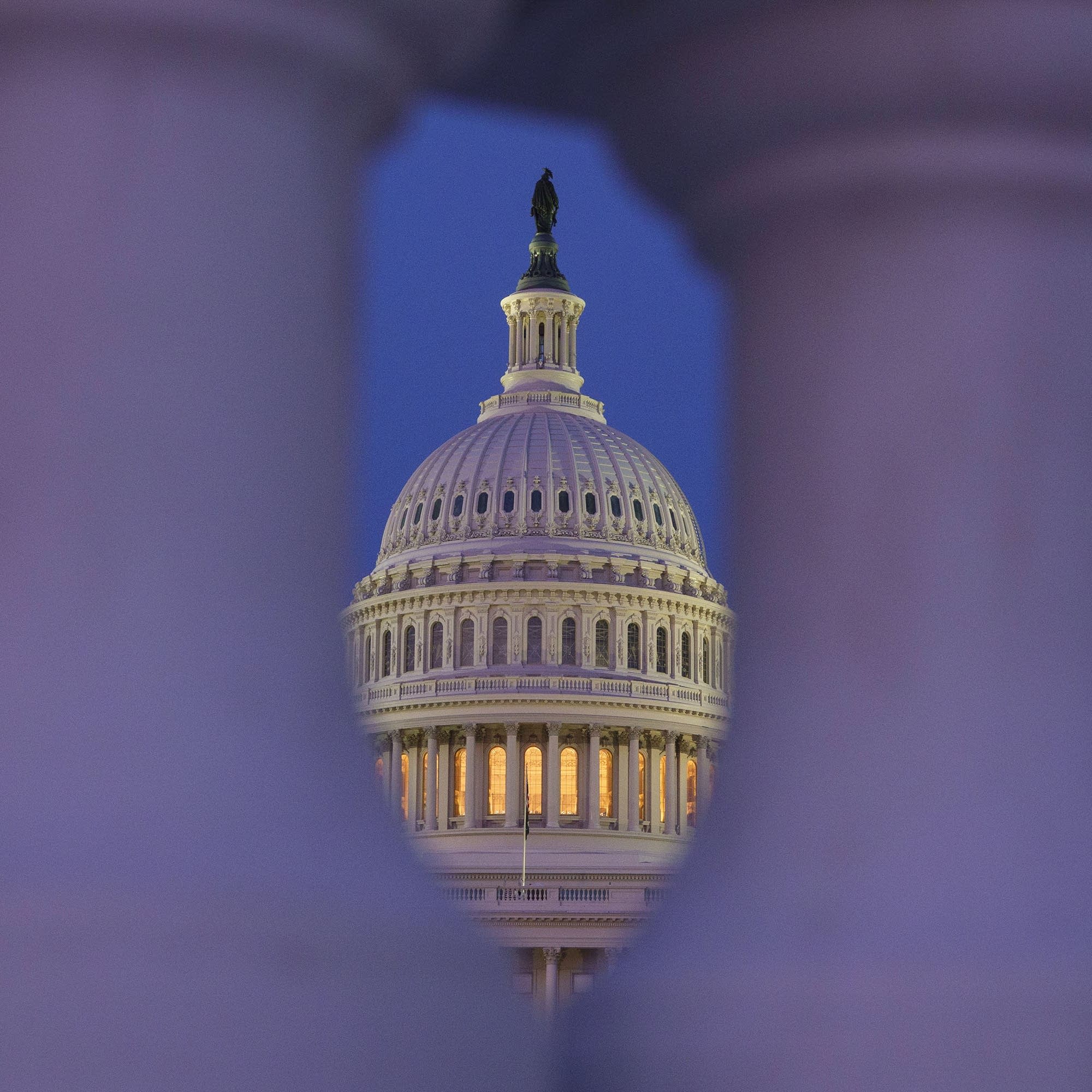
Comb through the evolving big package of tax cuts and spending being worked out by Republicans in the Senate to try to align with what came out of the House of Representatives, which been exploring effects on households. But today, businesses. Let's bring on Marketplace's senior Washington correspondent, Kimberly Adams. Morning, Kimberly.
- [05:35]
Kimberly Adams
Morning, David.
- [05:35]
David Brancaccio
Now, remember, Congress made the tax cuts for corporations, as opposed to individuals, for corporations, permanent in that 2017 law. So what's in this reconciliation package for businesses?
- [05:50]
Kimberly Adams
Quite a bit, especially for small and medium sized businesses. I spoke with Jeff Brabant, who's vice president for federal government relations at the National Federation of Independent Business, and he told me he really feels like businesses came out on top in this bill.
- [06:05]
Adam Grant
For example, right now, the cap on full and immediate expensing for equipment for.
- [06:11]
Jeff Brabant
Small businesses is one and a quarter million dollars.
- [06:14]
Adam Grant
Congress wants to double that to two and a half million dollars, which we think is a really good thing to.
- [06:18]
Jeff Brabant
Encourage small business owners to invest in new equipment, buy a new tractor if you're a farmer.
- [06:24]
Kimberly Adams
But the big win, says Brabant, is making what's called the pass through deduction permanent and expand.
- [06:31]
David Brancaccio
You're the best, Kimberly, because you're going to try to explain the pass through deduction, how does it work and what does the GOP want to change?
- [06:40]
Kimberly Adams
So if you're a business that's a sole proprietorship and LLCs or some partnerships in S Corps, you pay your business's taxes at personal income tax rates, which are much higher than what corporations pay. So the 2017 law gave an extra deduction for those businesses. But a lot of people have complained that it doesn't really help small businesses that much. Richard Trent is executive director of the small business advocacy group Main Street Alliance.
- [07:09]
Jeff Brabant
So the initial numbers on this are that the top 1% of small businesses are reaping 50% of the benefit coming from that deduction. So this is a small business deduction that cost about $800 billion, the vast majority of that benefit going to the largest small businesses in the country.
- [07:27]
Kimberly Adams
Right now that deduction is 20%. But this bill would make it permanent and boost it to 23%.
- [07:33]
David Brancaccio
All right. Now, Republicans want to make major spending cuts to help partially pay for the tax cuts. But how might some of those cuts affect businesses?
- [07:43]
Kimberly Adams
Lots of different ways. So for example, this bill threatens many of the Inflation Reduction act or green energy tax credits. And Michael Negron with the group Small Business Majority and a senior fellow at the center for American Progress gives this example of possible impact of that there.
- [08:01]
Adam Grant
Were credits for solar to support solar installation. There were small businesses that made a living out of essentially marketing those tax credits and going to homeowners or going to businesses. Same goes for energy efficient home improvements. And this bill would just about immediately terminate them.
- [08:18]
Kimberly Adams
Of course, this is just the House version of the bill we're talking about. The Senate is working through it and hearing from lobbyists and constituents. So things could change.
- [08:27]
David Brancaccio
All right. Marketplace's senior Washington correspondent, Kimberly Adams. Never afraid of getting into the nitty gritty. Kimberly, thanks.
- [08:34]
Kimberly Adams
You're welcome, David.
- [08:36]
David Brancaccio
A fresh analysis by the Congressional Budget Office finds the mega bill would take $1,600 a year away from the poorest households while increasing the income of the wealthiest households by an average $12,000 a year. Middle income households would see between 500 and $1,000 extra, while the lowest income households make too little to pay. Income tax cuts to SNAP food stamps and new, tougher rules for Medicaid would be drivers of the decrease. Treasury Secretary Scott Besant and other Republicans downplay the non partisan CBO's work, suggesting not passing the bill would be catastrophic. In Los Angeles, I'm David Brancaccio. This is the Marketplace Morning Report from APM American Public Media.
- [09:20]
Adam Grant
Hi, I'm Adam Grant, host of the podcast Rethinking, a show where I talk to some of today's greatest thinkers about the unconventional ways they see the world. On Rethinking, you'll get surprising insights from scientists, leaders, artists and more. People like Reese Witherspoon, Malcolm Gladwell, and Yo Yo Ma. Here are lessons to help you find success at work, build better relationships and more. Find Rethinking wherever you get your podcasts.