Loading summary
Transcript35 lines
- [00:00]
Colin Friesen
This Marketplace podcast is supported by the Freedom From Religion Foundation. America is an aspirational idea, one we're still working to fulfill, shaped by enlightenment ideals, reason, liberty and freedom of conscience, the belief that power comes from we the people, not a divinely appointed ruler. And while these ideals have not yet been fully perfected, they created something powerful, a framework that has expanded rights and freedoms over time. Now those freedoms and your rights are under attack. We're seeing growing efforts to blur the line between church and state, public funds to promote religion, Ten Commandments and cloth classrooms, and pushing a version of America that leaves out too many people. As our Nation approaches its 250th anniversary, the Freedom From Religion foundation is working to protect the Constitution, defend secular government, and ensure that freedom continues to expand for everyone. Because America isn't just where we started, it's what we choose next. Go to FFRF US America or text America to 51151 1America to 511511 text fees may apply.
- [01:00]
Bridget
The Marketplace Morning Report podcast is supported by three Day Blinds. Shop for blinds from the comfort of your home with a local professional design consultant who brings physical samples, measures your space, and handles expert installation. See what works in your space before you buy. Book a free no obligation consultation and save with buy one. Get one 50% off at three day blinds.com morning. That's the number three D A Y blinds.com morning.
- [01:32]
Nancy Marshall Genser
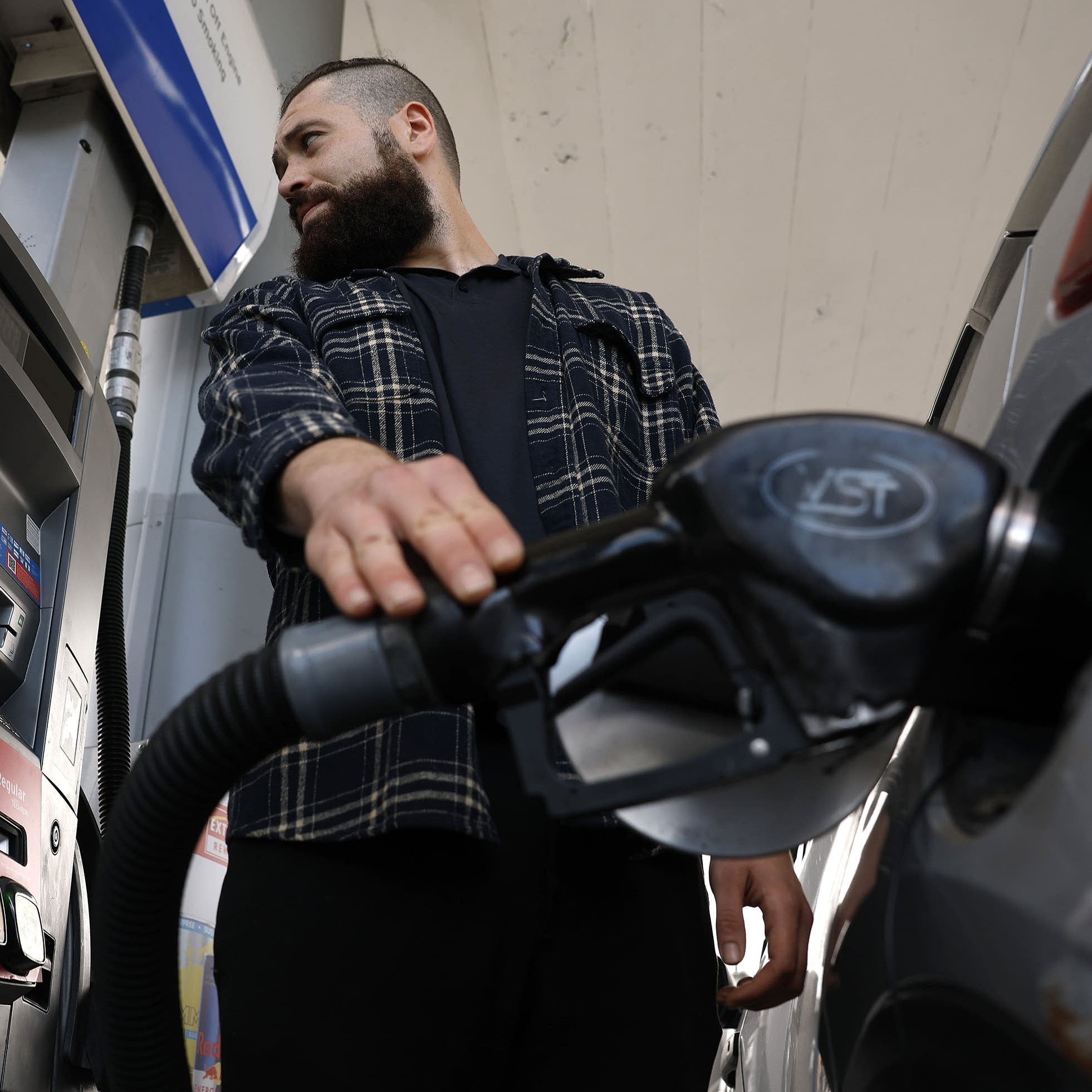
What the war in the Middle east is costing you From Marketplace, I'm Nancy Marshall Genser in Washington. The war in Iran has cost Americans more than $40 billion in extra fuel costs. That's according to an analysis from Brown University's Watson School of International and Public Affairs. The costs go beyond just what Americans pay at the pump. Marketplace's Henry Epp is here with more. Good morning, Henry.
- [01:57]
Henry Epp
Hey, Nancy. So Brown's research finds that so far the war has cost each US household about $318, because, as we've seen when we go to the gas station, gas and diesel prices has risen over 50% since the war started in late February. The average gallon of gas is now 451 a gallon. It was 298 when the war started. And that $40 billion figure that Brown is counting is just the direct cost of fuel, but also gets passed along to us in other ways. Diesel, especially, is essential for transporting goods. So higher diesel prices are also pushing up prices of food and other consumer products.
- [02:37]
Nancy Marshall Genser
So, Henry, could these prices come down if the war in the Middle east is resolved and the Strait of Hormuz is reopened potentially.
- [02:45]
Henry Epp
But even if the strait reopens soon, fuel prices likely won't immediately drop. The International Energy Agency said last week that if the conflict ended in early June, just a couple weeks away, the global, global oil market would remain undersupplied for months. The agency said it could take until October for oil supplies to catch up with demand, and that could keep fuel prices high. And countries have been drawing down their stockpiles of oil to get through this period and those reserves are getting thin. And meanwhile, there hasn't been much public progress in negotiations in recent weeks. And President Trump said to reporters last week, quote, I don't think about Americans financial situation when seeking a deal with Iran. And he added that his only concern is keeping Iran from getting a nuclear weapon. But the financial costs from this war for Americans are clearly adding up.
- [03:33]
Nancy Marshall Genser
Yes, they are. Well, thank you very much, Henry.
- [03:37]
Henry Epp
You're welcome.
- [03:54]
Ryan
Dell PCs with Intel inside are built for the moments that matter. For the moments you plan and the ones you don't. Built for the busy days that turn into all night study sessions. The moment you're working from a cafe and realize every outlet's taken the times you're deep in your flow and the absolute last thing you need is an auto update throwing off your momentum. That's why Dell builds tech that adapts to the way you actually work, built with long lasting battery so you're not scrambling for the closest outlet. And built in intelligence that makes updates around your schedule, not in the middle of it. They don't build tech for tech's sake, they build it for you. Find technology built for the way you work@dell.com DellPCS built for you.
- [04:47]
Three Day Blinds Announcer
The Marketplace Morning Report podcast is supported by three Day Blinds. We shop for everything at home now. Why can't we shop for blinds at home too? We can now with three Day Blinds. Instead of wandering around a store, three Day Blinds sends a professional design consultant straight to you. They bring all the samples, help you see what actually works in your space, take expert measurements, and even handle the installation. We've all bought something that looked great in store and terrible once we got it home. With three Day Blinds you see everything in your actual light with your actual furniture before you commit. Plus, whether you're at home or away, you can control your window treatments with the three Day Blinds app. So for a free no charge and no obligation consultation, head to threedayblinds.com morning for our buy one get one 50% off deal. That's the number three D A yblinds.com morning.
- [05:41]
Nancy Marshall Genser
It's been a rough few years in Hollywood, Covid. Then two big strikes saw networks and studios cut way back on production. But as Colin Friesen tells us, some of these jobs are finally coming back, thanks to an explosion of micro dramas made just for your phone.
- [05:58]
Colin Friesen
On the patio of a hip Hollywood coffee shop, directors Corey Gibbons and Kristen Brancaccio are comparing resumes.
- [06:04]
My first one was Billionaires Borrowed.
- [06:07]
Henry Epp
We did that one together.
- [06:07]
Colin Friesen
The Reluctant Billionaire Mafia Daddy. Surprise. Sextuplets.
- [06:12]
These aren't traditional films or TV shows, but a thing called verticals. First popularized in Asia, the quirky titles are often iffy translations from the original Mandarin episodes are three minutes max. Unapologetically soapy cliffhangers designed to be watched on your phone and some say the only thing saving the entertainment business.
- [06:32]
The overall tenor of the industry just
- [06:34]
Henry Epp
was so bleak and everything kind of just went away.
- [06:38]
Colin Friesen
And then once verticals came along, it was like, oh, I'm busy and so is everyone I know.
- [06:43]
Austin Herring is also riding the vertical wave. The CEO of Snowy Productions produces five series a month in the vertical format, or roughly the equivalent of five feature films. There were like tumbleweeds rolling through Hollywood. If it hadn't been for verticals, the whole industry would have cleared out in a much more dramatic way. To keep costs super low, crews are small, they shoot with multiple cameras or on iPhones, and they move fast.
- [07:10]
Bridget
26 beta, take 1.
- [07:11]
Colin Friesen
Mark. Action.
- [07:13]
In this large house in LA's Koreatown neighborhood, Director Aiko Lazar is trying to get her final shots before lunch. How many pages are you going to do today?
- [07:22]
13. And then yesterday was 18 and a half, I believe.
- [07:25]
Yeah, so four times the speed of a normal TV show. Producer Peter Sullivan is with Vert TV. Somebody referred to it as cognitive dopamine,
- [07:36]
Ryan
so that you're constantly having to engage
- [07:39]
Colin Friesen
the viewer and getting them to want to view more. Most verticals give away the first few episodes. Then once you're hooked, finishing a series can cost as much as $50. It adds up. Current estimates put the value of the microdrama market in North America at more than a billion dollars. The genre even has its first breakout star in Casey Esser, who some call the vertical Brad Pitt.
- [08:03]
It definitely doesn't offend me. I mean, I don't think I would reject that association.
- [08:07]
Esser had actually just been dropped by his agent when he auditioned for Faded to My Forbidden Alpha, a werewolf love story. Now, with 50 plus series under his belt, he makes around $2,000 a day and plans to start producing with girlfriend slash actress Vanessa Von Schwartz.
- [08:23]
No one predicted the introduction of these, but now the goal is to always have a foothold in vert in Hollywood forever, don't we? We can make anything happen, true, but
- [08:33]
so can a lot of people. Studios like Disney and actors like Kevin Hart are planning their own phone sized productions, which for fans of supernatural billionaires dating the twin sister of the mother of their secret love child will be at best a mixed blessing in Hollywood. I'm Colin Friesen for Marketplace.
- [08:52]
Nancy Marshall Genser
Our free daily Wrap newsletter brings all the day's news and numbers straight to your inbox every weekday evening. It'll take you less than five min to catch up. Read the latest issue and sign up for the Marketplace daily wrap@Marketplace.org subscribe In Washington, I'm Nancy Marshall Genser with the Marketplace Morning Report. From apm, American Public Media.
- [09:23]
Ryan
There's so much happening in the world, and if you have particularly, shall we say, inquisitive kids, it can be hard to answer their questions. Hi, I'm Ryan.
- [09:33]
Bridget
And I'm Bridget, and we host Million Bazillion, a podcast from Marketplace about money for kids and their families. We help your little ones think big about important but tricky topics like taxes, gas prices, and even what a cashless society might be like.
- [09:49]
Ryan
There's a bunch of new episodes out now, so go listen to Million Bazillion on your favorite podcast app.