← Marketplace Morning Report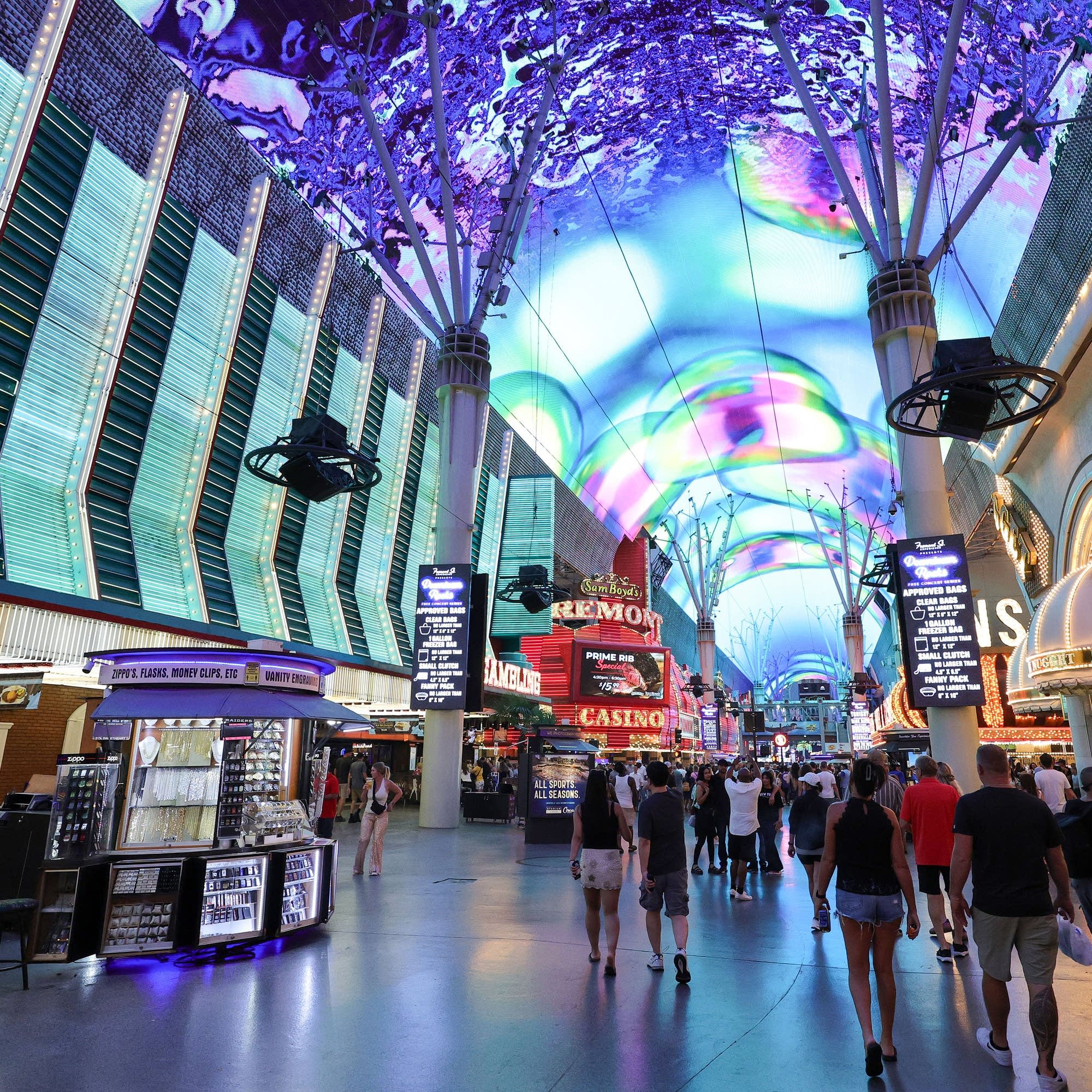
Loading summary
Transcript35 lines
- [00:01]
Casual Conversationalist
Hey, hate to do this. Could we reschedule our morning hike? I was just about to ask the same next week. Yes, it's Dunkin Original blend time. Staying at home with Dunkin'. Don't mind if I do.
- [00:13]
David Brancaccio
The home with Dunkin's is where you wanna be.
- [00:16]
Clorox Advertiser
Clorox Toilet Wand. It's all in one. Clorox Toilet Wand. It's all in one.
- [00:23]
Casual Conversationalist
Hey, what does all in one mean?
- [00:26]
Clorox Advertiser
The Caddy, the wand, the Preloaded Pad. There's a cleaner in there.
- [00:33]
Casual Conversationalist
So Clorox Toilet Wand is all I need to clean a toilet.
- [00:37]
Clorox Advertiser
You don't need a bottle of solution to get into the solar revolution. Clorox Clean feels good.
- [00:45]
Casual Conversationalist
Use as directed.
- [00:48]
David Brancaccio
What's a US economy to do if.
- [00:50]
Foreign tourists feel unloved?
- [00:53]
I'm David Brancaccio. The travel and tourism industry contributes $2.9 trillion to states the United US economy more even than the size of the automotive industry. But can travel and tourism thrive at a time the US Is working to overhaul border and trade policy? I'm just back from what had been a red hot spot for tourism in America, Las Vegas. And found an economy that's being dealt some tough hands.
- [01:18]
Dinner time on a weeknight. There are cars at the lights at the corner of all corners, Las Vegas Boulevard and Flamingo Road. But traffic's a breeze next month. The big Formula one event should bring a surge of racing fans. And since it's Vegas, you'll always find some hubbub. Here's Ashley from Toledo.
- [01:37]
Ashley from Toledo
I'm a big TikTok person, so everything says it's going to be dead here. It's a dying city and we're like, it's not that dead.
- [01:45]
David Brancaccio
So not deadsville. But using the August figures, the number of visitors is down 6.7% from a year earlier. And under the video canopy covering Fremont street downtown, foot traff is also sparse. Leah and class are part of a Dutch and Belgian tour group out sipping refreshment. They came but some people over group.
- [02:08]
Deanna Vias
They skipped the trip. Cause the situation here in the U.S.
- [02:13]
David Brancaccio
You know, the situation hardened. Borders and a global trade war, higher fees to come into the US and other restrictions for people without US passports. For instance, the the early fall has typically been prime time for people from Mexico and points south to come. But this time many Latin themed events got canceled. As for that part of North America, President Trump talks of adding to the United States.
- [02:37]
Jeremy Aguero
Canada's down, probably the most significant of anyone. By some measures down 30% over where they were a year or two ago. But Canadians make up about three to three and a half percent of all the visitors that come to Las Vegas. So you know, at the end of the day it's an impact.
- [02:52]
David Brancaccio
Jeremy Aguero of Applied Analysis, a Las Vegas based research and consulting firm, among the downspots, what people here call the three C's. Visitors from Canada, China with its property market mess hitting disposable incomes there and one more C, not a country, but the adjacent state, people from California.
- [03:14]
Deanna Vias
And with all these rates and deportation and all these anti immigrant message that is going on right now, people, they don't feel good coming here. They're fearful.
- [03:26]
David Brancaccio
Deanna Vias is president of the Culinary Workers Union, Las Vegas Local 226.
- [03:32]
Deanna Vias
We're seeing layoffs, we're seeing restaurant closures. People are nervous just to like go to the grocery store. Yeah, the people are nervous just to go to church. Even if you are documenting people in this country because you never know what's going to happen is your profile. When we heard people saying that they're going to deport criminals, we're okay about that. Our members are not okay to deporting people, working people, just because the way they look.
- [04:04]
David Brancaccio
Another shift engineered in Washington that's percolating into every regional economy, this one included are new import taxes. The tariffs. Juani Romero opened seven high design cafes in Las Vegas called Mothership Coffee roasters.
- [04:22]
Juani Romero
Oh my goodness. The majority of coffee is from Brazil. And it's like just because like the president doesn't like the way the Brazilian president is talking to him, we're going to impose a 50% tariff and like literally change everything overnight.
- [04:36]
David Brancaccio
Mothership has deals with women owned suppliers of raw beans in Brazil. Relationships not easily switched to lower tariff countries.
- [04:45]
Juani Romero
The most important thing is like we care from beginning to end and that's what makes coffee really cool and relevant. But with these things going on, a lot of roasters aren't able to care as much because prices are going up. They can't afford to care and charge their customer. Like you can't charge your customer $40 for a bag of coffee. That's insane.
- [05:06]
David Brancaccio
Again, data man, Jeremy Aguero.
- [05:09]
Jeremy Aguero
David, any of these things, if it was just one of them, you and I wouldn't be even talking. But the combination of conflict in washing DC conflict around the world, the fact that consumers are feeling uncertain, all of that is converging today into this very difficult circumstance that we see ourselves in. Do I think it's permanent? Like structurally unsound? No, I do not we also talked.
- [05:31]
David Brancaccio
To a longtime waiter at one of the big casino hotels about how he reads the economy. The Marketplace morning podcast will have that later this morning. Dominion Voting Systems of Canada has been purchased by a Missouri based firm that sells a popular election software program. The purchase price has not been disclosed. The buyer of Dominion will be called Liberty Vote and is owned by Scott Leyendecker, a tech CEO with multiple connections to Republican officials. President Trump had made baseless claims against Dominion about election rigging in 2020. Fox News had paid Dominion $787 million to settle defamation claims. Newsmax paid 67 million. The new company focuses on paper based ballots, which remain a common vote tallying system in America because auditing is more straightforward.
- [06:35]
Dell PC Advertiser
Introducing your new Dell PC Powered by the Intel Core Ultra processor, it helps you handle a lot even when your holiday to do list gets to be a lot because it's built with an all day battery plus powerful AI features that help you do it all with ease, from editing images to drafting emails to summarizing large documents to multitasking so you can organize your holiday shopping and make custom holiday decor and search for great holiday deals and respond to holiday requests and customer questions and customers requesting custom things. And plan the perfect holiday dinner for vegans, vegetarians, pescatarians and Uncle Mike's carnivore diet. Luckily you can get a PC that helps you do it all faster so that you can get it all done. That's the power of a Dell PC with Intel inside, backed by Dell's price match guarantee. Get yours today@dell.com deals, terms and conditions apply. See Dell.com for details.
- [07:36]
David Brancaccio
The US has finalized its bailout of Argentina's currency, the peso, a $20 billion swap to help prop up finances of a country run by a Conservative president. The BBC's Ione Wells has that Javier.
- [07:48]
Ione Wells
Milei has brought down Argentina's previously sky high inflation and deficit through a program of radical public spending cuts and deregulation that had pleased the markets. But now things have started to slip. Mr. Milei's party got a trouncing in recent provincial elections ahead of further midterm elections later this month, suggesting some are tiring of his austerity measures. And he's been keeping inflation at bay by propping up the peso and draining reserves. At a time when Argentina owes eye watering debts. The markets have been spooked, fearing that a financial crisis could be imminent and that Mr. Milei is losing political support.
- [08:23]
David Brancaccio
Ione Wells, BBC and business of Sports the NBA is just now returning to China for the first time since 2019. Its two preseason games today and Sunday between the Brooklyn Nets and the Phoenix Suns at an arena in Macau's Venetian casino and hotel. NBA China is estimated to be a $5 billion business at this point. The NBA stopped playing in China after the Houston Rockets GM at the time posted a tweet in support of pro democracy protesters in Hong Kong. I'm David Brancaccio, Marketplace Morning Report from APM American Public Media.
- [08:59]
Hey, it's Marketplace Morning Report host David Brancaccio. I have an update on our fall fundraiser. Over 2,000 donors stepped up to power the future of Marketplace and thank you.
- [09:10]
To everyone who donated.
- [09:11]
Your support powers our mission to make everyone smarter about the economy and we can't thank you enough. Thank you. This work doesn't stop and it's never too late to become a Marketplace investor. Head over to Marketplace. Org donate and thank you.