Loading summary
Transcript23 lines
- [00:00]
A
Your business is one of a kind, so your website should be too. With wix, it's easy, almost too easy to create a website that's perfectly yours. Just tell AI what kind of site you want to build or choose from thousands of templates, change whatever you want whenever you want and get everything you need to start running your business your way. No matter what you sell or what you aspire to be, you can do it all yourself on wix.
- [00:27]
B
Is it time to reimagine your future? The right business skills may make a difference in your career. At Capella University, we offer a relevant education that's designed to focus on what you need to know in the business world. We'll teach professional skills to help you pursue your goals, like business management, strategic planning, and effective communication, and you can apply these skills right away. A different future is closer than you think with Capella University. Learn more@capella.edu.
- [00:59]
C
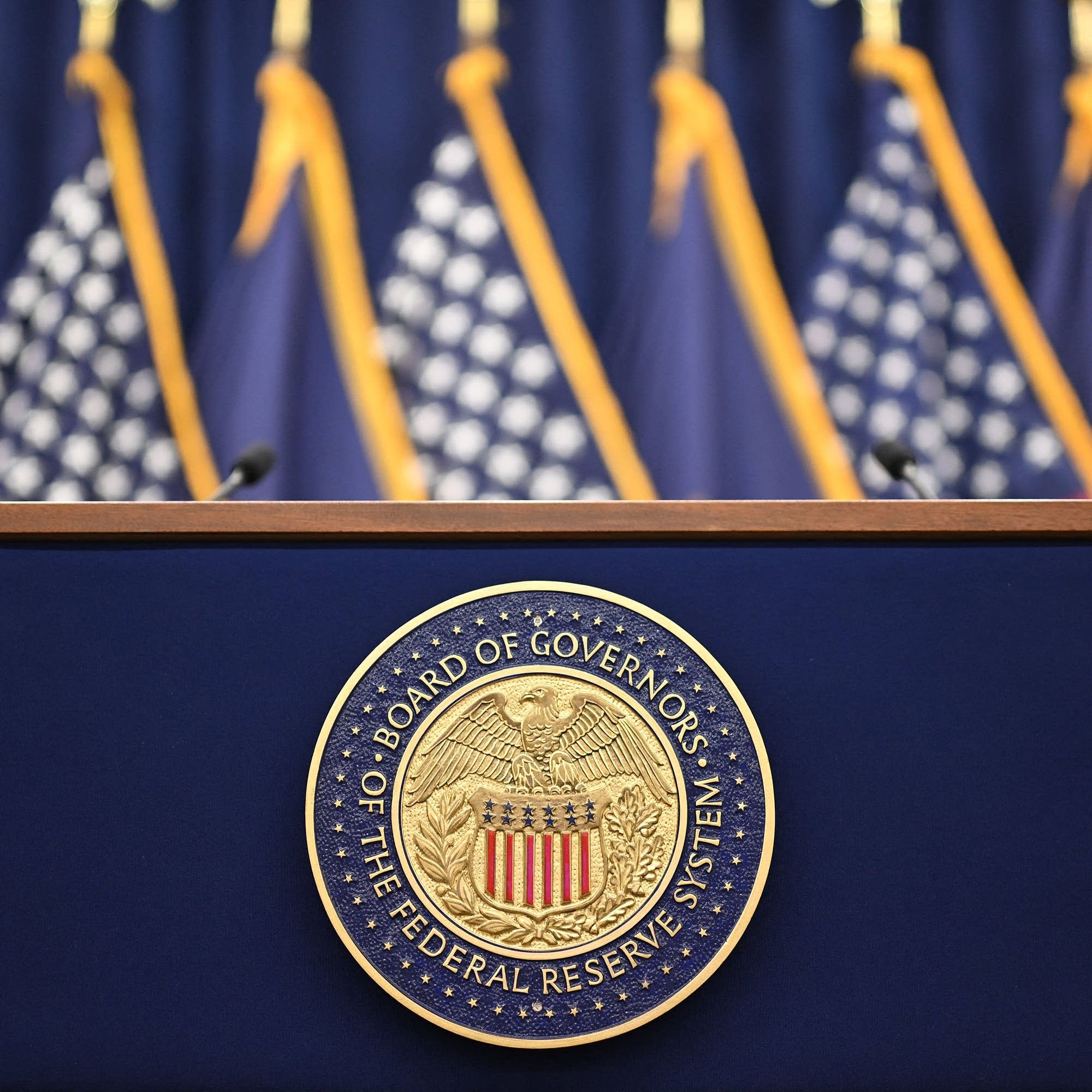
The fashion world has the annual Met Gala. The movies have the Oscars. Central banking has the annual gathering in Jackson Hole, Wyoming. From Marketplace, I'm NovaSafo in for David Brancaccio. That gathering in Jackson Hole is on now, and Federal Reserve Chair Jerome Powell is scheduled to make his final appearance as chair, delivering a speech in front of economists and central bankers from around the world. As always, we'll be listening for hints on the direction of interest rates, especially amid a White House pressure campaign to lower them. But there's another issue looming over Powell's speech the Fed's framework for setting policies to keep inflation in check and the job market healthy. Marketplace's Nancy Marshall Genser has more on that framework and how it might change.
- [01:43]
D
Every five years, the Fed makes a plan. It just like Stalinist countries used to do, theirs were focused on every detail of the economy. The Fed is just trying to figure out how to accomplish its dual mandate of stable prices and maximum employment. Ellen Mead is a former Fed economist now at Duke. She says when Fed officials issued the first framework in 2012, they kept talking about it as a constitution. For the first time, central bank officials set 2% as their inflation target. They they didn't establish a specific number for unemployment, but a few years later, inflation was stuck below 2%. So Mead says in 2020, Fed officials made a big edit. We're going to say that when we've been really under running 2%, we're going to try to make up for it by running inflation a bit above 2% for a while so that we average out at 2. But as anyone who's been to a Grocery store lately knows inflation is now stuck stubbornly above 2%. That 2020 framework established when low inflation was a problem, it's outdated. Fed Chair Powell is expected to unveil a new framework in his speech today. Former Fed economist Claudia Somm is now with New Century Advisors. The big edits we see are going to in all likelihood be undoing the big edits we saw in 2020. Because now she says, we have stubborn inflation. But nobody knows if we'll see a resurgence of low inflation.
- [03:07]
E
So.
- [03:08]
D
So the Fed has to be flexible. I'm Nancy Marshall Genser for Marketplace.
- [03:27]
A
What does it mean to move at the speed of AI? It means thinking big and moving fast. It means running like a 10 person team, even if it's just you. With Wix, it's possible. Create a website that's as unique as your business, launch a new campaign or test new ways to make more money without slowing down. Think it, build it, scale it. All with AI on wix.
- [03:52]
B
At Capella University, learning the right skills could make a difference. That's why our business programs teach you relevant skills you can take from the course room to the workplace. A different future is closer than you think with Capella University. Learn more at capella. Edu.
- [04:10]
C
The housing market remains stuck amid high mortgage rates. Home sales are hovering near a 30 year low even with more inventory coming online. Aside from those high rates, there's also broader economic uncertainty keeping people on the sidelines. There is one bright spot. New evidence that first time home buyers remain undeterred. For more on this, David Brancaccio spoke with Marketplace's senior economics contributor Chris Farrell.
- [04:35]
F
So it can be done. People who've never owned a house can buy a home. There are actual examples of this occurring.
- [04:42]
E
Yes, there are. Look, David, first time home buyers, they're a resilient group. And that word, resilient. It's favored by economists at the Federal Reserve bank of New York. And they did this intriguing series of studies on first time home buyers. And the economists document that the share of purchase mortgages by first time homebuyers as well as their share of home purchases increased slightly in recent years.
- [05:06]
F
Are they sure? I pay attention to this and I recall contradictory data showing first timers are especially having trouble buying. Why the turnabout?
- [05:17]
E
Data, David, Data. Now you're right. National association of Realtors. They previously reported that first time home buyers represented only 24% of home sales between July of 2023 in June of 2024. And that figure, it was disturbing. It was the lowest in the history of the Realt going back to 1981. And obviously the figure generated dismay that the dream of homeownership for millions of renters was fading.
- [05:44]
F
So the New York Fed economists come in, they take a second look and what do they find?
- [05:49]
E
Well, they take a really deep dive into the data and they say, look, here's the thing. The national association of Realtors annual survey, it's very legitimate, but it has a small response rate, 3.6% or slightly more than 6,800 responses. Instead, they tapped into the New York Fed's quarterly report on household debt and credit. And I'm sure over the years, David, that you've looked at that data and it captures about 5% of the population with a credit report or approximately 14 million individuals. And one important finding is that first time buyers had a 35% share of all home purchases in 2023, and that was up from 28% in 2013.
- [06:33]
F
All right. I mean, doing better than many had feared is okay. Could have been worse. But it remains hard for renters to buy their first home. I mean, inventories of homes are low, prices are high, mortgage rates are not a bargain.
- [06:47]
E
Not at all. I mean, I think this is the case of the economic glasses half full. I mean, look, first time homebuyers are faring better than expected, but in a market that's difficult for everyone.
- [06:58]
F
All right, back to these resilient first time home buyers. How did the successful buyers pull it off?
- [07:04]
E
Well, the Congress emphasized two trends. First, average credit scores for first time home buyers rose by nearly 10%. So that improved them, helped them maintain access to mortgages with decent interest rates. They also found that these first time home buyers, they went to lower income zip codes, lower income neighborhoods to find houses selling at a cheaper price.
- [07:26]
F
Marketplace's senior economics contributor, Chris Farrell, he's in St. Paul, Minnesota. Thank you.
- [07:32]
E
Thank you.
- [07:33]
C
And that was Marketplace's David Brancaccio with that interview. Our executive producer is Nancy Fargali. Our digital team includes Antoinette Brock, Emily McCune and Dylan Mietnan. Our engineers are Brian Allison, Rachel Breeze, and Tessa Block. I'm Novosafo with the Marketplace morning report from APM American Public Media.
- [07:58]
G
Hey, everybody. I'm Kyle Rysdal, the host of Marketplace. I'm going to join Amy Scott on September 9th. She's the host of How We Survive and also science writer Elizabeth Kolbert for a conversation about the economic consequences of our climate crisis. We're going to break down how the acceleration of climate change is going to disrupt jobs and entire industries, even our daily lives. But it's not all doom and gloom. We're also going to dive into the solutions that are giving us hope right now. Thanks so much to Odoo for sponsoring this free webinar. Thanks for and you can sign up today@marketplace.org climate.