← Marketplace Morning Report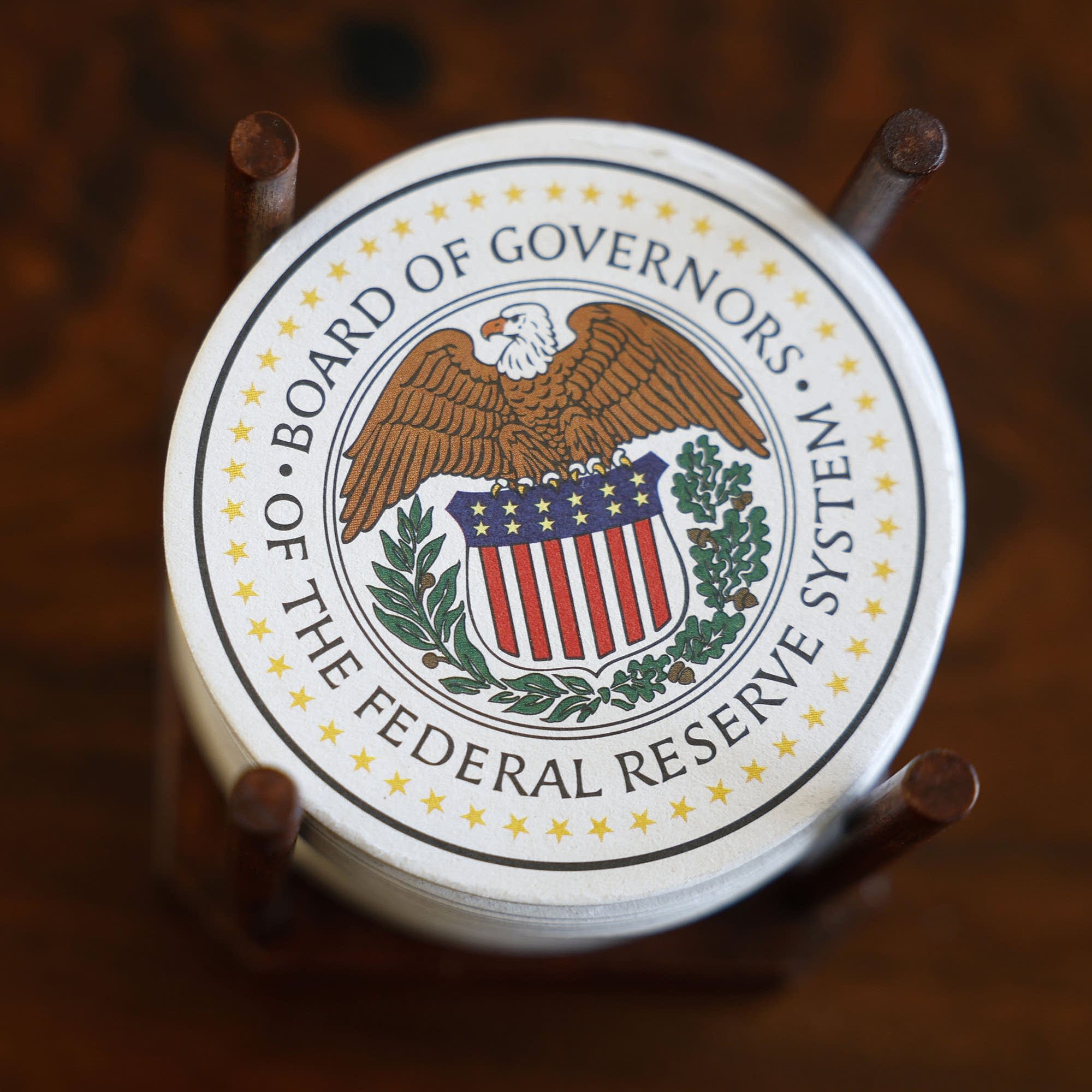
Loading summary
Transcript34 lines
- [00:00]
Carla Javier
For 140 years, MultiCare has been in Washington prioritizing long term solutions, partnering with local communities and expanding access to care. Together, we're building a healthier future. Learn more@ multicare.org.
- [00:18]
Sabri Benishore
Coal is no longer king for the first time in more than a century From Marketplace, I'm Sabri Benisure in for David Brancaccio. First, the Trump administration has created a new job at the irs. CEO Frank Bisignano will be taking on that position in addition to his current job as head of the Social Security Administration Marketplaces.
- [00:40]
Henry Epp
Henry Epp reports the job of IRS CEO did not exist before yesterday's announcement. For Frank Bisignano, the title will apparently mean overseeing quote, all day to day IRS operations, according to a press release from the Treasury Department. And yet he technically won't be the IRS's leader. Treasury Secretary Scott Besant will remain the IRS's acting commissioner, a role that's been held by seven different people this year. The last commissioner clashed with Besant and was pushed out earlier this summer and has now been nominated to be the ambassador to Iceland. By making Bisignano the IRS's so called CEO, the Trump administration might sidestep the Senate confirmation process required for the irs. Commissioner Bicignano has already received Senate confirmation for his other job. Head of the Social Security Administration is in both positions. He'll be overseeing agencies that handle millions of Americans personal data. I'm Henry Epp for Marketplace.
- [01:37]
Sabri Benishore
It was the largest US coal sale in more than 10 years. Yesterday the government offered up the rights to lease federal land in southeastern Montana and the highest bidder would get to mine 167 million tons of coal there. But the highest bidder was the only bidder and they did not bid much. The Navajo Transitional Energy Company offered just $186,000. That is about a tenth of a penny per ton of available coal. Back in 2012, a coal lease went for 1,000 times more. It is a sign of how far coal has fallen for the first time. Renewable energy is now the world's biggest source of electricity. It's a title coal held for more than 100 years. This is according to energy think tank Ember. Justin Rowlett is the BBC's climate editor.
- [02:27]
Justin Rowlett
Coal has been the main source for electricity generation literally since the dawn of the electric era. And so the fact that it's now been displaced by renewables really is significant. And that's why Ember, the think tank that published today's report, describes it as a turning point for the global energy system. What's really interesting is we've got the world moving at two different speeds. Lower income countries led by China becoming deeper and deeper into what should be described as a solar revolution, and then developed countries moving much more slowly.
- [02:57]
Sabri Benishore
Justin Rowlett at the BBC Meanwhile, the world's crude oil market is getting more gluttish. OPEC plus producers decided once again to expand output and drive down prices. That'll be tough for U.S. oil producers. Not so for oil consumers, though. Marketplaces Elizabeth Trobel has that even though.
- [03:16]
Elizabeth Trobel
A barrel of oil today is about $10 less than it was a year ago, Mark Finley with Rice University says.
- [03:22]
Mark Finley
Consumers don't consume crude oil, they consume gasoline.
- [03:26]
Elizabeth Trobel
And typically lower crude prices do bring down gas prices.
- [03:30]
Mark Finley
But the national average for retail regular gasoline is $3.13 a gallon more or.
- [03:38]
Elizabeth Trobel
Less the same as a year ago, Finley says, because of pressures on refiners. And analyst Tom Closet with Turner, Mason and company says looking ahead, gasoline prices.
- [03:48]
Mark Finley
Will come off, but I don't think they're going to come off quite as aggressively. That's because of all of these drone impacts on Russian refiners that's knocking out Russian refining, he says.
- [04:01]
Elizabeth Trobel
Even if lower crude prices continue, I.
- [04:04]
Mark Finley
Don'T think it's necessarily going to be this wonderful dividend of deflation or disinflation.
- [04:10]
Elizabeth Trobel
For the public especially, he says, because diesel and jet fuel prices are still pretty pricey. I'm Elizabeth Troval for Marketplace.
- [04:42]
Mark Finley
Foreign.
- [04:48]
Dell PC Commercial
Dell PC Powered by the Intel Core Ultra processor, it helps you handle a lot, even when your holiday to do list gets to be a lot because it's built with an all day battery plus powerful AI features that help you do it all with ease, from editing images to drafting emails to summarizing large documents to multitasking so you can organize your holiday shopping and make custom holiday decor and search for great holiday deals and respond to holiday requests and customer questions and customers requesting custom things. And plan the perfect holiday dinner for vegans, vegetarians, pescatarians and Uncle Mike's carnivore diet. Luckily, you can get a PC that helps you do it all faster so that you can get it all done. That's the power of a Dell PC with Intel inside, backed by Dell's price match guaranteed. Get yours today@dell.com deals, terms and conditions apply. See Dell.com for details.
- [05:46]
Sabri Benishore
Last month the Fed decided to cut interest rates by a quarter percentage point. Tomorrow we'll get a little bit of the inside scoop on how they decided to do that. Look at the minutes of that meeting, Marketplace's Carla Javier looked into what they could tell us about what's ahead.
- [06:00]
Carla Javier
Former Fed economist Anne Owen was on her way to a class she teaches at Hamilton College about monetary policy.
- [06:07]
Anne Owen
I have a group of students doing a presentation about what the Fed should do at the next meeting, and after.
- [06:12]
Carla Javier
That they have some homework. Read and prepare to discuss the Fed minutes that come out tomorrow.
- [06:17]
Anne Owen
What are the issues that people who thought we need to lower rates more? What are they looking at? How are the people who think, well, one rate cut is going to be enough this year? What are the indicators that they're looking at?
- [06:30]
Carla Javier
One thing. She's asked her students to look closely for signs of disagreement. Owen says the minutes are usually pretty.
- [06:37]
Anne Owen
Neutral, but what you'll see is a discussion that might say some participants thought this was important, while other participants noted.
- [06:47]
Carla Javier
That debate is healthy, says former Fed economist Claudia Somm. She's now at New Century Advisors.
- [06:54]
Claudia Somm
At a moment like this, as complicated as monetary policy is, if everybody were in agreement, I would actually be worried that they're missing something. We should feel good about the fact that we have Fed officials really engaging with the data, really engaging with the tension that's in the economy, because that that should lead to better monetary policy decisions.
- [07:17]
Carla Javier
In the end, Sahm says she'd be shocked if any discussion of the political debate about Fed independence makes it into the minutes.
- [07:24]
Claudia Somm
By focusing on the data, focusing on the theory, focusing on how the Fed always does its work work. That is their way of saying, hey, we're independent. We're still doing our work the way we would always do our work.
- [07:40]
Carla Javier
The minutes are also likely to contain clues about what could come next, says David Beckwourth, a senior fellow at the Mercatus center at George Mason University.
- [07:49]
Sabri Benishore
If you get a sense that the Fed's really concerned about inflation and some of them aren't as concerned about employment, that would tell you don't expect as many rate cuts going forward.
- [07:59]
Carla Javier
On the other hand, if more members are focused on unemployment, then more cuts could be in the cards. The minutes are not a full transcript of what transpired, though that won't come out until five years from now. I'm Carla Javier for Marketplace.
- [08:14]
Sabri Benishore
Our producers are Tamar Fagan, Ashley Rodriguez, Ariana Rosas, and Erica Soderstrom. Our senior producer is Alex Schroeder. Our supervising senior producer is Meredith Garrettson Morby. In New York, I'm Sabri Benishore with the Marketplace Morning Report from APM American Public Media.
- [08:35]
Kimberly Adams
I'm Kimberly Adams, host of Make Me Smart, a podcast from Marketplace that makes today make sense. Join me throughout the week as I dig into the biggest stories in tech culture and the economy. Whether it's a vibe check on the job market or the latest on China US Relationship, Make Me Smart helps you understand how the headlines actually impact your daily life. Listen to Make Me Smart on your favorite podcast.
- [09:00]
Mark Finley
Applause.