Loading summary
Transcript42 lines
- [00:00]
A
What do you think makes the perfect snack?
- [00:02]
B
Hmm, it's gotta be when I'm really craving it and it's convenient.
- [00:06]
A
Could you be more specific when it's cravenient?
- [00:08]
B
Okay, like a freshly baked cookie made with real butter available right down the street at a.m. p.m. Or a savory breakfast sandwich I can grab in just.
- [00:15]
A
A second at AM pm. I'm seeing a pattern here.
- [00:18]
B
Well yeah, we're talking about what I.
- [00:19]
A
Crave which is anything from AM pm.
- [00:21]
B
What more could you want? Stop by AM PM where the snacks and drinks are perfectly craveable and convenient. That's cravenience.
- [00:28]
C
Amazing.
- [00:29]
B
Too much good stuff.
- [00:31]
D
Is it time to reimagine your future? The right business skills may make a difference in your career. At Capella University we offer a relevant education that's designed to focus on what you need to know in the business world. We'll teach professional skills to help you pursue your goals like business management, strategic planning and effective communication. And you can apply these skills right away. A different future is closer than you think with Capella University. Learn more@capella.edu.
- [01:02]
E
The White House has reciprocal tariffs the US Supreme Court has questions. I'm David Brancaccio in Los Angeles. Supreme Court justices yesterday seemed skeptical of several Trump administration arguments that the president can use emergency powers to impose tariffs without getting approval from Congress. Tariffs as taxes and how they would refund money if it comes to that were among key points during yesterday's oral arguments. Marketplace's Nancy Marshall Genzer reports.
- [01:32]
A
The issue here is a law President Trump used to impose many of his tariffs, the International Emergency Economic powers Act of 1977, or IIPA. Small businesses and states brought lawsuits challenging the tariffs. They say AIPA doesn't even mention the word tariff. Their lawyer, Neil Kataiel, told the court, tariffs are taxes and only Congress has the power to tax.
- [01:55]
F
IPA is a sanctioned statute.
- [01:57]
A
It's not a tax statute where Congress gave away the store. But President Trump's Solicitor General, D. John Sauer, argued, we don't contend that what's being exercised here is the power to tax. It's the power to regulate foreign commerce. These are regulatory tariffs. The major questions doctrine came up repeatedly yesterday. It says if Congress wants to give up some of its powers like the ability to tax, it has to say so clearly. Chief Justice John Roberts said President Trump may have violated the by using IEEPA to justify tariffs, but the vehicle is imposition of taxes on Americans, and that has always been the core power of Congress. Some of the conservative justices had tough questions for both sides. Amy Coney Barrett, a Trump appointee, asked the plaintiff lawyer, Neil Kattael, what would happen if he won. Would all the tariffs that have been paid have to be refunded? But how would this work? It seems to me like it could be a mess. Katiel told her the businesses in the case before the Supreme Court would get refunds, but for everyone else, it would be difficult. I'm Nancy Marshall Genzer for Marketplace.
- [03:05]
E
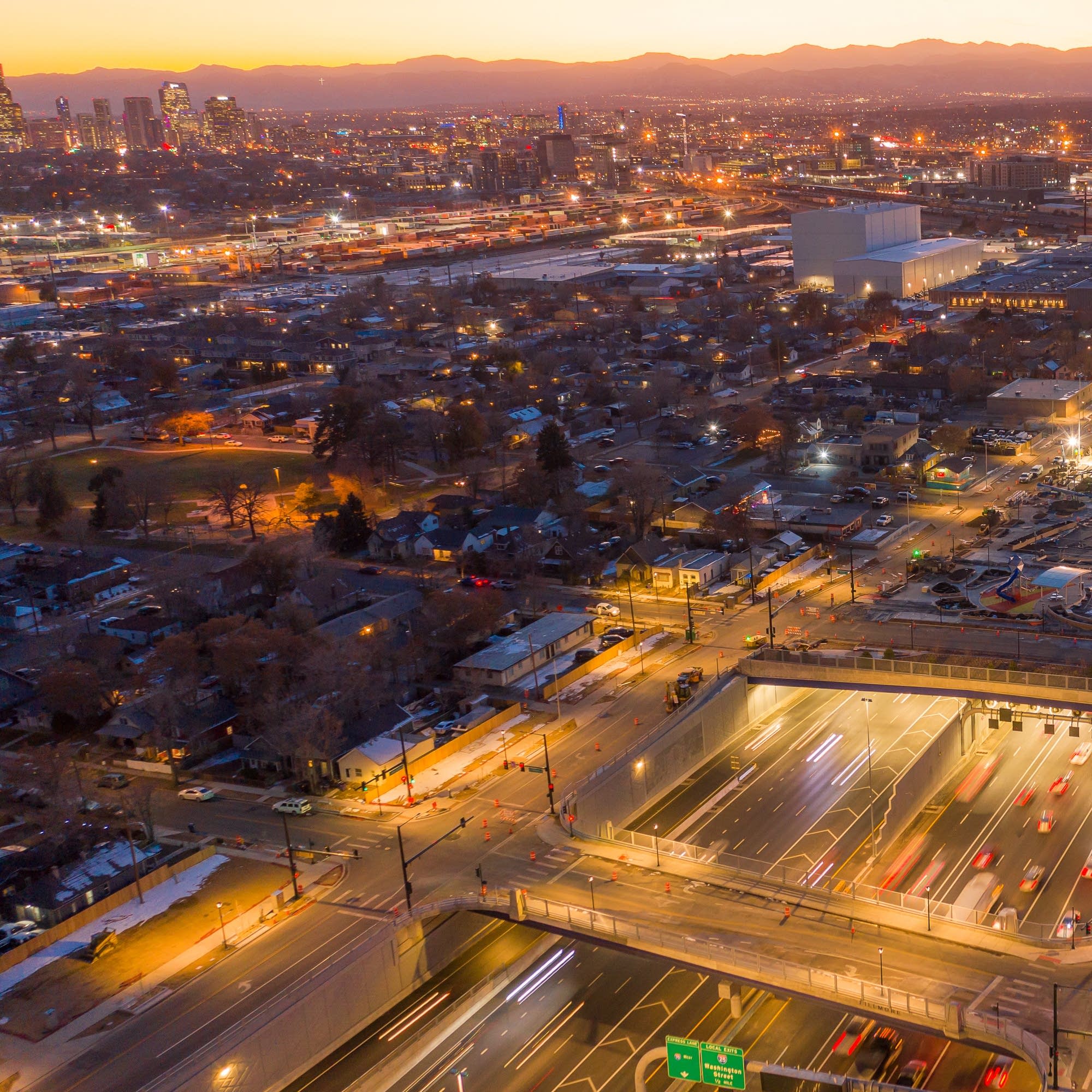
Data centers are popping up nationwide to power E Commerce and the AI boom. Those facilities need lots of electricity and water. But there are other environmental concerns. Some residents in north Denver fear a data center now under construction could add to air pollution. Sam Brash of Colorado Public Radio reports.
- [03:24]
C
About four years ago, Julie Moat moved into an affordable housing complex in Denver's Elyria Swansea neighborhood. It's a largely Latino area packed with highways and heavy industry. And she's learned bad air is a fact of life.
- [03:38]
A
I can't leave my windows open when.
- [03:41]
D
It'S a nice cool day or whatever.
- [03:44]
A
The air is horrible. It stinks.
- [03:47]
D
You can smell the gas, gas from.
- [03:49]
C
A nearby oil refinery and smells from a dog food factory. Now coresight, a data center company, is building a facility across the street. Once it's done, Mote fears local air quality could get even worse.
- [04:03]
A
And I just want to move, you know, but unfortunately I'm low income, you.
- [04:07]
C
Know, it might seem odd to worry about pollution from a data center. The facilities are hulking buildings packed with computers, not factories with smokestacks. But they do produce pollution, nitrogen dioxide and other air pollutants. That's Xiaolei Ren, an associate professor of engineering at the University of California, Riverside. He says there's two main sources to worry about extra emissions from power plants and backup diesel generators ready to flip on during blackouts. Because data centers are built to run around the clock, they cannot tolerate any downtime. An analysis Wren published last year estimated the potential impact by by 2028. He thinks AI air pollution, what he calls digital smog, will lead to new asthma in cancer cases, costing the US up to an extra $20 billion in annual public health costs. But he says there's a pretty basic solution. If you choose the location in a better way, you can significantly reduce the health impact. But coresight's new data center is less than a block from apartments and a low income health clinic. In a statement, a spokesperson says it's still a good spot, already zoned for indust and close enough to future AI users to ensure quick digital responses. But that doesn't sit well with neighbors like Ana Varela we deserve to be.
- [05:29]
A
Treated like any other gorgeous historic neighborhood in Denver.
- [05:34]
C
Coresight says its pollution permit only lets it operate backup generators during blackouts and short daytime tests. Varela thinks it should also install air.
- [05:44]
A
Monitors so that our neighborhoods can know exactly what toxins and pollutants they are emitting.
- [05:51]
C
That way, other communities learn what it means to have a data center next door in Denver, I'm Sam Brash for Marketplace.
- [05:59]
E
Also noise pollution in North Tonawanda near Buffalo, New York. A data center to digitally mine cryptocurrency drew controversy for the noise of its AC systems that some had described as a constant soul shaking hum. This is the story of the One As a maintenance supervisor at a manufacturing facility, he knows keeping the line up and running is a top priority. That's why he chooses Grainger, because when a drive belt gets damaged, Grainger makes it easy to find the exact specs for the replacement product he needs, and next day delivery helps ensure he'll have everything in place and running like clockwork. Call 1-800-GRAINGER clickranger.com or just stop by. Granger are the ones who get it done.
- [07:08]
B
The holidays mean more travel, more shopping, more time online and more personal info in more places that could expose you more to identity theft. But LifeLock monitors millions of data points per second. If your identity is stolen, our US Based restoration specialists will fix it, guaranteed your money back. Don't face drained accounts, fraudulent loans or financial losses alone. Get more holiday fun and less Holiday worry with LifeLock. Save up to 40% your first year. Visit LifeLock.com SpecialOffer Terms Apply.
- [07:39]
E
World leaders are gathering in Belem, Brazil, ahead of the big United Nations Climate Conference, which gets underway next week. It's part of an effort to show that climate change remains a top priority. Here's the BBC's Justin Rolatt.
- [07:52]
F
Faith in the UN climate process is at a low. Only a few dozen heads of state are expected to attend today's summit. The leaders of China, India and the United States, together responsible for roughly half of global emissions, will not be present. The US Is withdrawing from the Paris agreement entirely. Yet there are glimmers of progress. Renewable energy technologies are being deployed around the world faster than anyone anticipated a decade ago, and the Global rise in CO2 emissions has nearly leveled off.
- [08:25]
E
The whole thing will be known as COP 30 United nations ease for Conference of the Parties to the UN Framework Convention on Climate Change. And amid protests over alleged human rights and environmental abuses in its supply chains, the retailer Shein this week opened its first bricks and mortar location in Paris. The same day, French officials moved to shut down Shein's web presence in that country, with people objecting to things for sale on the site that seems to have included weapons and sex dolls. Shein, based in China, is mainly known for cheap apparel. In Los Angeles, I'm David Brancaccio, Marketplace Morning Report from apm, American Public Media.
- [09:06]
A
Have you ever had the pleasure of holding a $2 bill in your hands? It's real money, but strangely rarely used by some people. At least this week on Million Bazillion, we'll learn the history of this mysterious piece of currency.
- [09:21]
E
Wait a minute.
- [09:21]
B
One of these $2 bills is different.
- [09:24]
A
How cool.
- [09:25]
E
Most of them have a picture of.
- [09:26]
B
Thomas Jefferson on them, but this one.
- [09:28]
E
Has a picture of Alexander Hamilton.
- [09:31]
F
You rang?
- [09:33]
A
Don't miss this week's episode of Million Bazillion. Listen. On your favorite podcast, apparently.